
In the rapidly evolving landscape of digital innovation, we often find ourselves preoccupied with the “soft” side of technology—algorithms, cloud computing, and user interfaces. However, the physical infrastructure that houses our digital world relies on precision engineering and specialized hardware. Whether you are assembling a high-performance server rack, calibrating a 3D printer, or building a custom PC workstation, you will inevitably encounter a small but indispensable tool: the Allen key.
Commonly referred to in technical circles as a hex key or an L-wrench, the Allen key is the silent workhorse of the tech hardware industry. While it may appear simple at first glance, its design is a masterpiece of geometric efficiency. For those entering the world of hardware maintenance or gadget assembly, understanding exactly what an Allen key looks like—and why it looks that way—is the first step toward professional-grade technical proficiency.

The Anatomy of a Hex Key: Visual and Technical Specifications
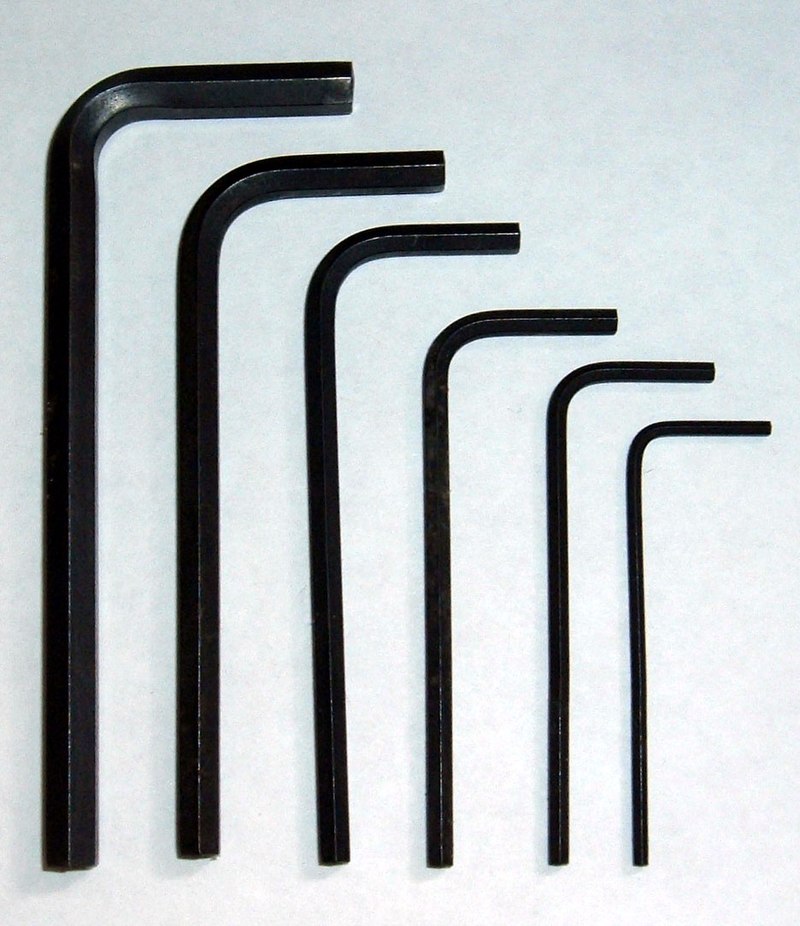
To the uninitiated, an Allen key might look like a simple piece of bent metal. However, from a tech engineering perspective, its form follows a very specific function. Its primary identifying feature is its hexagonal cross-section. Unlike a traditional flat-head or Phillips screwdriver, which relies on a bladed or cruciform tip, the Allen key is a solid hexagonal bar.
The Distinctive L-Shape Design
The most common iteration of the Allen key is the L-shaped wrench. This design is not accidental; it provides a dual-purpose functionality that is critical for tech assembly. The long arm of the “L” allows a technician to reach deep into narrow gadget housings or server chassis where a standard screwdriver handle might be too bulky. Conversely, the short arm allows for the application of high torque. When you hold the long end and insert the short end into a bolt, the leverage is increased significantly, allowing for a secure fit without the need for heavy power tools.
Material Composition and Finish in Tech Environments
In the tech sector, durability is paramount. High-quality Allen keys are typically manufactured from heat-treated chrome vanadium steel or S2 tool steel. Visually, these tools often have a matte grey, black oxide, or polished chrome finish. In precision electronics, you may even encounter color-coded hex keys. These are powder-coated in vibrant hues, allowing technicians to quickly identify the correct metric or imperial size at a glance—a crucial feature when working in low-light data centers or cluttered laboratory benches.
The Role of Allen Keys in Modern Hardware Engineering and Gadget Assembly
While the Allen key is famous for its role in consumer furniture assembly, its true value is found in the high-stakes world of technology hardware. Many of the most sophisticated gadgets we use today are held together by hexagonal socket-head cap screws.
Precision in Robotics and 3D Printing
If you look at the frame of a modern 3D printer or a robotic arm, you will see a series of recessed bolts. These are designed for hex keys. The hexagonal interface provides a large contact surface area between the tool and the fastener. In tech maintenance, this reduces the risk of “cam-out”—the annoying slip that occurs when a screwdriver pops out of a screw head. Because 3D printers require frequent calibration and tightening of eccentric nuts and frame bolts, the Allen key is the primary tool for maintaining these digital manufacturing machines.
Server Racks and Data Center Infrastructure
Enterprise-level technology requires robust physical security and structural integrity. Server racks, which house thousands of dollars’ worth of networking equipment, are often secured with hex-head fasteners. In these environments, the Allen key is used to adjust mounting rails and secure side panels. The sleek, low-profile look of a hex bolt allows server cabinets to remain flush and stackable, maximizing space in the crowded environments of modern data centers.
Variations and Innovations: Beyond the Standard L-Shape

As technology has become more complex, the tools used to maintain it have evolved. While the basic L-shaped Allen key remains the standard, several variations have emerged to meet the specific needs of the tech industry.
The Ball-End Revolution
If you look closely at a premium set of hex keys, you might notice that one end looks like a small, faceted sphere rather than a flat hexagon. This is a “ball-end” hex key. In the world of tech repair, space is often at a premium. The ball-end allows a technician to insert the tool into a screw head at an angle (up to 25 or 30 degrees). This is a game-changer when you are trying to tighten a screw tucked behind a heatsink or a tangle of fiber optic cables where a straight-on approach is impossible.
T-Handle and Folding Sets for the Mobile Technician
For field engineers and IT professionals who travel between sites, the look of the Allen key changes for the sake of portability and ergonomics. Folding hex key sets look similar to a Swiss Army knife, housing multiple sizes in a single handle. Meanwhile, in laboratory or factory settings, you will often see T-handle hex keys. These feature a plastic or rubber grip at the top, allowing for rapid spinning and more comfortable repetitive use during large-scale hardware deployments.
Essential Maintenance: Using the Right Tools for Precision Tech Repair
One of the biggest challenges in tech hardware maintenance is the “Metric vs. Imperial” divide. To the naked eye, a 5mm Allen key and a 3/16-inch Allen key look almost identical. However, using the wrong one can be catastrophic for expensive electronics.
Avoiding “Stripped” Fasteners in Delicate Electronics
In the context of a $2,000 MacBook or a high-end cinema camera, a “stripped” screw—where the internal hexagonal shape is rounded out due to a poor tool fit—can render a device nearly unrepairable. Professional tech toolkits, such as those produced by brands like iFixit, provide precision-ground hex bits that ensure a perfect friction fit. When you look at these precision bits, they lack the “L” shape and are instead designed to be inserted into a magnetized driver handle, offering the ultimate control for delicate internal components.
Torque Sensitivity and Hardware Longevity
In advanced hardware engineering, over-tightening a bolt can be just as damaging as under-tightening it. This is especially true when mounting CPUs or securing delicate PCB (Printed Circuit Board) trays. Modern tech-focused Allen keys are sometimes integrated into torque-limiting drivers. These tools ensure that once a specific level of pressure is reached, the tool “clicks” or slips, preventing structural damage to the silicon or the housing.
The Future of Fasteners: Why the Hex Design Remains a Tech Staple
As we look toward the future of hardware, from foldable smartphones to modular green-energy tech, the Allen key’s design remains relevant. While some companies are moving toward proprietary “pentalobe” or “Tri-point” screws to discourage third-party repairs, the hexagonal standard remains the bedrock of open-source hardware and industrial technology.
Security Hex Fasteners in Digital Infrastructure
In public-facing technology, such as smart-city kiosks or outdoor networking hubs, you might see a variation of the Allen key known as the “Security Hex” or “Tamper-Resistant Hex.” These look like standard Allen keys but have a small hole drilled into the tip. The corresponding screw has a small pin in the center of the socket. This minor design tweak ensures that only authorized technicians with the specific security tool can access the sensitive internal hardware, adding a layer of physical security to our digital infrastructure.
The Sustainability of Standardized Tools
In the “Right to Repair” movement, the Allen key represents a move toward sustainability. By using standard hex fasteners, tech manufacturers make it easier for users to maintain their own devices, extending the lifecycle of the hardware and reducing electronic waste. The familiar look of the Allen key is, in many ways, a symbol of a more transparent and repairable technological future.
In conclusion, while an Allen key may look like a simple, low-tech tool, it is an essential component of the modern technological ecosystem. From its specific hexagonal geometry to its application in the most advanced data centers in the world, the Allen key provides the precision and reliability that our digital world is built upon. Whether you are a hobbyist or a professional engineer, recognizing and respecting this tool is fundamental to mastering the physical side of technology.
aViewFromTheCave is a participant in the Amazon Services LLC Associates Program, an affiliate advertising program designed to provide a means for sites to earn advertising fees by advertising and linking to Amazon.com. Amazon, the Amazon logo, AmazonSupply, and the AmazonSupply logo are trademarks of Amazon.com, Inc. or its affiliates. As an Amazon Associate we earn affiliate commissions from qualifying purchases.