
In the expansive ecosystem of sandbox gaming, few titles offer the depth of technical sophistication found in Minecraft. At the heart of its engineering capabilities lies Redstone—a simulated electrical system that allows players to build everything from simple doors to functional 16-bit computers. Within the specialized niche of rail transportation and automation, the “Activator Rail” stands as a pivotal component. Often misunderstood by beginners and underutilized by intermediate players, the activator rail is a versatile tool designed to trigger specific behaviors in entities and minecarts.
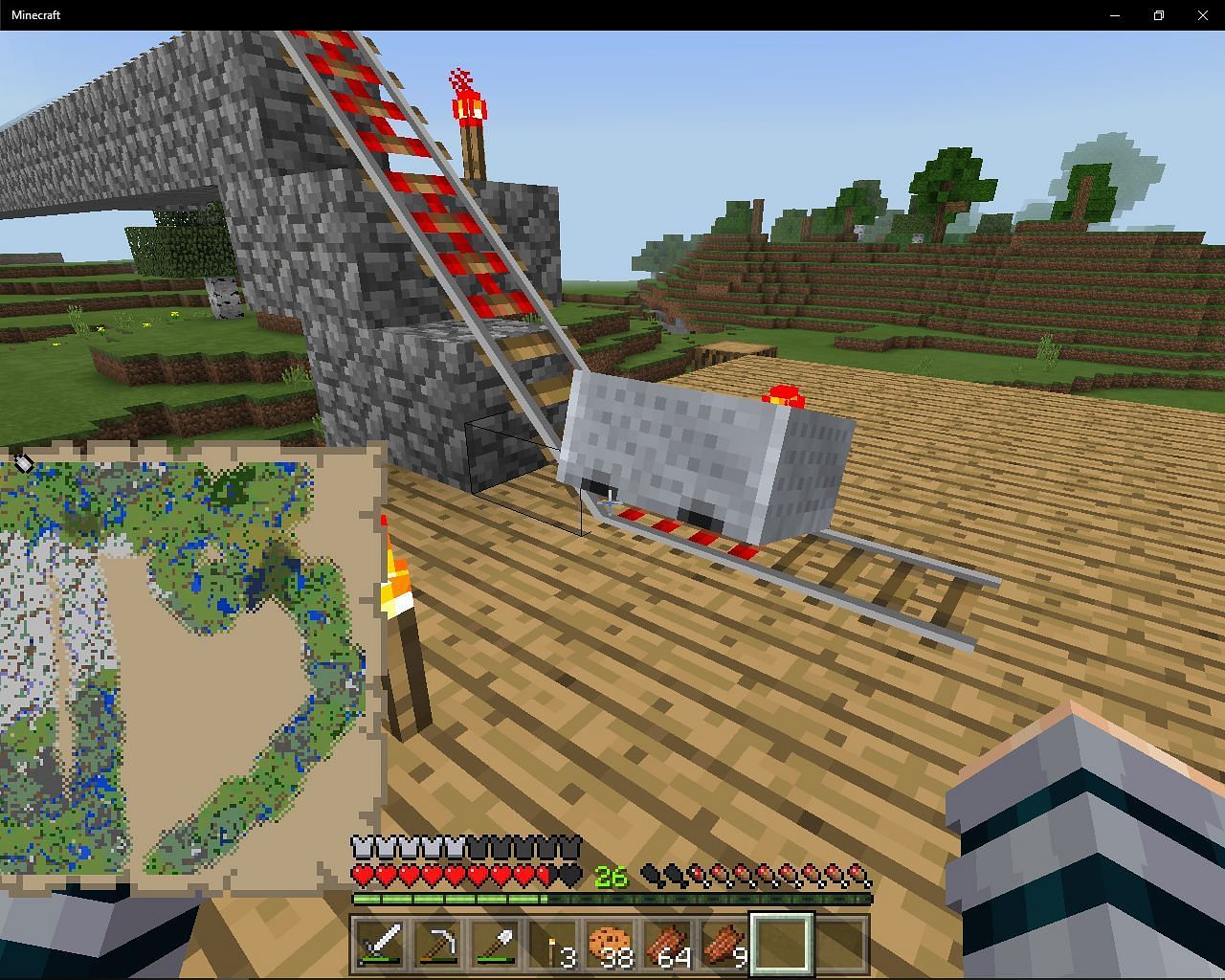
Understanding what an activator rail does requires a deep dive into the software’s internal logic. Unlike powered rails, which provide kinetic energy, or detector rails, which act as sensors, the activator rail functions as a “state switcher.” It communicates with the entities passing over it, dictating their behavior based on the presence or absence of a Redstone signal.
1. Technical Fundamentals: Crafting and Power Logic
To master the use of activator rails, one must first understand their composition and how they interact with the game’s power grid. In the context of Minecraft’s software architecture, the activator rail is a block that listens for a “power” state (on or off) and transmits that state to any minecart occupying its space.
The Engineering Behind the Craft
The recipe for an activator rail reflects its mid-tier utility in the game’s progression. It requires six iron ingots, two sticks, and a single Redstone torch. This configuration signifies its identity as a “smart” rail. While iron provides the physical structure, the Redstone torch acts as the internal logic gate, allowing the rail to process signals rather than just providing physical propulsion.
Signal Transmission and Activation States
An activator rail is “active” when it receives a Redstone signal from an adjacent source, such as a lever, button, or Redstone block. When powered, the rail glows with a faint red hue. The “Tech” aspect of this mechanic is the “vibrating” visual cue it gives to certain entities. If the rail is not powered, it remains in a dormant state. The crucial distinction to remember is that an activator rail does not increase the speed of a minecart; instead, it acts as a software trigger for the cart’s internal functions.
2. Core Functional Applications in Game Logic
The primary purpose of the activator rail is to “activate” (or deactivate) specific features of various minecart types. This makes it an essential tool for players looking to automate their infrastructure or create complex adventure maps.
Managing Hopper Minecarts and Item Sorting
One of the most common applications of the activator rail is in the realm of automated logistics. A Hopper Minecart is designed to pull items from containers above it or pick up items dropped on the tracks. However, there are times when a player needs to pause this collection process.
When a Hopper Minecart passes over a powered activator rail, its picking-up function is disabled. This is essential for complex sorting systems where a cart needs to travel through a “neutral zone” without accidentally grabbing items from the wrong chests. Conversely, an unpowered activator rail allows the Hopper Minecart to resume its normal function.
Priming TNT Minecarts for Controlled Demolition
In the field of virtual mining and defense systems, the TNT Minecart is a powerful but volatile tool. Unlike a standard block of TNT, which requires a direct spark or flame, a TNT Minecart is triggered by an activator rail. When a TNT Minecart rolls over a powered activator rail, it begins its fuse sequence.
The technical nuance here is the “velocity-based explosion.” The faster the cart is moving when it hits the activator rail, the more powerful the resulting blast will be. This allows for high-precision demolition in automated quarrying systems or the creation of sophisticated trap mechanics in multiplayer environments.
The Command Block Minecart: Scripting on Tracks
For advanced users and developers within the Minecraft ecosystem, the Command Block Minecart represents the pinnacle of rail-based automation. Command blocks allow for the execution of “scripts” or console commands within the game.
An activator rail serves as the “executioner” for these commands. When a Command Block Minecart passes over a powered activator rail, it executes its programmed command string. Depending on how the rail is pulsed (using a Redstone clock), it can trigger a command once or repeatedly. This is a fundamental technique used in the software design of “adventure maps” to trigger dialogue, change the weather, or teleport players as they move along a rail network.
3. Entity Interaction: Ejection and Incapacitation
Beyond its interaction with the cargo within the carts, the activator rail has a profound impact on “entities”—the players, animals, and monsters that inhabit the digital world. This functionality is what makes the rail a key component in “Mob Grinders” and high-efficiency transport hubs.
Automated Ejection Systems
One of the most frustrating aspects of minecart travel is manual dismounting, especially in high-traffic stations. The activator rail solves this through automated ejection logic. When any minecart carrying a “living entity” (a player, a villager, or a mob) passes over a powered activator rail, the rail will “shake” the cart and force the passenger out.
This is a vital mechanic for building automated villager trading halls or iron farms. By placing an activator rail at the end of a track, engineers can ensure that the entity is deposited exactly where they need to be, without requiring player intervention. This mimics “automated offboarding” processes found in real-world transit software.
Disabling Hostile Mobs
The activator rail also possesses a defensive utility. When certain mobs, such as “Shulkers,” are moved via minecarts, passing over a powered activator rail can disrupt their behavior. More generally, the “shaking” effect caused by the rail can prevent certain entities from performing their standard AI routines for a brief moment. While niche, this application is utilized in high-level technical play to manipulate mob AI and pathfinding for various automated farms.
4. Optimization and Troubleshooting: Activator vs. Powered Rails
A common point of confusion in the “Tech” of Minecraft railroading is the difference between the three main types of specialized rails. To build a functional system, one must distinguish the specific use cases of the activator rail compared to its counterparts.
Distinguishing the “Big Three” Rails
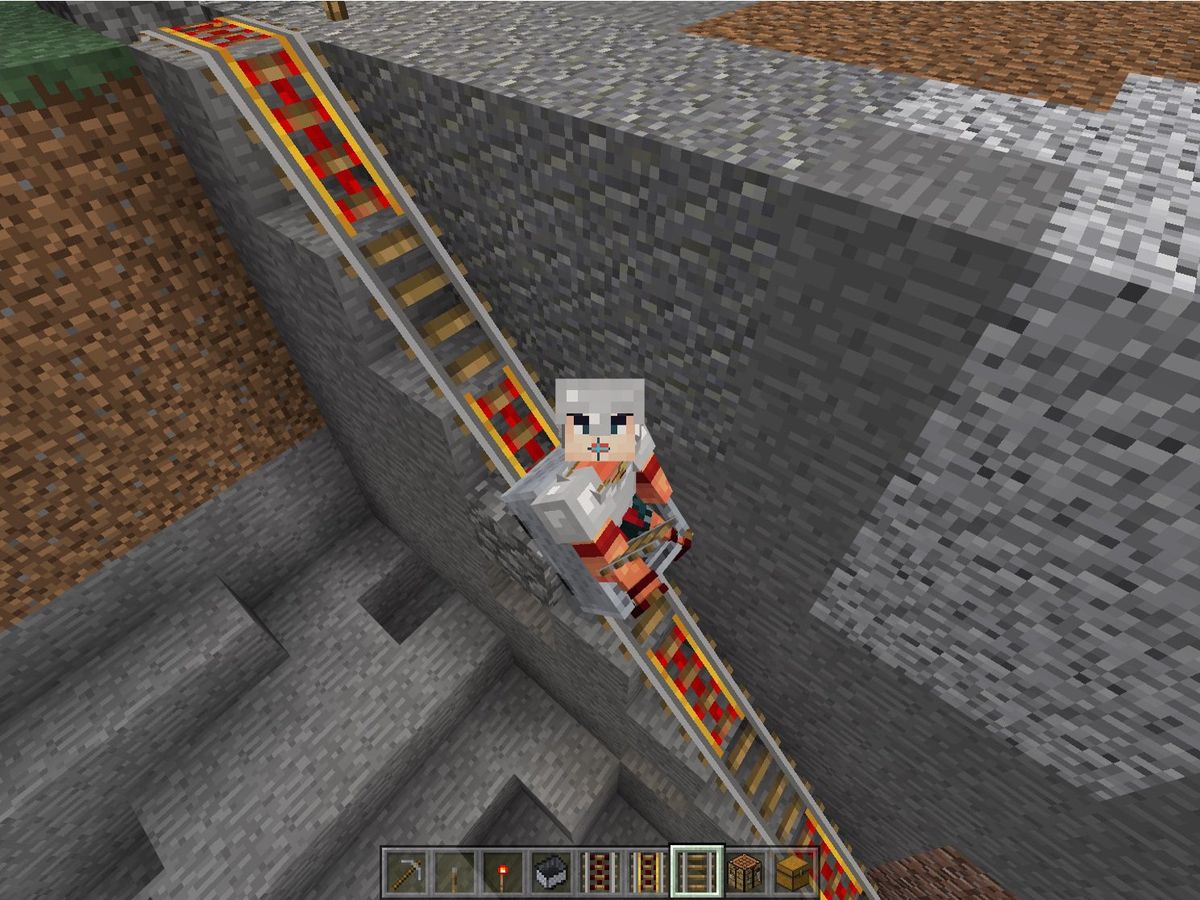
- Powered Rails: These are the “engines” of the track. Their sole purpose is to increase or maintain the velocity of a minecart. They do not interact with the contents of the cart or the entities inside.
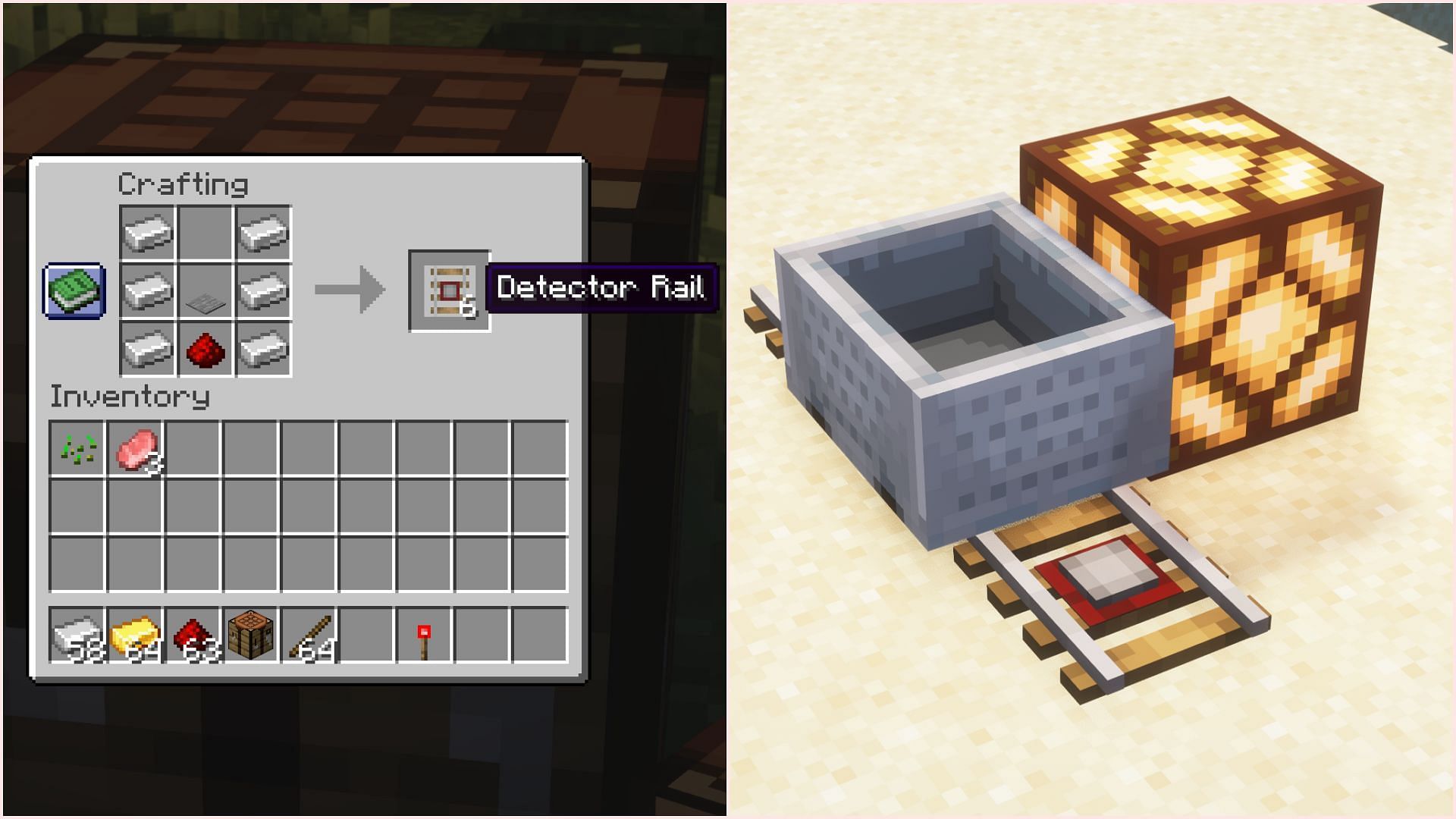
- Detector Rails: These are the “sensors.” They detect when a cart is passing over them and output a Redstone signal. They are the “Input” in a logic circuit.
- Activator Rails: These are the “actuators.” They receive a Redstone signal and tell the cart to do something. They are the “Output” in a logic circuit.
Understanding this flow—Input (Detector), Logic (Redstone wire/gates), and Output (Activator)—is the basis of computational thinking within the game.
Common Logic Errors in Rail Design
When an activator rail fails to work, it is usually due to one of two software-logic issues. First is the “Power Leak.” Because activator rails are blocks, they can sometimes be powered by accident if they are adjacent to other powered components. This can lead to Hopper Minecarts being permanently disabled.
The second issue is “Signal Timing.” For Command Block Minecarts or TNT Minecarts, the rail must be powered exactly as the cart’s hitbox enters the block’s coordinate space. If the Redstone pulse is too short (a “1-tick” pulse), the game engine may occasionally skip the activation check, leading to a failure in the automated sequence.
5. The Role of the Activator Rail in Software Simulation
The activator rail is more than just a game item; it is a manifestation of “Event-Driven Programming” within a virtual environment. By using these rails, players are essentially writing a physical script for their world to follow.
Scaling Infrastructure with Activator Logic
In large-scale “Technical Minecraft” projects—such as massive storage silos that hold millions of items—the activator rail acts as the traffic controller. It ensures that data (represented by items) is only moved when certain conditions are met. This level of granular control is what allows the Minecraft engine to simulate complex industrial processes.
Conclusion: The Impact of Granular Control
Whether you are using it to eject a villager into a trading pod, prime a TNT charge for a mining operation, or execute a line of code via a Command Block, the activator rail is an indispensable tool for the modern digital architect. It bridges the gap between simple movement and complex interaction, turning a basic rail line into a programmable transit system. By mastering the activator rail, players move beyond the role of a simple builder and into the role of a systems engineer, leveraging the internal logic of the game to create efficient, automated, and highly sophisticated digital worlds.
aViewFromTheCave is a participant in the Amazon Services LLC Associates Program, an affiliate advertising program designed to provide a means for sites to earn advertising fees by advertising and linking to Amazon.com. Amazon, the Amazon logo, AmazonSupply, and the AmazonSupply logo are trademarks of Amazon.com, Inc. or its affiliates. As an Amazon Associate we earn affiliate commissions from qualifying purchases.