
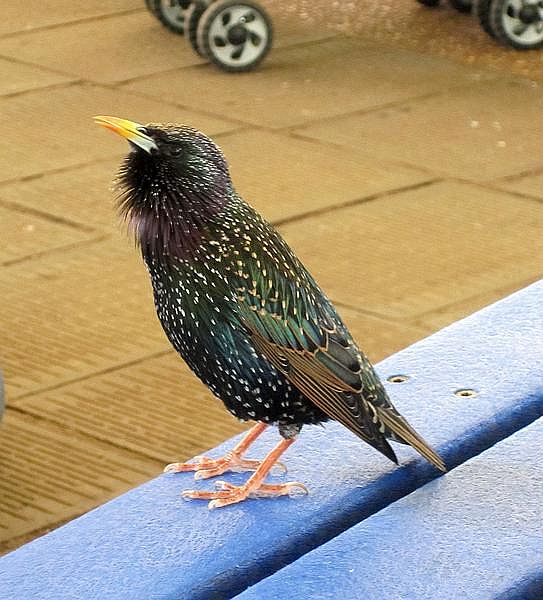
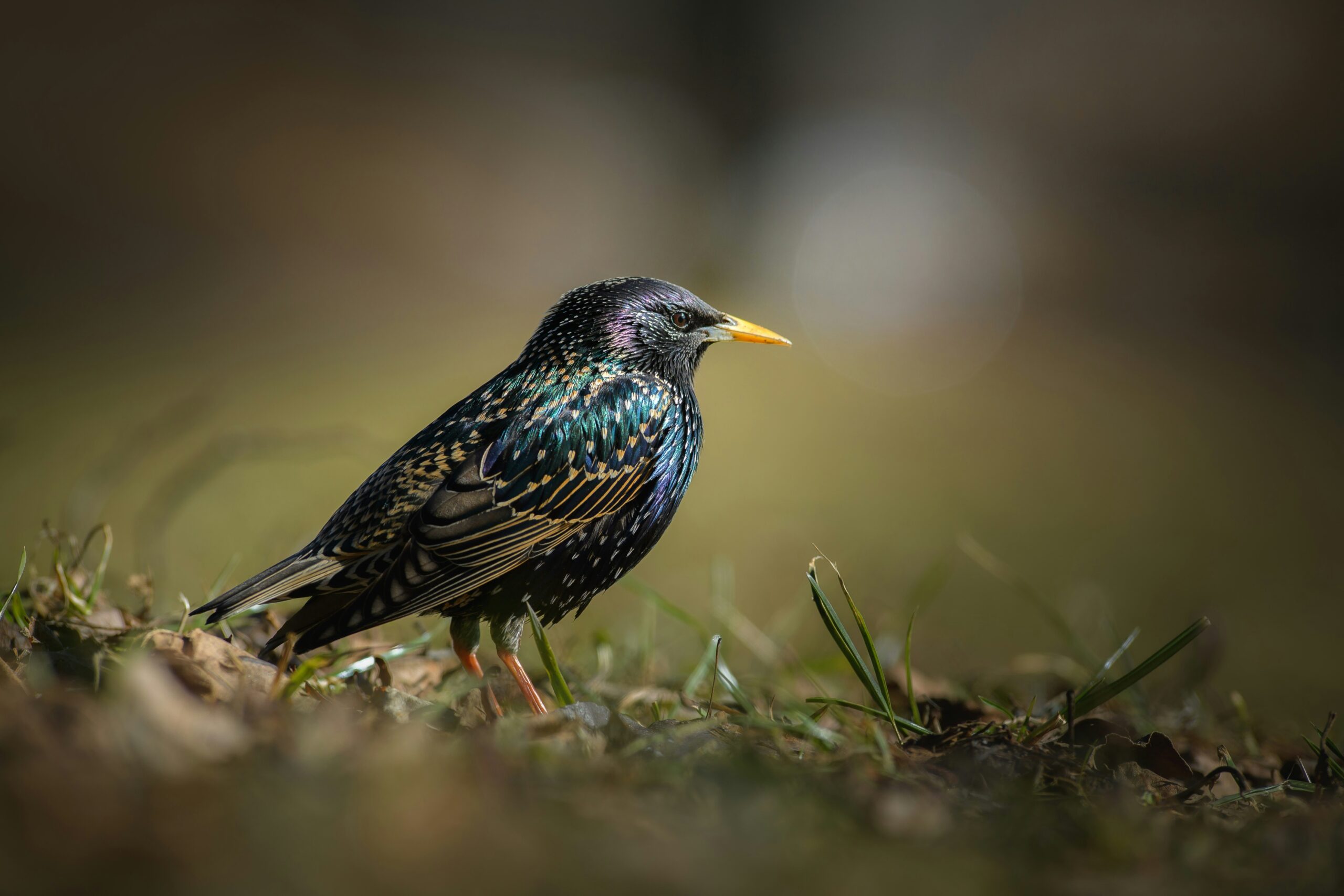
The European Starling (Sturnus vulgaris) is perhaps one of the most acoustically complex subjects in the natural world. To the casual observer, a starling sounds like a chaotic medley of whistles, clicks, and rattles. However, in the realm of modern technology, the question “what does a starling sound like?” is no longer just a matter of subjective description. Today, we answer this question using sophisticated bio-acoustic software, artificial intelligence, and high-fidelity hardware.
As we delve into the intersection of technology and ornithology, we find that the sound of a starling is a treasure trove of data. By leveraging machine learning algorithms and digital signal processing, tech enthusiasts and researchers are beginning to decode the intricate patterns hidden within the starling’s mimicry, providing us with a deeper understanding of both avian intelligence and the limits of our own audio-processing capabilities.

The Digital Fingerprint: Understanding the Starling’s Complex Audio Profile
To understand what a starling sounds like through a technological lens, we must first look at the “digital fingerprint” of their song. Unlike many birds that have a fixed repertoire of melodies, the starling is a “mimic.” This means their audio output is a high-bandwidth stream of environmental data, processed and replayed with startling accuracy.
The Mimicry Algorithm: How Starlings Process Environmental Data
From a technical standpoint, the starling functions like a biological recording and playback device with a highly advanced onboard processor. They don’t just “sing”; they sample. A starling in an urban environment might incorporate the sound of a digital camera shutter, a car alarm, or even human speech into its song.
In tech terms, this is a form of sophisticated pattern matching. The bird’s brain identifies a specific frequency range and rhythmic pattern in its environment and replicates it. Software developers working on voice recognition and synthesis often look at these biological models to understand how complex signals can be compressed and reproduced without losing the essential “character” of the sound.
Spectrogram Analysis: Visualizing Sound Waves in Tech Applications
When we ask what a starling sounds like, the most accurate answer is found in a spectrogram—a visual representation of the spectrum of frequencies in a signal as it varies with time. In bio-acoustic software, a starling’s song appears as a dense, multi-layered map.
High-frequency whistles appear as sharp, ascending lines, while the “churring” or clicking sounds show up as vertical bursts of broad-spectrum noise. By using digital spectrograms, tech professionals can isolate specific components of the starling’s song that the human ear might miss, such as ultrasonic overtones or subtle frequency modulations that define the individual “voice” of a specific bird.
AI and Machine Learning: Software Solutions for Species Identification
The explosion of Artificial Intelligence (AI) has revolutionized how we answer the question of avian identification. No longer do we need to rely solely on expert birdwatchers; we now have apps and cloud-based platforms that can identify a starling in real-time using nothing but a smartphone microphone.
Neural Networks and Pattern Recognition in Birdsong Apps
Tools like Merlin Bird ID (developed by the Cornell Lab of Ornithology) and BirdNET utilize deep learning neural networks to identify sounds. These AI models are trained on millions of recorded audio samples. When a starling sings, the app converts the audio into a spectrogram and compares it against its database.
The challenge for AI developers is the starling’s mimicry. Because a starling can sound like a hawk, a thrush, or even a mechanical object, the AI must be trained to recognize the “underlying” timbre and cadence that remain consistent despite the mimicked content. This requires an immense amount of computational power and sophisticated filtering algorithms to separate the starling’s unique tonal quality from the “noise” of its mimicry.
Large Language Models (LLMs) and the Future of Interspecies Communication
While we are currently at the stage of identification, the next frontier in tech is interpretation. Researchers are beginning to use Large Language Models (the same technology behind ChatGPT) to look for linguistic structures in starling vocalizations. Starlings are highly social creatures, and their sounds are not random; they are communicative.
By feeding vast amounts of starling audio data into LLMs, technologists hope to identify “syntax” or “grammar” in their songs. If we can map specific sound clusters to social behaviors—such as warning of a predator or coordinating a murmuration—we move from simply knowing “what” a starling sounds like to knowing “what it is saying.”
Hardware and Gadgets: Tools for Capturing the Starling’s Song
To get a high-quality answer to the question of what a starling sounds like, one requires specialized hardware. The built-in microphones on most consumer gadgets often fail to capture the full dynamic range of a starling’s vocalizations, which can span several octaves.
Parabolic Microphones and Field Recording Tech
For those serious about capturing the nuances of avian audio, parabolic microphones are the gold standard. These gadgets use a dish-shaped reflector to gather sound waves and focus them onto a single point—the microphone capsule. This allows a technician to “zoom in” on a starling from hundreds of feet away, isolating its song from the ambient noise of a forest or city.
Digital Audio Workstations (DAWs) then allow for the post-processing of these recordings. By using high-pass filters to remove low-end rumble and spectral repair tools to erase unwanted background noise, field recordists can produce ultra-high-definition audio files that reveal the “micro-clicks” within a starling’s rattle—sounds that occur too fast for the human ear to fully process in real-time.
High-Fidelity Bio-Acoustic Sensors for Urban Environments
In smart city initiatives, bio-acoustic sensors are being deployed to monitor urban biodiversity. These gadgets are essentially small, weather-proof computers equipped with high-sensitivity microphones and edge-computing capabilities.
Instead of streaming raw audio to a server (which would consume massive amounts of bandwidth), these devices process the audio locally. They are programmed to detect the specific frequency signatures of starlings and other urban birds. This data is then sent to a central hub, allowing city planners to track how bird populations respond to changes in noise pollution or green space availability.
The Impact of Audio Technology on Environmental Conservation
The technological pursuit of understanding “what a starling sounds like” has implications far beyond hobbyist curiosity. It is a vital component of modern conservation tech, providing a non-invasive way to monitor ecosystems.
Big Data in Ornithology: Mapping Migration via Sound
By deploying thousands of automated recording units (ARUs) across a continent, scientists can create a “sound map” of starling populations. This generates petabytes of data, which are processed using cloud computing. These maps allow us to see—and hear—how starling populations migrate and shift in response to climate change.
The tech used here is similar to that used in seismic monitoring or underwater sonar. By analyzing the “soundscape,” we can determine the health of an environment. A silent starling colony, for instance, might indicate a localized ecological collapse, alerting conservationists much faster than traditional visual surveys could.
Passive Acoustic Monitoring (PAM) Systems
Passive Acoustic Monitoring is a growing field in digital security and environmental tech. PAM systems operate 24/7, capturing the soundscape and using automated scripts to flag anomalies. In the context of the starling, PAM systems help researchers understand the “dawn chorus”—the peak time for avian vocalization.
The integration of PAM with IoT (Internet of Things) devices allows for real-time environmental monitoring. If a starling’s song is suddenly interrupted or changes in intensity, the system can trigger other sensors (like cameras or air quality monitors) to investigate the cause. This interconnected web of technology turns the starling’s song into a vital indicator of environmental stability.
Conclusion: The Symphony of Nature and Silicon
What does a starling sound like? It sounds like a challenge to our current technological limitations. It is a complex, multi-layered, and adaptive signal that requires our best AI, our most sensitive microphones, and our most powerful data processing tools to fully comprehend.
As we continue to refine our bio-acoustic technologies, we find that the starling is more than just a common bird; it is a masterclass in audio complexity. By studying its song through the lens of tech, we not only learn about the bird itself but also push the boundaries of how we record, analyze, and interpret the world around us. In the end, the marriage of nature’s oldest melodies and humanity’s newest innovations provides an insightful look into the future of how we interact with the digital and biological realms.
aViewFromTheCave is a participant in the Amazon Services LLC Associates Program, an affiliate advertising program designed to provide a means for sites to earn advertising fees by advertising and linking to Amazon.com. Amazon, the Amazon logo, AmazonSupply, and the AmazonSupply logo are trademarks of Amazon.com, Inc. or its affiliates. As an Amazon Associate we earn affiliate commissions from qualifying purchases.