
In the landscape of global commerce, few alphanumeric designations carry as much weight, legacy, and immediate recognition as the “F-150.” For the Ford Motor Company, these four characters represent more than just a model in a lineup; they signify a dominant brand architecture that has redefined the American automotive market for nearly half a century. While the casual observer might view the “150” as a mere technical specification, a deeper dive into corporate strategy reveals a masterclass in brand positioning, consumer psychology, and market adaptation.
The “150” in F-150 is a cornerstone of one of the most successful branding exercises in history. It represents a precise point in a hierarchy of capability, a bridge between the consumer and commercial worlds, and a symbol of reliability that has allowed Ford to maintain its position as the manufacturer of the best-selling vehicle in America for decades. To understand what the “150” means is to understand the soul of the Ford brand.
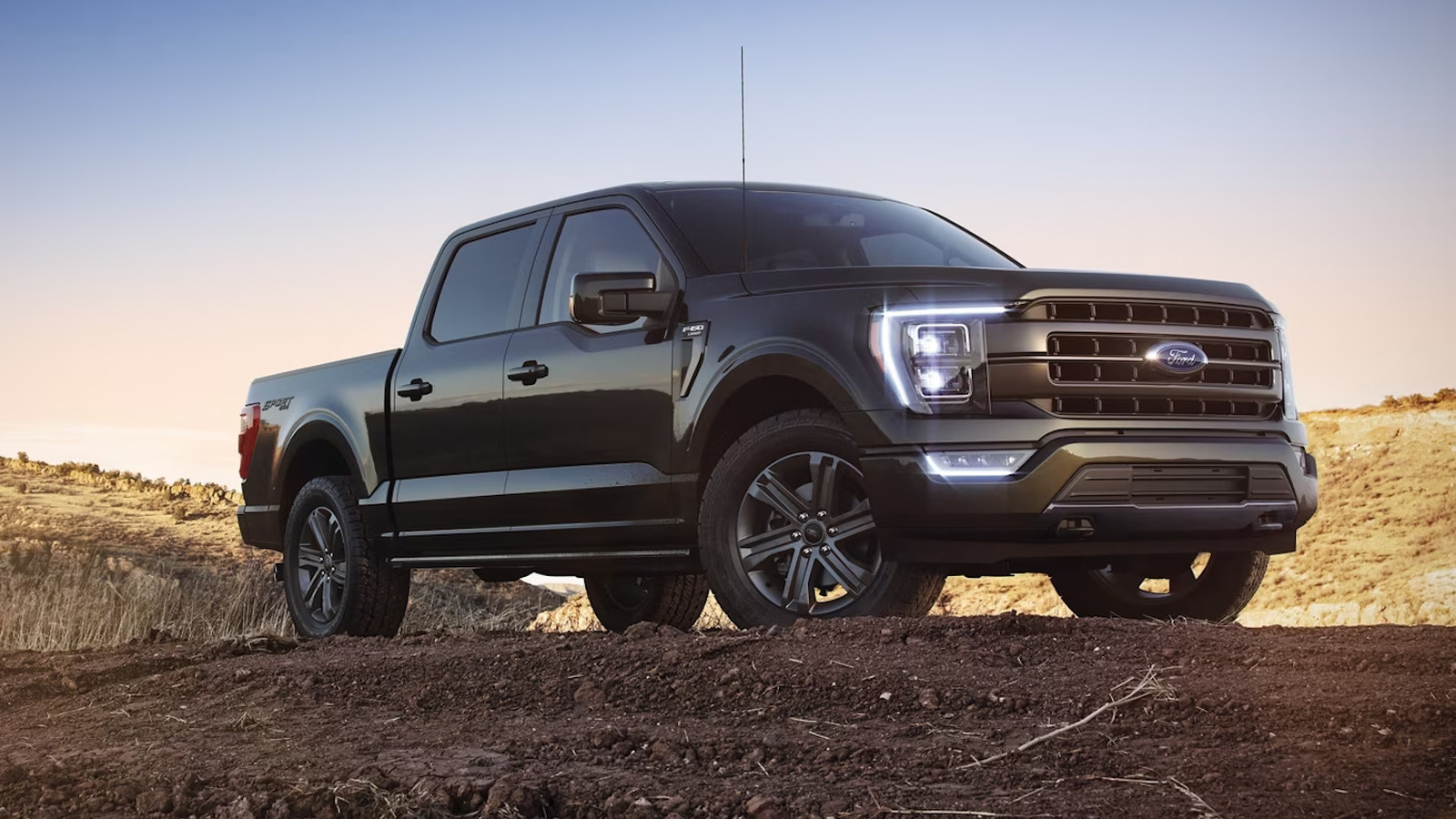
The Evolution of a Legend: From Functional Coding to Brand Iconography
The story of the F-150 is not merely one of engineering, but of strategic rebranding. Before the F-150 became a household name, Ford’s truck nomenclature followed a different logic. Understanding the transition from simple functional codes to an iconic brand name is essential to grasping the “150’s” significance.
The Transition from F-1 to F-100
Following World War II, Ford introduced the “Bonus-Built” trucks in 1948. At this time, the naming convention was straightforward: the F-1 represented the half-ton pickup, the F-2 was the three-quarter-ton, and the F-3 was the heavy-duty version. This was a purely functional naming system intended to communicate payload capacity to a primarily agrarian and industrial workforce.
In 1953, to celebrate Ford’s 50th anniversary, the company revamped the naming convention, shifting to the F-100, F-250, and F-350. This change was the first step toward “lifestyle” branding. The addition of zeros made the trucks sound more substantial and modern, moving away from the single-digit simplicity of the post-war era. The F-100 remained the flagship consumer truck for over two decades, establishing a foundation of trust under that numerical banner.
1975: The Birth of the F-150 Designation
The “150” specifically emerged in 1975. Interestingly, its origin was a clever response to environmental regulations rather than a purely creative marketing whim. At the time, the United States government was implementing stricter emission standards for “light trucks” (those under 6,000 pounds Gross Vehicle Weight Rating).
By positioning the F-150 as a “heavy” half-ton truck—sitting just above the F-100 but below the F-250—Ford was able to offer a vehicle that met the needs of consumers who required more capability while technically falling into a different regulatory category. However, what began as a tactical maneuver quickly evolved into a strategic brand asset. The F-150 offered a “sweet spot” of performance that the F-100 couldn’t match, and by the late 1980s, the F-150 had completely supplanted the F-100 as the primary face of the Ford F-Series.
Psychological Positioning: Why Numbers Matter in Automotive Branding
In the world of brand strategy, numbers are rarely chosen at random. They are used to evoke feelings of progression, power, and precision. The “150” serves a specific psychological purpose in the mind of the consumer, acting as an anchor for the brand’s identity.
The Hierarchy of Capability
The use of the number 150 creates an immediate sense of “more than.” In a market where consumers are constantly looking for the best value and the most capability, the shift from 100 to 150 suggested an upgrade. Even if the physical differences between the late-model F-100s and early F-150s were incremental, the branding suggested a 50% increase in “something”—be it power, durability, or prestige.
This numerical hierarchy allows Ford to segment its audience without alienating them. The “150” identifies the vehicle as the “Everyman’s” truck—capable enough for the job site but refined enough for the driveway. It creates a psychological “Goldilocks zone”: it is not a “basic” F-100, yet it isn’t an intimidatingly massive F-350. For the consumer, the 150 represents the perfect balance of utility and lifestyle.
Establishing Trust Through Numerical Consistency
One of the greatest challenges in branding is maintaining relevance over decades. Many automotive brands frequently change model names (e.g., Ford’s transition from the Escort to the Focus to the Fiesta). However, Ford has maintained the F-150 moniker for nearly 50 years.
This consistency has turned “F-150” into a brand in its own right, often carrying more weight than the “Ford” name itself. When a consumer hears “150,” they don’t just think of a number; they think of a specific set of values: American-made strength, longevity, and “Built Ford Tough” resilience. By sticking to the 150 designation, Ford has built a massive reserve of brand equity that competitors struggle to disrupt with new, unproven names.

The F-Series Ecosystem: Scaling the Corporate Identity
The “150” does not exist in a vacuum. Its meaning is reinforced by its position within the broader F-Series ecosystem. This “Brand Architecture” is what allows Ford to dominate multiple market segments simultaneously.
Differentiation Between Consumer and Commercial Segments
The F-150 serves as the gateway to the F-Series brand. By clearly demarcating the consumer/light-duty truck as the “150” and the Super Duty trucks as “250” and “350,” Ford creates a clear path for customer ascension. A small business owner might start with an F-150 for personal use and light hauling, but as their business grows, the branding leads them naturally up the ladder to a 250 or 350.
This naming convention creates a cohesive “family” of products. The “150” benefits from the rugged, “working man” reputation of the 350, while the 350 benefits from the technological advancements and mass-market appeal of the 150. It is a symbiotic branding relationship where the “150” acts as the high-volume flagship that funds the research and development for the entire line.
Maintaining Brand Dominance in a Competitive Landscape
In the hyper-competitive pickup truck market, the “150” acts as a defensive moat. While Chevrolet uses the “Silverado” and Ram uses the “1500,” Ford’s use of the “F-150” feels more institutional. The alphanumeric nature of the name suggests a piece of precision machinery rather than a romanticized concept (like a “Tundra” or “Titan”).
This industrial-leaning brand identity appeals to the pragmatic nature of truck buyers. It suggests that the vehicle is a tool, and tools are often identified by model numbers. By framing the F-150 as the “standard” by which all other trucks are measured, Ford has successfully positioned the 150 as the default choice in the American mind.
Modern Brand Strategy: Adapting the 150 Legacy for the Electric Era
As the automotive industry shifts toward sustainability, the F-150 brand faces its greatest challenge: how to maintain the meaning of “150” when the very technology of the vehicle is changing. Ford’s strategy in this area has been a masterclass in modern brand management.
The “Lightning” Sub-Brand: Merging Heritage with Innovation
When Ford launched its all-electric pickup, they did not call it the “E-Truck” or the “Ford Volt.” They called it the “F-150 Lightning.” This decision was crucial for the brand’s survival in an EV-dominated future. By keeping the “F-150” prefix, Ford signaled to its loyal customer base that the electric version was still a member of the family—still capable, still rugged, and still a “150.”
The “150” in this context acts as a bridge. It reassures traditionalists that the electric platform hasn’t compromised the truck’s core identity. The branding strategy here is about continuity; it suggests that while the fuel source has changed, the promise of the 150 remains the same.
Future-Proofing the Alphanumeric Signature
Looking forward, the “150” is being positioned as a platform for digital and software integration. Ford is no longer just selling a mechanical object; they are selling a connected device. The “150” now stands for “Ford Power-Up” software updates, BlueCruise hands-free driving, and Pro Power Onboard.
The brand meaning of 150 is evolving from “half-ton capability” to “complete mobile capability.” By expanding the definition of the 150 to include tech-forward features, Ford ensures that the brand remains relevant to a younger, more tech-savvy generation of buyers who value connectivity as much as towing capacity.
Conclusion: The Lasting Legacy of a Number
The “150” in the Ford F-150 is much more than a legacy weight classification or a lucky number chosen in a 1970s boardroom. It is a profound example of how a brand can take a functional designation and transform it into a cultural icon.
Through decades of consistent application, strategic psychological positioning, and a carefully managed ecosystem of related products, Ford has made the “150” synonymous with the American spirit of productivity and progress. Whether it is an old 1975 classic or a brand-new 2024 Lightning, the 150 signifies a commitment to a specific standard of excellence. In the world of brand strategy, the F-150 proves that the right name—and the right number—can create a legacy that lasts for generations.
aViewFromTheCave is a participant in the Amazon Services LLC Associates Program, an affiliate advertising program designed to provide a means for sites to earn advertising fees by advertising and linking to Amazon.com. Amazon, the Amazon logo, AmazonSupply, and the AmazonSupply logo are trademarks of Amazon.com, Inc. or its affiliates. As an Amazon Associate we earn affiliate commissions from qualifying purchases.