
When homeowners or property developers embark on a renovation project, they often focus on the aesthetic results: the lush green grass, the vibrant flower beds, and the pristine curb appeal. However, from a financial perspective, the success of these projects depends on a much more granular understanding of logistics and material procurement. One of the most common questions that arises during the budgeting phase of outdoor improvements is: “What does 1 yard of topsoil look like?”
While this sounds like a simple spatial query, it is actually a fundamental question of unit economics. In the world of real estate value and home equity, topsoil is the literal foundation of your investment. Understanding exactly how much material a “cubic yard” represents—and how to budget for it—is the difference between a project that stays under budget and one that suffers from significant financial leakage.

The Unit Economics of Landscape Design: Understanding the Cubic Yard
In the construction and landscaping industries, materials like topsoil, mulch, and gravel are sold by the cubic yard. To the uninitiated, this unit of measurement can be deceptive, leading to over-ordering (wasted capital) or under-ordering (increased delivery fees for second loads). From a financial standpoint, mastering the cubic yard is the first step in precise project management.
Why Volume Matters for Your Bottom Line
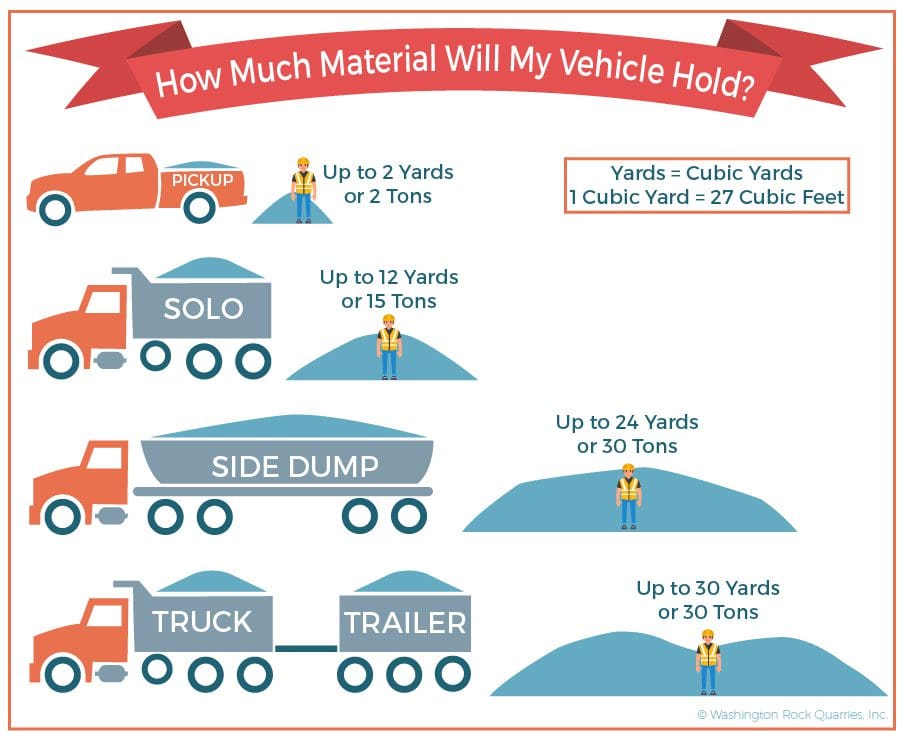
A cubic yard is a measurement of volume, defined as an area 3 feet wide, 3 feet long, and 3 feet deep. This equates to 27 cubic feet. When you are managing a budget for a large-scale project, even a slight miscalculation in depth can lead to a massive discrepancy in total cost.
For example, if you are covering a 1,000-square-foot area, the difference between a 2-inch layer and a 3-inch layer of soil is nearly 4 cubic yards. Depending on your location and the quality of the soil, that could represent a $150 to $400 variance in your procurement budget. In the context of “Money,” precision in volume measurement is the primary tool for mitigating unnecessary expenses.
The Hidden Costs of Poor Estimation
Financial leakage in landscaping often occurs through “delivery surcharges.” Most soil suppliers charge a flat delivery fee regardless of whether the truck is half-full or at maximum capacity. If you underestimate your needs and realize mid-project that you need just one more yard of soil, you may end up paying a $75 delivery fee for $30 worth of product. By visualizing exactly what a yard looks like and calculating your needs with a 10% buffer for “settling,” you optimize your capital outlay and ensure that every dollar spent on logistics is maximized.
Visualizing the Asset: The Physical and Monetary Scale of Topsoil
To manage your project’s finances effectively, you must be able to visualize the product you are paying for. When a dump truck arrives at your property, how do you know you are receiving the full value of your purchase?
The “Pickup Truck” Benchmark
The easiest way to visualize one cubic yard of topsoil is to look at a standard, full-size pickup truck. A standard short-bed pickup truck typically has a capacity of about 1.5 to 2.0 cubic yards when filled level with the top of the bed. Therefore, one cubic yard of soil will fill roughly two-thirds to three-quarters of a standard truck bed.
If you are paying for three yards of soil and it arrives in a small dump truck that is barely half-full, you have a measurement discrepancy that affects your ROI. In professional procurement, verifying the volume upon delivery is a standard practice to ensure that the “goods received” match the “invoice issued.”
Bulk vs. Bagged: Analyzing the Price Delta
From a personal finance perspective, one of the most significant decisions you will make is whether to buy soil in bulk or in bags. One cubic yard of soil is equivalent to roughly 27 bags of soil (if using the standard 1-cubic-foot bags found at hardware stores).
Let’s look at the numbers:
- Bagged Price: 27 bags at $5.00 each = $135.00.
- Bulk Price: 1 cubic yard = $30.00 to $50.00 (plus delivery).
Even with a $60 delivery fee, the bulk option often becomes more cost-effective once you exceed two cubic yards. Furthermore, bagged soil represents “dead money” in the form of plastic waste and the labor cost of opening and spreading 27 individual units. For any investment-focused property owner, bulk procurement is almost always the superior financial move.
Strategic Investment: Boosting Property Value with Ground-Level Upgrades
Topsoil is not merely “dirt”; it is a strategic asset. In the realm of real estate and “Money,” the quality of your land’s foundation dictates the health of your landscaping, which in turn dictates your property’s market value.
Topsoil as a Foundation for Real Estate ROI
Appraisal experts often cite “curb appeal” as a factor that can add 5% to 11% to a home’s value. However, high-end landscaping cannot survive without a nutrient-rich base. Investing in high-quality topsoil (often a 70/30 mix of soil and compost) ensures that your expensive plantings and sod have the biological infrastructure to thrive.
From a financial planning perspective, spending an extra $200 on premium topsoil today can prevent the “total loss” of $2,000 worth of sod or ornamental trees next season. This is a classic example of risk mitigation through quality procurement.
Tax Implications and Business Deductions for Landscaping
For real estate investors and business owners, the purchase of topsoil and the associated labor can often be categorized differently for tax purposes. If the landscaping is part of a “permanent improvement” (such as a new drainage system or a major site renovation), it may be capitalized and added to the cost basis of the property.
If you are a “fix-and-flip” investor, every yard of soil added to the property is a direct investment in the “exit price.” Keeping meticulous records of these material costs is essential for accurate capital gains calculations. For commercial properties, landscaping can sometimes be depreciated, providing a steady tax shield over several years.
Procurement Tactics: How to Save Money on Bulk Topsoil
Just as with any commodity, the price of topsoil fluctuates based on supply, demand, and seasonal cycles. To maximize your “Side Hustle” or “Business Finance” efficiency, you must approach soil procurement with a tactical mindset.
Timing the Market for Soil and Mulch
The price of topsoil often peaks in the spring when consumer demand is at its highest. If your project timeline allows for it, procurement in the late autumn or early spring can sometimes result in “off-season” discounts. Suppliers are often looking to clear inventory before the ground freezes or before the new season’s stock arrives.
Additionally, “screened” topsoil—which has been processed to remove rocks and debris—costs more than “unscreened” soil. If you are using the soil as a base layer or to fill deep holes, purchasing unscreened soil can save you 20-30% on material costs, allowing you to reserve your “premium capital” for the top two inches of finished, screened soil.
Delivery Logistics and Surcharge Optimization
The final frontier of landscaping finance is the logistics of the “last mile.” Delivery fees are often a fixed cost, meaning the more you order, the lower your “per-yard” delivery cost becomes.
If you only need 4 yards of soil, but the truck can hold 10 yards for the same delivery fee, consider partnering with a neighbor who also needs landscaping work. By splitting the delivery fee, you both lower your total project cost. In the business world, this is known as “cooperative procurement,” and it is an excellent way for small-scale property owners to exercise the same scaling power as large developers.

Conclusion: The Wealth in the Earth
What does 1 yard of topsoil look like? It looks like a strategic investment. It looks like 27 bags of potential equity. It looks like a manageable unit of a larger financial plan.
By understanding the volume, the pricing structures, and the ROI of high-quality soil, you move beyond the role of a casual gardener and into the role of a savvy asset manager. Whether you are improving your personal residence to build home equity or managing a portfolio of rental properties, every cubic yard of soil you buy should be treated as a line item in your journey toward financial optimization. Precision in measurement leads to precision in budgeting, and in the world of money, precision is the ultimate path to profit.
aViewFromTheCave is a participant in the Amazon Services LLC Associates Program, an affiliate advertising program designed to provide a means for sites to earn advertising fees by advertising and linking to Amazon.com. Amazon, the Amazon logo, AmazonSupply, and the AmazonSupply logo are trademarks of Amazon.com, Inc. or its affiliates. As an Amazon Associate we earn affiliate commissions from qualifying purchases.