
The question of what disposable battery contains a “lead rod” is one of the most common points of confusion in the world of consumer electronics and hardware engineering. To provide a definitive technical answer: standard disposable batteries—such as Alkaline or Zinc-Carbon—do not actually contain a lead rod. This misconception often arises from a confusion between the carbon (graphite) rod found in heavy-duty batteries and the lead plates found in rechargeable lead-acid batteries.
Understanding the technical composition of these power cells is essential for anyone interested in hardware design, gadget maintenance, or the broader trajectory of energy technology. As we move toward an increasingly wireless world, the “tech” inside these small canisters dictates everything from the lifespan of our devices to the efficiency of our global recycling systems.

1. The Anatomy of Disposable Cells: Carbon vs. Lead
To understand why the “lead rod” is a misnomer in the disposable world, we must look at the specific engineering of the Zinc-Carbon and Zinc-Chloride battery. These are the “Heavy Duty” batteries often sold as budget-friendly disposable options.
The Role of the Graphite Electrode
In a traditional Zinc-Carbon battery, the central rod is made of graphite (a form of carbon), not lead. This rod acts as a current collector. Its technical purpose is to provide a conductive path for electrons to move from the cathode (the manganese dioxide paste) to the external circuit. Graphite is chosen for this specific tech application because it is highly conductive, chemically inert, and capable of withstanding the internal pressures of the chemical reaction without degrading.
Why the Lead Misconception Persists
The confusion regarding lead rods typically stems from two sources. First, the weight of heavy-duty batteries can lead consumers to assume a heavy metal like lead is present. Second, “Lead-Acid” technology is ubiquitous in the automotive and industrial sectors. In those systems, lead plates and rods are used extensively. However, lead-acid tech is almost exclusively rechargeable. Applying lead to a disposable, primary-cell format would be technically inefficient and environmentally disastrous, given the high toxicity of lead compared to zinc or carbon.
Chemical Transitions in Hardware Design
The technology behind disposable batteries has largely migrated away from the central rod design altogether. Modern Alkaline batteries—the gold standard for consumer tech—utilize a different internal geometry. Instead of a central carbon rod, they use a “nail” or “collector” made of brass or copper, surrounded by a granulated zinc anode and a manganese dioxide cathode. This shift allowed for higher energy density and a longer shelf life, marking a significant milestone in portable power tech.
2. Lead-Acid Technology: Where Lead Actually Resides
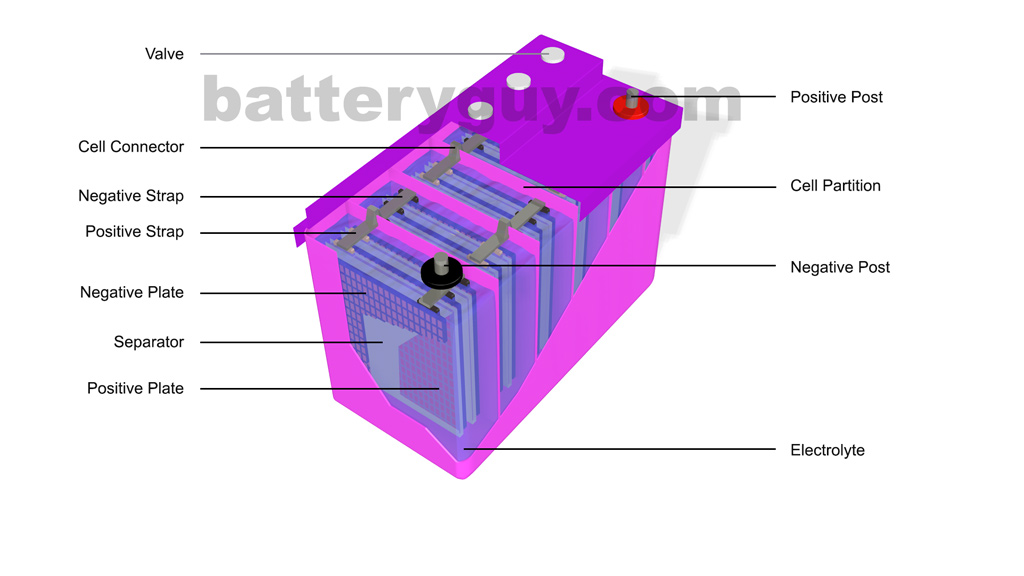
While lead is absent from your AA or AAA disposable batteries, it remains a cornerstone of stationary and mobile energy storage technology. If you are looking for a battery with a lead-based internal structure, you are looking at the Lead-Acid category.
The Engineering of Flooded Lead-Acid (FLA) Batteries
In these units, the internal structure consists of a series of lead plates (the anode) and lead dioxide plates (the cathode) submerged in an electrolyte of sulfuric acid. These are not rods in the cylindrical sense, but rather a grid-like framework. This technology is preferred in tech sectors that require high “surge” currents, such as starting internal combustion engines or providing emergency backup power for telecommunications hubs.
Sealed Lead-Acid (SLA) and AGM Tech
A more advanced iteration of lead-based technology is the Absorbed Glass Mat (AGM) battery. In this tech, the electrolyte is held in glass mats rather than floating freely. From a technical standpoint, this makes the battery “maintenance-free” and spill-proof. You will find these powering high-end uninterruptible power supplies (UPS) that protect servers and data centers. The lead components here are engineered for longevity and deep discharge cycles, a feat that carbon-rod disposables cannot match.
Comparative Technical Efficiency
When comparing the lead-based rechargeable tech to the carbon-based disposable tech, the differences are stark. Lead-acid batteries have a low energy-to-weight ratio, but they offer incredible power-to-weight ratios. This means they can provide a massive burst of energy (tech-speak: high CCA or Cold Cranking Amps) which is why they remain the standard for automotive tech despite the rise of Lithium-ion alternatives.
3. The Shift Toward High-Performance Cathode Materials
The tech industry is currently in a state of rapid evolution regarding battery chemistry. We are moving away from the simple rod-and-paste architecture of the 20th century toward sophisticated, nano-engineered materials.
Lithium-Ion and the End of the “Rod”
In modern gadgets—smartphones, laptops, and high-end flashlights—the “rod” architecture has been entirely replaced by layered or coiled “jelly roll” designs. Lithium-ion technology uses lithium cobalt oxide or lithium iron phosphate as the cathode. There is no central rod; instead, thin foils of copper and aluminum act as current collectors, layered with active materials and a separator. This allows for the slim form factors required by modern consumer electronics.
Nickel-Metal Hydride (NiMH) Innovation
Before Lithium-ion became the industry standard, NiMH was the dominant rechargeable tech for high-drain devices. NiMH batteries were designed to be direct replacements for disposable AA and AAA batteries. Technically, they lack a lead or carbon rod, instead using a hydrogen-absorbing alloy for the negative electrode. This tech provided a bridge between the old-school disposable “rod” design and the modern high-density power cells we use today.
Solid-State Battery Research
The future of battery tech lies in “Solid-State” hardware. In this emerging field, the liquid or paste electrolyte is replaced by a solid ceramic or polymer material. This removes the need for any internal rod structure and eliminates the risk of leakage or fire. For the tech enthusiast, this represents the “holy grail” of energy: a battery that is safer, denser, and faster to charge than anything previously designed with carbon or lead.
4. Digital Management and Smart Battery Hardware
As battery hardware has become more complex, the technology required to manage that hardware has evolved in tandem. No longer is a battery just a “dumb” chemical cell; in the modern tech ecosystem, it is part of a sophisticated Digital Power Management System (DPMS).
Battery Management Systems (BMS)
In any device using advanced battery tech, a BMS chip is present. This piece of hardware monitors the voltage, temperature, and “state of charge” of the cells. While a disposable battery with a carbon rod has no internal intelligence, a modern power pack uses a BMS to prevent overcharging and to balance the load across multiple cells. This technical layer is what allows your laptop to last for ten hours or your electric vehicle to travel hundreds of miles safely.
IoT and Battery Health Monitoring
With the rise of the Internet of Things (IoT), battery tech is becoming “connected.” Industrial-grade batteries (like the lead-acid banks in cell towers) now feature sensors that transmit health data to the cloud. This allows for predictive maintenance—using AI algorithms to determine exactly when a battery will fail before it actually happens. This is a far cry from the days of simply checking if a disposable battery had “leaked” its internal paste.
The Software Layer of Energy Efficiency
Software optimization is the silent partner of battery hardware. Tech giants like Apple and Google spend millions of hours optimizing operating systems to reduce “background draw.” Even if the battery chemistry (the hardware) remains static, improvements in software can effectively “increase” battery life by managing how the hardware requests energy from the cell.
5. Environmental Tech: The Lifecycle of Lead and Carbon
The technical discussion of battery components is incomplete without addressing the “End of Life” (EoL) protocols. The materials inside a battery—whether lead, carbon, or lithium—require specific technical processes for recovery.
The Circular Economy of Lead-Acid Batteries
Lead-acid batteries are a triumph of recycling technology. Over 99% of lead-acid batteries in the United States and Europe are recycled. The lead is melted down, the plastic casing is pelletized, and the sulfuric acid is neutralized or reclaimed. This high rate of recovery is possible because the “lead rod” and plate structure is easy to separate and purify compared to the complex mixtures found in modern disposables.
The Challenge of Recycling Disposables
Zinc-Carbon and Alkaline batteries (those with the graphite rod) are significantly harder to recycle profitably. While the steel casing and some metals can be recovered, the process is energy-intensive. From a technical standpoint, many municipalities still struggle with disposable battery waste, leading to a push for “rechargeable-only” hardware standards in certain tech sectors to reduce environmental impact.
Green Tech and Lead-Free Initiatives
As environmental regulations tighten, the tech industry is under pressure to find alternatives to heavy metals. This has led to the “RoHS” (Restriction of Hazardous Substances) compliance standards found on most electronics. While lead remains necessary for certain high-load applications, the trend is moving toward “Lead-Free” energy solutions, utilizing advanced carbon nanotubes and graphene to replace traditional electrodes, potentially bringing the “carbon rod” concept full circle into the 21st century.
In summary, if you are looking for a disposable battery with a lead rod, you are likely looking for a Zinc-Carbon battery and misidentifying its graphite (carbon) rod. If you require the power of lead-based components, you must look toward the Rechargeable Lead-Acid category used in automotive and industrial tech. As battery technology continues to evolve, the physical “rod” is slowly disappearing, replaced by sophisticated layers of nano-materials and smart software management, ensuring that our gadgets remain powered, portable, and increasingly efficient.
aViewFromTheCave is a participant in the Amazon Services LLC Associates Program, an affiliate advertising program designed to provide a means for sites to earn advertising fees by advertising and linking to Amazon.com. Amazon, the Amazon logo, AmazonSupply, and the AmazonSupply logo are trademarks of Amazon.com, Inc. or its affiliates. As an Amazon Associate we earn affiliate commissions from qualifying purchases.