
In the high-stakes ecosystem of Hollywood “tentpole” filmmaking, an age rating is far more than a parental guide; it is a critical financial determinant that dictates a project’s Total Addressable Market (TAM). When Universal Pictures and Warner Bros. Pictures set out to revive the disaster-epic franchise with Twisters, the decision to secure a PG-13 rating was not merely a creative choice—it was a calculated business strategy aimed at maximizing Return on Investment (ROI). For a film with a production budget estimated at $155 million, the delta between a PG-13 and an R rating can represent hundreds of millions of dollars in global box office revenue.
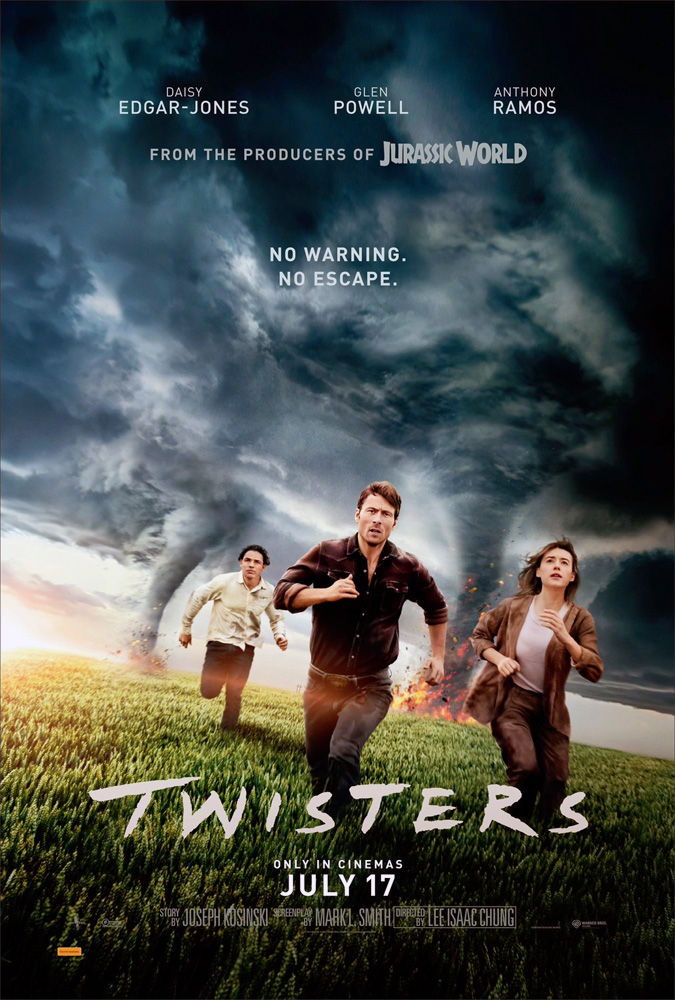
This article explores the fiscal implications of the PG-13 rating for Twisters, examining how content classification influences investor confidence, distribution scaling, and the long-term valuation of the intellectual property (IP).
The Economics of the PG-13 Tier: Maximizing the Total Addressable Market
The PG-13 rating serves as the “sweet spot” of the modern cinematic economy. For Twisters, this classification ensures that the film is accessible to the broadest possible demographic, ranging from nostalgic Gen Xers who saw the 1996 original to Gen Z audiences looking for high-octane spectacle.
The Four-Quadrant Strategy
In financial terms, a “four-quadrant” movie is one that appeals to all major demographic silos: men and women, both under and over the age of 25. By maintaining a PG-13 rating, Twisters successfully captures the “family” segment without alienating the “prestige action” segment. From a revenue perspective, this prevents “audience leakage.” If the film had skewed toward an R rating due to excessive intensity or graphic casualties, it would have effectively alienated the under-17 demographic and their parents, a segment that often accounts for 30% to 40% of opening weekend ticket sales for summer blockbusters.
Revenue Scalability and the Multiplier Effect
The PG-13 rating allows for high “multiplier” potential—the ratio of a film’s total domestic gross to its opening weekend. Movies that allow for repeat viewings by teenagers and family groups tend to have “longer legs” at the box office. For investors, a PG-13 rating reduces the volatility of the investment. It provides a safety net, ensuring that even if the film lacks the critical acclaim of an Oscar-contender, its sheer accessibility will drive consistent popcorn-sales revenue through the summer corridor.
Production Budgeting and Risk Management in the Disaster Genre
Disaster movies like Twisters are notoriously capital-intensive. The financial architecture of such a film requires a massive upfront investment in Visual Effects (VFX), practical stunts, and high-tier marketing. To justify a $155 million spend, the production must mitigate risks at every stage.
The ROI of Visual Effects (VFX)
A significant portion of the Twisters budget was allocated to Industrial Light & Magic (ILM) to create hyper-realistic weather patterns. In the business of disaster cinema, the “spectacle” is the primary product. Investors view high-quality VFX as a tangible asset that justifies premium ticket pricing, such as IMAX and 4DX formats. These premium formats often carry a 20% to 50% surcharge over standard tickets, directly boosting the per-screen average. The PG-13 rating is essential here; IMAX and 4DX theaters prioritize wide-release, family-accessible content to maximize their high-overhead operations.
Mitigating Risk through Global Distribution Rights
The rating also impacts international financial recoupment. Many international markets, particularly in Asia and the Middle East, have stringent censorship boards. An R-rated film often requires expensive re-edits or faces outright bans, which can jeopardize the “International Box Office” (IBO) projections. By producing Twisters with a PG-13 framework in mind, the studios ensured a “clean” product that could be exported globally with minimal friction, securing a faster path to break-even.

Monetizing the Franchise through Ancillary Revenue Streams
The financial lifecycle of Twisters extends far beyond its theatrical window. The age rating plays a pivotal role in the valuation of ancillary rights, which include streaming licenses, television syndication, and brand partnerships.
The Streaming Premium and Digital Licensing
In the current “Streaming Wars” climate, the value of a film’s SVOD (Subscription Video on Demand) rights is tied to its viewership potential. Platforms like Peacock (NBCUniversal) or Max (Warner Bros. Discovery) value PG-13 content more highly because it serves as “sticky” content—films that the whole family can watch together, reducing churn rates. A PG-13 Twisters is a versatile asset for a streaming library, fitting into “Action,” “Family Movie Night,” and “Trending” categories simultaneously.
Cross-Brand Partnerships and Sponsorships
From a marketing perspective, a PG-13 rating makes a film “brand-safe.” Twisters features significant product placement and promotional tie-ins, most notably with automotive brands like Ram Trucks. Corporate sponsors are often hesitant to align their brands with R-rated content due to potential PR blowback or restricted reach. The PG-13 rating enabled Twisters to secure multi-million dollar promotional partnerships that subsidized the film’s massive marketing “P&A” (Print and Advertising) spend. These partnerships act as a form of “free” media, amplifying the film’s reach through commercials and retail displays that the studio doesn’t have to pay for directly.
The Cost of Content Regulation: Global Ratings and Market Entry
While the PG-13 rating is a North American standard, its equivalent in other territories determines the film’s “Global Market Entry” strategy. Navigating these regulatory waters is a specialized field within film finance.
International Classification and Revenue Leakage
In territories like the UK (where the BBFC gave it a 12A rating) or Australia (M rating), the classification remains consistent with the “accessible” strategy. However, if a film’s intensity levels fluctuate, it risks a “15” rating in certain markets, which can cause significant revenue leakage. For Twisters, the production team likely worked with “compliance consultants” during the editing phase to ensure that the intensity of the storm sequences pushed the envelope of excitement without crossing the threshold into a restrictive rating. This “surgical editing” is a common financial tactic to protect the bottom line.
Intellectual Property (IP) Valuation and Future Cash Flows
Ultimately, the rating of Twisters affects the long-term valuation of the franchise. A successful PG-13 reboot proves that the IP is “evergreen” and can support sequels, spin-offs, or even theme park attractions (similar to the original Twister ride at Universal Studios). In the eyes of shareholders, a PG-13 rating validates the franchise as a sustainable revenue generator rather than a one-off niche experiment. It transforms the movie from a creative project into a reliable “cash cow” for the studio’s balance sheet.

Conclusion: The Bottom Line on PG-13
The question “what age rating is Twisters” is often asked by parents, but for the CFOs of Universal and Warner Bros., the answer—PG-13—is the cornerstone of the film’s financial viability. By positioning the film within this specific regulatory tier, the producers secured a massive global audience, minimized international distribution risks, and maximized ancillary revenue opportunities.
In the modern blockbuster economy, the art of the “Disaster Movie” is secondary to the science of “Market Capture.” Twisters stands as a masterclass in how a rating can be leveraged as a financial tool to turn a $155 million risk into a diversified, multi-platform success. The PG-13 badge is not just a warning for parents; it is a green light for global commerce.
aViewFromTheCave is a participant in the Amazon Services LLC Associates Program, an affiliate advertising program designed to provide a means for sites to earn advertising fees by advertising and linking to Amazon.com. Amazon, the Amazon logo, AmazonSupply, and the AmazonSupply logo are trademarks of Amazon.com, Inc. or its affiliates. As an Amazon Associate we earn affiliate commissions from qualifying purchases.