
In the contemporary financial landscape, the definition of a “blue-chip” investment is undergoing a radical transformation. While traditional portfolios have long been anchored by equities, bonds, and real estate, a new frontier of alternative assets has emerged, commanded by high-net-worth individuals and institutional speculators alike. At the pinnacle of this movement sits a surprising contender: a small piece of cardstock featuring a Japanese cartoon character.
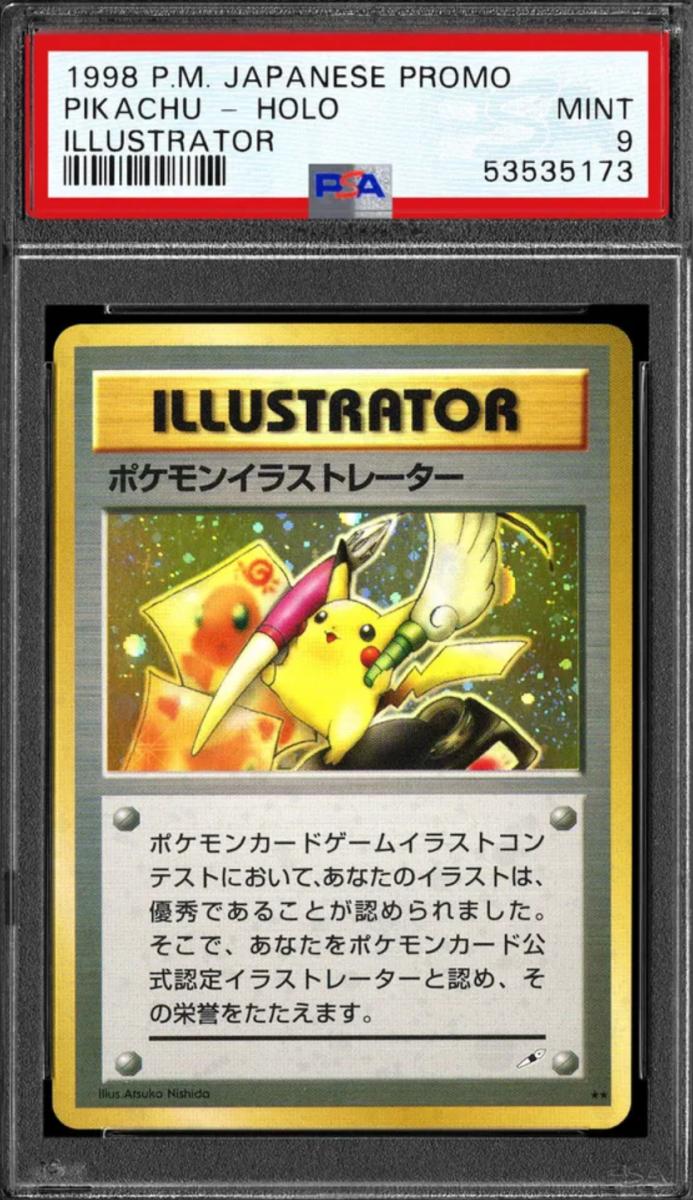
The quest to identify the most expensive Pokémon card in the world is no longer a matter of playground trivia; it is a study in market scarcity, speculative bubbles, and the institutionalization of collectibles. As of 2024, the record is held by the PSA 10 Pikachu Illustrator card, which commanded a staggering valuation of $5.275 million. To understand how a hobbyist’s item reached a price point equivalent to a luxury villa in the French Riviera, one must look through the lens of high-stakes finance and asset management.

The Rise of Alternative Assets: Why Pokémon Cards Are Now Serious Business
The transformation of Pokémon cards from a 1990s fad into a legitimate asset class is a phenomenon driven by several macroeconomic factors. For investors, the appeal lies in the “uncorrelated” nature of the asset; the value of a rare Charizard does not necessarily fluctuate in tandem with the S&P 500 or the price of crude oil.
The Shift from Hobby to Investment Vehicle
For decades, Trading Card Games (TCGs) were viewed through the lens of utility—they were meant to be played. However, as the initial generation of fans entered their peak earning years, the market witnessed a massive influx of capital. This “nostalgia equity” converted sentimental value into market liquidity. Investors began to treat “Holy Grail” cards as “paper gold,” seeking out assets with fixed supplies that could serve as a hedge against inflation.
Market Liquidity and the “Nostalgia Economy”
The 2020 global pandemic acted as a catalyst for the collectibles market. With a surplus of disposable income and a surge in digital auction participation, the “nostalgia economy” exploded. Platforms like Goldin Auctions and Heritage Auctions began reporting record-breaking quarters, specifically driven by TCG sales. The liquidity of the market improved significantly as professional grading services standardized the quality of the assets, making them easier to trade across borders without physical inspection by the buyer.
Analyzing the World’s Most Expensive Card: The Pikachu Illustrator
To understand the $5.275 million valuation of the Pikachu Illustrator card, one must examine the specific financial mechanics of the transaction. This was not a standard retail purchase but a strategic acquisition that combined cash, trade-in value, and brand positioning.
Provenance and Rarity: The $5.275 Million Valuation
The Pikachu Illustrator card is unique because it was never released in a commercial booster pack. It was a prize awarded to winners of an illustration contest in 1997 and 1998. Only 39 copies were originally distributed, and only a fraction of those have been accounted for today.
The record-breaking sale involved media personality Logan Paul, who purchased a PSA 10 (Gem Mint) copy in a private sale. The transaction consisted of $4 million in cash plus a PSA 9 Illustrator card valued at $1.275 million. From an investment perspective, this trade highlighted the exponential “grade premium”—the massive gap in value between a “Mint” card and a “Gem Mint” card.
The Logan Paul Effect and Market Momentum
The acquisition was a masterclass in personal branding and asset appreciation. By wearing the card as a necklace during a high-profile wrestling event, Paul effectively marketed the asset to a global audience, further driving up the perceived value of the “Illustrator” brand. This event demonstrated how celebrity endorsement and public visibility can act as a “force multiplier” for an asset’s valuation, independent of the card’s intrinsic rarity.
Valuation Metrics: What Drives the Price of High-Value Collectibles?
In the world of finance, an asset is only worth what a willing buyer will pay. However, in the TCG market, that willingness is calculated using specific metrics that mirror the due diligence found in art or wine investment.
The Role of Professional Grading (PSA and BGS)
The backbone of the high-end Pokémon market is the third-party grading system, primarily led by Professional Sports Authenticator (PSA) and Beckett Grading Services (BGS). Grading transforms a subjective “nice-looking card” into a certified, liquid asset.
- Authentication: Ensuring the card is not a sophisticated counterfeit.
- Condition Analysis: Measuring centering, corners, edges, and surface under magnification.
- The Population Report: This is perhaps the most critical financial tool. It tells investors how many copies of a card exist in a specific grade. If a card is a “Pop 1” (meaning only one exists in that condition), its price is essentially decoupled from the rest of the market, allowing for astronomical price discovery.
Scarcity vs. Demand: The Economics of Supply
The most expensive cards, like the First Edition Shadowless Charizard or the Illustrator, benefit from an “inelastic supply.” No more 1998 Illustrator cards will ever be printed. As institutional investors and “whales” (high-net-worth buyers) enter the market, they compete for a shrinking pool of available “Gem Mint” specimens. This supply-demand imbalance is what drives prices from the thousands into the millions.
Strategic Investing in the TCG Market
For those looking to enter the “Money” side of Pokémon, it is essential to approach the market with the same rigor one would apply to a stock portfolio or a venture capital fund.
Risk Management and Diversification
Investing millions into a single card carries significant “concentration risk.” If interest in the Pokémon brand wanes or if a cache of previously lost cards is discovered (increasing the population count), the value could plummet. Savvy investors diversify by holding:
- Blue-Chip Assets: High-grade cards from the earliest sets (1996–1999).
- Sealed Product: Unopened vintage booster boxes, which offer “Schrödinger’s Value”—the potential for a high-grade card inside, which often appreciates more steadily than the cards themselves.
- Modern Rarity: High-end “Alt Arts” from recent sets that have high demand but higher supply.
Tax Implications and Long-term Holding
In many jurisdictions, including the United States, high-value trading cards are treated as “collectibles” for tax purposes. This means they may be subject to a higher capital gains tax rate (often 28%) compared to standard stocks. Furthermore, the costs of insurance, climate-controlled storage, and security must be factored into the total “Carry Cost” of the investment. A $5 million card is not just a piece of paper; it is a liability that requires professional-grade protection.

The Future of High-Value TCGs as a Legitimate Asset Class
The $5.275 million price tag of the Pikachu Illustrator has forever changed the perception of TCGs. We are now seeing the “securitization” of Pokémon cards, where platforms allow investors to buy “shares” of a high-value card, similar to how one might buy fractional shares of Amazon or Apple.
As we move forward, the integration of blockchain technology for digital certificates of authenticity and the continued interest from auction houses suggest that the most expensive Pokémon cards will continue to be treated as serious financial assets. While the “bubble” may fluctuate, the fundamental drivers—scarcity, cultural significance, and the professionalization of the market—ensure that these cards will remain at the forefront of the alternative investment world.
For the modern investor, the lesson is clear: value is no longer confined to the boardroom or the trading floor. Sometimes, the most lucrative “side hustle” or “long-term hold” is sitting in a reinforced plastic slab, waiting for the next record-breaking auction.
aViewFromTheCave is a participant in the Amazon Services LLC Associates Program, an affiliate advertising program designed to provide a means for sites to earn advertising fees by advertising and linking to Amazon.com. Amazon, the Amazon logo, AmazonSupply, and the AmazonSupply logo are trademarks of Amazon.com, Inc. or its affiliates. As an Amazon Associate we earn affiliate commissions from qualifying purchases.