
The intersection of history and technology often hinges on the outcome of a few decisive moments. When considering the prompt “what would have happened if Germany won World War 2,” we must look past the geopolitical consequences and analyze the structural shift in technological evolution. War has always been a primary catalyst for innovation, and a global victory for the Axis powers would have redirected the trajectory of the 20th and 21st centuries away from the consumer-driven digital revolution of Silicon Valley and toward a state-centralized, military-industrial tech paradigm.
In this alternative timeline, the technological landscape would not be defined by open-source collaboration or the democratization of information. Instead, we would see a world dominated by “Wunderwaffen” (wonder weapons) legacy systems, hyper-advanced rocketry, and a digital infrastructure built entirely on surveillance and state control.

The Rocketry Renaissance: From V-2s to Interplanetary Colonization
One of the most immediate technological consequences of an Axis victory would have been the accelerated development of aerospace engineering. The V-2 rocket program, led by Wernher von Braun at Peenemünde, was decades ahead of Allied counterparts. In a post-war era where the Third Reich controlled global resources, the “Space Race” would not have been a competition between two superpowers, but a unilateral expansion of German orbital dominance.
Peenemünde’s Legacy and the Early Space Race
Without the “Operation Paperclip” that brought German scientists to the United States, the focus of rocket science would have remained in Germany. By the 1950s, it is likely that the first satellite would have been launched from a site in German-occupied Europe. The objective of such a program would not have been scientific exploration in the spirit of the Apollo missions, but rather the establishment of a “Global Positioning System” focused on military targeting and the deployment of orbital weaponry. The technical specifications of these rockets would have prioritized payload capacity and precision guidance over the civilian-friendly safety protocols we see in modern aerospace today.
The “Amerika Bomber” and Sub-Orbital Travel
The Reich’s obsession with long-range strategic dominance led to the conceptualization of the Silbervogel (Silver Bird), a sub-orbital liquid-propellant rocket bomber. Had Germany won, this technology would have likely evolved into the world’s first supersonic commercial transport system—albeit one reserved for the party elite. We would have seen the emergence of sub-orbital “Antipodal” flights decades before the Concorde or SpaceX’s Starship, fundamentally altering global logistics and high-speed transit.
Information Control: The Evolution of Cryptography and Computation
In our timeline, the computer age was birthed through the necessity of breaking German codes (Enigma) and the subsequent development of the transistor at Bell Labs. In an alternate reality where Germany emerged victorious, the computing landscape would have looked radically different, likely built upon the foundations laid by Konrad Zuse, the inventor of the Z3—the world’s first working programmable, fully automatic digital computer.
From Enigma to State-Managed Mainframes
While the Allies focused on decryption, the German tech sector would have focused on the perfection of encryption and automated administration. The Zuse lineage of computers would have likely become the standard for the European continent. These machines would have been massive, state-funded mainframes designed to manage the complex logistics of a sprawling empire. The focus of software development would have been “Planung” (Planning)—large-scale algorithmic resource management and population tracking, rather than the decentralized personal computing we know today.
The Pan-European Information Network (The Reich-Net)
The internet as we know it—a decentralized, peer-to-peer network designed to survive a nuclear strike—would likely not exist. Instead, the tech sector would have developed a centralized “Reich-Net.” This would be a proprietary, closed-circuit information system designed to disseminate state information and facilitate communication between government bureaus. The protocols would be highly structured, lacking the “Wild West” flexibility of the TCP/IP protocols. In this environment, digital security would not be about protecting the user from the state, but about protecting the state from internal and external “subversion.”

Industrial Automation and the “Volk” Gadgetry
The German engineering philosophy has always prioritized precision, durability, and “Vorsprung durch Technik” (Progress through Technology). In a world where they dominated the global market, the consumer gadgets we take for granted—smartphones, home appliances, and automobiles—would reflect a different aesthetic and functional priority.
Engineering Superiority: The Rise of Robotic Manufacturing
The Reich faced chronic labor shortages despite its vast territorial gains. This economic pressure would have driven a massive investment in industrial robotics and automation long before the 1980s. We can envision a 1960s Germany that utilized primitive AI and robotic arms to man its factories in the Ruhr Valley. The “smart factory” would have been an earlier reality, focusing on the high-speed production of standardized “Volks-products.” These would be high-quality, long-lasting goods designed for the “ideal” citizen, emphasizing utility over the planned obsolescence typical of Western capitalism.
Consumer Tech in a Controlled Society
Consumer electronics would have likely followed the “Volksempfänger” (People’s Radio) model—affordable, high-quality devices that were technically limited to ensure they could only receive state-sanctioned broadcasts. If a “German Smartphone” had been developed in this timeline, it would have been a masterpiece of hardware engineering—perhaps with a titanium casing and a revolutionary battery—but its software would be a locked-down ecosystem. There would be no “App Store” of independent developers; every application would be a government-vetted tool for productivity or authorized entertainment.
Genetic Engineering and the Dark Side of Biotech
Perhaps the most harrowing shift in technology would have occurred in the biological sciences. The Nazi regime’s obsession with eugenics and racial purity would have fundamentally redirected the field of genetics. In our timeline, the discovery of the double helix led to a revolution in medicine and agriculture. In a German-won world, biotech would have been the ultimate tool for social engineering.
The Dark Side of Biotech: Eugenics and Digital Identity
Molecular biology would have been fast-tracked not to cure rare diseases for all, but to identify and categorize populations based on genetic markers. This would have led to an early version of “Digital Bio-Identity.” Citizens might have been required to carry “Genetic Passports” embedded with micro-circuitry (an early form of RFID or NFC tech) containing their biological profile. The integration of biotechnology and digital surveillance would have created a “technocratic caste system,” where one’s access to tech, travel, and resources was determined by their genetic data.
Health Monitoring and National Efficiency
On a more functional level, the Reich would have likely excelled in “Performance Tech.” This includes the development of advanced synthetics, performance-enhancing pharmaceuticals, and wearable health monitors designed to ensure the labor force remained at peak physical efficiency. The concept of “Bio-hacking” would not be a fringe hobby for Silicon Valley executives, but a state-mandated requirement for soldiers and workers. This would have pushed the boundaries of prosthetic limbs and neural interfaces, though the ethical framework surrounding these advancements would be non-existent.
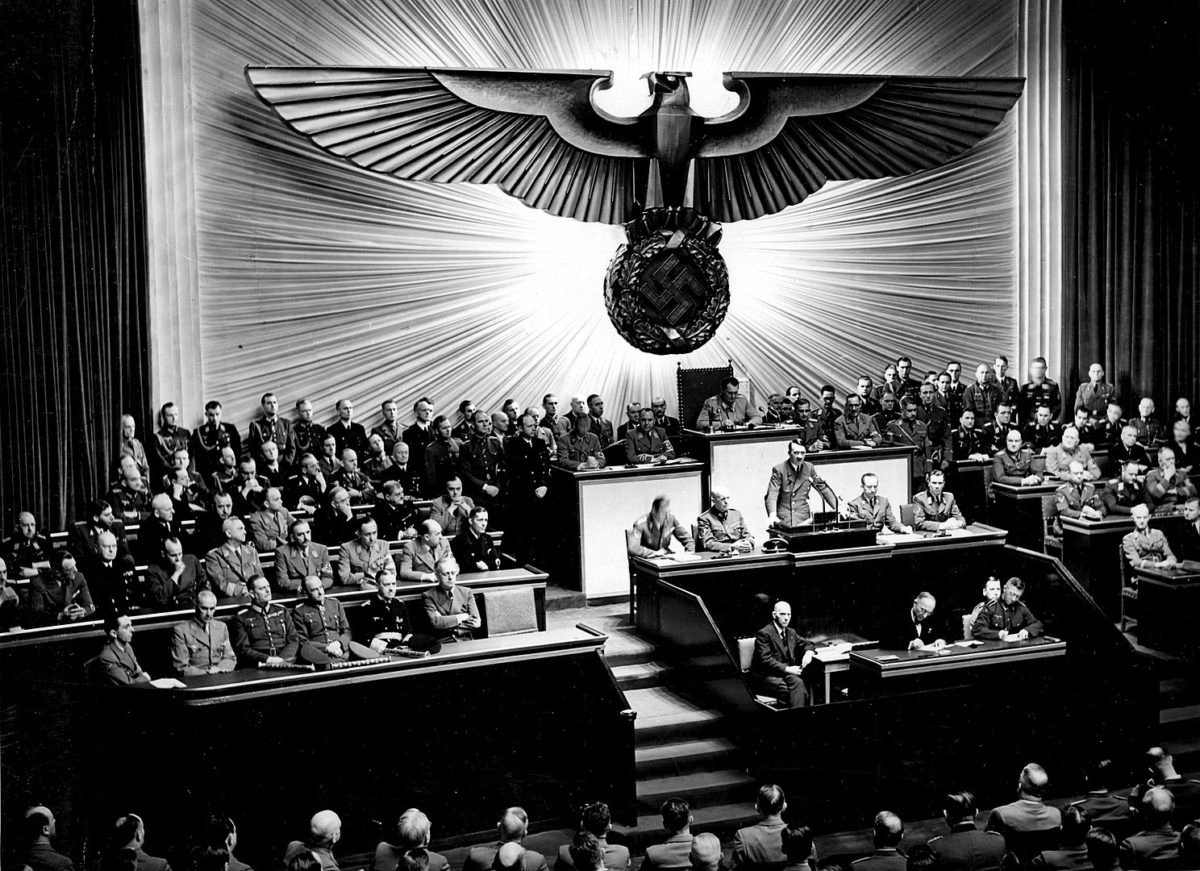
Conclusion: A Stagnant or Accelerated Future?
In analyzing what would have happened if Germany won World War 2 through a technological lens, we find a paradox. In certain fields—such as rocketry, jet propulsion, and automated manufacturing—the world might actually be more “advanced” in a purely mechanical sense. We might have reached Mars by 1990 or perfected high-speed sub-orbital travel before the turn of the century.
However, the “Tech” of this world would be cold, rigid, and oppressive. The vibrant, creative explosion of the digital age—characterized by social media, global connectivity, and the democratization of knowledge—would be entirely absent. There would be no Apple, no Google, and no open-source movement. Instead, the world would be a collection of highly efficient, state-owned technological silos.
Ultimately, a victory for Germany would have resulted in a world of high-tech stagnation. Without the friction of competition, the freedom of inquiry, and the incentive of the consumer market, innovation would eventually plateau, serving only the needs of a central authority. The “future” in this scenario is not a gleaming utopia, but a highly polished, titanium-plated machine—efficient, powerful, and utterly devoid of the human-centric design that defines the modern tech landscape.
aViewFromTheCave is a participant in the Amazon Services LLC Associates Program, an affiliate advertising program designed to provide a means for sites to earn advertising fees by advertising and linking to Amazon.com. Amazon, the Amazon logo, AmazonSupply, and the AmazonSupply logo are trademarks of Amazon.com, Inc. or its affiliates. As an Amazon Associate we earn affiliate commissions from qualifying purchases.