
The digital entertainment landscape has undergone a seismic shift over the last decade. While the initial “streaming wars” were defined by the proliferation of premium, ad-free subscription services (SVOD), the current era is being shaped by the rapid ascent of Free Ad-supported Streaming TV (FAST). At the forefront of this evolution is Amazon Freevee. Originally launched as IMDb Freedive and later rebranded as IMDb TV, Freevee represents a sophisticated convergence of cloud infrastructure, data-driven content delivery, and advanced advertising technology. To understand “what to watch” on Freevee is to understand the complex technological framework that allows high-quality content to be delivered at zero cost to the consumer.
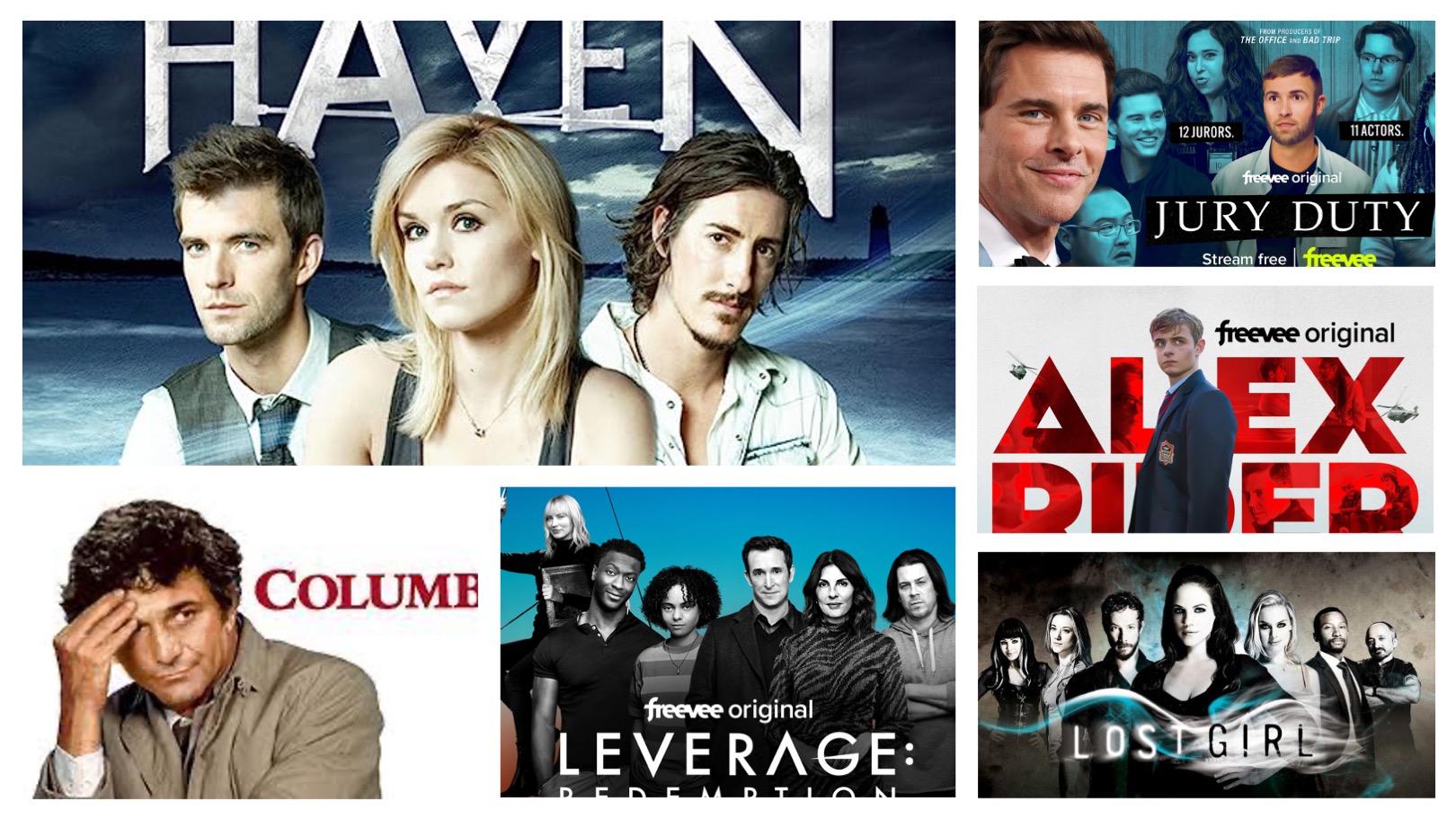
The Evolution of FAST: How Freevee Redefines Digital Broadcast
The transition from traditional cable to digital streaming was initially built on the promise of escaping commercials. However, as “subscription fatigue” set in among global consumers, the industry pivoted back to an ad-supported model, but with a high-tech twist. Freevee is not merely a digital version of broadcast television; it is a cloud-native platform that leverages the full power of the Amazon Web Services (AWS) ecosystem.
Cloud-Native Streaming and Scalability
At its core, Freevee operates on a massive scale that would be impossible without elastic cloud computing. By utilizing AWS, Freevee can handle millions of concurrent streams globally without the latency issues that plagued early internet video. The “tech stack” behind the platform allows for dynamic scaling, meaning that when a high-profile original series—such as Bosch: Legacy—premieres, the infrastructure automatically allocates more server resources to ensure a buffer-free experience for users. This backend agility is the primary reason the platform can maintain high-definition (HD) and 4G bitrates despite being a free service.
The Integration with Fire TV and Alexa
Freevee’s technological advantage is deeply rooted in its integration with Amazon’s hardware ecosystem. For users on Fire TV devices, Freevee isn’t just an app; it is a core component of the Operating System (OS). The integration allows for deep-linking and “Live” tab inclusion, where Freevee’s linear channels appear alongside traditional cable inputs. This seamless hardware-software synergy utilizes proprietary APIs to ensure that voice commands via Alexa (“Alexa, play Freevee”) execute with near-zero friction, a technical feat that standalone apps often struggle to replicate.
Seamless Ad-Insertion Technology (SSAI)
The most critical technical challenge for any FAST service is the delivery of advertisements. Freevee utilizes Server-Side Ad Insertion (SSAI), a method where the advertisement is “stitched” directly into the video stream at the server level before it reaches the user’s device. This differs from Client-Side Ad Insertion (CSAI), which often results in “black screens” or buffering when transitioning from content to commercials. By using SSAI, Freevee provides a broadcast-quality transition, making the presence of ads feel like a natural part of the technical flow rather than a disruptive software glitch.
User Experience and Interface Design: The Tech Behind Content Discovery
In a marketplace saturated with thousands of titles, the “What to Watch” dilemma is a major friction point for users. Freevee addresses this through a sophisticated User Interface (UI) and a series of underlying algorithms designed to minimize “choice paralysis.”
Recommendation Algorithms and Machine Learning
Freevee leverages the same machine learning (ML) models that power Amazon’s retail recommendations. By analyzing viewing patterns, search history, and even the time of day a user accesses the platform, the algorithm builds a hyper-personalized content feed. The “Tech” here is a collaborative filtering model that compares your data with millions of other users to predict what will keep you engaged. For example, if the system identifies a preference for procedural dramas, the backend uses metadata tagging to surface similar titles from the Freevee library, ensuring that the “Recommended for You” section is technically accurate rather than just a generic list.
Cross-Platform Synchronicity
One of the most impressive technical aspects of Freevee is its state-management across devices. Because Freevee is tied to an Amazon account, the “Watchlist” and “Continue Watching” features are synchronized in real-time across mobile (iOS/Android), web browsers, and smart TVs. This requires a robust synchronization engine that updates user metadata in the cloud every few seconds. When you pause a movie on your phone and resume it on your living room TV, you are witnessing a sophisticated handshake between different OS environments mediated by a centralized database.

Accessibility and UI Optimization
Beyond the flashy graphics, Freevee’s UI is built on a framework that prioritizes accessibility and low-end device performance. Not every user has the latest 4K smart TV; many access the platform via older tablets or budget smartphones. The developers use a “leanback” UI design philosophy, optimizing the code to ensure that navigation remains snappy even on devices with limited RAM. Furthermore, the inclusion of robust closed-captioning (CC) and audio description tracks is handled via technical sidecar files that sync perfectly with the video stream, meeting global compliance standards for digital accessibility.
The Backend Infrastructure: Data Privacy and Streaming Stability
While the front-end of Freevee is designed for entertainment, the backend is a masterclass in data management and digital security. Providing “free” content requires a sophisticated exchange of data, which must be handled within the strict confines of modern privacy laws.
Scalability on AWS and Content Delivery Networks (CDNs)
To provide global coverage, Freevee utilizes a multi-layered Content Delivery Network (CDN) strategy. By caching content at the “edge”—servers located physically closer to the user—Freevee reduces the distance data has to travel. This tech is what prevents “spinning wheels” during peak hours. When a user in London clicks “Play,” the data is likely being served from an AWS edge location in the UK, not a data center in Virginia. This geographic distribution is essential for maintaining the high-quality bitrate necessary for modern home theaters.
Data Analytics for Targeted Content
The “cost” of Freevee is subsidized by advertising, and the efficacy of those ads is driven by data. The platform uses anonymized data points to categorize audiences into segments. This involves a complex data pipeline where viewing habits are processed through an analytics engine to provide advertisers with “reach and frequency” metrics. However, this is balanced with strict encryption protocols. The tech ensures that while an advertiser might know their ad was shown to a “fan of sci-fi,” they do not receive PII (Personally Identifiable Information) about the individual viewer.
Security Protocols in Ad-Supported Environments
Digital security is a paramount concern for any platform that requires a login. Freevee employs multi-factor authentication (MFA) via the Amazon account system and utilizes HTTPS and TLS encryption for all data transmissions. This prevents “man-in-the-middle” attacks where hackers might attempt to hijack a stream or steal user data. Furthermore, the platform utilizes Digital Rights Management (DRM) technologies—such as Widevine and FairPlay—to ensure that the content remains protected from piracy, a requirement for licensing high-value Hollywood content for a free platform.
Future Innovations: The Roadmap for Streaming Software and Software
As we look toward the future of “what to watch,” the technology behind Freevee continues to evolve. We are moving toward a more interactive and immersive experience that blurs the lines between watching and participating.
The Convergence of Live and VOD
The next frontier for Freevee’s tech team is the seamless merging of Video on Demand (VOD) and “Live” linear channels. Currently, these often exist as separate technical silos. Future updates are expected to integrate “Start Over” features for live broadcasts and “Join-In” capabilities that allow users to jump from a live show into a full-season binge of the same series with a single click. This requires a unified content management system (CMS) that can handle multiple stream types simultaneously.
Interactive Advertising Technology
The most significant tech shift on the horizon is the introduction of shoppable video. Imagine watching a cooking show on Freevee and being able to click a button on your remote to add the featured kitchen gadget to your Amazon cart. This level of interactivity requires a complex overlay of metadata and an integration between the video player and the Amazon retail API. This “T-commerce” (television commerce) is the ultimate goal of the Freevee tech stack, turning a passive viewing experience into an active, integrated digital environment.

AI-Driven Content Creation and Localization
Finally, Artificial Intelligence (AI) will play a larger role in how content is prepared for Freevee. From AI-driven upscaling of older library titles to 4K, to automated dubbing and subtitling using neural networks, the technology will allow Freevee to expand its global footprint more rapidly. By automating the localization process, the platform can offer a wider variety of international cinema to a global audience, making the question of “what to watch” even easier to answer with a diverse, technically polished library.
In conclusion, Amazon Freevee is more than just a place to find movies; it is a sophisticated piece of software architecture. Through its integration with AWS, its use of machine learning for discovery, and its pioneering work in ad-insertion technology, it represents the technical future of how we consume media. The platform’s ability to deliver high-quality entertainment for free is a testament to the efficiency and innovation of modern cloud computing and digital strategy.
aViewFromTheCave is a participant in the Amazon Services LLC Associates Program, an affiliate advertising program designed to provide a means for sites to earn advertising fees by advertising and linking to Amazon.com. Amazon, the Amazon logo, AmazonSupply, and the AmazonSupply logo are trademarks of Amazon.com, Inc. or its affiliates. As an Amazon Associate we earn affiliate commissions from qualifying purchases.