
In the high-stakes environment of a professional interview, you are not just a candidate; you are a brand. Every word you speak, every gesture you make, and every answer you provide contributes to your professional identity. Perhaps no moment in the interview process tests the strength and consistency of that brand more than the dreaded question: “What is your greatest weakness?”
While many candidates view this question as a trap designed to expose their flaws, brand-savvy professionals recognize it as a strategic opportunity. In the world of branding, transparency and growth are powerful assets. A brand that claims to be perfect is often viewed with skepticism, whereas a brand that acknowledges its areas for development—and demonstrates a clear roadmap for improvement—builds trust and authority.
To master this question, you must move beyond generic HR advice and look at it through the lens of brand strategy. This article explores how to select, frame, and deliver your “weakness” in a way that reinforces your personal brand, demonstrates your value proposition, and aligns with the corporate identity of your target employer.
The Strategic Role of Vulnerability in Personal Branding
In brand management, the “vulnerability paradox” suggests that showing a degree of imperfection can actually increase brand loyalty and consumer trust. When applied to personal branding, this means that your ability to discuss a weakness openly is not a sign of failure; it is a demonstration of high-level self-awareness and emotional intelligence—two of the most sought-after traits in modern leadership.
Authenticity as a Brand Value
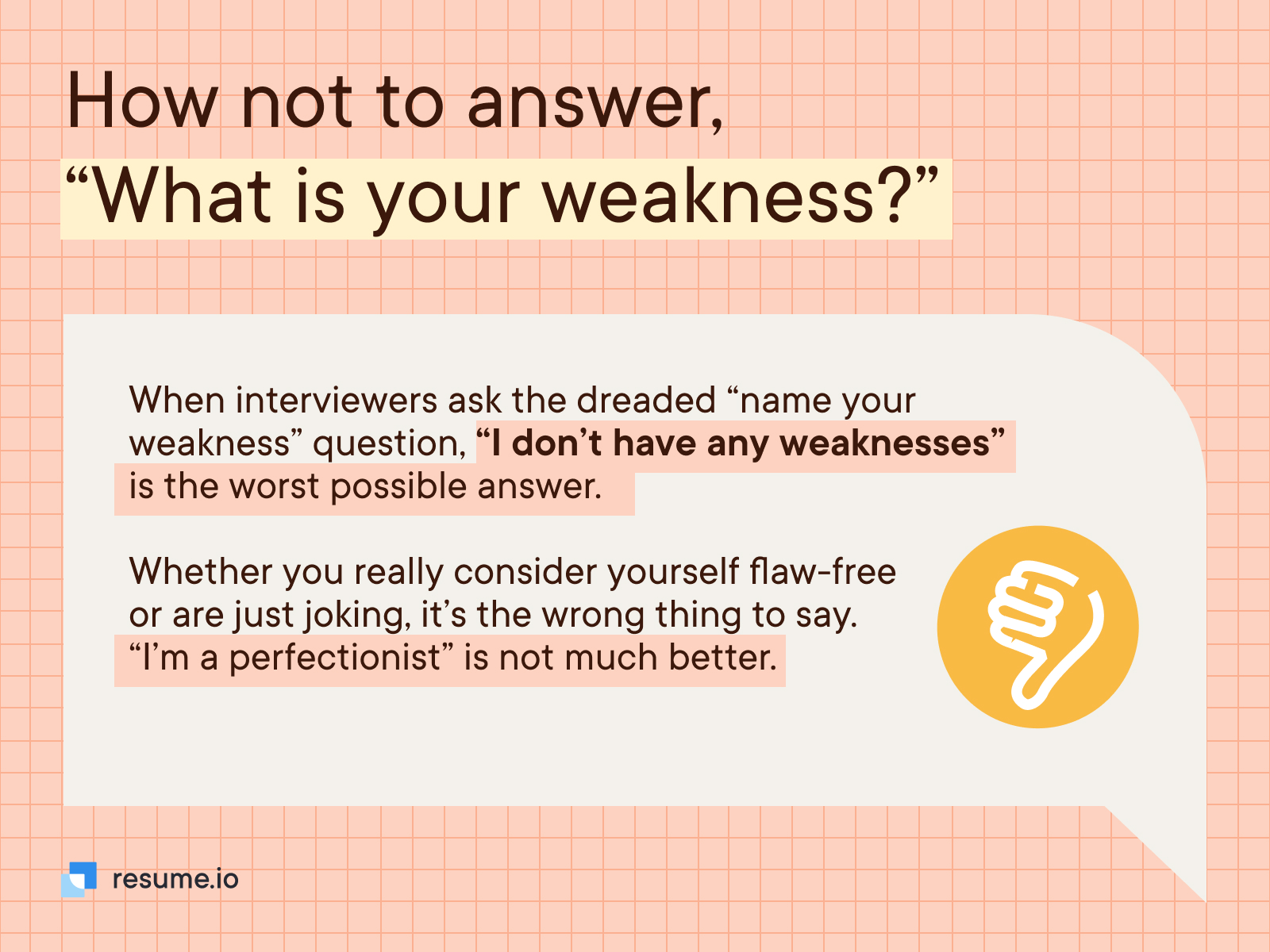
Authenticity is the cornerstone of any successful personal brand. If you provide a scripted, disingenuous answer, you risk damaging your brand equity before you’ve even started the job. Interviewers are trained to spot “fake” weaknesses, such as the infamous “I’m too much of a perfectionist” or “I work too hard.” These answers signal a lack of depth and a refusal to engage in honest self-reflection.
An authentic personal brand is one that acknowledges the reality of the professional journey. By identifying a genuine area for improvement, you signal to the employer that you are a “growth-mindset” brand. You are showing that you have the maturity to evaluate your own performance objectively, which is a key component of professional integrity.
Moving Beyond the “Perfectionist” Cliche
The “perfectionist” answer has become a brand-killer. It suggests that you are either hiding something or that you lack the self-awareness to recognize your actual limitations. From a brand strategy perspective, claiming perfection creates an unsustainable expectation.
Instead, a strong brand focuses on “vulnerable competence.” This involves choosing a weakness that is real but manageable. For example, perhaps you struggle with public speaking despite your excellent analytical skills, or maybe you find it challenging to delegate when you are deeply invested in a project’s success. By pivoting away from clichés, you differentiate your brand from the sea of average candidates who are afraid to be real.
Choosing a Weakness That Aligns with Your Professional Identity
Not all weaknesses are created equal. When selecting which weakness to share, you must act as a brand manager, carefully choosing a narrative that does not undermine your core value proposition. You want to pick a weakness that is “on-brand” for your career stage but “off-path” for the essential functions of the role.
Identifying High-Potential Areas for Growth
The most effective weaknesses to discuss are those that are currently being transformed into strengths. In branding terms, this is “repositioning.” You are taking a perceived deficit and showing the market how you are investing in its improvement.
Ideal candidates for this discussion include:
- Technical Skills: Mentioning a software or methodology that you are currently learning.
- Soft Skills: Discussing a specific communication style you are refining (e.g., “I am working on being more concise in executive briefings”).
- Workflow Management: Addressing a specific organizational challenge you’ve overcome with new tools or systems.
By selecting an area where you are already taking action, you reinforce a brand identity of proactive development. You aren’t just someone with a flaw; you are a brand that invests in R&D (Research and Development) for its own human capital.
Ensuring Your Weakness Isn’t a “Brand Killer”
Every brand has “non-negotiables.” If you are applying for a role as a Lead Designer, claiming that your weakness is “attention to detail” is a brand-killer. It contradicts the primary promise of your professional identity.

To avoid this, audit the job description and the company’s corporate identity. If the role requires high-level data analysis, your weakness should not be related to mathematics or logic. Instead, choose a “peripheral” weakness—something that is useful but not central to your daily survival in that specific role. This protects your brand’s core reliability while still allowing for the necessary transparency.
The “Problem-Solution-Result” Framework for Brand Consistency
A brand is a story, and every good story has a narrative arc. To deliver your weakness effectively, you should use a structured framework that moves the listener from the “problem” to the “solution” and, finally, to the “result.” This ensures that the conversation ends on your brand’s successes rather than its deficits.
Defining the Conflict
Start by clearly stating the weakness in a neutral, non-judgmental way. This is the “conflict” in your brand story. Avoid using highly negative language like “I’m terrible at…” or “I fail at…” Instead, use developmental language: “An area where I have focused on improving is…” or “Early in my career, I noticed that I struggled with…”
This framing sets the stage for your brand’s resilience. It shows that you view challenges as data points to be analyzed rather than personal failings.
Showcasing the Developmental Roadmap
The middle of your answer is the most important part of your brand pitch. This is where you describe the specific steps you have taken to address the weakness. This demonstrates your “brand agility”—your ability to adapt to new requirements and overcome obstacles.
For example, if your weakness was a lack of experience in data visualization, describe the specific certification you took, the mentor you sought out, or the software you practiced with after hours. This shifts the focus from the weakness itself to your work ethic, your initiative, and your commitment to excellence. You are effectively telling the interviewer: “When this brand encounters a limitation, it innovates.”
Delivering the Positive ROI
Conclude your answer by describing the results of your efforts. How has your brand improved? What is the Return on Investment (ROI) for you and your previous employers? By ending with a success story, you “anchor” the interviewer’s perception of you on your growth and results. You leave them with the impression of a brand that is constantly evolving and increasing in value.
Leveraging Your Weakness to Demonstrate Culture Fit
In branding, “alignment” is everything. Your personal brand must harmonize with the corporate brand of the company you wish to join. The weakness question is a stealthy way to demonstrate that you understand the company’s values and that your growth trajectory aligns with their mission.
Researching the Corporate Brand Identity
Before the interview, research the company’s internal culture. Do they value “radical transparency” (like Netflix)? Or do they value “meticulous craft” (like Apple)? A weakness that works for one corporate brand might fail for another.
If the company brand is built on “disruptive innovation,” you might choose a weakness related to “staying too long in the planning phase,” showing that you are working on moving faster—an alignment with their need for speed. If the company brand is built on “stability and trust,” your weakness might be “over-communicating,” which you are refining to ensure maximum efficiency without losing clarity.
Aligning Personal Growth with Company Objectives
The ultimate goal of personal branding in an interview is to show that your “brand’s future” fits perfectly within the “company’s future.” When you discuss your weakness and how you are fixing it, try to connect it to the skills that will be most valuable in the role you are applying for.
For instance, if you are applying to a tech firm that is pivoting toward AI, and your weakness is a lack of deep experience in machine learning, your “fix” (enrolling in an AI ethics course) shows that you are already moving in the same direction as the company. This creates a powerful brand alignment, suggesting that by hiring you, the company isn’t just getting a worker—they are acquiring a brand that is already synchronized with their strategic goals.

Conclusion: The Brand of Constant Evolution
Ultimately, what you say as your weakness in an interview is less about the flaw itself and more about the narrative you build around it. In the landscape of modern professional branding, the most valuable assets are self-awareness, the capacity for growth, and the ability to communicate a complex personal story with clarity and confidence.
By treating the “weakness” question as a strategic branding exercise, you transform a potential liability into a showcase of your character and professional trajectory. You prove that you are a brand that is not only aware of its current market position but is actively invested in its future appreciation. In the end, the most successful brands aren’t the ones without flaws; they are the ones that use their journey toward improvement to build a deeper, more authentic connection with their audience.
aViewFromTheCave is a participant in the Amazon Services LLC Associates Program, an affiliate advertising program designed to provide a means for sites to earn advertising fees by advertising and linking to Amazon.com. Amazon, the Amazon logo, AmazonSupply, and the AmazonSupply logo are trademarks of Amazon.com, Inc. or its affiliates. As an Amazon Associate we earn affiliate commissions from qualifying purchases.