
The digital landscape is currently buzzing with a singular question: “What time is OG Fortnite coming back?” While for many, this is a matter of nostalgia and entertainment, for the technology sector, it represents a massive case study in software deployment, server scalability, and the lifecycle management of a global Live-Service application. Epic Games, the powerhouse behind the Unreal Engine, has mastered the art of “event-driven” software updates, turning what would normally be a routine maintenance window into a global technological phenomenon.

Understanding the timing of the “OG” return—specifically the “Chapter 2 Remix” and the permanent return of the original Chapter 1 map—requires an exploration of how modern gaming infrastructure handles millions of concurrent users and the technical complexities of reverting a dynamic codebase to its legacy state.
The Global Rollout: Synchronizing Regional Servers for Chapter 2 Remix and OG Elements
The question of “what time” an update goes live is rarely as simple as flipping a switch. Epic Games operates on a massive, distributed server network that spans the globe. When we look at the return of OG content, we are observing a masterclass in synchronized software deployment.
Patch Deployment Schedules and Time Zones
Typically, major Fortnite updates—such as v32.00 or major seasonal shifts—commence with a period of “downtime.” This usually begins at 2:00 AM ET (6:00 AM UTC). During this window, the production servers are taken offline to undergo a comprehensive database migration. For the tech-savvy observer, this is the most critical phase. The “OG” assets, which may have been archived or optimized for older versions of the Unreal Engine, must be re-integrated into the current build without breaking existing mechanics like the “Mantling” or “Tactical Sprinting” systems that didn’t exist in 2018.
Users can generally expect the servers to return online between 6:00 AM ET and 9:00 AM ET, depending on the complexity of the backend changes. This staggering of time ensures that the “Thundering Herd” problem—where millions of devices attempt to ping a server simultaneously—is managed through a gradual ramp-up of regional availability.
The Role of Content Delivery Networks (CDNs) in Rapid Updates
The “time” you can play is also dictated by how fast your hardware can fetch data from a Content Delivery Network (CDN). When “OG Fortnite” returns, the update size can range from 10GB to 30GB. Epic Games utilizes high-bandwidth CDNs to push these packets to edge servers located near major urban centers. This minimizes latency and ensures that a player in Tokyo and a player in London can both download the “OG” assets with comparable efficiency, provided their local ISPs can handle the throughput.
Retro-Software as a Service: The Technical Philosophy Behind “OG” Content
The return of the “OG” map is more than just a marketing stunt; it is a significant achievement in version control and software modularity. In the tech industry, “Legacy” often carries a negative connotation, implying outdated or insecure code. However, Epic Games has pioneered a “Retro-SaaS” model where legacy environments are treated as modular plugins.
Managing Version Control in Live-Service Games
One of the greatest challenges in software development is maintaining a “single source of truth.” As Fortnite evolved from Chapter 1 to Chapter 5, the underlying code moved through several iterations of the Unreal Engine (from UE4 to UE5.4). Bringing back the OG map involves “back-porting” modern features into old environment data. Developers must ensure that the collision boxes of 2018 assets are compatible with the physics engine of 2024. This requires a sophisticated version control system that allows different “World States” to be toggled on or off without bloating the client-side installation.
Asset Optimization and Storage Management
To prevent the game from occupying 200GB of hard drive space, Epic uses advanced compression techniques and “on-demand” asset streaming. When the OG map returns, the game doesn’t necessarily keep all Chapter 5 assets in the active RAM. Instead, it utilizes the high-speed NVMe SSDs found in modern consoles and PCs to swap environment data. This technical optimization is what allows the “OG” experience to feel snappy and responsive despite being built on a much more complex engine than its predecessor.
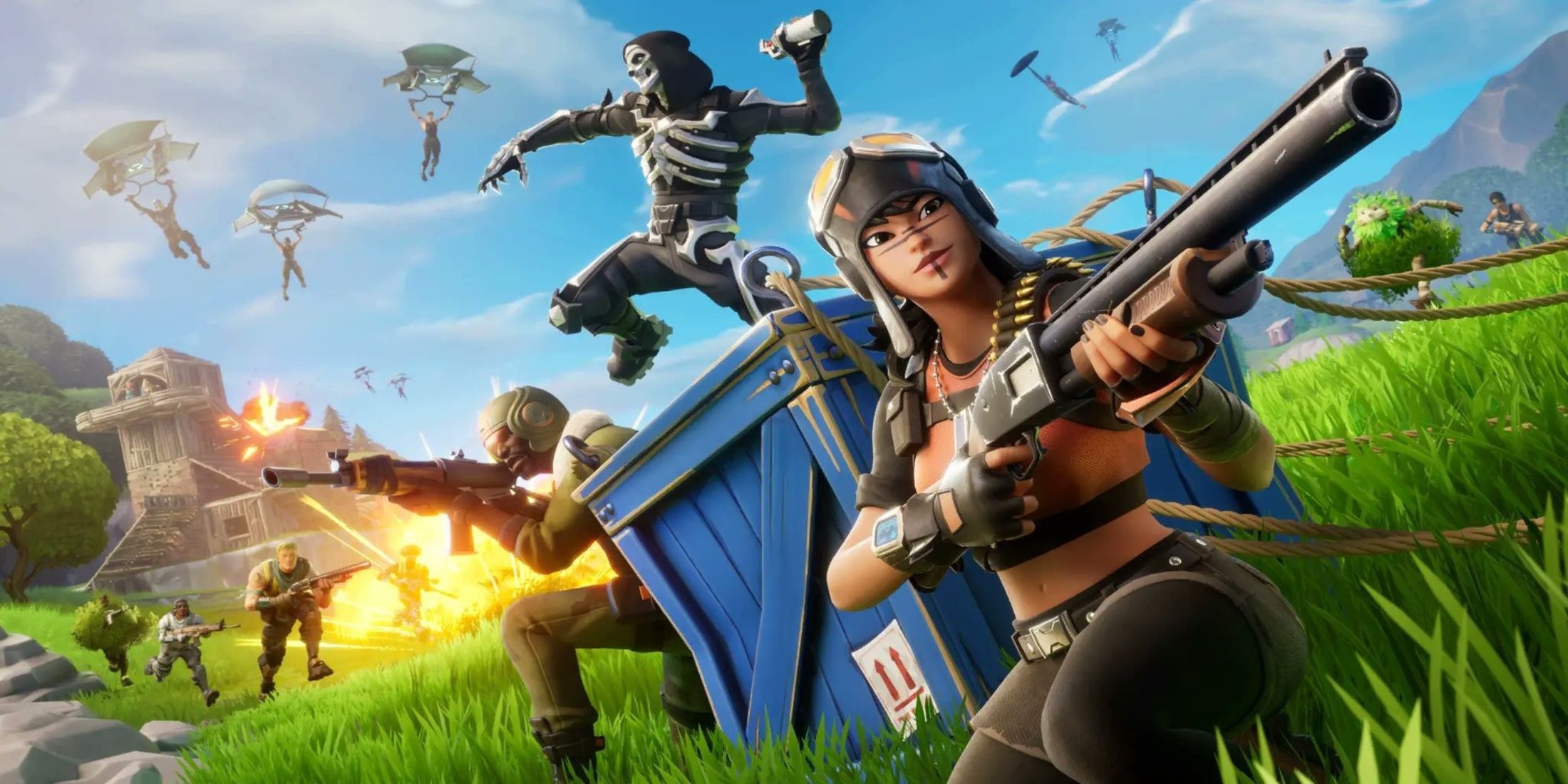
Navigating the Surge: High-Volume Traffic and Server Scalability
When the clock hits the “live” time for OG Fortnite, the infrastructure faces a stress test that few other apps in the world experience. We are talking about upwards of 5 to 10 million concurrent users hitting the login gate simultaneously.
Virtual Queues and Load Balancing
To prevent a total system collapse, Epic Games employs a “Virtual Queue” system. This is a classic load-balancing technique used in high-traffic web environments. Instead of allowing all requests to hit the authentication server at once, the system holds users in a buffer. This prevents the “Login Service” from being overwhelmed and crashing, which would result in a longer recovery time for the entire network. If you see a “Waiting in Queue” timer, you are witnessing an automated traffic management algorithm at work, ensuring the stability of the backend database.
Mitigating Downtime During Major Database Transitions
The transition to an OG season often involves a “Live Event”—a scripted, real-time technical demonstration that pushes the limits of synchronized networking. During these events, every player in a specific instance must see the exact same frames and events at the exact same millisecond. This requires “Netcode” optimization that minimizes packet loss and jitter. The downtime following these events is used to “wipe” the temporary event data and prepare the persistent world state for the new (or old) map.
The Evolution of Unreal Engine: Bringing 2018 Assets into 2024 Standards
A common misconception is that “OG Fortnite” is simply the old game being re-uploaded. In reality, it is a recreation of the old game using cutting-edge technology. The tech stack involved in this return is significantly more advanced than what was available during the original launch.
Lighting, Physics, and Nanite Integration
The original Chapter 1 map relied on pre-baked lighting and relatively simple geometry. The “OG” return utilizes Lumen (real-time global illumination) and Nanite (virtualized geometry). This means that while the “Salty Springs” or “Tilted Towers” you see looks like the 2018 version, the way light bounces off the surfaces and the level of detail in the terrain is powered by modern GPU architecture. This allows for a “Hi-Fi” version of a “Lo-Fi” memory, a technical feat that requires significant compute power.
Ensuring Cross-Platform Compatibility from Mobile to PC
Fortnite’s greatest technical strength is its ubiquity. It must run on a $2,000 gaming PC and a five-year-old Android phone simultaneously. When OG content returns, the developers must ensure that the “Level of Detail” (LOD) scaling works across all these devices. The “what time” factor is often influenced by the certification processes of different platforms (Apple, Google, Sony, Microsoft, Nintendo). Epic must coordinate the release time to ensure that no single platform has an unfair advantage or is left behind due to a delayed update “push” in a specific app store.
Looking Ahead: The Technical Legacy of the “OG” Movement in Tech
The success of “OG Fortnite” has ripple effects across the entire tech industry, signaling a shift in how we perceive the lifecycle of digital products.
Modularity as the Future of App Development
The ability to swap out an entire world for a legacy version suggests a move toward “Modular App Design.” We may see other major software suites (like Adobe Creative Cloud or Microsoft 365) offer “Legacy Mode” toggles that revert UI and core functionalities to previous versions that users preferred, all while maintaining the security and speed of the modern backend. Epic is proving that software doesn’t have to be a linear progression; it can be a library of experiences.

The Convergence of Social Media and Gaming Platforms
As we wait for the servers to go live, the sheer volume of social media engagement—tracked via APIs and real-time data scrapers—demonstrates that Fortnite is no longer just a game; it is a social protocol. The “OG” return is a “sync point” for millions of users. From a data science perspective, the spike in activity provides invaluable insights into user retention and the “nostalgia economy.”
In conclusion, when you ask “what time is OG Fortnite coming back,” you are inquiring about a precisely choreographed dance of server synchronization, CDN distribution, and engine optimization. Whether the servers open at 7:00 AM or 9:00 AM, the underlying technology represents the pinnacle of modern cloud computing and software engineering. Epic Games continues to set the standard for how to manage a global application, proving that sometimes, the best way to move technology forward is to strategically look back.
aViewFromTheCave is a participant in the Amazon Services LLC Associates Program, an affiliate advertising program designed to provide a means for sites to earn advertising fees by advertising and linking to Amazon.com. Amazon, the Amazon logo, AmazonSupply, and the AmazonSupply logo are trademarks of Amazon.com, Inc. or its affiliates. As an Amazon Associate we earn affiliate commissions from qualifying purchases.