
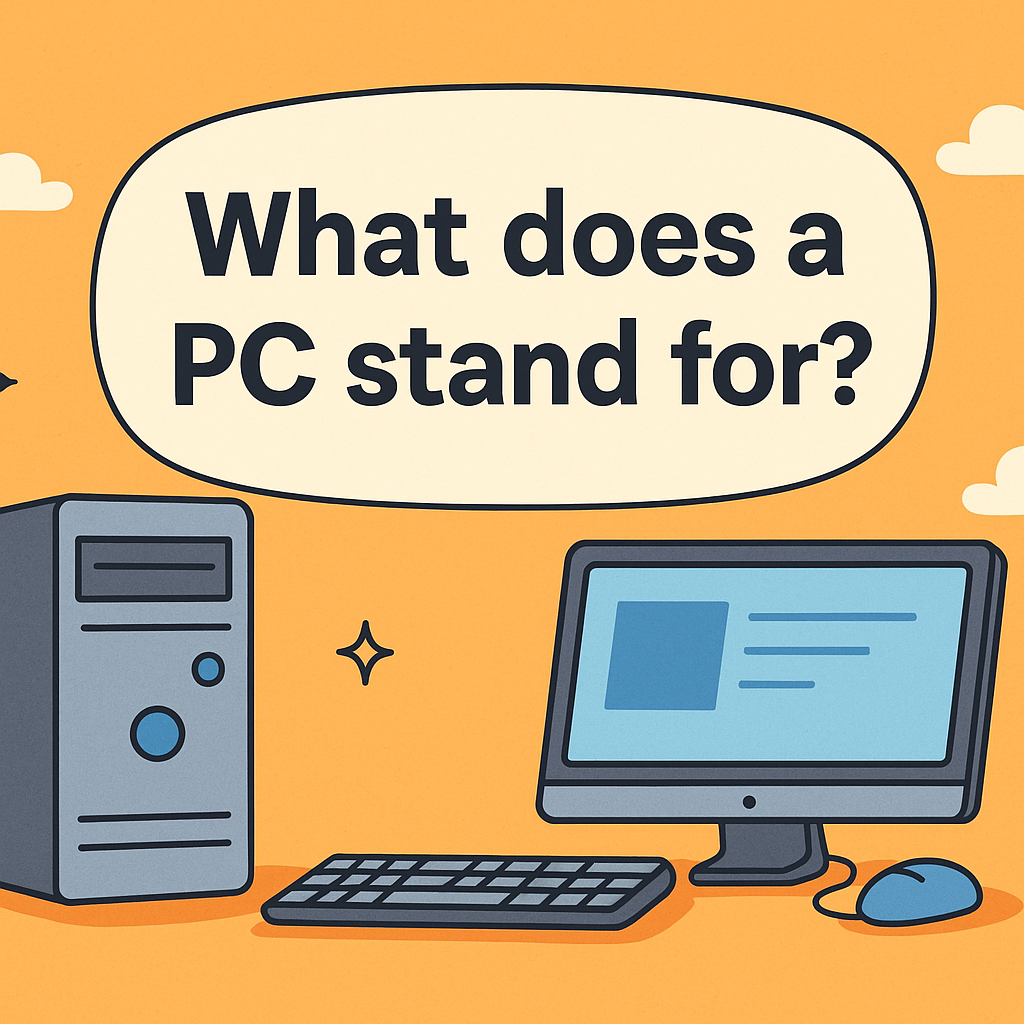
In the modern digital landscape, the acronym “PC” is so ubiquitous that it is often used without a second thought. Most users recognize it as the device sitting on their desk or the laptop in their bag. However, “PC” stands for Personal Computer, a term that represents one of the most significant technological shifts in human history. To understand what a PC truly is, one must look beyond the hardware and examine the philosophy of decentralized computing, the evolution of internal architecture, and the current transition into the era of Artificial Intelligence.
The Genesis of the Personal Computer: From Mainframes to Microchips
Before the 1970s, the concept of a “personal” computer was nearly unthinkable. Computing power was the exclusive domain of governments, massive corporations, and research universities. These machines, known as mainframes, occupied entire rooms, required specialized cooling systems, and were operated by teams of technicians.
The Birth of the Microprocessor
The shift from “institutional” to “personal” was made possible by the invention of the microprocessor. In 1971, Intel released the 4004, the first commercially available microprocessor. This tiny silicon chip integrated the functions of a computer’s central processing unit onto a single integrated circuit. This breakthrough allowed engineers to envision a machine that could fit on a desk and be operated by a single individual—hence the birth of the “Personal Computer.”
The IBM PC and the Standardization of the Term
While early hobbyist machines like the MITS Altair 8800 and the Apple I paved the way, it was the release of the IBM Model 5150 in 1981 that solidified the term “PC” in the global lexicon. IBM’s entry into the market was so influential that “PC-compatible” became the industry standard. This era defined the PC as a modular system where users could choose their own software and peripherals, distinguishing it from the “closed” systems of its competitors. Today, when we ask what PC stands for, we are referencing this legacy of individual empowerment through technology.
The Anatomy of Modern Computing: How a PC Functions
To truly understand the “PC,” one must understand the hardware that brings the concept to life. A personal computer is a symphony of components working in near-instantaneous harmony. Each part has evolved significantly over the last four decades, moving from basic arithmetic processors to complex engines capable of simulating reality.
The Central Processing Unit (CPU) and System Architecture
The CPU is frequently referred to as the “brain” of the PC. It executes the instructions of the computer program, performing the basic arithmetic, logic, controlling, and input/output operations. Modern PCs utilize multi-core processors, allowing them to handle dozens of tasks simultaneously. The move from 32-bit to 64-bit architecture was a pivotal moment in PC history, allowing machines to access much larger amounts of memory (RAM), which is essential for modern high-performance software.
Memory and Storage: The Speed of Data
What makes a PC “personal” is the ability to store and retrieve personal data. This is handled by two distinct systems: Random Access Memory (RAM) and long-term storage (HDDs and SSDs). RAM acts as the “short-term memory,” holding data that the CPU needs immediately. In contrast, the evolution from spinning Hard Disk Drives (HDDs) to Solid State Drives (SSDs) and the more recent NVMe technology has revolutionized PC performance. These advances have reduced boot times from minutes to seconds and made the “Personal Computer” more responsive than ever before.
The Graphics Processing Unit (GPU) and Visual Computation
While originally designed to render images and videos, the GPU has become a cornerstone of the modern PC. In the context of “what PC stands for” today, the GPU represents the machine’s ability to handle complex parallel processing. Beyond gaming, GPUs are now used for video editing, 3D modeling, and, most importantly, accelerating the local execution of AI models.
Software Ecosystems: Defining the User Experience

Hardware is merely a collection of metal and silicon without software. The “Personal” in PC is defined largely by the operating system (OS) and the applications that run atop it. The software ecosystem determines how a user interacts with their machine and what they can achieve with it.
The Windows Dominance and the Open-Source Alternative
For the vast majority of the PC’s history, Microsoft Windows has been the dominant operating system. Its success was built on the “IBM-compatible” model, allowing it to run on a vast array of hardware from different manufacturers. This flexibility is a core tenet of the PC philosophy. On the other end of the spectrum lies Linux, an open-source kernel that powers everything from enthusiasts’ desktops to the world’s most powerful supercomputers. Linux represents the ultimate “Personal” computer—one where the user has total control over every line of code.
The Rise of Cloud Integration and Hybrid Computing
In the last decade, the definition of a PC has expanded to include its connection to the cloud. Modern PCs are no longer isolated islands of data. Services like OneDrive, Google Drive, and Adobe Creative Cloud mean that the “Personal” aspect of the computer is now portable. You can start a project on a desktop PC and finish it on a laptop or tablet. This hybrid approach has changed the PC from a static workstation into a dynamic gateway to a global network of information and tools.
Digital Security: Protecting the “Personal” in PC
As computers became more integrated into our daily lives, the “Personal” in PC began to represent our most sensitive information: banking details, private communications, and professional secrets. Consequently, digital security has become an inseparable part of the PC’s identity.
The Shift Toward Hardware-Level Security
In the early days of computing, security was almost entirely software-based (antivirus programs). However, as threats became more sophisticated, the PC evolved to include hardware-level security. Modern PCs now feature Trusted Platform Modules (TPM), which provide a secure foundation for encryption. Technologies like biometric authentication (Windows Hello, fingerprint scanners) have replaced traditional passwords, ensuring that the “Personal Computer” remains accessible only to its rightful owner.
Navigating the Threat Landscape: From Malware to Ransomware
The interconnected nature of the modern PC makes it a target for various cyber threats. Understanding what a PC stands for today requires an awareness of the ongoing battle between security researchers and malicious actors. Concepts like “Zero Trust” architecture and sandboxing applications have become standard in the professional PC environment, ensuring that a single compromised file cannot bring down an entire system.
The Future of the PC: AI Integration and the Next Frontier
We are currently witnessing the most significant transformation of the PC since the introduction of the graphical user interface. The “Personal Computer” is becoming the “Personal AI.”
The AI PC and Neural Processing Units (NPUs)
The latest generation of PCs features a new type of processor: the NPU (Neural Processing Unit). These chips are designed specifically to handle Artificial Intelligence tasks locally, rather than relying on the cloud. This means your PC can now perform real-time language translation, advanced photo editing, and automated coding without sending your data to a remote server. This reinforces the “Personal” aspect of the PC by keeping data processing local and private.
The Convergence of Form Factors
The traditional distinction between a desktop, a laptop, and a tablet is blurring. With the advent of foldable screens, detachable keyboards, and ultra-powerful mobile processors, the “PC” is no longer defined by its shape. Whether it is a handheld gaming device or a multi-monitor workstation, the PC stands for a platform that adapts to the user’s needs.

Conclusion: A Legacy of Individual Empowerment
When we ask “what PC stands for,” the literal answer is simple: Personal Computer. But the technological answer is much deeper. It stands for the democratization of information, the modularity of hardware, the freedom of software choice, and the continuous push toward a more intelligent and secure digital future. As we move into the era of AI-integrated computing, the PC remains the most versatile and powerful tool ever created for individual creativity and productivity. It is the bridge between human intent and digital execution, a role it has perfected over forty years and will continue to evolve for decades to come.
aViewFromTheCave is a participant in the Amazon Services LLC Associates Program, an affiliate advertising program designed to provide a means for sites to earn advertising fees by advertising and linking to Amazon.com. Amazon, the Amazon logo, AmazonSupply, and the AmazonSupply logo are trademarks of Amazon.com, Inc. or its affiliates. As an Amazon Associate we earn affiliate commissions from qualifying purchases.