
Since its debut, Sword Art Online (SAO) has served as more than just a cornerstone of the “Isekai” anime genre; it has functioned as a speculative roadmap for the future of human-computer interaction. For technology enthusiasts, the series provides a fascinating look at the evolution of Brain-Computer Interfaces (BCI), Virtual Reality (VR), Augmented Reality (AR), and Artificial Intelligence (AI).
To truly appreciate the series from a technological perspective, one must watch it in an order that highlights the iterative development of its fictional hardware and software. This guide provides a chronological watch order while analyzing the digital infrastructure that defines each era of the SAO universe.
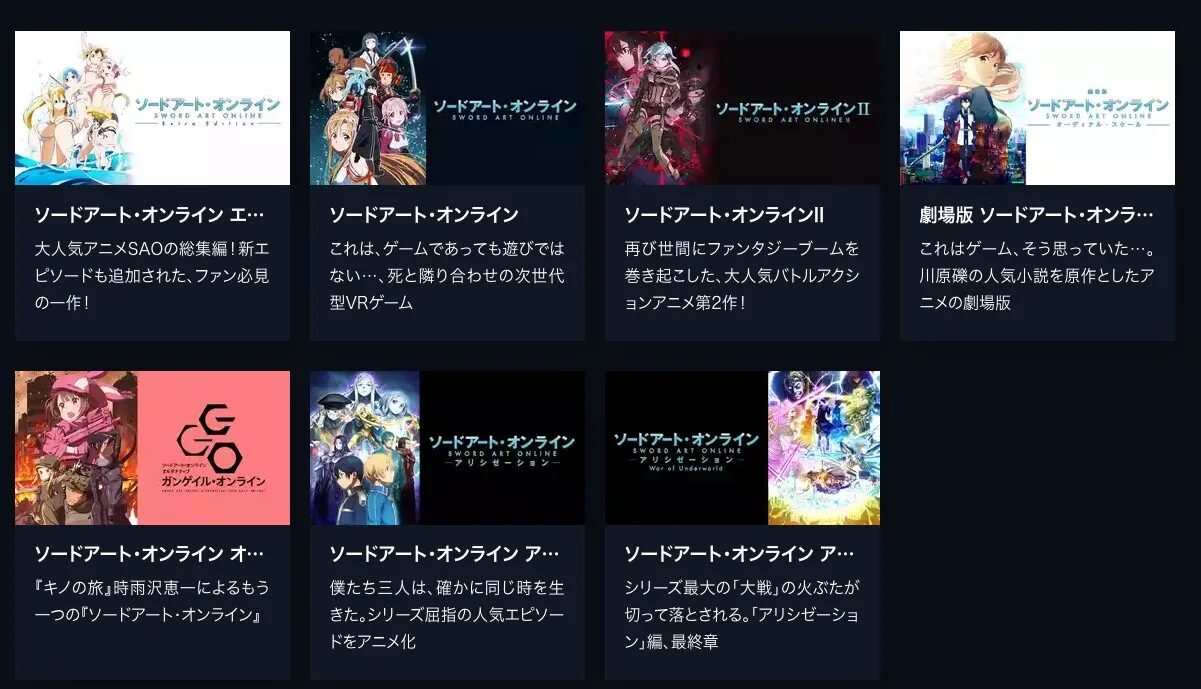
1. The Genesis of Full-Dive: The NerveGear and Aincrad Era
The journey begins with the most iconic—and terrifying—piece of hardware in the franchise: the NerveGear. Watching the series in the following order allows viewers to see the birth of the “Full-Dive” concept, where the user’s consciousness is entirely transposed into a digital environment.
Sword Art Online Progressive: Aria of a Starless Night & Scherzo of Deep Night
While released later, the Progressive films are the logical starting point for a tech-focused viewer. They provide a high-fidelity look at the early days of the Aincrad incident. From a software engineering perspective, these films showcase the “Beta Tester” experience, highlighting the importance of stress-testing massive multiplayer online (MMO) environments. We see the initial UI/UX design of the SAO ecosystem, emphasizing the limitations of early-gen haptic feedback and the “Cardinal System,” an autonomous AI designed to manage game balance and bug fixes without human intervention.
Sword Art Online (Season 1, Episodes 1–14): The Aincrad Arc
The first half of the original season introduces the “NerveGear.” This BCI device uses high-density microwave transceivers to access the user’s brain, intercepting motor commands and simulating sensory input. This arc is a masterclass in the ethics of “Safety-Critical Systems.” The “Death Game” scenario serves as a cautionary tale regarding the security of IoT devices and the catastrophic potential of hardcoded firmware locks that prevent users from disconnecting.
2. Iterative Improvements and the Shift to the Amusphere
As the narrative progresses, the technology shifts from experimental (and dangerous) hardware to consumer-grade safety-first devices. This section of the watch order explores how the industry responds to the “SAO Incident” by prioritizing user security over raw power.
Sword Art Online (Season 1, Episodes 15–25): The Fairy Dance Arc
This arc introduces the “Amusphere.” Following the tragedy of the NerveGear, the Amusphere was developed with lower-output electromagnetic waves, ensuring that the device could not physically harm the user’s brain. For tech reviewers, this represents the “Hardware Refresh” cycle common in Silicon Valley, where a Version 2.0 focuses on reliability and regulatory compliance. We also see the introduction of “The Seed,” an open-source engine that democratized the creation of VR worlds, mirroring real-world engines like Unity or Unreal Engine.
Sword Art Online II (Season 2): Phantom Bullet, Calibur, and Mother’s Rosario
The second season explores the diversification of VR environments. The “Phantom Bullet” arc (Gun Gale Online) introduces a fascinating look at predictive algorithms. The “Bullet Circle” system is essentially a visual representation of latency compensation and AI-driven combat assistance. Later, in the “Mother’s Rosario” arc, the technology takes a medical turn with the “Medicuboid.” This highlights the potential of Full-Dive technology in palliative care and neuro-rehabilitation, using BCI to provide quality of life for patients with terminal illnesses or sensory impairments.
3. The Convergence of Realities: AR and Spatial Computing
Before moving into the deep dive of the final seasons, the franchise takes a detour into Augmented Reality. This shift is highly relevant to current trends in spatial computing, such as the Apple Vision Pro and Meta Quest 3.

Sword Art Online The Movie: Ordinal Scale
Ordinal Scale is essential viewing for anyone interested in the transition from VR to AR. It introduces the “Augma,” a sleek, wearable device that overlays digital data onto the physical world while the user is awake and moving. Unlike the stationary nature of Full-Dive, the Augma relies on spatial mapping and localized data processing. The film explores the “Gamification of Reality,” where physical fitness and geographical location become key metrics in the user experience. It also raises significant questions about data privacy and the harvesting of memories/biometric data for AI training.
4. The Peak of Artificial Intelligence: The Soul Translator Era
The final major arc of the series represents the transition from “Top-Down AI” (traditional coding) to “Bottom-Up AI” (simulated consciousness). This is where the series’ technology moves from science fiction to theoretical neuroscience.
Sword Art Online: Alicization & War of Underworld (Season 3 & 4)
This massive 47-episode saga focuses on the “Soul Translator” (STL). Unlike previous devices that targeted the brain’s sensory centers, the STL interfaces directly with the “Fluctlight”—the series’ term for the human quantum soul or consciousness.
The Mnemonic Visual System
The STL doesn’t render polygons; it translates thoughts directly into visuals. This “Mnemonic Visual” system is the ultimate goal of neural rendering. If you are interested in the intersection of quantum computing and neuroscience, the Alicization arc provides a speculative look at how “time dilation” could be achieved in a digital environment, allowing years of subjective experience to pass in mere hours of real-world time.
Bottom-Up AI and the “A.L.I.C.E.” Project
The core of this arc is the creation of a “True AI.” Unlike the Cardinal System, which follows logic gates, the residents of the “Underworld” are digital entities with free will. This section of the watch order is a deep dive into the “Alignment Problem” in AI safety. The goal of the project—to create an AI capable of breaking rules—is a sophisticated look at the necessity of “heuristics” and “intuition” in the quest for Artificial General Intelligence (AGI).
5. Alternative Applications: Technical Spinoffs
To round out the technical understanding of the SAO universe, one must look at how the technology is utilized in niche markets and competitive gaming.
Sword Art Online Alternative: Gun Gale Online
This spinoff (which can be watched after Season 2) focuses on the competitive aspects of VR. It explores the psychological impact of digital avatars—specifically how users utilize the anonymity of the “Seed” network to express hidden facets of their personality. From a tech standpoint, it emphasizes the importance of hardware ergonomics; the protagonist’s choice of a compact avatar is a direct response to her real-world height, highlighting the relationship between physical “meatspace” limitations and digital solutions.

The Future of Immersive Technology: Lessons from the SAO Watch Order
Watching Sword Art Online in this tech-centric order reveals a clear progression: from invasive BCI and closed-loop systems to open-source democratization, augmented spatial computing, and finally, the simulation of consciousness itself.
For the modern tech professional, SAO serves as a “Pre-Mortem” for the Metaverse. It forces us to ask critical questions:
- Security: How do we secure a device that has a direct link to the human nervous system?
- Interoperability: “The Seed” highlights the necessity of a common framework for digital assets to move between platforms.
- AI Ethics: As we approach AGI, how do we distinguish between a complex algorithm and a sentient digital entity?
The technological order of Sword Art Online isn’t just about the narrative of Kirito and his friends; it’s a timeline of a civilization grappling with the implications of the “Full-Dive” revolution. As we move closer to real-world BCI developments through companies like Neuralink and Synchron, the “fictional” tech of SAO becomes an increasingly relevant case study in the potential and the perils of our digital future. Whether you are a software developer, a hardware engineer, or a digital strategist, viewing the series through this lens offers a unique perspective on the ultimate goal of technology: the seamless integration of the human mind with the digital realm.
aViewFromTheCave is a participant in the Amazon Services LLC Associates Program, an affiliate advertising program designed to provide a means for sites to earn advertising fees by advertising and linking to Amazon.com. Amazon, the Amazon logo, AmazonSupply, and the AmazonSupply logo are trademarks of Amazon.com, Inc. or its affiliates. As an Amazon Associate we earn affiliate commissions from qualifying purchases.