
Marine engineering has long been the backbone of global trade, but in the modern era, it has transitioned from a discipline of heavy machinery and steam to a high-tech frontier of digital transformation. At its core, marine engineering is the branch of engineering that deals with the design, development, production, and maintenance of the equipment used at sea and on board sea vessels. However, as we move further into the 21st century, the question of “what marine engineering does” is increasingly answered through the lens of advanced software, artificial intelligence, and sustainable energy technology.

The contemporary marine engineer is as much a data scientist and systems integrator as they are a mechanical specialist. From the implementation of autonomous navigation systems to the development of zero-emission propulsion, technology is redefining the boundaries of what is possible on the high seas.
The Core Framework: Advanced Systems and Digital Design
The lifecycle of any modern vessel begins long before a single sheet of steel is cut. The technological foundation of marine engineering is built upon sophisticated software environments that allow for precision modeling and simulation.
Computer-Aided Design (CAD) and Digital Twins
In the past, naval architecture and marine engineering relied on physical models and manual calculations. Today, the industry utilizes high-end Computer-Aided Design (CAD) and Computer-Aided Engineering (CAE) tools such as Rhino3D, AutoCAD, and Aveva. These platforms allow engineers to create intricate 3D models of ship structures, piping systems, and electrical grids.
One of the most significant tech trends in this space is the “Digital Twin” technology. A Digital Twin is a virtual replica of a physical vessel that is updated with real-time data collected from sensors on the actual ship. By using this technology, marine engineers can simulate how a vessel will react to extreme weather conditions or mechanical stress, allowing for optimizations in design that were previously impossible.
Computational Fluid Dynamics (Dynamics) and Propulsion
Understanding how a ship moves through water—hydrodynamics—is a critical component of marine engineering. Engineers use Computational Fluid Dynamics (CFD) software to simulate water flow around the hull. This technology allows for the optimization of hull shapes to reduce drag, which directly translates to lower fuel consumption and higher speeds.
Furthermore, the engineering of propulsion systems has moved beyond simple internal combustion. Tech-driven innovations in propeller design, such as the use of carbon fiber composites and specialized coatings to prevent cavitation, are essential for improving the mechanical efficiency of modern fleets.
Automation and the Rise of Autonomous Shipping
The maritime industry is currently undergoing a revolution similar to the automotive industry’s shift toward self-driving cars. Automation is perhaps the most transformative “tech” aspect of what marine engineers do today.
Artificial Intelligence in Vessel Navigation
Artificial Intelligence (AI) and Machine Learning (ML) are being integrated into the bridge systems of modern ships. These AI systems process vast amounts of data from radar, LiDAR, sonar, and satellite feeds to navigate vessels more safely than human operators alone. Marine engineers are responsible for designing the hardware-software interfaces that allow these AI systems to control the ship’s steering and propulsion.
Autonomous Surface Vessels (ASVs) are no longer a concept of the future. Projects like the Yara Birkeland, the world’s first fully electric and autonomous container ship, demonstrate the peak of marine engineering tech. These ships utilize complex algorithms to detect obstacles, adhere to international maritime regulations (COLREGs), and dock without human intervention.
Smart Sensors and IoT for Predictive Maintenance
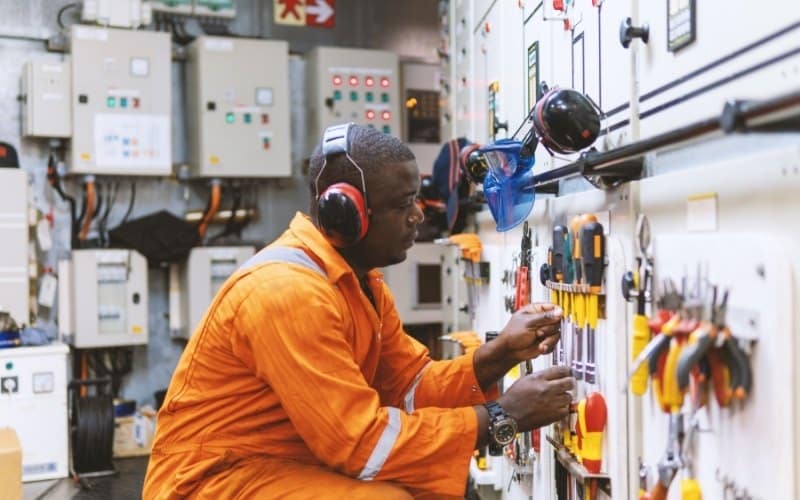
The Internet of Things (IoT) has found a massive application in the engine rooms of modern vessels. Thousands of smart sensors are now embedded into engines, turbines, and gearboxes. These sensors monitor temperature, vibration, and pressure in real-time.
Marine engineers use the data from these IoT devices to perform “Predictive Maintenance.” Instead of waiting for a part to fail or following a rigid calendar-based schedule, AI algorithms analyze the sensor data to predict exactly when a component is likely to wear out. This reduces downtime and prevents catastrophic mechanical failures in the middle of the ocean, representing a massive leap in operational technology.
Green Technology: Engineering a Sustainable Ocean Economy
As global pressure to reduce carbon emissions intensifies, marine engineering has become the primary vehicle for maritime decarbonization. The “tech” involved in making ships “green” is some of the most advanced in the engineering world.
Alternative Fuel Systems: Hydrogen and Ammonia
The traditional heavy fuel oil (HFO) used by ships is being phased out in favor of cleaner alternatives. Marine engineers are currently designing complex fuel delivery systems for Liquefied Natural Gas (LNG), Hydrogen, and Ammonia.
Hydrogen fuel cells, in particular, represent a significant technological challenge. Engineering a system that can store hydrogen at cryogenic temperatures or high pressures on a moving vessel requires advanced materials science and thermal engineering. Marine engineers are at the forefront of developing these “zero-carbon” propulsion systems, integrating fuel cell stacks with traditional battery storage to create hybrid power plants.
Energy Efficiency through Hull Optimization and Electrification
Beyond fuels, technology is being used to harvest energy from the environment. “Flettner rotors” and “suction sails” are modern, tech-heavy interpretations of wind power that use the Magnus effect to provide auxiliary propulsion.
Additionally, electrification is transforming short-sea shipping. For ferries and coastal vessels, marine engineers are designing massive battery arrays and shoreside charging robots. The software required to manage the power distribution between battery banks and electric motors is highly complex, requiring a deep understanding of both electrical engineering and software logic.
Marine Engineering in the Era of Cybersecurity
As ships become more connected, they also become more vulnerable. A modern ship is essentially a floating data center, and the role of the marine engineer now includes a significant focus on digital security.
Protecting Maritime Operational Technology (OT)
In the maritime world, there is a distinction between Information Technology (IT) and Operational Technology (OT). OT refers to the hardware and software that monitors or controls physical devices, such as the ship’s engines or steering gear. If a hacker gains access to a ship’s OT, they could potentially take control of the vessel.
Marine engineers work alongside cybersecurity experts to design “air-gapped” systems and secure communication protocols. They ensure that the Industrial Control Systems (ICS) used in the engine room are resilient against cyber-attacks, implementing encryption and multi-factor authentication for remote access points.
Satellite Connectivity and Secure Communication
The integration of Starlink and other Low Earth Orbit (LEO) satellite constellations has revolutionized ship-to-shore communication. Marine engineers are responsible for the installation and integration of these high-bandwidth systems. This connectivity allows for real-time monitoring of ship performance from land-based offices, but it also requires robust tech infrastructure to manage data traffic and protect against data breaches.
The Future Landscape: Subsea Robotics and Deep-Sea Exploration
What marine engineering does extends far below the surface of the water. The technology used in subsea engineering is some of the most robust and innovative in the field.
Remotely Operated Vehicles (ROVs) and AUVs
For tasks that are too deep or dangerous for human divers, marine engineers design and operate Remotely Operated Vehicles (ROVs) and Autonomous Underwater Vehicles (AUVs). These robots are equipped with high-definition cameras, robotic arms, and specialized sensors for hull inspections, pipeline maintenance, and scientific research.
The engineering challenge here involves creating housings that can withstand the crushing pressures of the deep ocean while maintaining delicate electronic connections. Advances in pressure-tolerant electronics and micro-robotics are allowing these machines to become smaller, smarter, and more capable of complex tasks like underwater welding and 3D mapping of the ocean floor.
Conclusion: The High-Tech Frontier
Marine engineering is no longer defined solely by wrenches and grease. It is a field defined by code, sensors, sustainable energy, and automated systems. As we look forward, the role of the marine engineer will continue to evolve into a multidisciplinary tech leader. Whether it is through the creation of digital twins, the implementation of AI-driven navigation, or the pursuit of zero-emission shipping, marine engineering is the essential technology that keeps the modern world moving across the waves. The future of the ocean is digital, and marine engineers are the architects of that transformation.
aViewFromTheCave is a participant in the Amazon Services LLC Associates Program, an affiliate advertising program designed to provide a means for sites to earn advertising fees by advertising and linking to Amazon.com. Amazon, the Amazon logo, AmazonSupply, and the AmazonSupply logo are trademarks of Amazon.com, Inc. or its affiliates. As an Amazon Associate we earn affiliate commissions from qualifying purchases.