
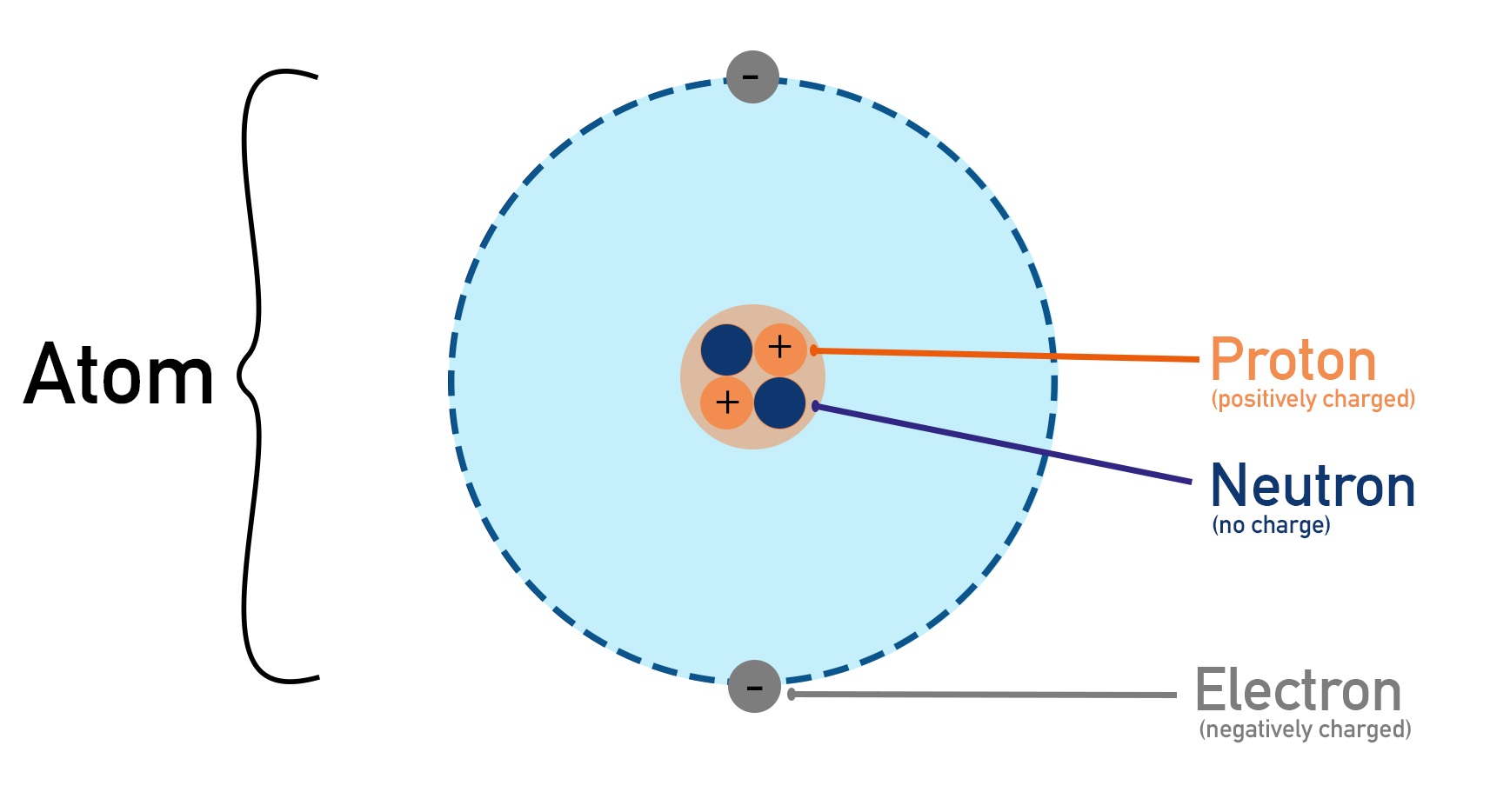
In the realm of physical chemistry, the neutrality of an atom is a state of perfect equilibrium. It occurs when the positive charge of the nucleus—driven by protons—is exactly countered by the negative charge of the orbiting electrons. This balance is what makes matter stable, allowing for the complex structures that build our universe. In the rapidly evolving landscape of technology, engineers and designers have adopted this “atomic” metaphor to solve one of the greatest challenges of the digital age: scalability.
The concept of “Atomic Design,” pioneered by Brad Frost, and the subsequent move toward micro-modular software architectures, mirror the laws of physics. In a tech ecosystem, an “atom” is the smallest functional unit of a system—a button, an input field, or a single line of API logic. But what makes these digital atoms “neutral”? In technology, neutrality refers to a state where a component is self-contained, unopinionated, and perfectly balanced, allowing it to function seamlessly across diverse environments without causing “interference” or systemic failure.

As we delve into the mechanics of modern software, we find that achieving this neutrality is the difference between a brittle, legacy-bound application and a robust, future-proof platform.
The Anatomy of the Digital Atom: Redefining the Building Blocks of Tech
To understand how neutrality is achieved in technology, we must first define the digital atom. In the early days of web and software development, pages were treated as monolithic entities. If you wanted to change a single element, you often had to risk destabilizing the entire structure. Modern tech has moved away from this “page-based” thinking toward a component-based philosophy.
From Biological Systems to Binary Structures
In the “Atomic Design” methodology, the hierarchy begins with atoms. These are the basic tags of HTML, the core variables of a style sheet, or the foundational functions of a backend service. Just as a physical atom cannot be broken down further without losing its identity, a tech atom is the smallest unit that still provides value.
However, the transition from monolithic code to atomic structures was not merely a stylistic choice; it was a response to the increasing complexity of hardware. With the explosion of mobile devices, wearables, and IoT gadgets, developers needed a way to ensure that a “Search” button looked and functioned identically on a 4-inch watch face and a 30-inch monitor. By isolating the atom, developers created a building block that could be audited, tested, and optimized in a vacuum.
Why Modularization is the New Standard
The move toward modularization is driven by the need for speed. In a high-stakes tech environment, “Time to Market” is the ultimate metric. When your system is built of neutral, reusable atoms, you no longer have to reinvent the wheel for every new feature. You simply reconfigure existing atoms into new “molecules” (groups of atoms) and “organisms” (complex components). This modularity ensures that the system remains agile. If an “atom” is neutral, it carries no “baggage” from its previous implementation, making it a plug-and-play asset for the next generation of software.
Achieving Technical Neutrality: The Key to Component Longevity
In software engineering, a “charged” atom is one that is too tightly coupled to its environment. For example, if a button component only works when placed inside a specific header, it has a “positive charge” toward that header—it is not neutral. To make an atom neutral, it must be decoupled from context, logic, and specific data structures.
Decoupling and the Pursuit of Pure Functions
The gold standard of neutrality in programming is the “pure function.” A pure function is a digital atom that, given the same input, will always produce the same output without causing side effects elsewhere in the system. This is the definition of technical neutrality.
When developers write “neutral” code, they ensure that the component does not reach out and touch parts of the database or UI it shouldn’t. This encapsulation prevents the “spaghetti code” that plagued early software. By maintaining neutrality, teams can update a specific atom—perhaps upgrading its security protocol or optimizing its render speed—without worrying that the rest of the application will collapse like a house of cards.
The Role of Design Tokens in Neutrality
Design tokens are the “subatomic particles” of the tech world. They are the smallest bits of information: a hex code for color, a pixel value for spacing, or a millisecond value for animation. For an atom (like a form field) to remain neutral, it must not have hard-coded values. Instead, it should consume design tokens.

By using tokens, a brand can change its entire visual identity—from a “techy” blue to a “sustainable” green—by simply updating the subatomic values. The atoms themselves remain neutral; they simply reflect the “charge” of the tokens they are fed. This allows for a level of brand consistency and technical flexibility that was previously impossible.
The Impact of Atomic Neutrality on Scalability and UX
When we ask what makes an atom neutral in a tech context, we are ultimately asking about the health of the User Experience (UX). A neutral system is a predictable system. For the end-user, this manifests as a seamless, intuitive interface where every interaction feels familiar, regardless of which part of the application they are using.
Reducing Cognitive Load and Technical Debt
Technical debt is the “entropy” of the software world. It is the cost of choosing an easy, messy solution now instead of a better, atomic solution later. Systems built with “charged” or non-neutral components accumulate debt rapidly. Every time a developer has to write a “workaround” to make a component fit a new use case, the system becomes more unstable.
Neutral atoms reduce cognitive load for both the developer and the user. For the developer, a library of neutral components means they don’t have to guess how a piece of code will behave. For the user, it means that a “Cancel” button always looks and acts like a “Cancel” button, reducing the friction of learning a new interface. This stability is the bedrock of user retention in the competitive app economy.
Multi-Platform Synchronization
In the current tech landscape, a single service might exist as a web app, an iOS app, an Android app, and a voice-controlled AI assistant. Achieving neutrality allows for a “Create Once, Deploy Everywhere” strategy. By defining the atomic logic and design in a platform-neutral way, companies can ensure that their core value proposition isn’t lost in translation between different operating systems. This “Universal Atom” approach is what allows companies like Spotify or Airbnb to maintain a singular identity across thousands of different device types.
Security and Stability: The “Charge” of the Digital Atom
Neutrality is not just about aesthetics and ease of use; it is a fundamental requirement for digital security. In an era of constant cyber threats, a “neutral” atom acts as a containment unit. If every component is decoupled and independent, a vulnerability in one area is less likely to lead to a total system compromise.
Encapsulation as a Defense Mechanism
In digital security, we often talk about the “attack surface.” A large, monolithic application has a massive, interconnected attack surface. However, an atomic architecture allows for better encapsulation. If an atom is truly neutral and independent, security teams can apply “Zero Trust” principles at the component level.
Each atom can be required to verify its “charge” (identity and permissions) before interacting with others. This prevents a “cascading failure” where an exploit in a minor UI component allows an attacker to pivot into the core database. Neutrality, in this sense, is a form of digital isolation that preserves the integrity of the whole.
Ensuring Data Integrity in Atomic Transactions
In backend engineering, neutrality is often reflected in “statelessness.” A neutral service does not store the history of previous interactions; it treats every request as a fresh “atom” of work. This statelessness is what allows cloud platforms like AWS and Google Cloud to scale indefinitely. If a server becomes “charged” with too much session data, it becomes a bottleneck. By keeping transactions atomic and neutral, tech architectures can spin up thousands of identical instances to handle traffic spikes, then dissolve them just as quickly when the load drops.
Conclusion: The Future of Atomic Tech
What makes an atom neutral? In physics, it is the balance of protons and electrons. In technology, it is the balance between functionality and independence. As we move toward a future dominated by Artificial Intelligence and automated code generation, the importance of the “neutral atom” will only grow.
AI tools are increasingly capable of generating software, but they struggle with complex, intertwined legacy systems. AI thrives in atomic environments. When the building blocks of a system are neutral, well-defined, and decoupled, AI can assist in assembling those blocks with unprecedented speed and precision.
The goal for any modern tech leader is to strive for this state of atomic neutrality. By investing in design systems, modular architectures, and decoupled code, organizations can create a digital environment that is as stable, scalable, and resilient as the physical matter that surrounds us. In the end, the neutrality of our digital atoms is what allows the grander “molecule” of our businesses and innovations to flourish in a volatile digital world.
aViewFromTheCave is a participant in the Amazon Services LLC Associates Program, an affiliate advertising program designed to provide a means for sites to earn advertising fees by advertising and linking to Amazon.com. Amazon, the Amazon logo, AmazonSupply, and the AmazonSupply logo are trademarks of Amazon.com, Inc. or its affiliates. As an Amazon Associate we earn affiliate commissions from qualifying purchases.