
In the modern professional landscape, the concept of “branding” has migrated from corporate boardrooms and marketing agencies into the personal lives of every professional. Your personal brand is the unique combination of skills, experience, and personality that you want the world to see. While your digital footprint and verbal communication are vital, your visual presentation—specifically how you interpret “business casual”—serves as the immediate, non-verbal prologue to your professional story.
For women, the “business casual” dress code often presents a complex puzzle. Unlike the traditional “business formal” power suit, business casual offers a spectrum of choices that can either sharpen or dilute a personal brand. Navigating this niche requires more than just picking clothes; it requires a strategic understanding of how fabric, fit, and style contribute to your corporate identity and personal brand equity.

The Strategic Role of Business Casual in Modern Brand Identity
The evolution of workplace attire is a direct reflection of shifting corporate cultures. As organizations move toward flatter hierarchies and more collaborative environments, the rigid uniforms of the past have been replaced by business casual. However, from a branding perspective, “casual” does not mean “careless.” In fact, the flexibility of business casual demands a higher level of strategic thinking to maintain a professional edge.
The Shift from Formal Authority to Relatable Leadership
Historically, professional authority for women was signaled through mimicry of masculine silhouettes—heavy shoulder pads and stiff fabrics. Today, brand strategy focuses on authenticity and relatability. Business casual allows a professional woman to project warmth and accessibility without sacrificing competence. By moving away from the “armor” of a full suit, you invite collaboration. A well-tailored silk blouse paired with slim-fit trousers signals a brand that is sophisticated yet agile—a key trait in today’s fast-paced tech and creative economies.
Maintaining Visual Consistency Across Platforms
In branding, consistency is king. If your LinkedIn profile displays a high-resolution headshot in a structured blazer, but you show up to a stakeholder meeting in an oversized, pilled sweater, your personal brand suffers from “brand friction.” Business casual provides the bridge between these two worlds. It allows for a consistent visual identity that translates well from a Zoom call to an in-person networking event. By defining your specific version of business casual, you create a recognizable “visual trademark” that people associate with your professional reliability.
Curating Your Brand Palette: Essential Components of the Wardrobe
Building a business casual wardrobe is akin to designing a brand style guide. You need to select the “assets” that will represent you most effectively. For women, this involves balancing professional silhouettes with softer, more versatile pieces.
The Foundation: Blouses, Knitwear, and Tailored Tops
The top half of your outfit is your primary “brand real estate,” especially in the era of digital meetings. Business casual for women centers on high-quality tops that avoid the rigidity of a starched button-down but maintain structure.
- Shells and Blouses: Silk or high-quality synthetic blends provide a drape that looks expensive and professional. In terms of brand psychology, solid jewel tones (emerald, navy, plum) suggest stability and depth, while neutrals suggest clarity and precision.
- Refined Knitwear: A fine-gauge cashmere or merino wool sweater is a staple of the “polished” business casual brand. It suggests comfort and approachability while remaining firmly within the realm of professional attire.
The Anchor: Trousers, Skirts, and Dresses
The “business” in business casual is often carried by the bottom half of the ensemble.
- Tailored Trousers: Move away from denim unless the specific corporate culture explicitly calls for it. Chinos, ankle-length cigarette pants, or wide-leg wool trousers serve as excellent anchors.
- The Power of the Midi Skirt: A pencil skirt or a structured A-line midi skirt offers a feminine yet powerful silhouette. From a branding standpoint, the midi length is the gold standard for business casual, balancing elegance with modesty.
- Sheath and Wrap Dresses: These are the “one-and-done” solutions for professional branding. They provide a streamlined silhouette that looks intentional and organized—two qualities highly valued in any brand identity.
Layering as a Strategic Tool
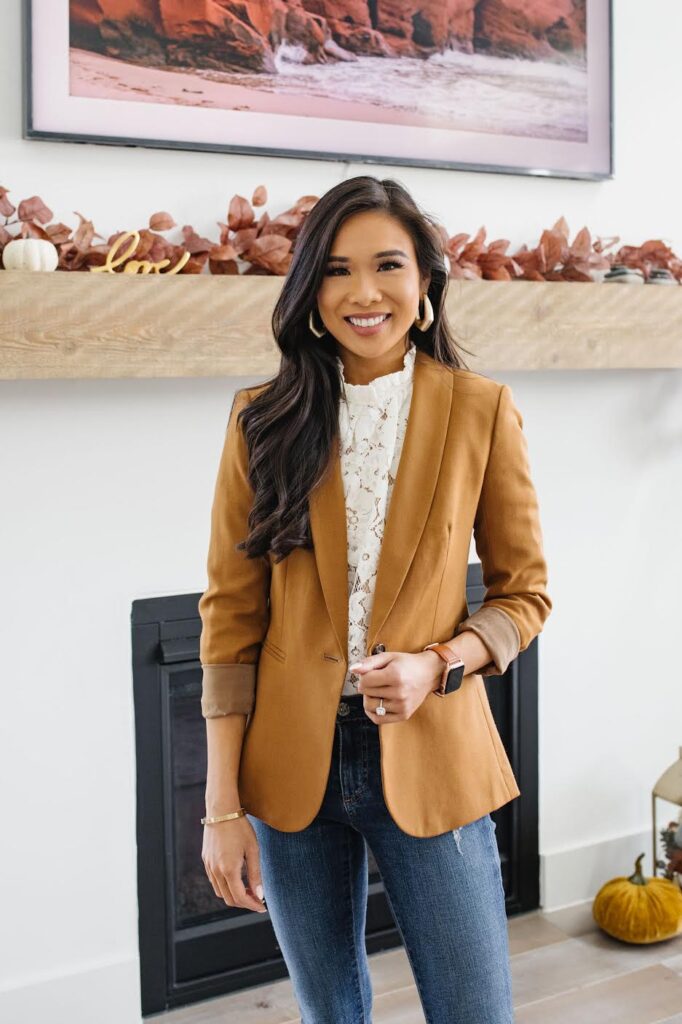
The blazer remains the most potent tool in a woman’s personal branding arsenal. In a business casual environment, the blazer doesn’t need to match the pants. An unstructured blazer in a contrasting color or texture (like tweed or linen) can instantly elevate a basic t-shirt and trouser combination to “Executive Business Casual.” It acts as a frame for your professional persona, adding a layer of authority to a relaxed look.
Navigating Industry-Specific Brand Standards
A crucial aspect of brand strategy is “audience awareness.” A brand that works in a creative advertising agency might fail in a traditional law firm. Business casual is not a monolithic standard; it is a fluid concept that must be calibrated to your industry’s expectations.
The “High-Trust” Brand (Finance, Law, Consulting)
In industries where trust and tradition are the core product, business casual leans closer to “business formal.” For women in these sectors, the brand should communicate “discretion” and “meticulousness.” This means darker palettes, minimal patterns, and structured fabrics. A navy blazer over a cream silk blouse and grey trousers is a classic “high-trust” business casual look. It signals that you respect the gravity of the industry while acknowledging the modern trend toward comfort.
The “Innovation” Brand (Tech, Startups, Creative Arts)
In tech-driven or creative fields, a brand that is too formal can actually be a detriment, signaling that you are “out of touch” or “stiff.” Here, business casual can be more expressive. This might include high-end dark denim, loafers or clean white leather sneakers (industry permitting), and bolder colors or unique architectural cuts. The goal is to project a brand that is forward-thinking, energetic, and unafraid of change.
The “Bridge” Brand (Management and Education)
For those in mid-level management or education, the brand needs to balance authority with empathy. This is the sweet spot for textures like corduroy, soft knits, and functional yet stylish footwear. The “bridge” brand uses business casual to appear like a leader who is still “on the ground” with their team.
The ROI of the Strategic Capsule Wardrobe
In brand design, “less is more” is a frequent mantra. Applying this to your professional wardrobe through a “capsule” approach ensures that your personal brand remains cohesive and high-quality without requiring an overwhelming amount of effort.
Investing in Quality over Quantity
A brand is only as strong as its weakest link. In a wardrobe, a single worn-out or ill-fitting garment can compromise the entire visual message. Strategic personal branding involves investing in fewer, higher-quality pieces that stand the test of time. A high-quality wool blazer may have a higher upfront cost, but its “cost-per-wear” and the “brand equity” it builds through its superior fit and finish make it a smarter investment than three cheaper, poorly constructed alternatives.
The Role of Fit and Tailoring in Brand Perception
Nothing undermines a professional brand faster than poor fit. Clothing that is too tight can appear unprofessional, while clothing that is too baggy can appear sloppy or unconfident. Tailoring is the “graphic design” of your personal brand; it ensures the lines are clean and the presentation is sharp. Even an affordable business casual piece can look like high-end “corporate identity” if it is tailored specifically to your proportions.
Accessorizing as a Brand Signature
If your clothing is the “logo,” your accessories are the “brand personality.” A signature watch, a high-quality leather tote, or a specific style of jewelry can become a recognizable part of your professional identity. For women, accessories in a business casual context should be purposeful. A structured leather bag signals organization and readiness, while a pair of classic pointed-toe flats or loafers signals a brand that is both practical and sophisticated.

Conclusion: Mastering the Art of Intentional Presence
What is women’s business casual clothing? At its core, it is a versatile tool for personal branding. It is the art of balancing professionalism with personality, and authority with accessibility. By viewing your wardrobe through the lens of brand strategy, you transform the daily act of getting dressed into a powerful exercise in identity management.
In a world where first impressions are formed in seconds, your interpretation of business casual tells the story of who you are before you ever say a word. When your visual identity aligns perfectly with your professional capabilities, you create a brand that is not only memorable but also undeniably influential. Whether you are navigating a boardroom, a startup hub, or a digital conference, your business casual choices are the visual shorthand for your commitment to excellence.
aViewFromTheCave is a participant in the Amazon Services LLC Associates Program, an affiliate advertising program designed to provide a means for sites to earn advertising fees by advertising and linking to Amazon.com. Amazon, the Amazon logo, AmazonSupply, and the AmazonSupply logo are trademarks of Amazon.com, Inc. or its affiliates. As an Amazon Associate we earn affiliate commissions from qualifying purchases.