
The global pursuit of sustainable energy has long been dominated by the visible giants of the industry: sprawling solar farms and towering wind turbines. However, beneath the surface of our oceans lies a vastly untapped and far more consistent power source. Wave power, the capture of energy from ocean surface waves and the conversion of that energy into electricity, represents one of the most promising frontiers in the “Tech” sector of renewable energy. Unlike solar or wind, which can be intermittent and unpredictable, the kinetic energy of the ocean is relentless.
As we transition toward a carbon-neutral future, the technology behind wave energy converters (WECs) is evolving from experimental prototypes into sophisticated, digitally integrated hardware systems. This article explores the engineering mechanics, the digital infrastructure, and the innovative tech trends that define wave power today.
The Mechanics of Modern Wave Energy Converters (WECs)
At its core, wave power is an engineering challenge of converting reciprocating mechanical motion into steady electrical current. Because ocean waves move in various directions and with varying intensities, the technology used to capture this energy must be both incredibly robust and highly adaptable. Engineers have developed several distinct classes of hardware to solve this problem.
Point Absorbers and Attenuators
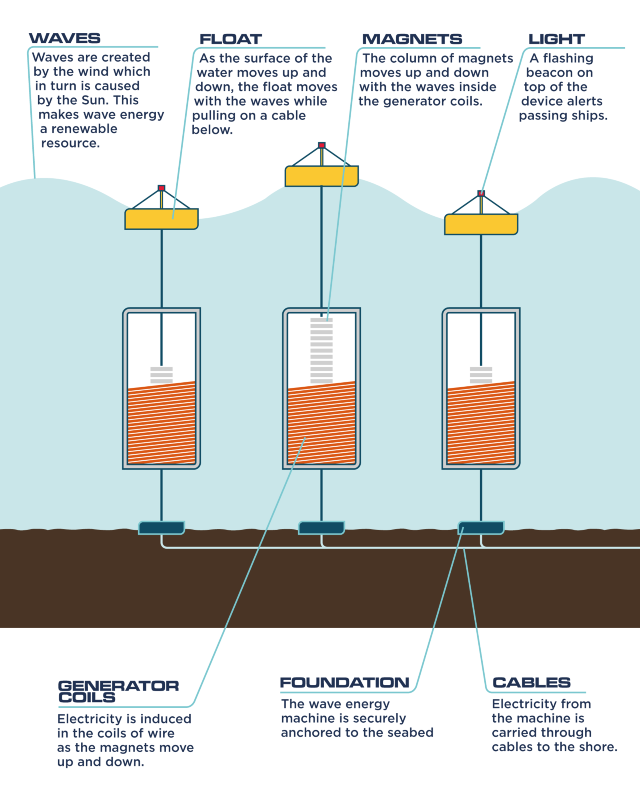
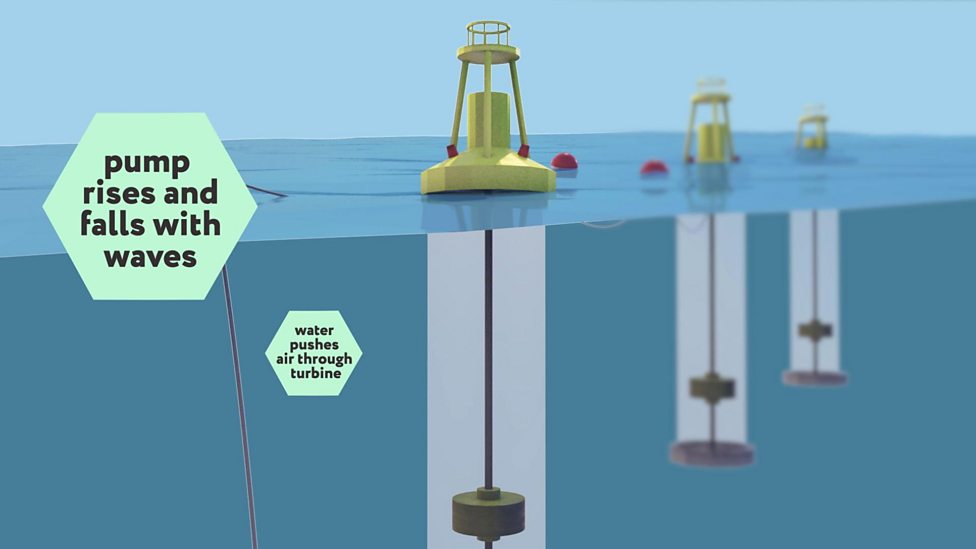
Point absorbers are perhaps the most recognizable wave power gadgets. These are floating structures—often resembling large buoys—that harvest energy from the rise and fall of the water level. As the buoy moves relative to a fixed base or a secondary floating component, it drives a hydraulic ram or a linear generator.
Attenuators, on the other hand, are long, multi-segmented floating structures oriented parallel to the direction of the waves. As the wave passes down the length of the device, the flexing movements at the joints are captured by high-pressure hydraulic systems, which then drive generators. The technological sophistication here lies in the “Power Take-Off” (PTO) systems, which must manage high-torque, low-frequency motion and convert it into high-frequency electricity suitable for the grid.
Oscillating Water Columns (OWC)
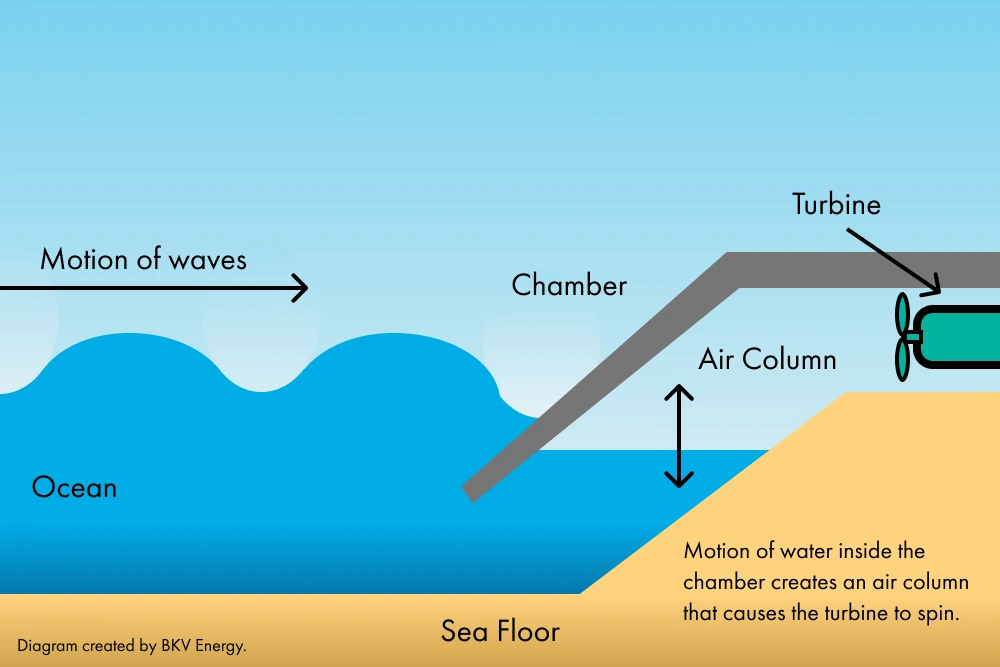
The Oscillating Water Column is a masterclass in pneumatic engineering. These structures are partially submerged chambers open to the sea below. As waves enter and retreat, the water level inside the chamber rises and falls, acting like a giant piston. This movement compresses and decompresses the air trapped above the water, forcing it through a turbine.
The “Tech” breakthrough in OWC systems is the Wells Turbine. Unlike standard turbines, a Wells Turbine rotates in the same direction regardless of which way the air is flowing. This eliminates the need for complex valving systems, reducing mechanical failure points and increasing the efficiency of the energy capture.
Overtopping Devices
Overtopping devices function similarly to a hydroelectric dam but are located at sea. These structures capture the crests of waves in a reservoir situated above the surrounding sea level. The potential energy of the stored water is then released through low-head turbines as it drains back into the ocean. The technological hurdle here is the design of the “collector” arms, which must use advanced hydrodynamics to funnel as much water as possible into the reservoir, even in calm seas.
The Integration of AI and Digital Twin Technology
Hardware is only half the story. The modern wave power sector is increasingly defined by the software and data analytics that manage these offshore assets. Because the ocean environment is notoriously hostile, “Digital Security” and “Predictive Maintenance” are critical components of the tech stack.
Predictive Analytics for Wave Patterns
One of the primary tech trends in wave power is the use of Artificial Intelligence (AI) to predict wave behavior in real-time. By integrating machine learning algorithms with satellite data and localized ocean sensors, operators can forecast the arrival of massive swells or periods of calm.
AI-driven control systems can then adjust the “stiffness” or damping of a Wave Energy Converter’s PTO system. By tuning the device to the frequency of the incoming waves—a process known as “latching” or “declutching”—the software can significantly amplify the energy yield. This digital optimization ensures that the hardware is always operating at its peak resonance, much like tuning a radio to the right frequency.
Autonomous Maintenance and Robotics
Maintaining energy infrastructure in the middle of the ocean is dangerous and expensive. To solve this, the industry is leaning heavily into underwater robotics and autonomous underwater vehicles (AUVs). These gadgets are equipped with high-resolution cameras and AI-based image recognition to scan hulls and submerged cables for corrosion or structural fatigue.
Furthermore, “Digital Twin” technology allows engineers on shore to create a high-fidelity virtual replica of the offshore wave farm. Every sensor reading from the physical device is mirrored in the digital twin, allowing for “what-if” simulations and the prediction of mechanical failures before they occur. This convergence of IoT (Internet of Things) and heavy engineering is what makes wave power a true high-tech industry.
Engineering Challenges and Material Science Innovations
The technical barrier to wave power has never been a lack of energy—it has been the sheer brutality of the environment. Designing a machine that can survive a “one-hundred-year storm” while remaining sensitive enough to capture energy from a light swell requires cutting-edge material science.
Corrosion Resistance and Structural Integrity
Saltwater is one of the most corrosive substances on the planet. Traditional steel structures require constant painting and maintenance to prevent rust. The latest tech reviews of wave energy hardware show a shift toward advanced composites and carbon-fiber-reinforced polymers. These materials offer the high strength-to-weight ratio needed to withstand massive wave loads while being naturally resistant to electrochemical corrosion.
In addition to materials, the “Bio-fouling” tech—preventing barnacles and algae from growing on the devices—has seen innovation. Engineers are now using non-toxic, silicon-based “foul-release” coatings and even UV-light emitting diodes (LEDs) integrated into the hull surfaces to prevent marine growth, which can otherwise add tons of weight and drag to the system.
Grid Integration and Energy Storage Solutions
A major technical challenge for all renewables is “smoothing” the output. Wave energy is more consistent than wind, but it still pulses with every passing wave. To make this power “grid-ready,” wave farms utilize sophisticated power electronics.
High-voltage direct current (HVDC) technology is often used for long-distance subsea transmission to minimize energy loss. On the software side, smart inverters and supercapacitors are used to buffer the short-term fluctuations in power, ensuring that the electricity hitting the mainland grid is stable and at the correct frequency. This digital-to-electrical interface is a critical area of R&D, as it allows wave power to play nicely with existing energy infrastructures.
The Future Roadmap: Scaling the Blue Economy
The trajectory of wave power technology suggests a future where our energy needs are met by multi-modal offshore platforms. The “Tech” community is currently looking at how to combine wave, wind, and hydrogen production into single, massive offshore hubs.
Hybrid Offshore Platforms
The next logical step in the evolution of wave tech is the hybrid platform. These are structures that feature wind turbines on top and wave energy converters below the waterline. By sharing the same subsea cabling and structural foundations, the “levelized cost of energy” (LCOE) is significantly reduced.
Moreover, these platforms are being designed to act as “recharging stations” for autonomous shipping and subsea data centers. As land-based real estate for data centers becomes more expensive and cooling becomes more difficult, the tech trend of “subsea cloud computing” cooled by the surrounding ocean and powered by wave energy is moving from science fiction to pilot projects.
Policy-Driven Tech Acceleration
While the focus remains on the engineering, the speed of wave power adoption is increasingly dictated by “Regulatory Tech” and streamlined simulation software. Modern CAD (Computer-Aided Design) and CFD (Computational Fluid Dynamics) tools allow startups to test thousands of iterations of a WEC design in a virtual environment before a single piece of steel is cut.
This digital-first approach to hardware development has shortened the R&D cycle from decades to years. As governments offer more “Green Tech” incentives, we are seeing a surge in “Digital Security” protocols to protect this critical infrastructure from cyber-attacks, ensuring that our future energy grid is as resilient in the digital world as it is in the physical ocean.
In conclusion, wave power is far more than just “water-powered electricity.” It is a complex synergy of mechanical engineering, AI-driven optimization, and advanced material science. While it is currently in an earlier stage of maturity compared to solar and wind, the technological foundations being laid today suggest that the ocean’s waves will soon be a cornerstone of the global tech-driven energy landscape. The “Blue Economy” is rising, and its engine is the sophisticated, relentless power of the wave.
aViewFromTheCave is a participant in the Amazon Services LLC Associates Program, an affiliate advertising program designed to provide a means for sites to earn advertising fees by advertising and linking to Amazon.com. Amazon, the Amazon logo, AmazonSupply, and the AmazonSupply logo are trademarks of Amazon.com, Inc. or its affiliates. As an Amazon Associate we earn affiliate commissions from qualifying purchases.