
For decades, the world of consumer electronics was a fragmented landscape of proprietary chargers, tangled cables, and “barrel” connectors. If you lost your laptop charger, you had to hunt for a specific model from the same manufacturer. If your phone died, you needed a different cable entirely. This era of technological isolationism began to crumble with the advent of USB, but it was the introduction of USB-C Power Delivery (USB-PD) that truly revolutionized how we think about power.
USB-C Power Delivery is not just a faster way to charge your smartphone; it is a sophisticated protocol designed to provide a universal power standard for almost every portable electronic device in existence. From wireless earbuds requiring a trickle of energy to high-end gaming laptops demanding a massive surge of power, USB-PD manages it all through a single, standardized interface.

1. The Architecture of USB-C Power Delivery
To understand USB-C PD, one must first distinguish between the physical connector and the underlying communication protocol. While the USB-C port is the physical “hole” and “plug” that we see, Power Delivery is the “language” spoken between the charger and the device to determine how much electricity should flow.
The Difference Between USB-C and USB-PD
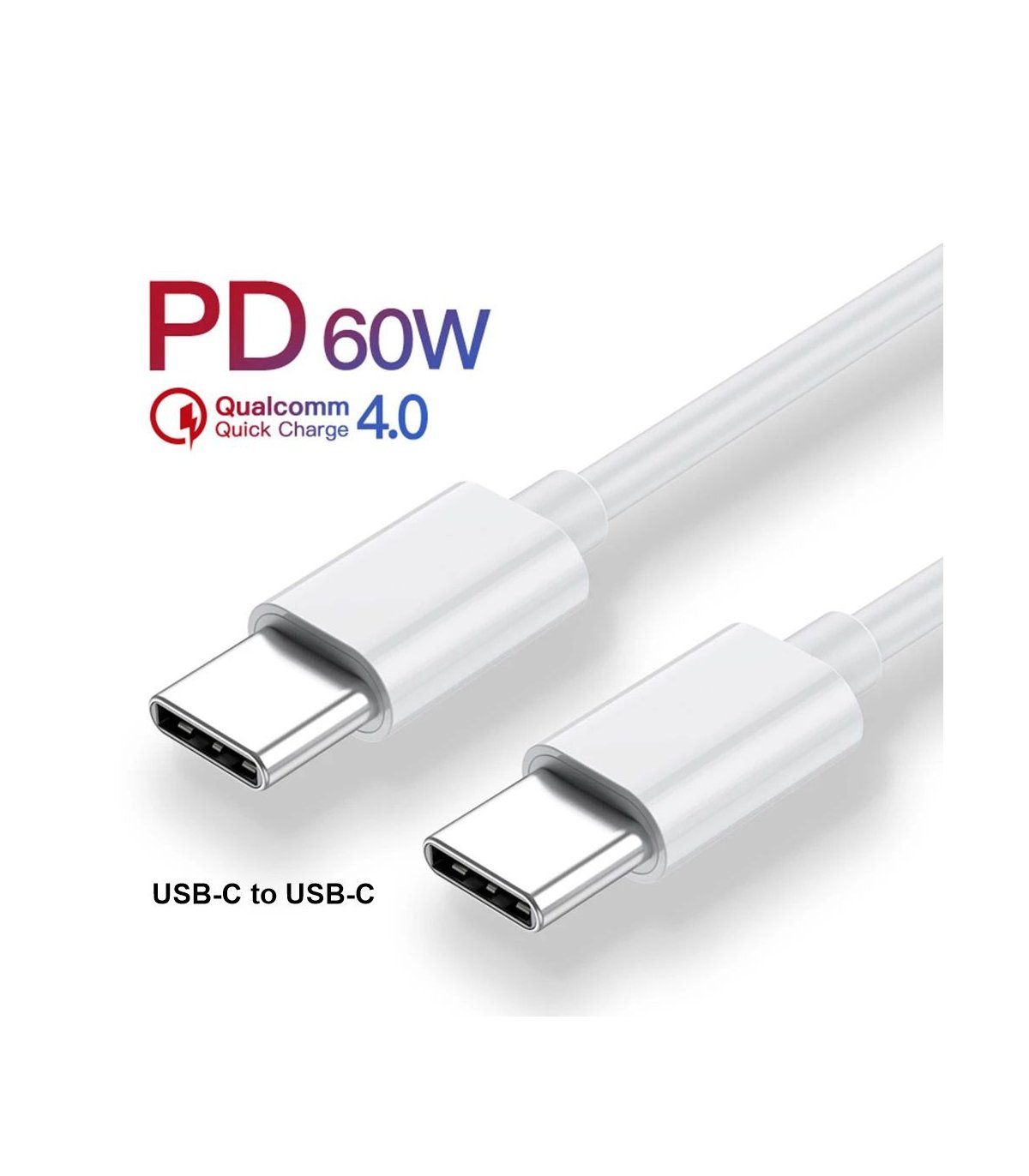
It is a common misconception that all USB-C cables and ports are capable of Power Delivery. USB-C refers to the physical shape of the connector—the reversible, 24-pin oval plug. USB-PD, however, is a specific power specification that runs on top of the USB-C standard. While a standard USB-C port might only provide 7.5W or 15W of power, a USB-C port equipped with Power Delivery can currently scale up to 240W.
The Communication “Handshake”
The defining characteristic of USB-PD is its bidirectional communication. When you plug a PD-compatible device into a PD charger, they engage in a “handshake.” The device tells the charger exactly how much voltage and current it can handle, and the charger responds by providing the optimal power profile. This prevents overcharging and ensures that a small device, like a smartwatch, isn’t fried by a high-output laptop charger.
Role Reversal and Power Direction
Unlike older USB standards where power only flowed from a “host” (like a PC) to a “peripheral” (like a phone), USB-PD allows for role reversal. This means your laptop can charge your phone, but if your laptop battery is low, a portable power bank can charge the laptop through that same port. The protocol dynamically negotiates which device should be the power source and which should be the sink.
2. How USB-PD Manages Voltage and Current
Traditional USB charging was limited to 5 volts. To increase power, manufacturers had to increase the amperage, which led to thicker cables and heat dissipation issues. USB-PD solves this by increasing the voltage, allowing for significantly more power to be transmitted efficiently.
Standard Power Profiles
USB-PD utilizes specific voltage “buckets” to ensure compatibility across different tiers of hardware. The standard profiles typically include 5V, 9V, 15V, and 20V. For example:
- 5V/9V: Generally used for smartphones and small accessories.
- 15V: Ideal for tablets and smaller ultrabooks.
- 20V: The standard for most laptops and high-performance mobile workstations.
Programmable Power Supply (PPS)
A major leap in the USB-PD 3.0 specification was the introduction of Programmable Power Supply (PPS). PPS allows the device to request non-standard voltages in very small increments (as small as 20mV). This is crucial for modern fast-charging smartphones, as it allows the device to adjust the voltage in real-time based on the battery’s thermal state, reducing heat and extending the overall lifespan of the battery.
Extended Power Range (EPR) and the 240W Barrier
Until recently, USB-PD was capped at 100W. While sufficient for most office laptops, this wasn’t enough for power-hungry gaming rigs or professional video editing machines. The USB Implementers Forum (USB-IF) introduced USB-PD 3.1 with Extended Power Range (EPR), which adds 28V, 36V, and 48V profiles. This pushed the maximum power delivery to 240W, effectively marking the beginning of the end for proprietary AC adapters even for high-performance hardware.
3. The Benefits of a Unified Power Ecosystem
The shift toward USB-C PD is driven by more than just convenience; it is an evolution toward efficiency, sustainability, and technological synergy.
The “One Cable” Future
The primary benefit for the consumer is the reduction of electronic clutter. In a USB-PD-centric world, a single high-quality cable and a powerful GaN (Gallium Nitride) charger can power a MacBook Pro, a Nintendo Switch, an iPad, and an Android phone. This interoperability simplifies travel and minimizes the “nest” of cables typically found behind desks and nightstands.
Environmental Impact and E-Waste Reduction
By standardizing power, regulatory bodies (most notably the European Union) are forcing manufacturers to adopt USB-C. This move significantly reduces e-waste. When consumers don’t need a new proprietary charger with every new device they purchase, fewer chargers end up in landfills. Manufacturers are increasingly shipping devices without “power bricks” in the box, under the assumption that the consumer already owns a compatible USB-PD charger.
Enhanced Safety Protocols
USB-PD is inherently safer than legacy charging methods. Because the charger and device are in constant communication, the system can instantly shut down power if it detects a short circuit, an overheating cable, or an incompatible voltage request. This intelligent monitoring protects the expensive internal components of modern gadgets from electrical surges.
4. Hardware Requirements: Cables and E-Markers
To take full advantage of USB-C Power Delivery, the entire chain—the charger, the cable, and the device—must support the protocol. The most often overlooked link in this chain is the cable.
The Importance of E-Marker Chips
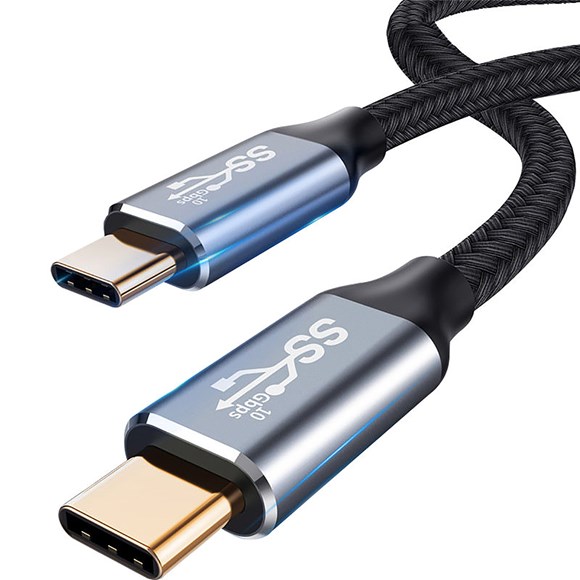
Not all USB-C cables are created equal. Any cable intended to carry more than 3A of current (generally anything over 60W) must contain an “E-Marker” (Electronic Marker) chip. This chip acts as a digital ID card for the cable, telling the connected devices its maximum wattage and data speed capabilities. If you use a cheap, non-E-marked cable with a 100W charger, the system will automatically throttle the power to a safe 60W to prevent the cable from melting.
Navigating Wattage Ratings
When purchasing hardware, it is vital to match the wattage to your needs. A 30W PD charger is excellent for fast-charging an iPhone, but it will barely keep a laptop battery stable during heavy use. Conversely, using a 140W charger on a smartphone is perfectly safe, as the phone will only “pull” the amount of power it needs (usually 18W–27W). In the world of USB-PD, it is generally better to have a charger with a higher wattage than you think you need.
Data Transfer vs. Power Delivery
It is important to note that a cable’s ability to deliver power does not always correlate with its ability to transfer data. Some USB-C PD cables are optimized for 100W charging but only support USB 2.0 data speeds (480 Mbps). If you require high-speed data for external hard drives or 4K video output (DisplayPort Alt Mode) alongside fast charging, you must look for cables labeled as USB 3.2 or USB4.
5. The Future: GaN Technology and Beyond
As USB-PD continues to mature, it is being paired with advancements in semiconductor material science, specifically Gallium Nitride (GaN).
The GaN Revolution
For years, chargers used silicon-based components. Silicon, however, has physical limits regarding heat and efficiency. GaN is a crystal-like material that can handle much higher voltages and conduct electricity more efficiently with less heat loss. This allows manufacturers to create 100W+ USB-PD chargers that are half the size of traditional silicon chargers. The marriage of USB-PD’s intelligence and GaN’s efficiency has made ultra-portable, high-power charging a reality.
Integration into Infrastructure
We are already seeing USB-C PD ports integrated into airplane seats, hotel wall outlets, and automotive dashboards. As the standard becomes ubiquitous, the need for the traditional AC wall plug will diminish for mobile electronics. We are moving toward an era where “power” is a universal utility provided through a standard port, much like Wi-Fi is a universal utility for data.
Conclusion
USB-C Power Delivery is the most significant advancement in consumer power technology in the last two decades. By combining high-wattage output with intelligent negotiation and a universal connector, it has solved the problem of proprietary fragmentation. While the technical nuances—voltages, E-markers, and PPS—can be complex, the result for the end-user is simple: a faster, safer, and more convenient way to stay connected. Whether you are a creative professional or a casual smartphone user, USB-PD is the invisible force ensuring your tech is ready when you are.
aViewFromTheCave is a participant in the Amazon Services LLC Associates Program, an affiliate advertising program designed to provide a means for sites to earn advertising fees by advertising and linking to Amazon.com. Amazon, the Amazon logo, AmazonSupply, and the AmazonSupply logo are trademarks of Amazon.com, Inc. or its affiliates. As an Amazon Associate we earn affiliate commissions from qualifying purchases.