
The video game industry has undergone a radical transformation over the last three decades, evolving from a niche hobby into a dominant force in global entertainment. Today, the production of a “Triple-A” (AAA) title often mirrors or exceeds the complexity and cost of a Hollywood blockbuster. When we ask, “What is the most expensive game ever made?” we are not just looking at a single figure on a balance sheet; we are looking at a milestone in software engineering, digital artistry, and technological ambition.
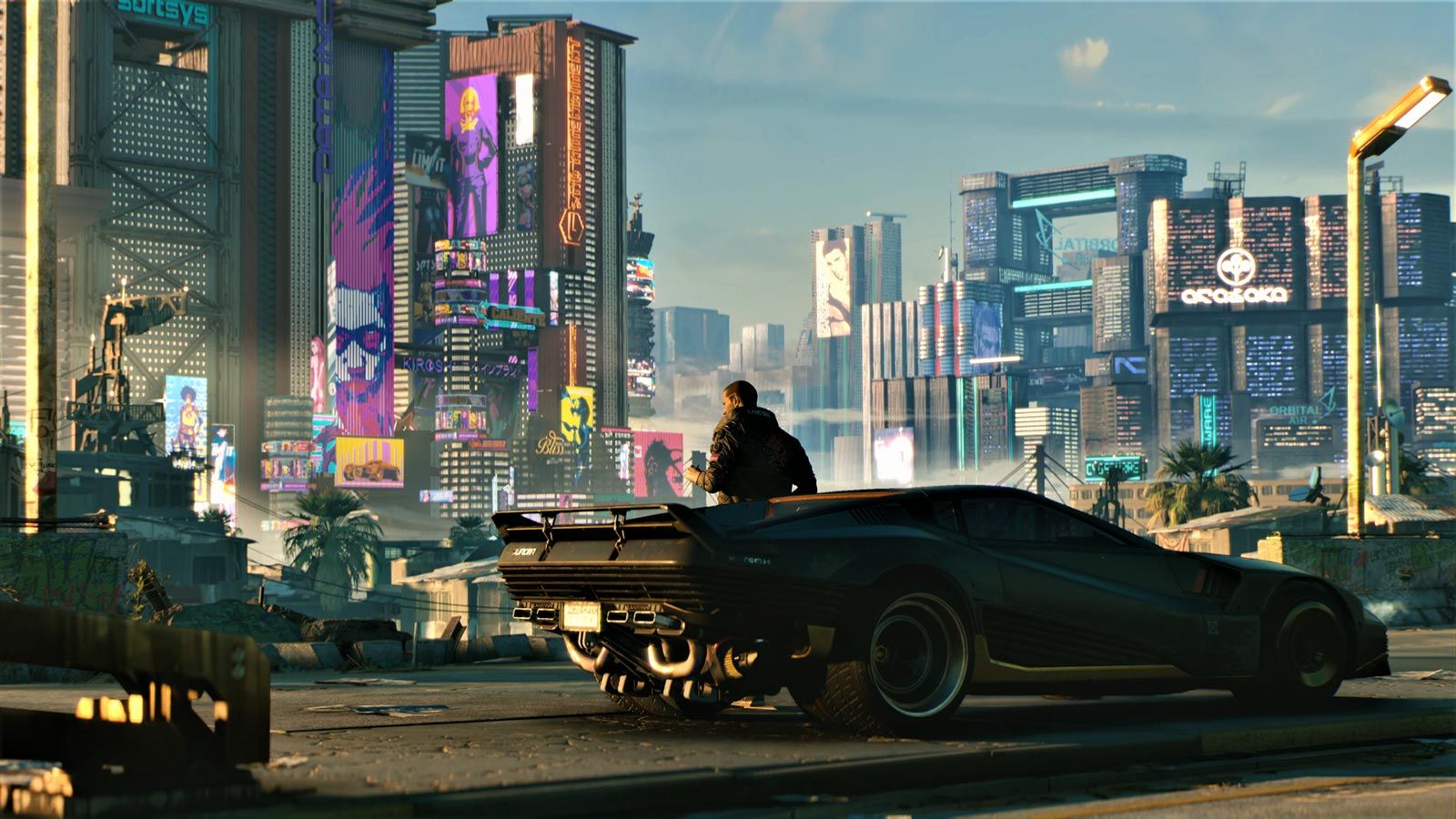
In the current landscape, the title of “most expensive” is often contested between massive corporate releases and ambitious, long-term technical projects. Whether it is Rockstar Games’ Red Dead Redemption 2 or the perpetually developing Star Citizen, these projects represent the pinnacle of what modern technology can achieve.
The Financial and Technical Scale of Modern Game Development
To understand the cost of a modern masterpiece, one must first distinguish between development costs and marketing budgets. In the tech world, “development” refers to the actual engineering, coding, and asset creation, while marketing ensures the product reaches a global audience. For the most expensive games in history, these two figures combined often push the total investment toward the billion-dollar mark.
Defining the Budget: Production vs. Marketing
In high-end software development, the “burn rate”—the amount of money spent per month—is staggering. A top-tier game studio might employ upwards of 1,000 developers, including software engineers, UI/UX designers, and technical artists. When a project spans eight years, as was the case with Red Dead Redemption 2, the payroll alone accounts for hundreds of millions of dollars. However, the tech industry dictates that a great product is invisible without a platform. Consequently, marketing budgets often equal or exceed the production costs, covering global digital distribution, server stress testing, and massive advertising campaigns.
The Current Title Holders: Star Citizen and Red Dead Redemption 2
As of 2024, Star Citizen holds a unique, albeit controversial, position as the most expensive game ever developed. Unlike traditional studio-funded projects, it is a crowdfunded behemoth that has surpassed $600 million in development costs alone. From a tech perspective, Star Citizen is an attempt to build a “seamless” universe using procedural generation and advanced physics engines.
On the corporate side, Red Dead Redemption 2 is widely cited as the most expensive traditional release. While Rockstar Games does not release official figures, analysts estimate the combined development and marketing costs to be between $540 million and $600 million. The sheer technical density of the game—from the way snow deforms to the AI routines of thousands of NPCs—sets a benchmark for what financial power can buy in software.
Technological Drivers of Escalating Costs
Why does it cost so much to build a game today? The answer lies in the exponential increase in technical fidelity. As hardware capabilities (like the PlayStation 5, Xbox Series X, and high-end NVIDIA GPUs) grow, the software must evolve to utilize that power, requiring more complex assets and more sophisticated code.
High-Fidelity Assets and the “Uncanny Valley”
One of the most significant costs in modern gaming is the creation of 4K and 8K assets. In the past, a 3D model of a character might consist of a few thousand polygons. Today, characters are built with millions of polygons, featuring hyper-realistic skin shaders, simulated hair, and “motion-matched” animations.
To achieve this, studios use a technology called photogrammetry—a process of taking thousands of high-resolution photos of real-world objects and using software to stitch them into 3D models. While this results in breathtaking realism, the technical pipeline required to manage, compress, and render these assets in real-time is incredibly expensive to maintain.
Custom Engines and Software Architecture
While many developers use third-party tools like Unreal Engine 5, the most expensive games are often built on proprietary “in-house” engines. Rockstar uses the RAGE (Rockstar Advanced Game Engine), while Guerrilla Games uses Decima.
Building a custom engine is a monumental tech undertaking. It requires a dedicated team of engine programmers to write the code that handles lighting, physics, and sound. The advantage is that the engine can be perfectly optimized for the specific needs of the game (e.g., the massive open-world streaming of GTA V). The disadvantage is the astronomical cost of building and updating this foundational software from scratch.
The Human Element: Engineering at Scale
Software is made by people, and in the world of high-budget gaming, the “human tech” is the most significant investment. Managing a team of 2,000 people across three continents is a logistical and technological challenge that requires sophisticated version control and collaborative software.

Massive Development Teams and Global Collaboration
The days of a game being made by ten people in a basement are over for the AAA sector. Today, “co-dev” (collaborative development) is the norm. A studio in California might handle the core gameplay mechanics, while a studio in India handles environment art, and a studio in Scotland manages the networking code.
Synchronizing these efforts requires a robust technical infrastructure. Large-scale Perforce servers, high-speed fiber-optic pipelines for transferring terabytes of data daily, and advanced project management AI are all part of the hidden costs of making the world’s most expensive games.
Motion Capture and Voice Acting Technology
Modern high-budget games are as much “digital cinema” as they are software. The cost of “Performance Capture” (PCAP) has skyrocketed. This involves not just recording voice lines, but capturing the facial expressions and body movements of actors simultaneously.
The technology used here is the same used in films like Avatar. It requires specialized soundstages equipped with hundreds of infrared cameras and sophisticated software to translate human movement into digital data. When you hire A-list talent and put them in “mocap” suits for months, the technical and payroll costs add up to a significant portion of the total budget.
The Role of Infrastructure and Live Services
In the modern tech era, the “launch” of a game is no longer the end of its development. We have moved into the age of “Games as a Service” (GaaS). This model requires a permanent technological backbone that can support millions of concurrent users.
Cloud Computing and Server Maintenance
For games like Grand Theft Auto Online or Cyberpunk 2077 (following its extensive post-launch technical overhaul), the cost of server infrastructure is immense. To provide a lag-free experience for a global player base, developers must invest in vast server farms and cloud computing services like AWS or Azure.
This infrastructure must be maintained 24/7. Engineers must constantly monitor for bugs, deploy “hotfixes,” and prevent DDoS attacks. This ongoing digital security and server maintenance mean that the “cost” of the game continues to rise every single day the servers are live.
Continuous Updates: The “Forever Game” Model
The most expensive games are often those that never stop being built. Star Citizen is the prime example, but even titles like Destiny 2 or Fortnite represent billions of dollars in cumulative investment.
The tech challenge here is “Technical Debt.” As new features are added to an aging codebase, the software becomes more fragile. Keeping a game running for a decade requires constant “refactoring” (rewriting old code to work with new tech), which is a labor-intensive and costly process that ensures the game remains compatible with new operating systems and hardware.
The Future of High-Cost Gaming: AI and Procedural Frontiers
As we look toward the future, the cost of game development shows no signs of slowing down. Rumors suggest that the upcoming Grand Theft Auto VI could have a total budget exceeding $1 billion, potentially making it the most expensive piece of software ever created for the consumer market.
AI-Assisted Development: A Cost-Saving Solution?
To combat these rising costs, the tech industry is turning to Artificial Intelligence. Generative AI is being used to automate “grunt work,” such as generating textures, coding basic NPC behaviors, or testing for bugs.
While AI has the potential to reduce the time required for certain tasks, it also introduces new technical challenges. Integrating AI into a game engine requires specialized “AI Architects” and massive computational power for training models. In the short term, AI may actually increase the “Tech” spend as studios race to build the most advanced automated pipelines.

The Procedural Revolution
The goal for many high-budget developers is to move away from “hand-crafted” every pixel toward “procedural generation.” This technology uses algorithms to create vast landscapes or cities automatically. While this sounds like a cost-saver, the initial tech investment to build an algorithm that creates realistic and playable environments is immense.
As we move toward the next generation of gaming, the “most expensive game” will likely be defined by how well it integrates these automated systems with human creativity. Whether it is a galaxy of billions of stars or a single, hyper-detailed city, the intersection of massive capital and cutting-edge software engineering continues to push the boundaries of what is possible in the digital realm. The cost is high, but for the millions of players who inhabit these worlds, the technological payoff is unparalleled.
aViewFromTheCave is a participant in the Amazon Services LLC Associates Program, an affiliate advertising program designed to provide a means for sites to earn advertising fees by advertising and linking to Amazon.com. Amazon, the Amazon logo, AmazonSupply, and the AmazonSupply logo are trademarks of Amazon.com, Inc. or its affiliates. As an Amazon Associate we earn affiliate commissions from qualifying purchases.