
As individuals approach retirement, the shift from employer-sponsored health insurance to Medicare represents one of the most significant financial transitions they will ever make. For most, the primary concern isn’t just the monthly premium, but the potential for catastrophic financial loss due to unexpected medical emergencies. In the world of personal finance, the “Maximum Out-of-Pocket” (MOOP) limit is a critical metric for risk management. However, when it comes to Medicare, the answer to “what is the maximum out-of-pocket” is surprisingly complex and depends entirely on how you structure your coverage.
Understanding these limits is not merely a healthcare decision; it is a core component of retirement wealth preservation. Without a clear grasp of where your financial liability ends, your investment portfolio and savings remain vulnerable to the rising costs of healthcare.
The Financial Structure of Original Medicare: A Gap in Protection
To understand Medicare’s out-of-pocket dynamics, one must first recognize that “Original Medicare” (Part A and Part B) does not function like a standard corporate PPO or HMO plan. Most commercial insurance plans are required by law to have an annual out-of-pocket maximum. Original Medicare, established in 1965, does not.
The Absence of a Global Limit
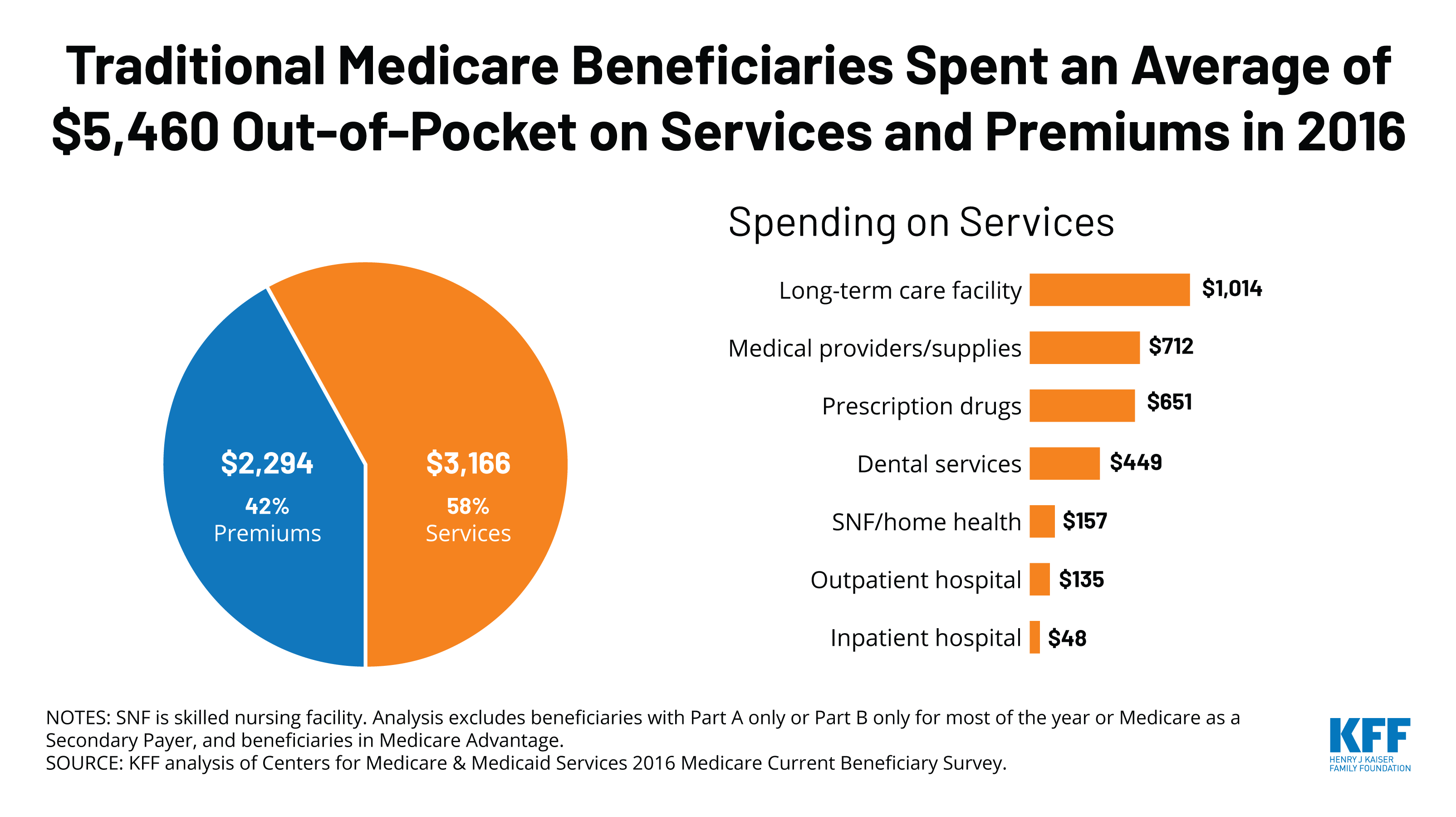
Under Original Medicare, there is no ceiling on what you might spend in a single year. While Part A (Hospital Insurance) and Part B (Medical Insurance) cover a significant portion of costs, the remaining 20% of outpatient services (Part B coinsurance) is your responsibility, and it is uncapped. If you face a chronic illness or a major surgical intervention requiring expensive physician services or durable medical equipment, that 20% can theoretically climb into the hundreds of thousands of dollars, posing a direct threat to your net worth.
Deductibles and Coinsurance Mechanics
From a financial planning perspective, you must account for the specific “per occurrence” or “per year” costs. Medicare Part A carries a deductible for each “benefit period”—not necessarily each year. If you are hospitalized, discharged, and then re-admitted after 60 days, you may have to pay the deductible again. Meanwhile, Part B carries an annual deductible, after which the 20% coinsurance kicks in. For a high-net-worth individual or a retiree on a fixed income, this lack of a safety net necessitates the use of secondary financial instruments to mitigate risk.
The Impact of “Excess Charges”
Another financial nuance of Original Medicare is the “excess charge.” Some providers are “non-participating,” meaning they do not accept the Medicare-approved amount as full payment. These providers are allowed to charge up to 15% above the approved amount. Without a cap on out-of-pocket spending, these incremental percentages can compound, leading to significant “leakage” in a retiree’s budget.
Medicare Advantage (Part C): The Introduction of Financial Certainty
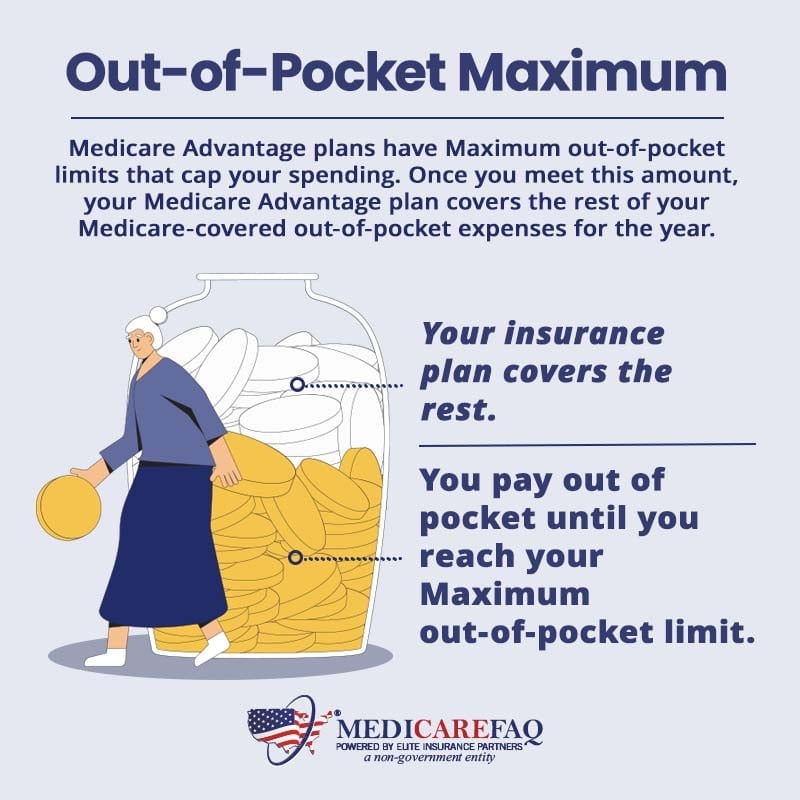
For those seeking the same type of financial structure found in the private sector, Medicare Advantage (Part C) offers a different approach. These plans are offered by private insurance companies approved by Medicare and are legally required to include an annual maximum out-of-pocket limit.
Mandatory MOOP Limits
The Centers for Medicare & Medicaid Services (CMS) sets a mandatory ceiling on how high a Medicare Advantage plan’s out-of-pocket limit can be. For 2024 and 2025, these limits are strictly regulated. While plans can set their limits lower to be more competitive in the marketplace, they cannot exceed the federal maximum. This provides a “hard stop” for your financial liability. Once you reach this limit through deductibles, copayments, and coinsurance for covered Part A and B services, the plan pays 100% for the remainder of the year.
In-Network vs. Out-of-Network Liabilities
From a budget-tracking standpoint, it is vital to distinguish between HMO and PPO structures within Part C. HMO plans typically only have an in-network MOOP; if you go out of network, you may be responsible for the entire bill. PPO plans, conversely, usually feature two limits: an in-network MOOP and a combined (in and out-of-network) MOOP. When calculating your emergency fund requirements, you should always look at the “combined” maximum to ensure you are prepared for the worst-case scenario.
Factoring in “Extra” Benefits
Medicare Advantage plans often include vision, dental, and hearing coverage. However, it is a common financial misconception that these services count toward your MOOP. Usually, the out-of-pocket maximum only applies to “Medicare-covered” services (Parts A and B). Expenses for dental implants or designer eyewear are typically separate line items in your financial ledger and do not reduce your progress toward the annual cap.
Prescription Drug Coverage (Part D): The New Era of Cost Capping

Historically, one of the most volatile areas of Medicare spending was prescription drugs. Until recently, Part D had a “coverage gap” (often called the donut hole) that could lead to thousands of dollars in out-of-pocket costs for seniors requiring specialty medications. However, recent legislative changes have fundamentally shifted the financial landscape of Part D.
The Inflation Reduction Act and the $2,000 Cap
The most significant development in Medicare finance in decades is the implementation of the Inflation Reduction Act. Starting in 2025, there will be a hard $2,000 annual out-of-pocket cap on prescription drugs for anyone with a Medicare Part D plan. This is a game-changer for financial forecasting. Previously, patients in the “catastrophic phase” still had to pay 5% of their drug costs, which, for cancer or MS medications, could still be exorbitant. The new $2,000 cap allows for precise annual budgeting of pharmaceutical needs.
The “Smoothing” Mechanism
Beyond the cap itself, the new regulations allow for “smoothing”—the ability to spread out-of-pocket drug costs over the course of the calendar year. Rather than hitting a $2,000 bill in January, beneficiaries can opt to pay in monthly installments. This is a vital tool for cash flow management, ensuring that a single expensive prescription doesn’t cause a liquidity crisis in a retiree’s portfolio.
Managing Tiered Formularies
Even with a cap, the way drugs are “tiered” by insurance companies affects how quickly you reach that limit. Drugs are categorized from Tier 1 (preferred generic) to Tier 5 (specialty). Understanding these tiers is essential for cost-benefit analysis when choosing a plan. If your specific medication is on a higher tier, you will reach your $2,000 cap faster, which may influence your decision on which Part D plan offers the best premium-to-value ratio.
Medigap: Purchasing a Zero-Liability Shield
For those who prefer the flexibility of Original Medicare (the ability to see any doctor in the U.S. who accepts Medicare) but want to eliminate the risk of uncapped costs, Medicare Supplement Insurance—or Medigap—is the primary financial strategy.
Eliminating the 20% Coinsurance
Medigap plans are private insurance policies designed to “fill the gaps” in Original Medicare. Plan G, currently the most popular choice for new enrollees, covers 100% of the Part B coinsurance, the Part A deductible, and even excess charges. From a wealth management perspective, paying a higher monthly premium for a Medigap plan effectively “pre-pays” your out-of-pocket costs. This turns an unpredictable variable expense (healthcare) into a predictable fixed expense (premiums).
The High-Deductible Medigap Option
For the budget-conscious investor who is comfortable with a degree of “self-insurance,” there are High-Deductible versions of Medigap plans (like High-Deductible Plan G). These offer a much lower monthly premium but require you to pay a specific amount out-of-pocket before the plan begins to pay. This is an excellent tool for those with significant cash reserves who want to protect themselves against catastrophic costs while keeping their monthly fixed overhead low.
Standardized Plans and Price Comparison
Medigap plans are standardized by the government, meaning a Plan G from Company A has the exact same benefits as a Plan G from Company B. Therefore, the financial strategy here is simple: shop for the lowest premium from a company with a strong credit rating. Unlike Medicare Advantage, where you judge the network and the MOOP, with Medigap, you are purely shopping for the most efficient price for a standardized financial shield.
Strategic Financial Planning for Healthcare Costs
Navigating Medicare is not a “set it and forget it” task; it requires an annual review of your financial exposure. As healthcare costs continue to outpace inflation, the way you manage your out-of-pocket maximums can determine the longevity of your retirement nest egg.
Integrating HSAs and Medicare
A common point of confusion in personal finance is the relationship between Health Savings Accounts (HSAs) and Medicare. Once you enroll in any part of Medicare, you can no longer contribute to an HSA. However, you can use existing HSA funds to pay for Medicare premiums (excluding Medigap) and all out-of-pocket costs (deductibles, copays, and coinsurance). This makes the HSA a powerful tax-advantaged vehicle for covering the “maximum out-of-pocket” expenses discussed earlier.
The Opportunity Cost of Late Enrollment
Financial efficiency in Medicare also involves avoiding penalties. If you miss your Initial Enrollment Period (IEP) and don’t have “creditable coverage,” you may face lifelong late enrollment penalties. These penalties are added to your monthly premiums, effectively increasing your “floor” of expenses forever. When calculating your long-term healthcare liability, ensuring timely enrollment is the simplest way to protect your ROI.
Portfolio Allocation for Healthcare
Finally, every retirement portfolio should have a “healthcare bucket.” By understanding whether your maximum out-of-pocket is $0 (with a premium-heavy Medigap plan), $8,000+ (with a Medicare Advantage plan), or unlimited (with Original Medicare only), you can better allocate your assets. If you choose a plan with a high MOOP, you must maintain higher liquidity in your short-term reserves to cover a potential “max-out” year without being forced to sell equities in a down market.
In conclusion, while “Original Medicare” lacks a maximum out-of-pocket limit, modern financial tools like Medicare Advantage, Medigap, and the new Part D regulations provide multiple pathways to cap your liability. By viewing Medicare through the lens of risk management and personal finance, you can protect your assets and ensure that your healthcare needs do not become a financial burden.
aViewFromTheCave is a participant in the Amazon Services LLC Associates Program, an affiliate advertising program designed to provide a means for sites to earn advertising fees by advertising and linking to Amazon.com. Amazon, the Amazon logo, AmazonSupply, and the AmazonSupply logo are trademarks of Amazon.com, Inc. or its affiliates. As an Amazon Associate we earn affiliate commissions from qualifying purchases.