
In the landscape of modern healthcare, the decision to pursue a career in nursing is often driven by a desire to help others. However, from a pragmatic perspective, it is equally a significant financial decision. When aspiring nurses evaluate their entry into the field, the most common crossroads they encounter is the choice between becoming a Registered Nurse (RN) through an Associate Degree in Nursing (ADN) or obtaining a Bachelor of Science in Nursing (BSN).
While both pathways lead to the same licensure—the NCLEX-RN—the financial implications of these two paths differ vastly. From initial tuition costs and “time-to-market” to long-term salary ceilings and leadership opportunities, the difference between an RN and a BSN is, at its core, a calculation of Return on Investment (ROI). This article breaks down the fiscal reality of these two degrees to help you determine which path aligns with your personal finance and wealth-building goals.

1. The Initial Investment: Comparing Education Costs and Opportunity Costs
The most immediate difference between the ADN (the standard path for an “RN-only” designation) and the BSN is the price tag of the education itself. In the world of personal finance, this is known as the “capital outlay.”
Associate Degree (ADN) Expenses
The ADN is often viewed as the “lean” entry point into the nursing profession. Typically offered by community colleges, the ADN takes approximately two years to complete. From a financial standpoint, the tuition is significantly lower than a four-year university. Students can often complete an ADN for a fraction of the cost, sometimes under $10,000 to $15,000 in total. For those looking to enter the workforce quickly and minimize student loan debt, the ADN offers a high “speed-to-income” ratio.
Bachelor’s Degree (BSN) Tuition and Opportunity Costs
A BSN is a four-year commitment usually hosted at a traditional university. The tuition can range from $40,000 to over $100,000 depending on whether the institution is public or private. Beyond the sticker price, one must consider the “opportunity cost.” By spending four years in school rather than two, a BSN student loses two years of potential RN wages—which, at a median salary of $80,000, represents a $160,000 gap in earned income before the BSN student even graduates. However, as we will explore, this initial deficit is often recovered through higher lifetime earnings.
2. Salary Trajectories and Immediate Earning Power
Once the license is obtained, the question shifts from “What did it cost?” to “What does it pay?” While an RN is an RN in the eyes of the licensing board, the payroll department often views them differently.
Starting Salaries for RN vs. BSN
In many hospital systems, the starting hourly wage for an ADN-prepared nurse and a BSN-prepared nurse is surprisingly similar. The difference might only be $1.00 to $3.00 per hour. On the surface, this makes the ADN look like the smarter financial move. If the pay is nearly the same, why pay four times more for the degree? However, this is a short-term view. Many Magnet-status hospitals (the gold standard in healthcare branding and quality) prioritize BSN candidates and may offer them signing bonuses or higher-tier starting steps that are unavailable to ADN holders.
Geographic Pay Differentials and Marketability
The financial value of a BSN varies by geography. In highly competitive markets like New York City, California, or Boston, a BSN is often the “minimum ante” to get into a high-paying hospital system. In these regions, a BSN holder might earn $10,000 to $20,000 more annually simply because they have access to the premier institutions that pay the highest market rates. For the RN with only an ADN, the lack of a BSN may limit them to lower-paying nursing homes or outpatient clinics, creating an immediate “income gap” based on institutional access.
3. The Long-Term Financial Upside of the BSN
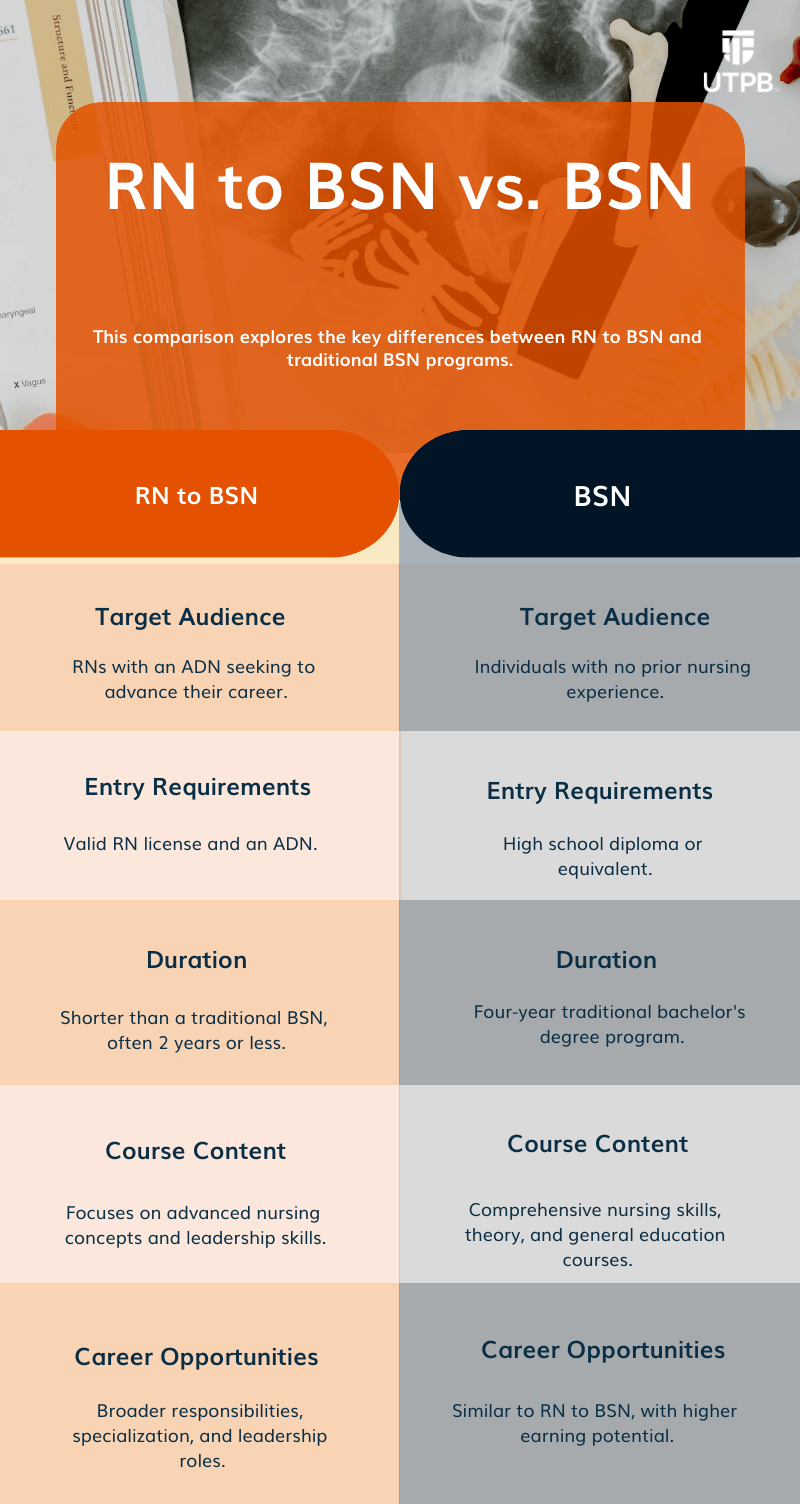
To understand the true difference between RN and BSN degrees, one must look at the “earnings ceiling.” While an ADN allows you to enter the floor, a BSN allows you to move into the executive suite.
Access to High-Paying Specialties
Many of the most lucrative nursing specialties require a BSN as a prerequisite for certification. For example, becoming a flight nurse, a trauma specialist, or an intensive care unit (ICU) coordinator often requires the advanced theoretical foundation provided by a BSN. These roles come with significant “differential pay”—extra income for specialized skills or high-stress environments. Without the BSN, an RN may find themselves plateauing at a certain pay grade, unable to move into the specialized niches that drive six-figure salaries.
Leadership and Administrative Roles
From a business finance perspective, the most significant “money move” in nursing is the transition from clinical care to management. Positions such as Nurse Manager, Director of Nursing (DON), or Chief Nursing Officer (CNO) almost exclusively require at least a BSN, if not a Master’s degree. These roles move the professional from hourly wages to high-tier executive salaries, often including performance bonuses, better retirement matching, and stock options in private healthcare groups. The BSN acts as the “key” to these corporate-level financial rewards.
4. Leveraging Employer Assistance and Financial Tools
One of the most strategic ways to navigate the RN vs. BSN debate is to use the healthcare industry’s own financial incentives to your advantage. This involves a “laddering” strategy that minimizes personal debt.
Tuition Reimbursement Programs
A popular financial strategy is to obtain an ADN first, enter the workforce to start earning a salary, and then have the employer pay for the “RN-to-BSN” bridge program. Many hospital systems offer tuition reimbursement as a standard benefit, providing anywhere from $3,000 to $10,000 per year toward further education. By using this “Money” hack, a nurse can earn their BSN for virtually zero out-of-pocket cost while simultaneously earning a full-time salary. This effectively eliminates the “opportunity cost” mentioned in the first section.
Public Service Loan Forgiveness (PSLF) and Grants
For those who choose to go the BSN route immediately, there are specific financial tools available to mitigate the debt. Since many BSN-heavy hospitals are non-profit or government-run, nurses are often eligible for the Public Service Loan Forgiveness (PSLF) program. After 120 qualifying payments while working for a qualifying employer, the remaining balance of federal student loans is forgiven tax-free. When factoring in this potential for debt cancellation, the “expensive” BSN can actually result in a higher net worth over a ten-year horizon compared to the self-funded ADN.
5. The Cost of Stagnation: Why the BSN is a Recession-Proof Asset
In economics, an asset is something that puts money in your pocket. In the nursing world, the BSN is a “recession-proof” asset because it provides career mobility and job security that a standard ADN may lack during market shifts.
Future-Proofing and The “BSN in 10” Legislation
There is a growing trend in legislation, such as New York’s “BSN in 10” law, which requires RNs to obtain a BSN within ten years of initial licensure to maintain their registration. From a financial risk management perspective, relying solely on an ADN is a gamble. If your state or your specific hospital system mandates a BSN, failing to have one could lead to job loss or a forced “demotion” to lower-paying roles. Investing in the BSN early is a form of “career insurance,” protecting your primary income stream from regulatory changes.

Wealth Building through Advanced Practice
Finally, the BSN is the mandatory stepping stone for those who want to reach the pinnacle of nursing income: Advanced Practice Registered Nursing (APRN). Nurse Practitioners (NPs), Certified Registered Nurse Anesthetists (CRNAs), and Nurse Midwives often earn between $120,000 and $250,000 annually. None of these paths are open to an ADN holder without first completing the BSN. If your financial goal is to reach the upper-middle class or achieve “Fat FIRE” (Financial Independence, Retire Early), the BSN is not just a degree—it is the essential foundation for a high-income career trajectory.
In conclusion, while the clinical difference between an RN and a BSN might seem subtle on the hospital floor, the financial difference is profound. The ADN is a cost-effective, high-speed entry tool for immediate income, while the BSN is a long-term capital investment that unlocks higher salary caps, management tiers, and advanced practice earnings. For the savvy professional focused on money and long-term wealth, the BSN remains the superior financial vehicle in the healthcare marketplace.
aViewFromTheCave is a participant in the Amazon Services LLC Associates Program, an affiliate advertising program designed to provide a means for sites to earn advertising fees by advertising and linking to Amazon.com. Amazon, the Amazon logo, AmazonSupply, and the AmazonSupply logo are trademarks of Amazon.com, Inc. or its affiliates. As an Amazon Associate we earn affiliate commissions from qualifying purchases.