
The Korean Peninsula presents perhaps the most striking technological contrast on the planet. From a satellite view at night, the border between North and South Korea is not merely a political line but a literal threshold of light. The South is a radiant network of interconnected cities, while the North remains almost entirely cloaked in darkness. This visual disparity serves as a profound metaphor for the divergence in their technological trajectories over the last seven decades. While South Korea has established itself as a global leader in semiconductors, 5G, and consumer electronics, North Korea has developed a localized, insular technological ecosystem focused on state security and strategic defense. This article explores the technical differences between these two nations, focusing on infrastructure, consumer hardware, software ecosystems, and the specialized application of emerging technologies.
Infrastructure and Connectivity: Hyper-Connected vs. Air-Gapped
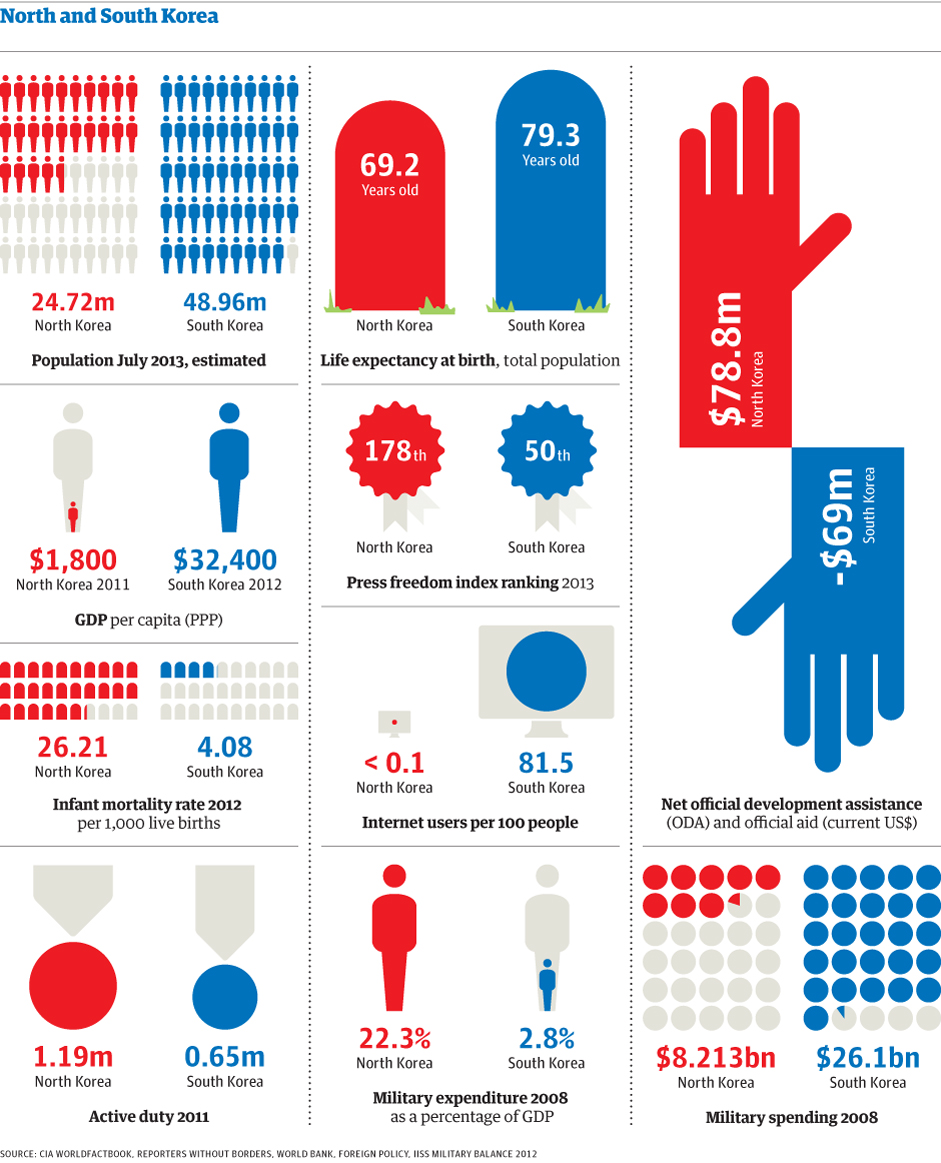
The foundation of any modern technological landscape is its connectivity infrastructure. In this regard, North and South Korea exist at opposite ends of the global spectrum. South Korea is frequently cited as the most “online” nation in the world, whereas North Korea operates one of the most restricted networks ever devised.
South Korea: The World’s Fastest Internet and 6G Aspirations
South Korea’s journey toward technological dominance began with a heavy investment in fiber-optic infrastructure during the late 1990s. Today, the nation boasts some of the highest average internet connection speeds globally. South Korea was the first country to launch a commercial 5G network in 2019, and the government has already committed billions to the development of 6G technology, aiming for commercialization by 2028.
The infrastructure in the South is characterized by its ubiquity. From the Seoul Metropolitan Subway to rural mountain villages, high-speed Wi-Fi and LTE coverage are considered basic utilities. This hyper-connectivity has facilitated the growth of a “Smart City” ethos, where IoT (Internet of Things) devices manage traffic flow, waste management, and energy consumption in real-time. The South Korean tech stack is built on openness, interoperability, and massive data throughput, supporting a digital economy that contributes significantly to its GDP.
North Korea: Kwangmyong and the Controlled Intranet
In stark contrast, North Korea utilizes an “air-gapped” approach to national networking. For the vast majority of the population, the “Internet” does not exist. Instead, they have access to Kwangmyong (Bright Light), a national intranet. This system is completely isolated from the World Wide Web, consisting of a few thousand censored websites that provide state-approved news, educational materials, and basic email services.
While high-ranking officials and specialized cyber units have access to the global internet, the general public relies on a domestic network that is monitored at every level. The physical infrastructure is largely composed of copper wiring and limited fiber links in the capital, Pyongyang. While mobile phone usage has surged (with an estimated 6 million subscribers), the network is restricted to voice calls and text messages within the country, with no capability for international communication or data exchange outside the domestic walled garden.
Consumer Technology and the Hardware Revolution
The hardware industries of North and South Korea reflect their differing economic philosophies: one driven by global market dominance and the other by Juche (self-reliance) and the circumvention of international sanctions.
South Korea’s Global Tech Titans: Samsung and LG
South Korea is home to some of the world’s most influential hardware manufacturers. Samsung Electronics and LG Electronics are not just domestic success stories; they are the architects of the modern digital experience. Samsung is the world’s largest producer of smartphones and a dominant force in the semiconductor industry, particularly in DRAM and NAND flash memory.
The hardware ecosystem in South Korea is defined by a cycle of rapid innovation. South Korean companies lead the way in foldable display technology, OLED panels, and high-performance chips. This hardware prowess is supported by a robust supply chain and a culture of “Pali-Pali” (hurry-hurry), which prioritizes speed to market. For the South Korean consumer, hardware is an extension of identity, with a replacement cycle for smartphones and gadgets that is among the shortest in the world.
North Korea’s Domestic Hardware: The Arirang and Samjiyon
North Korea has attempted to replicate the appearance of modern consumer hardware through domestic production, although much of the “manufacturing” involves rebranding Chinese-made components. Devices like the Arirang and Pyongyang smartphones, and the Samjiyon tablet, are the nation’s answers to the global mobile revolution.

Technically, these devices are surprisingly capable but are crippled by design. They typically run on modified versions of the Android operating system, heavily customized to remove Google services and include pre-installed surveillance software. One notable technical feature is the mandatory use of state-signed digital certificates; the devices will not open files (images, documents, or media) that do not carry a government-approved cryptographic signature. While the hardware may look like a mid-range smartphone from 2018, the internal logic is designed for control rather than connectivity.
Software Development and Artificial Intelligence
Software is the intelligence that drives hardware, and here too, the two Koreas have developed distinct specializations. South Korea focuses on commercial AI and platform services, while North Korea has pivoted toward tactical software and cybersecurity.
South Korea’s AI Ecosystem and Smart Cities
South Korea’s software landscape is dominated by “Super Apps” like KakaoTalk and Naver. These platforms have moved beyond simple messaging to become all-encompassing ecosystems for fintech, navigation, and e-commerce. In recent years, the technical focus has shifted toward Artificial Intelligence. The government’s “AI National Strategy” aims to integrate AI into every facet of the economy, from automated manufacturing in the semiconductor plants to AI-driven healthcare diagnostics.
The South is also a pioneer in the “Metaverse” and blockchain technology. Seoul was the first major city to announce a “Metaverse Seoul” project, allowing citizens to interact with municipal services in a virtual environment. This software-first approach is characterized by user-centric design and high-level integration with the global software community, including heavy contributions to open-source projects.
North Korea’s Strategic Focus: Cyber Defense and Hacking
North Korea’s software capabilities are remarkably advanced but are concentrated in a very narrow field: cybersecurity and offensive cyber operations. Due to its economic isolation, the state has invested heavily in training elite programmers at institutions like Kim Chaek University of Technology.
The most famous technical export of the North is not a commercial app, but the sophisticated code used by groups like the Lazarus Group. Their software expertise is evident in their ability to conduct complex cryptocurrency heists and deploy ransomware globally. Domestically, they have developed Red Star OS, a Linux-based operating system designed to look like MacOS but featuring deep-seated security protocols that monitor user activity and prevent the unauthorized modification of system files. While the South develops software for profit and convenience, the North develops software for survival and asymmetric warfare.
The Future of Tech Integration and Disparity
The technological gap between North and South Korea is not static; it is widening at an exponential rate. As the South moves toward the Fourth Industrial Revolution, integrating robotics, quantum computing, and green energy, the North struggles to maintain a basic power grid.
Bridging the 70-Year Gap: The Challenge of Unification
From a technical standpoint, the eventual reconciliation or unification of the two Koreas presents a monumental challenge. The divergence in technical standards—ranging from electrical grids and telecommunications protocols to the very language used in coding—means that “plugging” the North into the South’s infrastructure would require a complete rebuild of the former’s systems.
In the South, engineers are already experimenting with satellite-based internet (similar to Starlink) as a potential way to bypass the North’s lack of physical fiber-optic cables in a future integration scenario. However, the software gap is perhaps even more daunting. The North’s population lacks the “digital literacy” required to navigate a world of uncurated information, while the South’s digital infrastructure is vulnerable to the very cyber-tactics the North has spent decades perfecting.
Conclusion
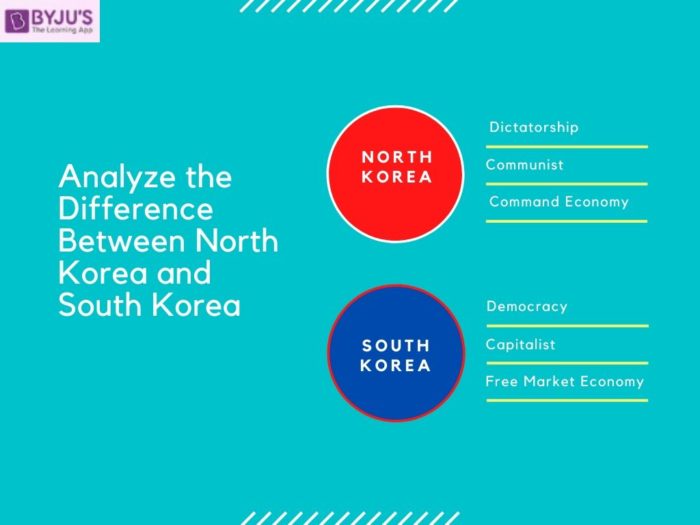
The difference between North and South Korea in the realm of technology is a study in divergent evolution. South Korea represents the pinnacle of the democratic, market-driven tech model: a hyper-connected society that exports innovation to every corner of the globe. North Korea represents a specialized, defensive tech model: an isolated system that uses technology as a tool for state preservation and revenue generation through unconventional means.
While South Korea builds the hardware and software that define the future of global communication, North Korea builds the walls—both digital and physical—that keep its people within a different century. As we move further into the age of AI and ubiquitous connectivity, the border between the two Koreas remains the most significant technological “null zone” in the world, a reminder of how political systems can fundamentally dictate the technical reality of a nation.
aViewFromTheCave is a participant in the Amazon Services LLC Associates Program, an affiliate advertising program designed to provide a means for sites to earn advertising fees by advertising and linking to Amazon.com. Amazon, the Amazon logo, AmazonSupply, and the AmazonSupply logo are trademarks of Amazon.com, Inc. or its affiliates. As an Amazon Associate we earn affiliate commissions from qualifying purchases.