
In the world of grandmasters and casual players alike, the question of the “best” first move has been debated for centuries. Is it the aggressive King’s Pawn opening (1. e4), the structural stability of the Queen’s Pawn (1. d4), or the hypermodern nuances of the Ruy Lopez? However, in the modern era, this question is no longer a matter of human intuition alone. It has become a fundamental problem of computational science, data processing, and artificial intelligence.
When we ask what the best first move in chess is from a technological perspective, we are really asking how algorithms navigate a state-space complexity that exceeds the number of atoms in the observable universe. In the realm of tech, the “first move” represents the foundational architecture of a system—the initial lines of code or the choice of a neural network framework that determines the trajectory of a project’s success.
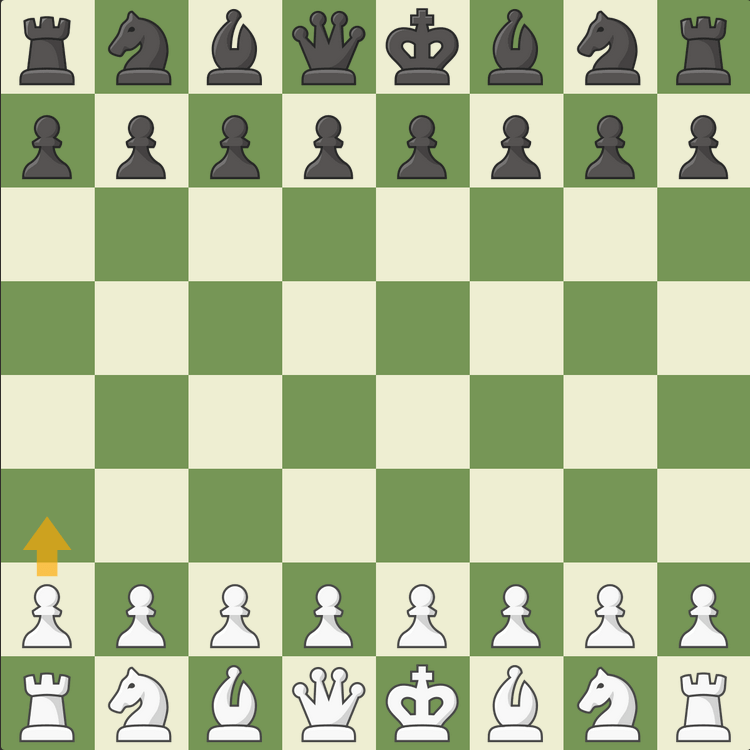
The Evolution of the Opening: From Human Intuition to Algorithmic Certainty
For centuries, chess openings were categorized by human trial and error. Players documented “theory” based on what felt most comfortable or what led to the most victories in tournament play. However, the introduction of high-performance computing changed the definition of a “best move” from a subjective preference to a mathematical probability.
The Legacy of Deep Blue and the Dawn of Computational Strategy
The 1997 victory of IBM’s Deep Blue over Garry Kasparov was a watershed moment for technology. It wasn’t just a win for a machine; it was a win for brute-force search algorithms. Deep Blue could evaluate 200 million positions per second. At that time, the “best first move” was determined by a hard-coded opening book—a database of moves curated by human grandmasters.
Technology has since moved away from this rigid reliance on human data. We have transitioned from “Expert Systems,” which follow rules provided by humans, to “Machine Learning Systems,” which derive their own rules from data. This shift mirrors the broader trend in software development: moving from deterministic, hard-coded logic to adaptive, heuristic-based models.
Stockfish vs. AlphaZero: Neural Networks Redefine the Board
The real revolution in identifying the best first move came with DeepMind’s AlphaZero. Unlike its predecessor, Stockfish—which relied on a highly tuned evaluation function and massive search depth—AlphaZero used reinforcement learning. It played millions of games against itself, starting with zero knowledge of chess strategy.
When AlphaZero calculated the “best” move, it didn’t just look at material advantage; it looked at “dynamic compensation” and “positional pressure.” Interestingly, AlphaZero showed a strong preference for 1. d4 (the Queen’s Pawn opening) and 1. Nf3 (the Reti Opening). This technological insight suggested that at the highest levels of computational logic, controlling the center through structural flexibility is more “efficient” than the direct aggression of 1. e4. This represents a pivot in tech philosophy: efficiency and flexibility often outweigh raw power.
Predictive Analytics: Why the “Best” Move is Data-Driven
In modern tech, the best first move is rarely a guess. Whether a company is launching a new app, deploying a cybersecurity protocol, or training a Large Language Model (LLM), the initial “move” is dictated by predictive analytics.
Leveraging Big Data for Opening Theory
The reason we can even argue about the best move in chess today is the existence of the “Lomonosov Tablebases.” These are massive databases that have solved chess for all positions with seven or fewer pieces on the board. In the tech industry, this is the equivalent of using Big Data to eliminate uncertainty.
When developers choose a tech stack today, they aren’t just picking what they like; they are looking at telemetry data, GitHub repository stars, Stack Overflow trends, and benchmark performance metrics. The “first move” in software development—choosing between a monolithic architecture or microservices—is a data-driven decision. Just as a chess engine uses a database to avoid “theoretical” blunders, modern tech firms use predictive modeling to avoid architectural “technical debt.”
Pattern Recognition in Complex Systems
Chess is a game of pattern recognition. Similarly, AI tools like GitHub Copilot or ChatGPT-4 operate on the principle of identifying the most probable “next move” in a sequence of code or text. When we look at the “best first move,” we are looking at the move that maximizes the number of winning “branches” in a decision tree.
In cybersecurity, this logic is applied to threat detection. An AI-driven firewall analyzes the “first move” of an incoming packet. By recognizing patterns associated with known exploits, the system can predict the “middle game” of a cyberattack and neutralize it before the “endgame” (the data breach) occurs. The technology doesn’t just react; it anticipates based on the statistical likelihood of the opponent’s (the hacker’s) strategy.
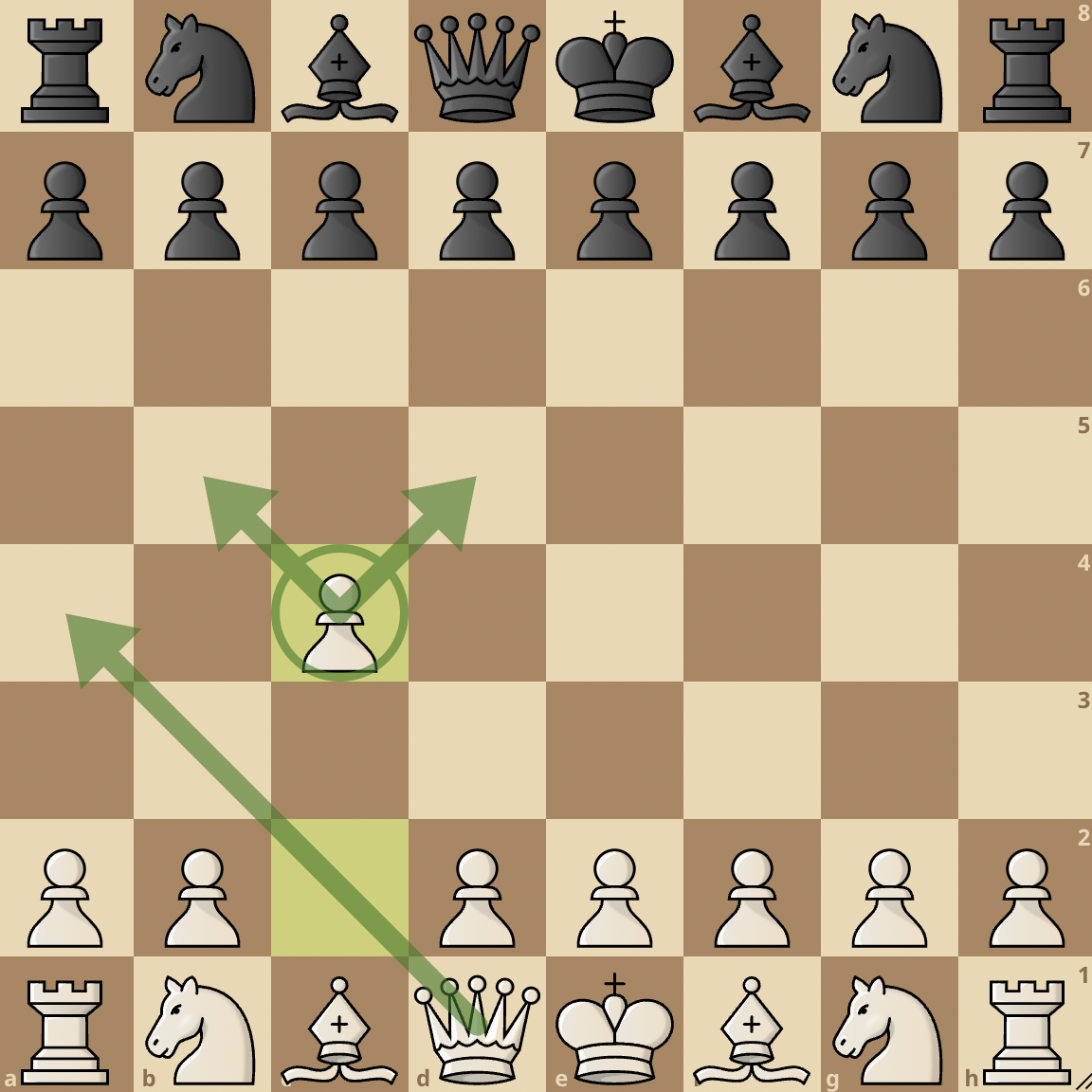
The Tech Stack as a Chessboard: Choosing Your Initial Architecture
In the tech world, the “first move” is your architectural foundation. Just as 1. e4 dictates a certain type of game—usually open, tactical, and fast-paced—your choice of programming language or cloud infrastructure dictates the lifecycle of your product.
Scalability: The Long-Term Endgame of Software Development
In chess, a “blunder” in the opening might not be felt until forty moves later in the endgame. In technology, choosing a non-scalable database (like a poorly indexed SQL instance for a global app) is an opening blunder. As the “game” (the user base) grows, the lack of foresight in the first move leads to a collapsed position.
Architects now prioritize “scalability by design.” This involves making the first move of choosing cloud-native environments (like AWS, Azure, or Google Cloud) and containerization (like Docker and Kubernetes). These tools act like a “Grandmaster’s preparation,” ensuring that no matter what the “opponent” (market demand or high traffic) throws at the system, the architecture remains resilient.
Security by Design: Protecting Your King from Day One
In chess, the ultimate goal is to protect the King. In tech, the “King” is your data. The best first move in any digital transformation project is the implementation of a “Zero Trust” security model.
For decades, tech companies treated security as a “late-game” consideration—something to be patched in after the product was built. Modern tech standards have reversed this. “Shift Left” security is a strategy where security testing is integrated into the very first stages of the software development lifecycle (SDLC). By making security the “best first move,” developers prevent the “checkmate” of a catastrophic security vulnerability.
AI-Driven Decision Making in Product Development
The search for the best first move has moved beyond the 64 squares of a chessboard and into the boardroom of every major tech company. We are now seeing the rise of “Strategic AI,” where machine learning is used to determine the best initial move in product launches and R&D.
Minimizing Risk through Simulation and Modeling
Just as a chess engine runs millions of simulations (Monte Carlo Tree Search) to find the best move, tech companies use “Digital Twins” and simulations to test products before they exist. Whether it’s an aerospace company simulating airflow over a new wing design or a fintech startup simulating market volatility, the “first move” is a simulated one.
This technological capability reduces the cost of failure. In the “old world,” the first move was expensive and risky. In the modern tech world, the first move is an iterative process. We use A/B testing—a form of computational experimentation—to see which “opening” resonates best with users. We let the data tell us what the best first move is, rather than relying on the “gut feeling” of a Product Manager.
The Future of Generative AI in Strategic Planning
As we look toward the future, the “best first move” in any technological endeavor will likely be assisted by Generative AI. We are entering an era where AI doesn’t just play chess; it writes the code, designs the interface, and plans the marketing strategy.
The convergence of AI and strategic planning means that the “opening theory” of business is being rewritten. We are seeing the rise of “Autonomous Agents” that can execute a series of moves independently. The human’s role is shifting from being the “player” to being the “coach”—setting the objectives and letting the technological “engine” find the most efficient path to victory.
Conclusion: The Final Evaluation
So, what is the best first move in chess? If you ask a 19th-century romantic player, they might say 1. e4 for the glory of the attack. If you ask a modern Super-GM, they might say 1. d4 for the strategic depth. But if you ask a computer scientist, they will tell you that the “best” move is the one that offers the highest probability of success across the greatest number of potential future scenarios.
In technology, as in chess, the best first move is characterized by three things: Data, Scalability, and Security. By leveraging AI to analyze patterns, choosing architectures that can grow with the system, and protecting the core assets from the very beginning, tech leaders can navigate the complexities of the modern digital landscape. Whether you are moving a pawn to e4 or deploying a new AI model to the cloud, the logic remains the same: the best move is the one that prepares you for the endgame before the game has even begun.
aViewFromTheCave is a participant in the Amazon Services LLC Associates Program, an affiliate advertising program designed to provide a means for sites to earn advertising fees by advertising and linking to Amazon.com. Amazon, the Amazon logo, AmazonSupply, and the AmazonSupply logo are trademarks of Amazon.com, Inc. or its affiliates. As an Amazon Associate we earn affiliate commissions from qualifying purchases.