
In the realm of modern technology, we often focus on the vastness of the cloud or the intricacies of terrestrial 5G networks. However, a significant technological frontier remains largely untapped and presents some of the most complex engineering challenges of our time: shallow water. In a technical context, “shallow water” refers to aquatic environments—typically up to 200 meters deep—that serve as the primary zone for human economic activity, including offshore energy, telecommunications cabling, and environmental monitoring.
The technical definition of shallow water is not merely about depth; it is defined by the way signals, sensors, and autonomous systems interact with the boundaries of the sea surface and the seabed. As we transition into the era of the Internet of Underwater Things (IoUT), understanding the “shallow water” domain is critical for developers, engineers, and tech innovators. This article explores the technical architecture of shallow water systems, the communication hurdles inherent in these environments, and the cutting-edge hardware driving the next wave of maritime digital transformation.
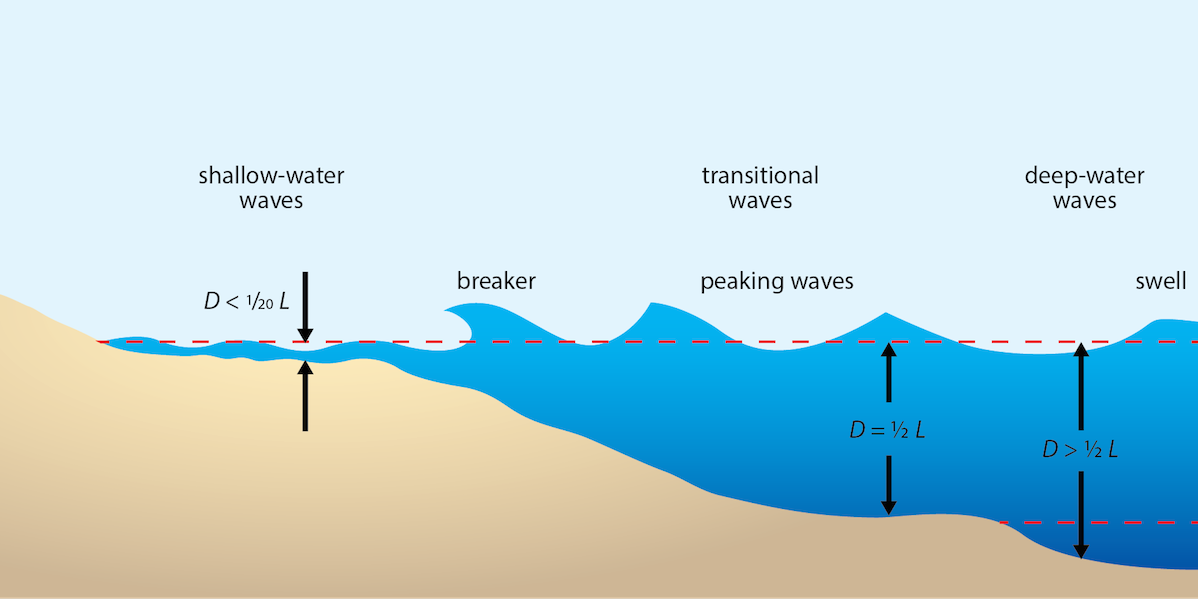
The Physics of the Shallow Water Environment: A Technical Challenge
While deep-sea exploration deals with crushing pressures, shallow water technology must contend with a chaotic and “noisy” physical environment. From a signal processing perspective, shallow water is one of the most difficult channels for data transmission due to its high variability and boundary interactions.
Multipath Propagation and Signal Distortion
In shallow water, the proximity of both the surface and the seafloor creates a “waveguide” effect. When an acoustic signal is sent from a sensor, it does not travel in a straight line to the receiver. Instead, it bounces off the surface and the bottom multiple times. This phenomenon, known as multipath propagation, causes the receiver to pick up the same signal at different times, leading to massive inter-symbol interference (ISI). For software engineers designing communication protocols, this requires sophisticated equalization algorithms and Orthogonal Frequency Division Multiplexing (OFDM) to ensure that data packets remain coherent despite the echoes.
Ambient Noise and Interference
Technically, shallow water is an incredibly “loud” environment. Unlike the silent depths of the midnight zone, coastal areas are flooded with acoustic noise from shipping traffic, industrial construction, and biological sources (such as snapping shrimp). Furthermore, the salinity, temperature, and pressure gradients in shallow water are constantly shifting due to tides and river runoffs. These fluctuations change the speed of sound, causing “refraction,” where signals bend away from their intended targets. Developing tech that can filter this noise in real-time requires high-performance Digital Signal Processors (DSPs) and AI-driven noise-cancellation models.
Emerging Technologies in Shallow Water Communication
Standard wireless technologies like Wi-Fi and LTE rely on electromagnetic waves, which are absorbed by water within centimeters. To conquer the shallow water domain, tech firms are developing specialized communication stacks that combine acoustics, optics, and magnetics.
Acoustic Modems and High-Frequency Transmission
Acoustics remain the backbone of shallow water tech. Modern acoustic modems have evolved from simple “pingers” to sophisticated data transceivers. In shallow environments, engineers often utilize high-frequency acoustics (above 30 kHz) to achieve higher bit rates. While high-frequency signals have a shorter range, they offer the bandwidth necessary for transmitting sensor data or low-resolution telemetry. Current research is focused on adaptive modulation—software that automatically changes the transmission frequency and bit rate based on the level of turbulence and noise detected in the water column.
Optical and Hybrid Communication Systems
For high-bandwidth tasks, such as live-streaming video from an underwater drone, acoustics are insufficient. This has led to the rise of Blue-Light Optical Communication. Blue and green lasers/LEDs can transmit data at gigabit speeds over short distances (typically 10 to 50 meters) in shallow water. The tech industry is currently pivoting toward “hybrid” systems: using acoustics for long-range, low-speed signaling and switching to optical links when an Autonomous Underwater Vehicle (AUV) gets close to a docking station. This “handover” technology is a cornerstone of the emerging subsea data network.
Applications of Shallow Water Tech in Modern Industry
The push to digitize the ocean has moved shallow water technology from the lab into the commercial sector. As we look toward a “Blue Economy,” several key industries are deploying advanced tech stacks in coastal waters.
Coastal Surveillance and Environmental Monitoring
Smart cities are increasingly extending their sensor networks into the water. Shallow water sensor arrays are used to monitor water quality, detect chemical leaks, and track rising sea levels in real-time. These sensors are often integrated with “Edge Computing” nodes—buoys that process raw data locally before sending condensed insights to the cloud via satellite. This reduces the energy consumption of the underwater units, which must often run for years on a single battery.
Subsea Infrastructure and Robotics (AUVs/ROVs)
The offshore wind industry and subsea cable sectors rely heavily on shallow water robotics. Remote Operated Vehicles (ROVs) and Autonomous Underwater Vehicles (AUVs) are used to inspect foundations and repair cables. The technical trend here is moving toward “resident” robots—machines that live permanently in a shallow water docking station. These robots require advanced computer vision to navigate the murky, high-sediment waters of the coast. By using LIDAR and sonar fusion, these devices can create 3D maps of subsea structures with millimeter precision, even when visibility is near zero.
The Future of IoUT: From Shallow Water to Global Connectivity
As we look toward the 2030s, “shallow water” will no longer be a disconnected void. It will be a fully integrated component of the global data grid, functioning as a bridge between terrestrial networks and the deep ocean.
Integration with 6G and Satellite Networks
The next generation of telecommunications (6G) is expected to include “non-terrestrial networks,” including satellite-to-underwater links. In this architecture, shallow water acts as the “Access Layer.” Low Earth Orbit (LEO) satellites, like those in the Starlink constellation, can communicate with surface buoys, which then relay data to subsea assets. This creates a seamless data pipeline from the bottom of the ocean to a data center thousands of miles away. The software challenge lies in managing the extreme latency (delay) inherent in acoustic-to-satellite handoffs.
AI-Driven Signal Processing and Swarm Intelligence
The future of shallow water tech is defined by autonomy. We are seeing the emergence of “Swarm Intelligence,” where multiple small, inexpensive drones work together to map an area. These swarms use peer-to-peer acoustic networking to coordinate their movements without human intervention. To make this possible, developers are deploying “TinyML” (Machine Learning for microcontrollers) directly onto the hardware. These AI models allow the drones to distinguish between a biological obstacle (like a fish) and a technical one (like a pipeline), making real-time decisions in a fraction of a second.

Conclusion: The Strategic Importance of the Shallow Frontier
The question “what is shallow water” finds its most compelling answer in the world of technology. It is not just a geographical zone, but a complex, high-interference digital environment that demands the pinnacle of engineering ingenuity. From the development of robust acoustic modems that can fight through multipath interference to the deployment of AI-driven AUV swarms, shallow water tech is at the heart of our future relationship with the ocean.
As we continue to build out the Internet of Underwater Things, the innovations born in the shallow waters of our coasts will likely redefine how we handle data, connectivity, and environmental stewardship on a global scale. For the tech industry, the message is clear: the next great “disruption” is happening beneath the surface, in the vibrant, challenging, and data-rich world of shallow water.
aViewFromTheCave is a participant in the Amazon Services LLC Associates Program, an affiliate advertising program designed to provide a means for sites to earn advertising fees by advertising and linking to Amazon.com. Amazon, the Amazon logo, AmazonSupply, and the AmazonSupply logo are trademarks of Amazon.com, Inc. or its affiliates. As an Amazon Associate we earn affiliate commissions from qualifying purchases.