
In the modern marketplace, the term “luxury” is often overused, diluted by mass-market brands seeking to elevate their perceived value. However, true luxury remains an elusive, meticulously crafted experience that transcends mere functionality. When asking “What is Roja?”, one is not merely inquiring about a fragrance house; they are exploring a masterclass in brand strategy, personal branding, and the psychological architecture of the ultra-high-net-worth (UHNW) consumer market.
Founded by Roja Dove, one of the world’s most respected perfumers, Roja Parfums represents a pinnacle of corporate identity in the luxury sector. This article explores the strategic foundations of the Roja brand, analyzing how it transitioned from a personal reputation into a global symbol of prestige and how its marketing and design choices maintain its position at the top of the “Haute Parfumerie” pyramid.

The Genesis of the Roja Brand: From Personal Brand to Global Icon
The success of Roja is inseparable from the personal brand of its founder, Roja Dove. Before the brand existed as a corporate entity, Roja Dove spent decades cultivating an aura of unmatched expertise. This section examines how individual authority can be leveraged to launch a high-equity corporate brand.
The Power of the “Master Perfumer” Persona
A brand’s story often begins with a “creator mythos.” For Roja, this mythos is rooted in Roja Dove’s tenure at Guerlain, where he was the first non-family member to be named their Global Ambassador. By the time he launched his own house, his personal brand was already synonymous with “The Professeur de Parfums.” In branding terms, this is known as Expertise Authority. By positioning the founder as a gatekeeper of olfactory secrets, the brand inherited an immediate “legacy” status that usually takes decades to build.
Transitioning from Individual Expertise to Corporate Identity
The challenge many personal brands face is the transition from a person to a scalable business. Roja successfully navigated this by codifying the founder’s tastes into a distinct brand DNA. The “Roja” name became a shorthand for “the finest fragrances in the world.” This transition involved moving away from bespoke services for individuals toward a structured product line that retained the feel of a custom creation. The corporate identity was built on the pillar of “uncompromising quality,” ensuring that even as the business grew, the brand’s perceived intimacy remained intact.
Strategic Positioning: Defining the “Haute Parfumerie” Niche
In brand strategy, positioning is everything. Roja does not compete with the likes of Chanel or Dior; it exists in a category often referred to as “Ultra-Niche” or “Haute Parfumerie.” This positioning is a deliberate move to distance the brand from the “masstige” (mass-prestige) market.
The Scarcity Principle and Exclusivity
Roja utilizes the psychology of scarcity to maintain its allure. Unlike mass-market brands that prioritize volume, Roja focuses on exclusivity. This is achieved through limited distribution—available only in high-end department stores like Harrods or Bergdorf Goodman—and the use of rare, costly ingredients. From a brand strategy perspective, this creates a “Veblen Good” effect, where the high price and limited availability actually increase the desirability of the product among elite consumers.
Premium Pricing as a Brand Signal
Price is often viewed as a barrier, but in the world of Roja, price is a signal of quality and status. By setting price points significantly higher than standard luxury competitors, the brand communicates a “nothing but the best” philosophy. This strategy targets a specific psychographic: the consumer who views price as a secondary consideration to the story and the craftsmanship of the product. The brand strategy here is clear: it is better to be a necessity for a few than an option for many.
Visual Identity and Sensory Marketing
A brand is not just what it says; it is what it looks like and how it feels. Roja’s visual and sensory marketing is designed to reinforce its “Royalty of Perfume” narrative at every touchpoint.
Packaging as a Statement of Value
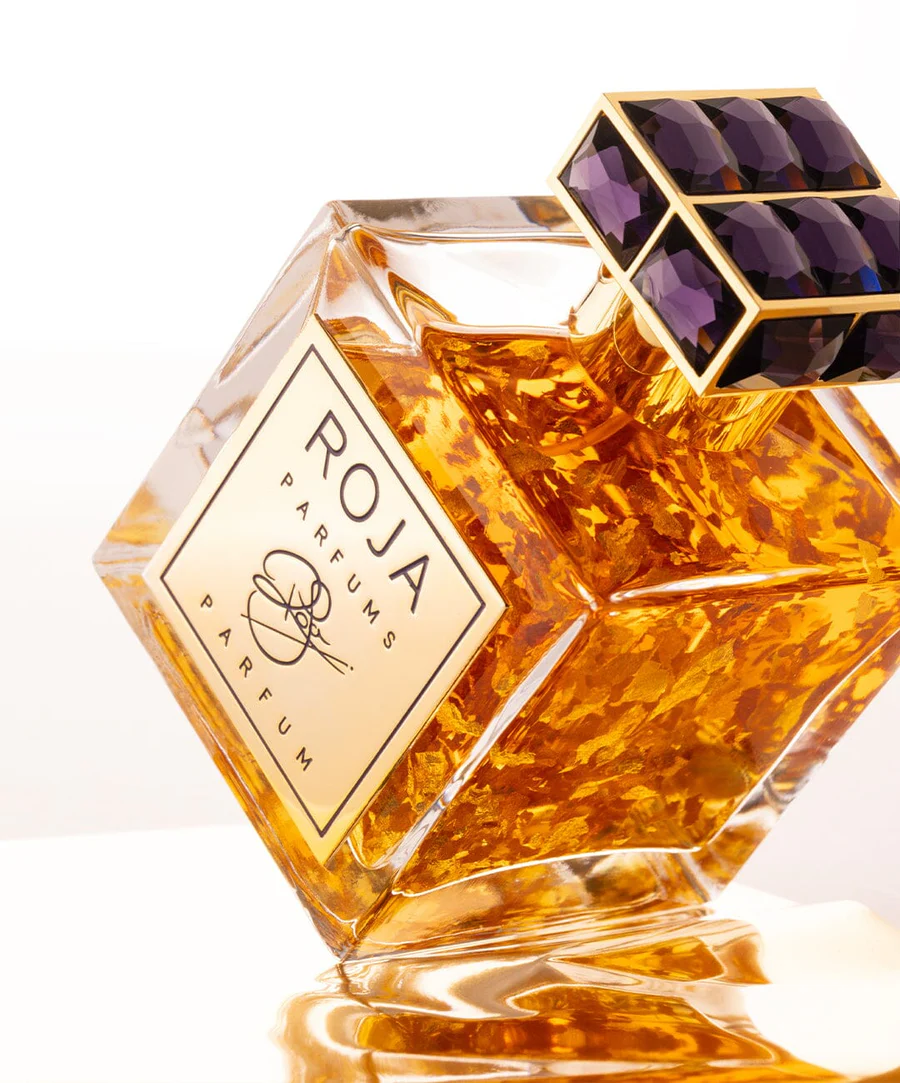
In luxury branding, the packaging is the “silent salesman.” Roja Parfums bottles are architectural statements. The use of gold-coated caps, Swarovski crystals, and heavy, high-clarity glass serves to justify the price point before the consumer even experiences the scent. This is a crucial element of Tangible Brand Equity. When a consumer holds a Roja bottle, the weight and craftsmanship provide a tactile confirmation of the brand’s promise of luxury.
Consistency Across Touchpoints
Whether it is the “Roja Dove Haute Parfumerie” in Harrods or the brand’s digital presence, the aesthetic remains consistent: opulent, sophisticated, and unhurried. The brand avoids the frantic, trend-chasing marketing common in the tech or fast-fashion industries. Instead, it leans into timelessness. The color palettes of gold, deep blacks, and rich purples communicate a sense of “Old World” luxury adapted for the modern connoisseur. This consistency builds brand trust and ensures that the “Roja” experience is uniform globally.
Brand Sustainability and the Future of Luxury
As the luxury market evolves, even the most established brands must adapt to changing consumer behaviors, particularly regarding digital engagement and global market shifts. Roja’s strategy for the future involves balancing its traditionalist roots with modern brand management.
Cultivating Loyalty in the Digital Age
While Roja relies heavily on physical sensory experiences, its digital strategy is focused on storytelling. Through social media and its website, the brand offers “behind-the-scenes” insights into ingredient sourcing and the creative process. This transparency builds a deeper emotional connection with the consumer. In modern branding, this is called Narrative Transportation—the ability to pull the consumer into the brand’s world, making them feel like an insider rather than just a customer.
Adapting to Global Market Shifts
The demand for ultra-luxury is shifting toward markets in the Middle East and Asia. Roja has strategically adapted its product development to cater to these regions, notably through its “Aoud” collections, which respect regional preferences while maintaining the brand’s British identity. This “Glocal” (Global + Local) approach allows the brand to expand its footprint without diluting its core identity. By understanding regional nuances in luxury consumption, Roja ensures its brand remains relevant and aspirational across diverse cultures.
Conclusion: The “Roja” Blueprint
What is Roja? It is a masterclass in high-equity branding. By meticulously managing the transition from a personal brand to a corporate powerhouse, Roja Dove has created a business that serves as a benchmark for the luxury industry.
The brand’s success lies in its adherence to three core principles:
- Authority: Leveraging deep expertise to create a foundation of trust.
- Exclusivity: Using scarcity and premium positioning to maintain high desirability.
- Sensory Excellence: Ensuring that every visual and tactile touchpoint reinforces the brand promise.
For brand strategists and entrepreneurs, Roja provides a clear blueprint: focus on the “why” and the “how” as much as the “what.” In an age of disposable products and fleeting trends, Roja stands as a testament to the power of a well-defined, consistently executed brand identity. It proves that there will always be a market for the exceptional, provided the brand has the courage to define its own standards and the discipline to never compromise on them.
aViewFromTheCave is a participant in the Amazon Services LLC Associates Program, an affiliate advertising program designed to provide a means for sites to earn advertising fees by advertising and linking to Amazon.com. Amazon, the Amazon logo, AmazonSupply, and the AmazonSupply logo are trademarks of Amazon.com, Inc. or its affiliates. As an Amazon Associate we earn affiliate commissions from qualifying purchases.