
In the dynamic and often unpredictable landscapes of career advancement, business deals, and contractual agreements, few phrases carry as much weight or induce as much consternation as “rescinding an offer.” Far from a simple change of mind, rescinding an offer is a deliberate and significant withdrawal of a previously extended proposal, occurring before its formal acceptance or the fulfillment of its stipulated conditions. This action, whether initiated by an employer, a business partner, or a financial institution, triggers a cascade of effects that ripple through financial planning, brand reputation, and even the very technological infrastructure that underpins modern communication. Understanding the nuances of offer rescission, from its legal and ethical dimensions to its practical implications across the realms of tech, brand, and money, is crucial for both the party initiating the withdrawal and the party receiving the unwelcome news.
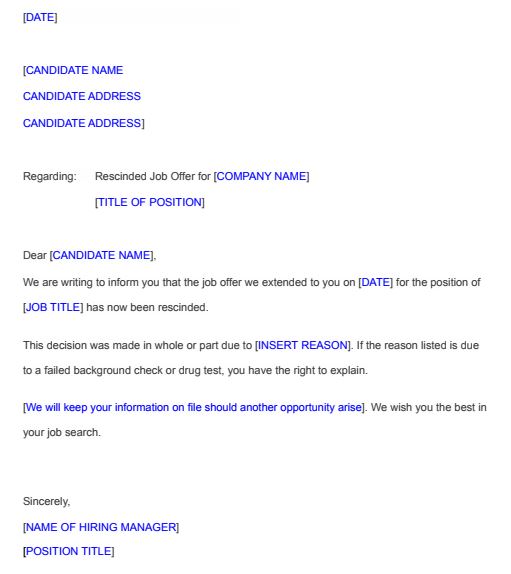
The Anatomy of a Rescinded Offer: More Than Just a “No”
To truly grasp the impact of a rescinded offer, we must first dissect its core meaning and the various circumstances that typically bring it about. It’s an act distinct from an offer being declined or expiring, carrying its own unique set of complexities and consequences.
Defining Rescission: The Legal and Ethical Underpinnings
At its heart, to “rescind an offer” means to formally revoke or cancel a proposition that has already been made, but crucially, has not yet been fully accepted or finalized into a binding agreement. This is a critical distinction in contract law: once an offer is accepted and consideration exchanged, it typically forms a contract that can only be terminated through breach, mutual agreement, or specific contractual clauses, not mere rescission. Rescission, therefore, operates in the interim period between the offer’s extension and its full acceptance.
Legally, the ability to rescind an offer depends heavily on jurisdiction and the specific nature of the offer. In employment contexts, “at-will” employment often allows employers significant leeway to rescind an offer, though legal challenges can arise if the rescission is found to be discriminatory or if promissory estoppel applies (where the candidate acted to their detriment based on the promise, e.g., quitting a job or relocating). Ethically, the act of rescinding an offer, particularly a job offer, is often viewed negatively, regardless of legality. It represents a broken promise and can cause significant distress and disruption. Companies are often judged not just by their products or services, but by their treatment of potential employees, making the ethical considerations paramount for brand integrity.
Common Scenarios Leading to Rescission
The reasons behind an offer rescission are diverse, often reflecting broader economic shifts, strategic business decisions, or unforeseen operational challenges. These scenarios highlight the interconnectedness of business finance, strategic planning, and market dynamics.
- Economic Downturns and Market Shifts (Money): Perhaps the most common driver, a sudden economic contraction, sector-specific downturn, or unforeseen market volatility can force companies to re-evaluate their financial forecasts and staffing needs. Funding for new positions might dry up, or projected revenues may fall short, making new hires financially untenable. This directly impacts the “Money” aspect of our discussion, as organizations scramble to preserve capital.
- Business Strategy Pivots and Restructuring (Brand, Money): A company might decide to pivot its core strategy, perhaps shifting away from a particular product line or service, or undergoing a major restructuring. Such shifts can render previously essential roles obsolete, leading to the painful decision to rescind offers. For instance, a tech company might abandon a software project, making a position for a specialized developer unnecessary. This has implications for the company’s “Brand” as it navigates internal changes while maintaining an external image of stability.
- Funding Withdrawal or Acquisition Failure (Money): For startups and growth-stage companies, offers are often contingent on securing specific rounds of funding. If that funding fails to materialize, or if a planned acquisition falls through, the financial basis for new hires can evaporate, necessitating rescissions. This is a stark reminder of the financial precariousness that can accompany rapid growth in the “Tech” sector.
- Unforeseen Circumstances (Tech, Money): Events like natural disasters, sudden regulatory changes impacting an industry (e.g., new data privacy laws affecting a tech firm), or even critical failures in internal technology systems that disrupt operations can lead to a reassessment of hiring plans. A major cyberattack, for example, could divert resources to security, freezing hiring budgets.
- Candidate-Specific Issues: While slightly different from a company-initiated rescission, an offer can also be withdrawn if a candidate fails a background check, misrepresents their qualifications, or cannot meet specific conditions (e.g., obtaining a necessary visa or license). This underscores the importance of due diligence on both sides.
The Ripple Effect: Financial, Brand, and Technological Dimensions
The act of rescinding an offer sets off a chain reaction, creating significant repercussions for both the organization and the individual involved. These impacts span financial stability, brand reputation, and the very tools and processes facilitated by technology.
Financial Fallout: Costs to Both Parties (Money Focus)
The financial implications of a rescinded offer are profound and often underestimated, affecting both the rescinding entity and the individual whose offer is withdrawn.
-
For the Rescinder:
- Recruitment Costs: Companies invest significant money in the hiring process—job postings, recruiter fees, interviewers’ time, assessment tools. These sunk costs are immediately lost when an offer is rescinded.
- Legal Fees and Severance: Depending on the jurisdiction and circumstances, companies may face legal challenges. To mitigate legal risk and brand damage, some may offer severance packages or compensation for relocation expenses, adding to the financial burden.
- Lost Productivity: Rescinding an offer means the position remains vacant, leading to continued lost productivity or increased workload for existing staff.
- Damage to Stock Price: For publicly traded companies, widespread rescissions can signal instability, potentially negatively impacting investor confidence and stock valuation.
- Future Recruitment Challenges: A reputation for rescinding offers can make it harder and more expensive to attract top talent in the future, as candidates become wary.
-
For the Rescinded:
- Lost Income and Financial Planning Disruption: The most immediate and painful impact is the loss of anticipated income. This can derail personal budgets, debt repayment plans, savings goals, and major life decisions like buying a home or starting a family.
- Job Search Costs: The individual must re-enter the job market, incurring costs associated with applications, interviews (travel, professional attire), and potentially retraining or upskilling.
- Emotional and Psychological Toll: Beyond the monetary, the emotional stress, disappointment, and feeling of rejection can be significant, impacting mental well-being and confidence.
- Relocation Expenses: If the individual had already committed to or completed relocation based on the offer, they face substantial unreimbursed costs and logistical nightmares.
- Opportunity Cost: The candidate likely turned down other offers, or stopped searching, based on the rescinded offer, losing out on those alternative opportunities.

To mitigate these risks, financial prudence becomes paramount. Individuals are encouraged to build robust emergency funds and explore diverse income streams, including “Online Income” and “Side Hustles,” as a buffer against such unforeseen disruptions. Companies, on their part, must conduct rigorous financial forecasting and contingency planning.
Branding and Reputation: The Visible and Invisible Scars (Brand Focus)
A company’s decision to rescind an offer, particularly without clear communication or adequate support, leaves a lasting mark on its brand reputation, both as an employer and a corporate entity.
- Employer Brand Damage: News of rescinded offers spreads rapidly, especially in specialized communities (like “Tech” circles). This can severely tarnish a company’s “Employer Brand,” making it difficult to attract future talent. Prospective candidates may view the company as unreliable, unethical, or financially unstable, choosing competitors instead.
- Corporate Identity and Trust: A pattern of rescinded offers undermines public trust in the company’s integrity and long-term vision. It challenges the “Corporate Identity” a company strives to project—one of stability, growth, and fair dealing. This negative perception can extend beyond talent acquisition to customer loyalty and investor confidence.
- Social Media and Press Backlash: In the age of instant communication, disgruntled candidates can share their experiences on platforms like LinkedIn, Glassdoor, or Twitter, leading to viral negative publicity. This “Reputation” damage can quickly escalate, requiring intensive and often costly “Marketing” and PR efforts to counteract.
- Personal Branding Impact: For the individual, having an offer rescinded can create a narrative challenge for their “Personal Branding.” While it’s rarely their fault, they may feel compelled to explain gaps or changes in their career path. The ability to articulate their resilience and continued value is crucial.
- Crisis Communication: Companies facing rescission scenarios must have a clear “Brand Strategy” and “Crisis Communication” plan. Transparency, empathy, and offering support services (like outplacement assistance) can help mitigate the damage, demonstrating a commitment to ethical conduct even in difficult times.
The Tech Lens: Tools, Trends, and Transparency (Tech Focus)
Technology plays a dual role in the context of offer rescission: it provides the tools for communication, but also highlights broader industry trends that can necessitate such actions.
- Technology in Communication: The speed and ubiquity of digital communication tools—email, video conferencing, digital contract platforms—mean that offers can be extended and, regrettably, rescinded with unprecedented efficiency. While this facilitates rapid action, it also raises questions about the human touch. An impersonal email rescission, for example, can exacerbate negative feelings and brand damage compared to a difficult but empathetic personal call. “Digital Security” is also paramount when handling sensitive candidate information during withdrawal processes.
- Impact of Tech Trends: The tech sector itself is highly susceptible to rapid shifts that can lead to offer rescissions.
- AI Automation: Advances in “AI Tools” and automation can render certain roles redundant faster than anticipated. A company might hire for a data entry position, only to realize months later that new AI software can perform the task with greater efficiency, leading to rescission.
- Software and App Development Cycles: The volatile nature of “Software” and “App” development means projects can be suddenly cancelled or refocused, making previously essential hires unnecessary.
- Remote Work Shifts: Changes in company policy regarding remote work versus in-office presence can also lead to rescissions if candidates were hired under different assumptions and cannot meet the new requirements.
- Gadgets and Hardware: Companies focused on “Gadgets” and hardware might face unexpected supply chain issues or product launch failures, impacting their financial stability and hiring capacity.
- Leveraging Productivity Tools: During periods of high rescission activity, companies can use “Productivity” tools to manage the communication process, track affected individuals, and ensure consistent messaging, minimizing errors and further brand damage. However, these tools must be used with a strong ethical framework.
Navigating the Aftermath: Strategies for Recovery and Resilience
Both companies and individuals must adopt proactive strategies to navigate the aftermath of an offer rescission, focusing on recovery, resilience, and learning from the experience.
For the Company: Ethical Rescission and Brand Repair
When faced with the difficult decision to rescind offers, companies have a responsibility to act ethically to mitigate harm and protect their long-term “Brand.”
- Transparency and Timely Communication: Deliver the news promptly and honestly. While not every detail can be shared, a clear, empathetic explanation for the decision is crucial. Avoid generic, impersonal emails.
- Offering Support: Provide tangible support where possible. This might include severance pay, compensation for relocation expenses, outplacement services to help with the job search, or professional references. Such gestures, though costly, can significantly reduce “Brand” damage and legal risks.
- Learning and Refining Processes: Conduct an internal review to understand why the rescission became necessary. Was it poor financial forecasting (“Money” aspect)? Over-optimistic “Tech” project timelines? Refine hiring processes, contingency planning, and communication strategies to prevent future occurrences.
- Rebuilding Trust and Reputation: Proactively engage in “Brand Strategy” efforts to rebuild trust. This could involve public statements, community engagement, or demonstrating renewed commitment to ethical hiring practices. A strong “Corporate Identity” is built on consistency and integrity.

For the Individual: Bouncing Back Stronger
Receiving a rescinded offer is a setback, but it doesn’t have to be a career-ender. Individuals can leverage resilience and strategic action to bounce back.
- Coping Strategies (Emotional and Practical): Acknowledge the disappointment and frustration. Then, pivot to practical steps. Review your finances (“Money” aspect), update your resume, and reactivate your job search.
- Reactivating the Job Search Strategically: Don’t just resend old applications. Use the experience to refine your search. Were there red flags you missed? What kind of companies offer more stability? Leverage “Apps” and online platforms for job searching more effectively.
- Leveraging Networks and Personal Brand: Reach out to your professional network. Inform them (discreetly and professionally) about your situation. A strong “Personal Branding” makes it easier for others to advocate for you. Don’t let the rescission define your professional narrative; instead, focus on your skills and future potential.
- Financial Preparedness: This incident underscores the importance of an emergency fund. Explore “Online Income” opportunities or “Side Hustles” to bridge gaps or provide an additional layer of financial security against future uncertainties. Using “Financial Tools” for budgeting and planning becomes more critical than ever.
- Utilizing Tech Tools for Skill Development: If the rescission was due to industry shifts (e.g., AI automation), consider using online “Tutorials” and courses to upskill or reskill in demand areas, ensuring future employability in evolving “Tech” landscapes.
In conclusion, to rescind an offer is a multi-faceted event with profound implications extending beyond a simple contract withdrawal. It intricately weaves together financial stability, brand reputation, and the evolving role of technology in modern business. While often a painful necessity for companies and a distressing setback for individuals, understanding its various dimensions allows both parties to navigate the challenge with greater foresight, ethical consideration, and ultimately, a stronger path towards recovery and resilience in an increasingly complex world.
aViewFromTheCave is a participant in the Amazon Services LLC Associates Program, an affiliate advertising program designed to provide a means for sites to earn advertising fees by advertising and linking to Amazon.com. Amazon, the Amazon logo, AmazonSupply, and the AmazonSupply logo are trademarks of Amazon.com, Inc. or its affiliates. As an Amazon Associate we earn affiliate commissions from qualifying purchases.