
In the rapidly evolving world of technology, from the sleek aluminum casing of a smartphone to the heavy-duty components of a SpaceX Starship, there is a fundamental unit of measurement that dictates the limits of what we can build: the MegaPascal, or MPa. While it may sound like a term relegated to the back of a physics textbook, the MPa is a cornerstone of modern engineering, manufacturing, and digital simulation.
Understanding what the MPa unit is, and why it matters, is essential for anyone interested in the technical foundations of the gadgets and infrastructure that define our digital age.
The Fundamentals of MPa: From Physics to Engineering Tech
At its most basic level, the MegaPascal is a unit of pressure or stress in the International System of Units (SI). To understand the “Mega” part, we must first understand the Pascal (Pa).
Defining the Pascal and the MegaPascal
Named after the French mathematician and physicist Blaise Pascal, one Pascal is defined as one Newton of force applied over an area of one square meter ($1 N/m^2$). In practical terms, a single Pascal is an incredibly small amount of pressure—roughly the weight of a single sheet of paper resting on a table.
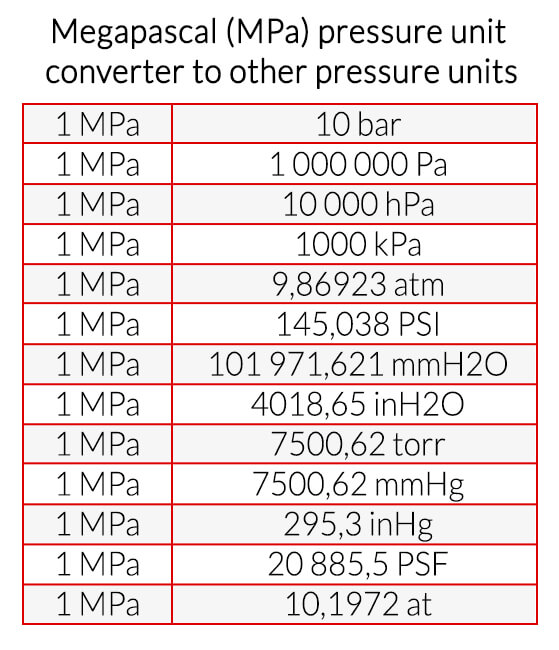
Because modern technology involves forces far greater than what a single Pascal can represent, engineers use the MegaPascal. The prefix “Mega” denotes a factor of one million ($10^6$). Therefore, 1 MPa equals 1,000,000 Pascals. To put this into perspective for tech enthusiasts, 1 MPa is approximately 10 times the atmospheric pressure at sea level or about 145 pounds per square inch (psi).
Why the Tech Industry Relies on SI Units
In the global tech ecosystem, standardization is key. Whether a hardware component is designed in Silicon Valley, simulated in Berlin, or manufactured in Shenzhen, using the MPa unit ensures precision. Unlike imperial units (like psi), the MPa integrates seamlessly into the metric system used by scientific software and automated manufacturing systems. This universality prevents catastrophic engineering errors and allows for the high-speed iteration cycles we see in the consumer electronics and aerospace sectors.
MPa in Hardware Design and Manufacturing
The physical durability of our devices is perhaps the most direct application of MPa that consumers interact with, even if they don’t realize it. When a tech company boasts about a “titanium frame” or “unbreakable glass,” they are essentially talking about the material’s yield strength and ultimate tensile strength, both of which are measured in MPa.
Material Resilience in Consumer Electronics
Consider the evolution of smartphone chassis. Early plastic models had a relatively low threshold for stress. As the industry moved toward aluminum alloys (like the 7000 series used in iPhones), the yield strength—the point at which a material begins to deform permanently—jumped significantly, often exceeding 300 to 500 MPa.
In the world of wearable tech, the MPa unit is equally critical. Smartwatch screens made of sapphire crystal are prized because their compressive strength is exceptionally high (often exceeding 2,000 MPa), making them nearly impossible to scratch under normal conditions. Engineers must balance these high MPa ratings with weight and cost, a classic “tech trade-off” that defines every product launch.
Structural Integrity in High-Performance Computing
Beyond the casing, MPa plays a role in the internal architecture of high-performance computing (HPC) environments. Cooling systems, particularly liquid cooling loops in massive data centers, operate under specific pressure thresholds. If a pump or a tube fails because the internal pressure exceeds the material’s MPa rating, the result is a catastrophic leak that could destroy millions of dollars in hardware. Thus, every fitting and seal in a liquid-cooled server is rated for a specific MPa limit to ensure 24/7 uptime.
The Role of MPa in Advanced Manufacturing: 3D Printing and Robotics
As we move toward “Industry 4.0,” the MPa unit becomes a vital metric in the software-driven world of additive manufacturing and automated robotics.
Tensile Strength in Additive Manufacturing
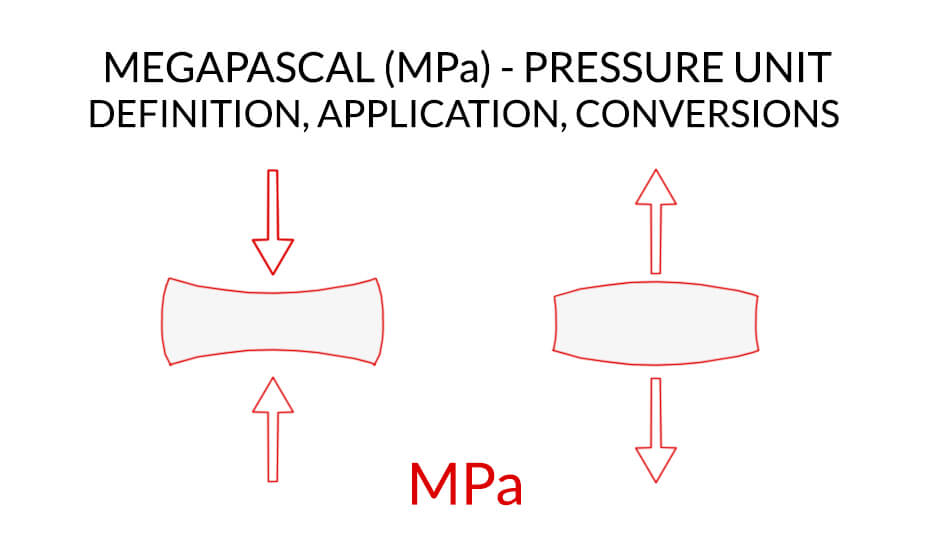
3D printing (or additive manufacturing) is no longer just for hobbyists; it is a primary tech for creating aerospace components and medical implants. In this niche, the MPa unit is the standard for measuring the “tensile strength” of printed parts.
When a 3D printer layers polymer or metal powder, the bond between those layers is the weakest point. Engineers use stress-testing software to determine if a part printed in a specific orientation can withstand, for example, a 50 MPa load without delaminating. Software tools like Cura or PrusaSlicer are increasingly integrating material profiles that include these MPa values, allowing designers to predict failure before the first layer is even laid down.
Hydraulic Systems and Pressure Control in Robotics
In industrial robotics, particularly those used in automotive assembly or heavy lifting, hydraulic systems are the “muscles” of the machine. These systems operate at incredibly high pressures, often between 20 MPa and 70 MPa.
The software controlling these robots must constantly monitor pressure sensors to ensure the system doesn’t exceed its safety margins. A spike in pressure beyond the rated MPa of a hydraulic line could lead to a “burst,” halting production lines. The digital security of these systems is also paramount; as industrial IoT (IIoT) connects these robots to the cloud, protecting the pressure-regulation software from malicious overrides is a major focus for cybersecurity experts in the manufacturing tech space.
Digital Simulation and MPa: Virtual Stress Testing
One of the most significant shifts in modern technology is the move from physical prototyping to digital twin simulation. This is where the MPa unit truly lives within the realm of software and AI.
Finite Element Analysis (FEA) Software
Before a single piece of metal is cut for a new laptop hinge or a drone wing, engineers use Finite Element Analysis (FEA) software. Tools like Ansys, SolidWorks, and Autodesk Fusion 360 allow designers to apply “virtual loads” to a 3D model.
The software then generates a color-coded map showing the distribution of stress across the object, measured in MPa. If the “red zones” on the map exceed the known MPa limits of the chosen material (such as carbon fiber or magnesium alloy), the designer can modify the geometry in the software. This digital-first approach saves billions of dollars in R&D and is the reason why modern tech products are lighter and stronger than ever before.
Predictive Maintenance and Industrial IoT
In the context of the “Internet of Things” (IoT), sensors are now embedded in bridges, aircraft, and factory machines to measure real-time stress and pressure. This data is streamed to AI-driven platforms that analyze the MPa-level fluctuations. By applying machine learning algorithms to this data, companies can perform “predictive maintenance.”
For instance, if a sensor on a gas turbine detects that a component is repeatedly hitting 400 MPa—near its fatigue limit—the software can automatically schedule a replacement before the part fails. This intersection of physical measurement and big data analytics is a hallmark of current technological trends.
Future Trends: Extreme Pressure Environments in Space and Deep-Sea Tech
As technology pushes the boundaries of the Earth’s atmosphere and the depths of its oceans, the MPa unit remains our primary guide for what is possible.
Aerospace and the “Max Q” Challenge
In aerospace tech, “Max Q” refers to the point of maximum dynamic pressure during a rocket’s flight. This is the moment when the mechanical stress on the vehicle’s structure is at its peak. Aerospace engineers must design rocket skins and fuel tanks to withstand hundreds of MPa of stress while vibrating at intense frequencies. The use of advanced composites and alloys with high MPa-to-weight ratios is what allows companies like Blue Origin and SpaceX to develop reusable rockets that don’t crumple under the immense pressures of re-entry.

Deep-Sea Exploration and Submersible Tech
Similarly, the burgeoning field of deep-sea exploration technology is a battle against MPa. At the bottom of the Mariana Trench, the pressure is approximately 110 MPa. For context, that is like having an elephant stand on your thumb. Designing drones and submersibles that can operate in these conditions requires specialized materials—such as syntactic foam and thick-walled titanium—that can withstand massive compressive MPa without imploding.
As we look toward the future of tech, the quest for materials and software that can handle higher MPa ratings will drive innovation in everything from deep-sea mining robots to the infrastructure of extraterrestrial colonies. The MegaPascal, though a simple unit of measure, is the invisible yardstick of human technological progress.
aViewFromTheCave is a participant in the Amazon Services LLC Associates Program, an affiliate advertising program designed to provide a means for sites to earn advertising fees by advertising and linking to Amazon.com. Amazon, the Amazon logo, AmazonSupply, and the AmazonSupply logo are trademarks of Amazon.com, Inc. or its affiliates. As an Amazon Associate we earn affiliate commissions from qualifying purchases.