
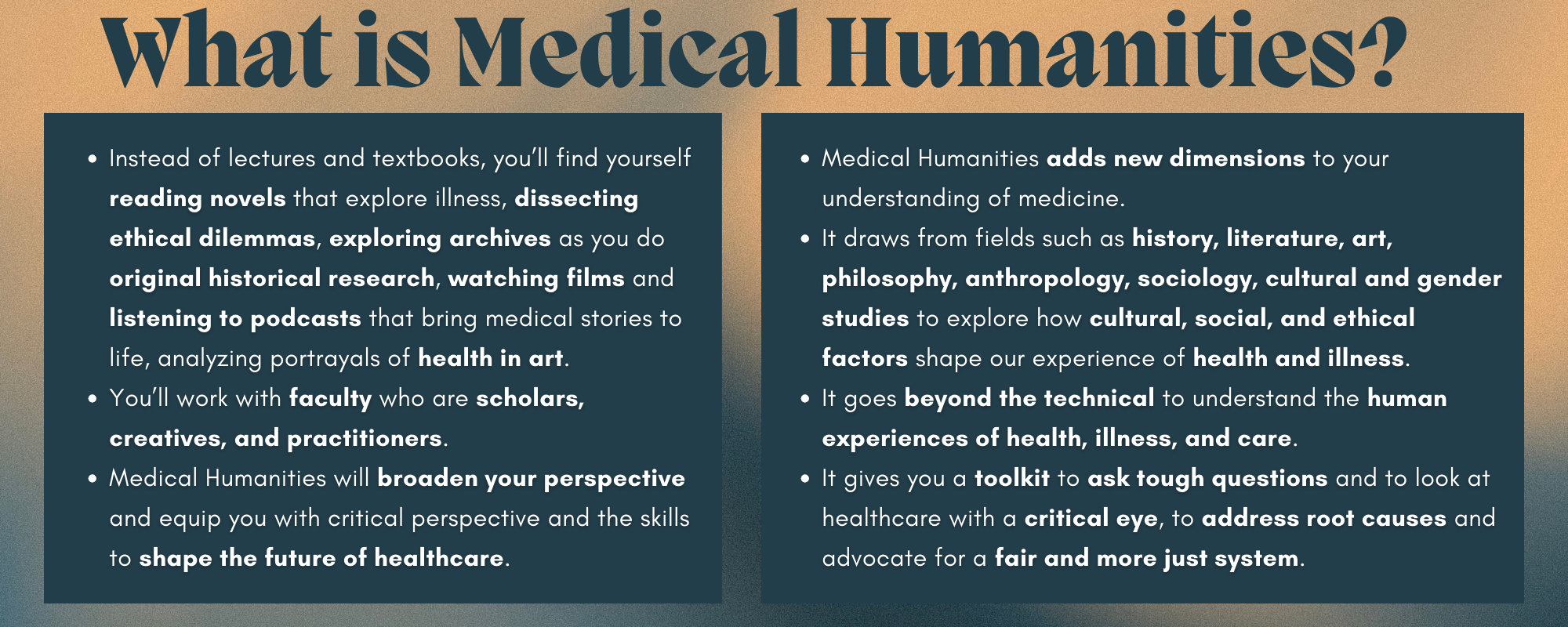
In the modern healthcare landscape, the rapid acceleration of digital transformation has created a paradox. While we possess more data, faster diagnostic algorithms, and more sophisticated surgical robotics than ever before, there is a growing sense of disconnection between the provider and the patient. This is where the field of “Medical Humanities” enters the digital age. Far from being a soft science or a mere academic pursuit, Medical Humanities in a tech-driven context is the interdisciplinary study of how the human experience of health and illness is mediated by technology. It explores the intersection of medicine, philosophy, ethics, and software to ensure that as our tools become more automated, our care remains profoundly human.
The Digital Transformation of the Human Experience
The shift from paper charts to Electronic Health Records (EHRs) was marketed as a move toward efficiency, but it fundamentally altered the “narrative” of the patient. Medical Humanities examines this shift through the lens of technology trends, looking at how the digitization of a person’s health journey affects the quality of care.
Redefining “Humanities” in the Age of Big Data
Traditionally, Medical Humanities focused on literature and history to teach doctors empathy. Today, that definition must expand to include “Digital Humanities.” As we move toward precision medicine—where a patient’s genetic code, lifestyle data from wearables, and environmental factors are synthesized into a single profile—we risk reducing the individual to a data point. The role of tech-focused Medical Humanities is to integrate these data streams into a coherent life story. It challenges software developers to design interfaces that prioritize “the person” over “the data,” ensuring that a clinician looking at a screen is still looking at a human being.
The Role of Narrative Medicine in Digital Health Records
Narrative medicine is the practice of using a patient’s story to inform their clinical care. In the realm of software, this is manifesting in the development of “Narrative-Enhanced EHRs.” Current software often limits patient input to checkboxes and drop-down menus. Emerging tech trends are pushing for the inclusion of unstructured data fields and natural language processing (NLP) to capture the nuances of a patient’s lived experience. By using software to track not just symptoms but the context of those symptoms, technology becomes a facilitator of the human story rather than a barrier to it.
AI and the Empathy Algorithm
Artificial Intelligence (AI) is often viewed as the antithesis of the humanities—cold, logical, and algorithmic. However, in the field of Medical Humanities, AI is being repositioned as a tool that can actually enhance the human connection by offloading the “dehumanizing” administrative tasks that lead to provider burnout.
Can Machines Master Compassion?
One of the most provocative questions in modern medical tech is whether AI can simulate empathy. We are seeing the rise of AI-driven chatbots and virtual health assistants designed to provide emotional support to patients with chronic illnesses. While a machine cannot truly “feel,” it can be programmed using linguistic frameworks derived from the humanities to respond in ways that validate a patient’s feelings. Medical Humanities experts are now working alongside software engineers to refine these “Empathy Algorithms,” ensuring that the tone, pacing, and vocabulary of AI interactions respect the dignity of the user.
Natural Language Processing (NLP) as a Tool for Understanding Patient Stories
NLP is perhaps the most significant technological bridge to the humanities. By analyzing thousands of hours of patient-doctor transcripts, AI can identify patterns of distress or hesitation that a busy clinician might miss. This technology doesn’t replace the doctor’s intuition; it augments it. It provides a “humanities-based audit” of the clinical encounter, highlighting moments where the communication broke down. In this sense, AI acts as a digital mirror, reflecting the quality of the human interaction back to the practitioner to improve future care.
Virtual Reality and the Humanities of Healing

Virtual Reality (VR) and Augmented Reality (AR) are no longer just for gaming; they are powerful tools for empathy-building and therapeutic intervention. Within Medical Humanities, these gadgets are used to bridge the gap between “knowing” a patient’s condition and “understanding” it.
Using VR to Simulate Patient Perspectives
One of the most successful applications of VR in medical education is the simulation of age-related or disease-related impairments. For example, software programs now allow medical students to experience the visual distortions of macular degeneration or the cognitive disorientation of dementia through a VR headset. This use of “Empathy Tech” takes the philosophical concept of “walking in another’s shoes” and makes it a literal, immersive experience. By using technology to foster deep, visceral understanding, we are using the tools of the future to reinforce the ancient values of the humanities.
Digital Art Therapy and the Future of Mental Health
The humanities have always recognized the power of the arts in healing. Modern technology has digitized this process. Digital art platforms, VR-based creative spaces, and music therapy apps are being integrated into standard treatment protocols for PTSD, anxiety, and palliative care. These tools provide patients with a medium to express what words cannot, using software to facilitate a traditional humanities-based approach to wellness. The focus here is on the “user experience” of healing, where the app serves as a canvas for the human spirit.
Ethics and Governance in Health Tech
As technology becomes more deeply embedded in our bodies—via pacemakers, neural implants, and continuous glucose monitors—the boundary between the “biological human” and the “technological entity” blurs. This intersection is a primary focus of Medical Humanities in the 21st century.
The Philosophical Implications of Algorithmic Bias
When we delegate medical decision-making to software, we inherit the biases of the developers and the data sets used to train the AI. Medical Humanities provides the ethical framework needed to audit these technologies. If an algorithm suggests a treatment plan that disproportionately favors one demographic over another, it is not just a coding error; it is a failure of justice. Tech leaders must now integrate “Ethics by Design,” a practice rooted in the humanities, to ensure that software tools do not perpetuate systemic inequalities in healthcare.
Data Sovereignty as a Human Right
In the tech world, data is often called “the new oil.” In medicine, however, data is the digital extension of the self. Medical Humanities advocates for a shift in how we view digital security and data privacy. It moves the conversation beyond simple encryption and GDPR compliance toward “Data Sovereignty.” This perspective treats a patient’s digital health footprint as a sacred part of their identity. Technology trends like blockchain are being explored not just for security, but as a way to return ownership of the medical narrative to the patient, ensuring that their “humanity” cannot be sold or manipulated without consent.
The Future of Medical Education in a Tech-Driven World
The integration of Medical Humanities and technology is ultimately a cultural shift that must begin in education. The next generation of healthcare professionals must be as comfortable with a line of code as they are with a line of poetry.
Integrating Coding and Classics
We are seeing a new curriculum emerge in top-tier institutions: the “Med-Tech Humanist.” These programs teach medical students the basics of data science and AI alongside ethics and literature. The goal is to produce clinicians who understand the limitations of the tools they use. By teaching “Algorithm Literacy,” we empower doctors to question the machine when it contradicts the human element. This ensures that technology remains a servant to the clinical relationship, not its master.

The Rise of the Chief Human-Tech Officer
As hospitals and health systems become tech companies in their own right, a new corporate role is emerging: the leader who oversees the intersection of digital strategy and patient experience. This role requires a deep understanding of software lifecycle management and a profound commitment to the principles of Medical Humanities. Their task is to ensure that the “Digital Transformation” of the hospital doesn’t lead to a “Human Devaluation.” They analyze software not just for its ROI, but for its “Return on Humanity”—measuring how a new app or tool improves the lived experience of both the patient and the provider.
In conclusion, Medical Humanities is the essential “operating system” for the future of healthcare technology. It provides the ethical, philosophical, and narrative framework necessary to ensure that as we move toward an increasingly digital future, we do not lose sight of the very thing we are trying to save: the human being. By embracing technology as a medium for the humanities, we can create a healthcare system that is not only more efficient but more compassionate, more just, and more profoundly connected.
aViewFromTheCave is a participant in the Amazon Services LLC Associates Program, an affiliate advertising program designed to provide a means for sites to earn advertising fees by advertising and linking to Amazon.com. Amazon, the Amazon logo, AmazonSupply, and the AmazonSupply logo are trademarks of Amazon.com, Inc. or its affiliates. As an Amazon Associate we earn affiliate commissions from qualifying purchases.