
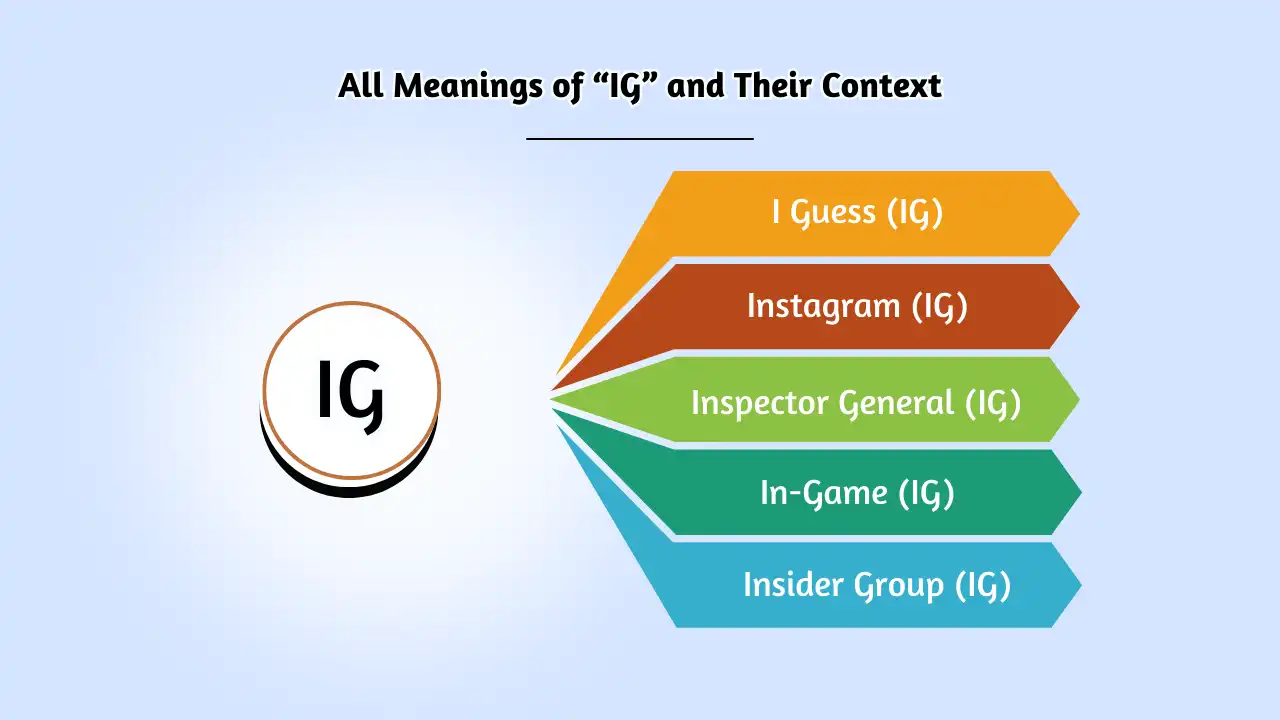
In the fast-paced world of digital communication, the search term “what is mean ig” often yields two distinct results. Linguistically, “IG” is a ubiquitous shorthand for “I guess,” used in casual text-based conversations. However, in the context of technology and global communication, “IG” refers to Instagram—the powerhouse social media platform owned by Meta. Since its inception in 2010, Instagram has transitioned from a simple photo-sharing application into a complex technological ecosystem that dictates trends in software development, artificial intelligence, and digital security.
To understand what IG means in the modern tech landscape, one must look beyond the surface level of filters and hashtags. It is a sophisticated piece of software that has redefined how we interact with mobile hardware, how machine learning governs our attention, and how digital privacy is managed on a global scale.

The Architectural Evolution: From Filter App to Global Ecosystem
When Kevin Systrom and Mike Krieger first launched Instagram, its primary technological appeal was its ability to make low-quality mobile photos look professional through digital filters. Today, the underlying architecture of the app is a marvel of mobile engineering, supporting over two billion monthly active users.
From Monolithic Origins to Microservices
In its early days, Instagram’s backend was relatively straightforward, relying heavily on the Django framework (Python). As the user base exploded, the tech stack had to evolve. The platform shifted toward a microservices architecture, allowing different features—such as Stories, Reels, and Direct Messaging—to operate independently. This modularity ensures that if the Reels server experiences a lag, the core feed and messaging capabilities remain functional. This structural shift is a case study in scalable software engineering, demonstrating how a platform can grow without collapsing under the weight of its own data.
The React Native Integration
A significant milestone in IG’s tech history was the adoption of React Native. Developed by Meta, this framework allows developers to write code once and deploy it across both iOS and Android. For Instagram, this meant a more unified user interface (UI) and user experience (UX). The seamless transition between the “Explore” page and the “Home” feed, despite the massive amount of high-definition video data being processed, is a testament to the efficiency of this cross-platform development strategy.
API Development and Third-Party Integration
The “IG” experience extends beyond the app itself. The Instagram Graph API has become a vital tool for software developers worldwide. By allowing third-party apps to interact with the platform, Instagram has created a secondary industry of analytics tools, scheduling software, and creative suites. This API-centric approach has solidified Instagram’s position as a foundational layer of the internet’s social infrastructure.
Deciphering the Algorithm: The Intersection of AI and User Behavior
When users ask what “IG” means today, they are often referring to the “Algorithm”—the invisible hand that decides which content reaches the top of a user’s feed. The technology behind this is not a single code sequence but a complex web of machine learning (ML) models.
Machine Learning and Personalization
Instagram utilizes deep learning to analyze billions of data points in real-time. Every tap, scroll, and “like” serves as a training signal for the algorithm. The platform uses these signals to predict “interest,” “timeliness,” and “relationship.” For example, if a user frequently interacts with tech review videos, the ML model prioritizes similar content in the Explore tab. This level of personalization is achieved through sophisticated neural networks that categorize images and videos based on visual elements, captions, and even the sentiment of the comments.
The Shift to Video and the Reels Engine
The introduction of Reels marked a pivot toward “discovery” AI, similar to the architecture used by TikTok. Unlike the traditional feed, which focuses on content from people you follow, the Reels engine uses “unconnected distribution.” This means the software identifies high-quality content and pushes it to users who have shown similar interests, regardless of whether they follow the creator. This shift required a massive upgrade in server-side processing power to handle real-time video transcoding and low-latency delivery.
Combating Misinformation through Automated Moderation
AI on IG isn’t just about engagement; it’s also about safety. The platform employs advanced Computer Vision (CV) and Natural Language Processing (NLP) to detect community guideline violations. These tools can automatically flag hate speech, graphic violence, or synthetic media (deepfakes). The technical challenge lies in the nuance of language and imagery, requiring the AI to constantly learn from human moderators to reduce “false positives” while maintaining a safe digital environment.
Digital Security and User Privacy in the Meta Era
As “IG” became a central hub for personal and professional data, its security protocols became a primary focus for both the developers and the users. In an era of increasing cyber threats, the tech behind Instagram’s security is more robust than ever.
Two-Factor Authentication (2FA) and Account Integrity
Security on Instagram has evolved from simple password protection to multi-layered authentication. The platform now supports hardware security keys and third-party authentication apps, moving away from the less secure SMS-based 2FA. Furthermore, the “Account Center” allows users to manage their security settings across both Facebook and Instagram simultaneously, using a unified identity management system that tracks suspicious login attempts via IP address and device fingerprinting.
End-to-End Encryption (E2EE) in Messaging
One of the most significant technological updates in recent years has been the rollout of end-to-end encryption for Direct Messages (DMs). This ensures that only the sender and the recipient can read the contents of a conversation, protecting the data from third-party interception—even from Meta itself. This move aligns Instagram with other high-security messaging apps like WhatsApp, reflecting a broader tech trend toward prioritized user privacy.
Data Privacy Controls and Transparency Tools
In response to global regulations like GDPR and CCPA, Instagram has implemented comprehensive data transparency tools. Users can now download a complete copy of their data, see how they are being tracked by advertisers, and limit the amount of information shared with third-party partners. The “Privacy Checkup” feature is a software-driven guided tour that helps non-technical users navigate complex security settings, ensuring that digital safety is accessible to all.
The Future of IG: Generative AI and Emerging Trends
The definition of “IG” is currently being rewritten by the integration of Generative AI and Augmented Reality (AR). These emerging technologies are transforming the platform from a place where we share our lives into a place where we augment and create our realities.
Generative AI in Content Creation
Meta has begun integrating generative AI tools directly into the Instagram interface. From AI-generated backgrounds for Stories to “AI stickers” and chatbot assistants, the platform is leveraging Large Language Models (LLMs) to enhance creativity. These tools allow users with no graphic design experience to create professional-quality visuals, democratizing digital content creation through the power of software.
Augmented Reality and the Spark AR Engine
Instagram’s use of AR through its “Filters” is powered by the Meta Spark engine. This platform allows developers to create 3D effects that track human movements and facial expressions in real-time. As mobile hardware—specifically GPUs and NPU (Neural Processing Units)—becomes more powerful, the complexity of these AR experiences increases. We are moving toward a future where “IG” serves as a bridge between the physical and digital worlds, potentially integrating with wearable tech like AR glasses.
The Decentralization and Interoperability Trend
With the launch of Threads (an Instagram-linked app) and the move toward the “Fediverse” (decentralized social networks), the technology behind IG is becoming more interoperable. By adopting protocols like ActivityPub, Instagram is signaling a future where users might be able to interact with people on different social platforms without leaving the app. This represents a paradigm shift in social media software, moving away from “walled gardens” toward a more connected and open digital landscape.
In conclusion, when we ask “what is mean ig,” we are inquiring about a pillar of modern technology. Instagram is no longer just an app; it is a sophisticated confluence of mobile engineering, artificial intelligence, and digital security. Its evolution mirrors the broader trajectory of the tech industry—moving from simple utility to a deeply integrated, AI-driven experience that shapes our daily interactions with the digital world. Whether through the lens of a developer using its API or a user navigating its encrypted messages, “IG” represents the cutting edge of what is possible in the mobile software era.
aViewFromTheCave is a participant in the Amazon Services LLC Associates Program, an affiliate advertising program designed to provide a means for sites to earn advertising fees by advertising and linking to Amazon.com. Amazon, the Amazon logo, AmazonSupply, and the AmazonSupply logo are trademarks of Amazon.com, Inc. or its affiliates. As an Amazon Associate we earn affiliate commissions from qualifying purchases.