
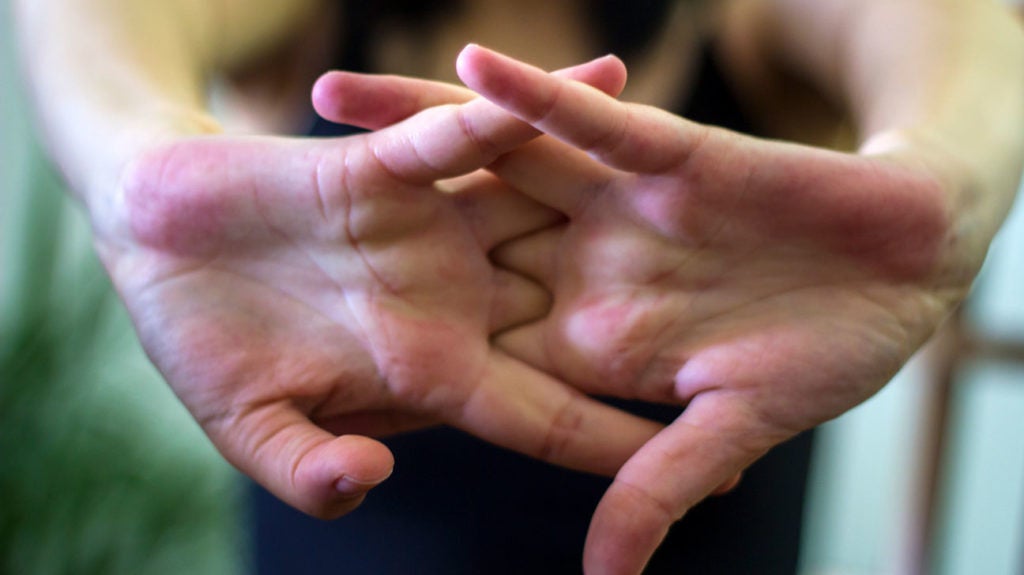
The seemingly innocuous act of popping your knuckles, a habit many find either satisfying or irritating, has long been a subject of curiosity. Beyond the audible “pop,” what physiological and physical processes are at play? While often relegated to casual conversation or dismissed as a mere quirk, a deeper understanding of this common human behavior holds surprising potential for technological innovation. By dissecting the science behind knuckle-popping, we can unlock insights that can inform the development of more sophisticated and intuitive technologies, ranging from advanced haptic feedback systems to intelligent wearable devices and even novel approaches to physical rehabilitation. This exploration delves into the biomechanics, the underlying acoustic phenomena, and the current scientific understanding, all through the lens of their implications for the tech industry.

The Biomechanics of the “Pop”: Cavitation and Synovial Fluid Dynamics
At the heart of the knuckle-popping phenomenon lies a fascinating interplay of physical forces and the unique properties of our joints. When you stretch or bend your finger to induce a pop, you are essentially increasing the volume of the joint capsule. This rapid expansion creates a negative pressure, drawing the synovial fluid—the lubricant that cushions and nourishes your joints—into the expanding space.
The Birth of the Bubble: Cavitation Explained
The magic, or rather the science, happens when this negative pressure becomes sufficiently low to cause the dissolved gases within the synovial fluid (primarily carbon dioxide) to come out of solution. This process is known as cavitation. Instead of remaining dissolved, these gases aggregate to form tiny bubbles or voids within the fluid. This formation is not instantaneous; it’s a rapid process driven by the sudden change in pressure. Think of it like opening a carbonated beverage: the dissolved CO2 quickly forms bubbles when the pressure is released. In the joint, this creates a microscopic, transient bubble.
The Sound of Success: Bubble Collapse and Acoustic Emission
The characteristic “pop” or “crack” sound associated with knuckle-popping is not the formation of the bubble itself, but rather its subsequent collapse. Once the joint is returned to its neutral position, or the pressure is released, the bubble rapidly implodes under the surrounding positive pressure. This rapid collapse generates a shockwave, which propagates through the surrounding tissues and is perceived by our ears as sound. While the precise acoustic signature can vary, it’s this implosion that is the primary source of the audible event.
Synovial Fluid: More Than Just Lubrication
It’s crucial to understand the role of synovial fluid in this process. This viscous, protein-rich fluid is more than just a lubricant. It contains dissolved gases, electrolytes, and other compounds that are essential for joint health. The rheological properties of synovial fluid—its flow characteristics and elasticity—play a direct role in the speed and nature of bubble formation and collapse. The concentration of dissolved gases and the viscosity of the fluid are key determinants of the “pop” itself. Understanding these properties at a micro-level allows us to appreciate the delicate balance required for this phenomenon to occur.
Beyond the Audible: Implications for Haptic Technology and Sensory Feedback
The scientific understanding of knuckle-popping’s acoustic and physical properties offers a fertile ground for innovation in the realm of haptic technology. Haptics, the science of applying touch and motion, is increasingly vital in creating more immersive and interactive digital experiences, from gaming and virtual reality to sophisticated industrial interfaces.
Mimicking the Tactile Sensation: Artificial Cavitation

The sensation of popping a knuckle isn’t solely about the sound; it’s also about the subtle tactile feedback. While the sound is generated by bubble collapse, the stretching and release of the joint capsule can create a distinct feeling. Replicating this precise tactile sensation artificially presents a significant challenge and opportunity for haptics. Imagine a future where virtual keyboards provide subtle, convincing tactile feedback for each keystroke, mimicking the slight resistance and release. Or consider surgical simulators that offer realistic feedback for delicate manipulations, guiding surgeons through complex procedures with an intuitive touch. By understanding the pressure dynamics and fluid mechanics involved in knuckle-popping, engineers can explore methods of creating localized pressure changes within artificial interfaces to generate specific, nuanced tactile cues.
Acoustic Signatures for Interface Design
The distinct acoustic signature of a knuckle pop, while sometimes annoying, is an identifiable event. This characteristic sound could be leveraged in user interface (UI) design. For instance, in accessibility technologies, distinct auditory cues can be invaluable for users with visual impairments. A precisely calibrated “pop” sound could signify the successful completion of a complex gesture or the activation of a specific function on a device. Furthermore, in environments where visual cues are limited or distracting, such as in industrial settings or during hazardous operations, carefully designed auditory feedback, inspired by the controlled sounds of physiological processes like knuckle-popping, can enhance situational awareness and operational safety.
Predictive Maintenance and Wear Detection in Mechanical Systems
The principles of cavitation, the formation and collapse of bubbles due to pressure changes, are not exclusive to biological joints. Cavitation is a well-known phenomenon in fluid dynamics and mechanical engineering, often associated with wear and tear in machinery, such as pumps and propellers. Understanding how cavitation occurs in a biological system, under relatively low pressures and within a viscous fluid, can provide analogies for designing more sensitive and early-stage detection systems for cavitation in engineered systems. By studying the acoustic emissions and pressure fluctuations associated with knuckle-popping, researchers might develop novel sensing technologies that can detect the onset of cavitation in industrial equipment long before it leads to catastrophic failure. This could translate into more robust, reliable, and longer-lasting machinery through advanced predictive maintenance strategies informed by biological analogues.
Biologically Inspired Interfaces: Enhancing Human-Machine Interaction
The integration of biological understanding into technological design, often termed “biomimicry,” is a rapidly growing field. The way our bodies naturally perform complex actions, like joint articulation and the subsequent auditory and tactile feedback, offers a blueprint for more intuitive and effective human-machine interactions.
Prosthetic Dexterity and Feedback
For individuals who have lost limbs, the development of advanced prosthetics is a paramount goal. Current prosthetics often lack the fine motor control and sensory feedback that a natural limb provides. Understanding the subtle biomechanics of joint movement, including the interplay of forces that lead to a knuckle pop, could inform the design of more dexterous and responsive prosthetic fingers. Imagine a prosthetic hand that can mimic the controlled stretching and subtle pressure release that characterizes knuckle articulation, providing users with a more natural feel and improved grip control. Furthermore, the auditory or tactile cues associated with such movements could be translated into sensory feedback for the user, allowing them to better perceive the position and interaction of their prosthetic limb with the environment.
Wearable Technology and Biosensors
The field of wearable technology is constantly seeking to integrate seamlessly with our lives, moving beyond mere data collection to provide truly intelligent assistance. By understanding the subtle physiological changes that precede and accompany events like knuckle-popping, developers could design more advanced biosensors. These sensors, potentially embedded in smartwatches or other wearable devices, could monitor micro-movements, pressure variations, and even the subtle acoustic emissions within joints. This information could then be used for a variety of applications, from early detection of joint strain or injury to providing personalized ergonomic advice during physical tasks. The ability to interpret the complex biomechanical signatures of everyday actions, like knuckle-popping, could lead to more sophisticated health monitoring and proactive wellness interventions.
The Future of Virtual and Augmented Reality Immersion
The pursuit of ever-greater realism in virtual and augmented reality (VR/AR) hinges on creating multisensory experiences. While visual and auditory fidelity have advanced considerably, tactile immersion remains a significant frontier. The controlled release of pressure and the subsequent acoustic event of knuckle-popping offer a model for how physical phenomena can be translated into rich sensory feedback. Future VR/AR interfaces might incorporate micro-actuators or pneumatic systems that can precisely mimic the pressure dynamics and acoustic characteristics of joint movements. This could enable users to feel the resistance of a virtual object, the snap of a digital connection, or the subtle feedback of interacting with virtual elements in a way that feels remarkably lifelike. By deconstructing the simple act of popping one’s knuckles, we gain a deeper appreciation for the intricate sensory feedback mechanisms that nature has perfected, offering a compelling roadmap for the next generation of immersive technologies.
aViewFromTheCave is a participant in the Amazon Services LLC Associates Program, an affiliate advertising program designed to provide a means for sites to earn advertising fees by advertising and linking to Amazon.com. Amazon, the Amazon logo, AmazonSupply, and the AmazonSupply logo are trademarks of Amazon.com, Inc. or its affiliates. As an Amazon Associate we earn affiliate commissions from qualifying purchases.