
The modern fullback in soccer is a multifaceted athlete, operating at the crossroads of defense and attack, and their evolving role is increasingly being shaped and understood through the lens of technology. Gone are the days of a fullback being a mere defensive wall or a simple wing-back tasked with providing crosses. Today’s fullbacks are integral to a team’s tactical blueprint, their contributions meticulously analyzed through data, their performance enhanced by specialized training equipment, and their strategic positioning informed by advanced analytics. This article delves into the technical aspects of the fullback position, exploring how technology has redefined their responsibilities, skills, and impact on the game.
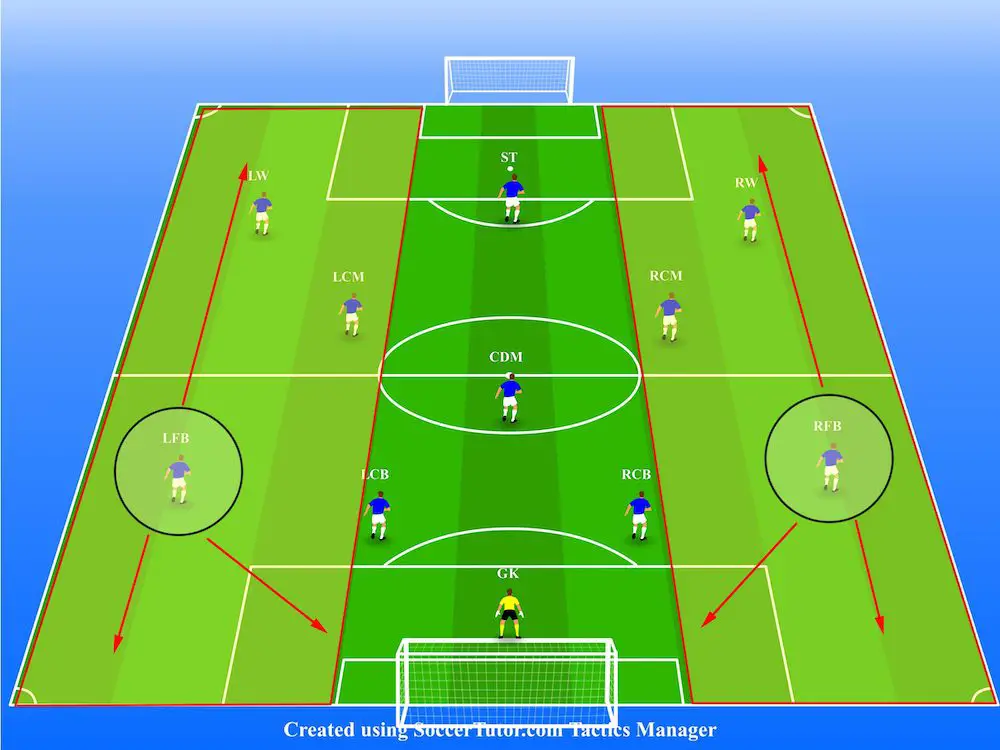
The Evolving Role of the Fullback: From Defensive Stalwart to Dynamic Playmaker
The historical perception of the fullback was primarily rooted in defensive duties. They were the wide defenders, expected to shut down opposition wingers, clear dangerous crosses, and provide a solid defensive shape. However, the advent of more fluid and possession-based football, coupled with advancements in tactical understanding and the tools to analyze it, has dramatically transformed this perception.
Defensive Responsibilities in the Digital Age
While defense remains a cornerstone of the fullback’s role, the approach is far more nuanced and data-driven than ever before. Modern fullbacks are not just tasked with winning tackles; they are expected to understand defensive structures, anticipate play, and execute defensive actions with precision.
Positional Discipline and Spatial Awareness
The concept of positional discipline has always been crucial, but technology has elevated its importance. Through video analysis software, coaches can dissect a fullback’s positioning in relation to the rest of the defensive line, the opposition’s midfield, and potential attacking threats. Heatmaps generated by tracking data highlight areas of the pitch where a fullback operates, revealing their tendency to stay deep or push high, and whether this aligns with the team’s tactical strategy. This granular data allows for targeted feedback and improvement in understanding defensive responsibilities and maintaining optimal spacing, minimizing vulnerabilities.
Tackling and Interception Metrics
Beyond simply recording the number of tackles made, advanced analytics provide deeper insights into the effectiveness of these actions. Metrics such as tackle success rate, the timing of tackles (preventing a shot vs. making a desperate last-ditch tackle), and the type of tackle (standing, sliding) are all recorded and analyzed. Similarly, interceptions are not just counted; their context is analyzed. Was it a proactive interception to regain possession or a reactive one to clear danger? This data helps coaches identify strengths and weaknesses in a fullback’s defensive duels and their ability to read the game and disrupt opposition attacks.
Pressing Triggers and Defensive Transitions
In high-pressing systems, fullbacks are often involved in initiating defensive actions. Tracking data can reveal how effectively a fullback identifies and reacts to pressing triggers, whether it’s closing down an opponent, cutting off passing lanes, or supporting a teammate in a defensive duel. Furthermore, analysis of defensive transitions – the period immediately after losing possession – highlights a fullback’s speed in recovering their defensive position and their ability to make crucial tackles or block shots in these critical moments. This data can be invaluable for developing specific training drills aimed at improving reaction times and defensive shape under pressure.
Offensive Contributions: The Fullback as a Catalyst
The contemporary fullback is expected to be an attacking threat, contributing significantly to their team’s offensive output. This shift is directly influenced by tactical evolution and enabled by technology that allows for the quantification of offensive impact.
Overlapping Runs and Width Creation
The classic overlapping run, where a fullback surges past a winger to provide width and attacking options, is a hallmark of many modern attacking systems. GPS trackers and video analysis allow coaches to measure the frequency, speed, and effectiveness of these runs. Data can reveal which players a fullback successfully links up with, the types of passes they receive and make in advanced areas, and the zones they create space in. This information is vital for optimizing offensive patterns and ensuring that the fullback’s forays forward are not only physically demanding but also strategically beneficial.
Crossing Accuracy and Chance Creation
For fullbacks tasked with delivering crosses, technology offers a sophisticated way to assess their contribution. Beyond simply counting crosses, analytics can measure the accuracy of these deliveries (proportion of crosses reaching a target player or area), the type of cross (driven, lofted, cut-back), and the outcomes (leading to a shot, a goal, or a dangerous opportunity). This data helps in identifying areas for improvement in crossing technique and decision-making, ensuring that their offensive forays translate into tangible goal-scoring chances.
Dribbling and Ball Carrying in Advanced Areas
Some fullbacks are adept dribblers, capable of carrying the ball into attacking positions and breaking defensive lines. Data analytics can track the number of successful dribbles, the zones where these take place, and the impact they have on creating space or drawing defenders. This information can inform tactical decisions about how best to utilize a fullback’s dribbling ability, whether it’s for direct attacking penetration or to draw opponents out of position, creating opportunities for midfielders and forwards.
The Technological Toolkit of the Modern Fullback
The advancements in sports science and data analytics have provided fullbacks with an array of technological tools that aid in training, performance monitoring, and tactical development. These tools are not just for coaches; they are increasingly being utilized by individual players to gain a deeper understanding of their own game.
Performance Monitoring and Data Analytics Platforms

The bedrock of understanding a fullback’s performance lies in the data collected.
GPS Tracking and Biometric Data
Global Positioning System (GPS) devices, worn by players during training and matches, provide a wealth of data. This includes distance covered, sprint distances, top speeds, accelerations and decelerations, and player load. For fullbacks, who often cover significant ground both defensively and offensively, this data is crucial for managing fatigue, preventing injuries, and ensuring they have the energy reserves for critical moments. Biometric data, such as heart rate, further complements this by offering insights into a player’s physiological response to different demands.
Video Analysis Software and Tactical Boards
Sophisticated video analysis software allows coaches and players to review match footage frame by frame. This enables detailed breakdowns of individual actions, team formations, and tactical execution. Fullbacks can see their positioning, their decision-making in various scenarios, and how they interacted with teammates. Digital tactical boards allow coaches to illustrate strategic concepts and visualize defensive and offensive movements, helping fullbacks to better understand their roles within the team’s overall strategy.
Performance Metrics and Statistical Databases
The proliferation of football analytics has led to the development of numerous performance metrics and comprehensive statistical databases. These platforms provide in-depth analysis of a fullback’s contributions across various aspects of the game, from defensive duels and aerial contests to passing accuracy and offensive contributions. By comparing these metrics against benchmarks or other players, fullbacks can identify specific areas for improvement and set measurable goals.
Training Technologies and Skill Enhancement
Beyond monitoring, technology plays a direct role in developing the skills required of a modern fullback.
Agility and Speed Training Equipment
Specialized equipment, such as reaction lights, agility ladders, and speed gates, are used to enhance a fullback’s agility, acceleration, and deceleration – critical attributes for both defensive recoveries and attacking runs. These tools allow for precise measurement of performance during training drills, ensuring that players are pushing their limits effectively and making tangible progress.
Ball Control and Passing Drills with Feedback Systems
While traditional drills remain fundamental, technology is introducing new dimensions. For instance, some advanced training equipment can provide real-time feedback on the accuracy and power of passes, or the technique used in dribbling. This immediate feedback loop is invaluable for reinforcing correct movements and refining technical skills, particularly for fullbacks who need to be proficient with the ball at their feet in various game situations.
Injury Prevention and Rehabilitation Tools
The demanding nature of the fullback position makes them susceptible to injuries. Technology plays a vital role in both preventing these and aiding in rehabilitation. Wearable sensors can monitor biomechanical loads on joints, alerting players and staff to potential overload. In rehabilitation, specialized equipment and virtual reality (VR) environments can be used to safely and effectively rebuild strength, balance, and proprioception, accelerating a player’s return to the pitch.
Tactical Innovations Driven by Technology
The insights gleaned from technological analysis have directly influenced tactical innovations, leading to new ways of deploying and utilizing fullbacks.
Formation Adaptability and Role Fluidity
The traditional 4-4-2 formation, for example, often saw fullbacks with more defined defensive responsibilities. However, with the advent of formations like the 3-5-2 or 4-3-3, fullbacks are often expected to push much higher up the pitch, acting as wing-backs or even wide forwards. This tactical fluidity, informed by data on how different formations impact space and player movement, is a testament to how technology has unlocked new strategic possibilities. Analytics help coaches understand the optimal positioning and movement patterns of fullbacks within these more fluid systems, ensuring they contribute effectively without leaving the team defensively exposed.
Data-Driven Scouting and Player Recruitment
Technology has revolutionized scouting. Data analytics platforms can identify fullbacks with specific skill sets and statistical profiles that align with a team’s tactical needs. This moves beyond subjective scouting to objective analysis, allowing clubs to pinpoint potential signings based on their performance metrics, their suitability for a particular tactical system, and their potential for development, all quantified through data.

Predictive Analytics and Game Strategy
In the future, predictive analytics may even play a role in game strategy. By analyzing vast datasets of past matches, player tendencies, and tactical patterns, teams could potentially gain insights into probable opposition strategies and develop counter-measures. For fullbacks, this could mean understanding how certain opposition players are likely to attack their flank, or what defensive structures are most effective against a particular opponent’s attacking threats, all based on complex algorithmic analysis.
In conclusion, the role of the fullback in soccer has transcended its traditional boundaries, largely thanks to the pervasive influence of technology. From meticulous performance analysis and data-driven training to the exploration of new tactical formations and player recruitment strategies, technology has provided the tools and insights necessary to understand, develop, and optimize the modern fullback. They are no longer just defenders; they are dynamic, data-informed athletes who are vital to a team’s success in the modern, technologically advanced era of football.
aViewFromTheCave is a participant in the Amazon Services LLC Associates Program, an affiliate advertising program designed to provide a means for sites to earn advertising fees by advertising and linking to Amazon.com. Amazon, the Amazon logo, AmazonSupply, and the AmazonSupply logo are trademarks of Amazon.com, Inc. or its affiliates. As an Amazon Associate we earn affiliate commissions from qualifying purchases.