
In the realm of software engineering, Java remains a cornerstone language, largely due to its robust implementation of Object-Oriented Programming (OOP) principles. At the heart of this paradigm lies a concept that often confuses beginners but serves as the building block for every Java application: the instance of a class. To understand Java is to understand how classes and instances interact to create functional, scalable, and maintainable software.
An instance of a class is more than just a technical term; it represents the transition from a theoretical design to a functional entity within a computer’s memory. This article explores the depth of what an instance is, how it is created, and how it functions within the Java Virtual Machine (JVM).

The Fundamental Relationship Between Classes and Instances
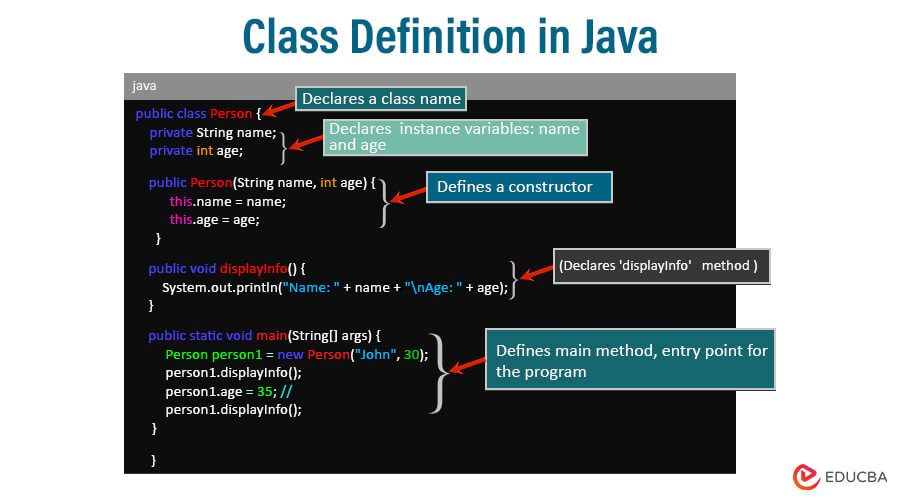
Before diving into the mechanics of instances, one must first grasp the definition of a class. In Java, a class is a blueprint or a template. It defines the variables (state) and methods (behavior) that a particular type of object will have. However, a class itself is a static definition; it does not “do” anything until it is instantiated.
The Blueprint Analogy: From Concept to Reality
To visualize this, consider the architectural blueprint of a house. The blueprint specifies the number of rooms, the placement of windows, and the dimensions of the foundation. However, you cannot live in a blueprint. To have a home, a builder must use that blueprint to construct a physical house.
In this analogy, the blueprint is the Class, and the physical house is the Instance. You can use a single blueprint to build ten different houses. Similarly, in Java, you can use one class to create thousands of instances. Each house might have different paint colors or furniture (different states), but they all follow the same structural design defined by the blueprint.
Defining the Structure: What Goes Inside a Java Class?
A class serves as a container for two primary components:
- Fields (Attributes): These represent the data or state of the object. For a
Carclass, fields might includecolor,model, andtopSpeed. - Methods (Behaviors): These represent the actions an object can perform. For the same
Carclass, methods might includeaccelerate(),brake(), orturn().
When we create an instance, the JVM allocates memory to hold these specific attributes for that specific object.
The Mechanics of Instance Creation: The Lifecycle of a Java Object
The process of bringing a class to life is known as instantiation. This is a sophisticated operation involving memory allocation, initialization, and reference assignment.
The Role of the new Keyword
In Java, the new keyword is the primary trigger for creating an instance. When the JVM encounters the new operator, it performs several critical tasks. First, it calculates how much memory is required for the object based on its class definition. Then, it searches the “Heap” memory for a sufficient block of space to house the instance.
For example, Car myCar = new Car(); tells the JVM to create a new instance of the Car class and store a reference to it in the variable myCar.
Constructors: The Architects of State
Once memory is allocated, the JVM calls a special type of method known as a Constructor. The constructor’s job is to initialize the new instance’s state. If a developer does not provide a constructor, Java provides a default “no-arg” constructor.
Constructors allow developers to set initial values at the moment of creation. For instance, a constructor could ensure that every Car instance starts with a specific serialNumber or fuelLevel, ensuring the object is in a valid state from the moment it exists.
Memory Allocation: Heap vs. Stack Management
Understanding where instances live is vital for performance tuning.
- The Heap: This is where all Java instances (objects) reside. It is a large pool of memory shared by all parts of the application.
- The Stack: This is where local variables and object references live.
When you create an instance, the object itself sits on the Heap, while the variable you use to access it (the reference) sits on the Stack. This distinction is why Java is often described as “passing by value” where the value is the memory address (reference) of the instance.

Working with Instances: State, Behavior, and Identity
Once an instance is created, it begins its functional life within the application. Every instance has three primary characteristics: state, behavior, and identity.
Instance Variables: Maintaining Unique State
Each instance maintains its own copy of the variables defined in the class. This is known as “instance state.” If you have two instances of a User class—userA and userB—changing the username of userA does not affect userB. This isolation is fundamental to encapsulation, allowing different parts of a program to handle distinct data sets using the same logic.
Instance Methods: Defining Object Behavior
While the state is unique to each instance, the methods (logic) are generally shared across all instances of a class to save memory. However, when an instance method is called, it operates on the specific state of the instance that invoked it. This is made possible by the this keyword, an implicit reference that allows the code to know which specific instance is currently being acted upon.
Reference Variables: How We Point to Instances
It is important to distinguish between the instance and the reference variable. A reference variable is like a remote control. The instance is the television. You can have multiple remote controls (references) pointing to the same television (instance). If you use one remote to change the channel, the television changes for everyone holding a remote to that specific TV. In Java, if two variables point to the same instance, changes made through one variable are visible through the other.
Advanced Concepts in Object Instantiation
As developers move beyond basic applications, they encounter more complex ways to handle instances, often to optimize resource usage or simplify code structure.
Anonymous Inner Classes and Lambda Instances
In modern Java (post-Java 8), we often create instances without even naming the class. Anonymous Inner Classes allow for the instantiation of a class that implements an interface or extends a class on the fly.
Furthermore, Lambda Expressions have revolutionized how we think about instances of functional interfaces. Instead of a bulky class definition, a lambda provides a concise way to create an instance of a functional interface, treating code as data and enabling a more declarative style of programming.
The Singleton Pattern: Restricting Instance Creation
In some architectural designs, you specifically do not want multiple instances of a class. The Singleton Pattern ensures that a class has only one instance and provides a global point of access to it. This is common for “Manager” classes, such as database connection pools or configuration loaders, where having multiple instances would lead to resource conflicts or inconsistent data.
Best Practices for Managing Instances in Modern Java Development
Creating instances is easy, but managing them effectively is what separates senior developers from juniors. Poor instance management leads to memory leaks and performance bottlenecks.
Effective Memory Management and Garbage Collection
Java features an automatic Garbage Collector (GC), which identifies instances that are no longer reachable by any reference and removes them from the Heap to free up memory. However, developers must be careful not to hold onto references longer than necessary (e.g., leaving objects in a static List indefinitely), as this prevents the GC from doing its job, eventually leading to an OutOfMemoryError.
Immutable Objects: Reducing Side Effects
One of the most powerful trends in modern Java tech is the move toward Immutability. An immutable instance is one whose state cannot be changed after it is created (e.g., the String class). By designing classes to be immutable, you ensure that instances are “thread-safe.” This means multiple parts of a program can share the same instance without worrying that one part will unexpectedly change the data for the others.
Conclusion
An instance of a class in Java is the physical manifestation of a programmatic idea. It is the bridge between the code you write and the data the computer processes. From the initial allocation of memory via the new keyword to the eventual cleanup by the Garbage Collector, the lifecycle of an instance is a testament to the sophistication of the Java Virtual Machine.
By mastering the relationship between blueprints (classes) and their realizations (instances), developers can build complex, stateful applications that are both efficient and easy to reason about. Whether you are building a simple mobile app or a massive enterprise backend, the humble instance remains the most vital tool in your technical arsenal.
aViewFromTheCave is a participant in the Amazon Services LLC Associates Program, an affiliate advertising program designed to provide a means for sites to earn advertising fees by advertising and linking to Amazon.com. Amazon, the Amazon logo, AmazonSupply, and the AmazonSupply logo are trademarks of Amazon.com, Inc. or its affiliates. As an Amazon Associate we earn affiliate commissions from qualifying purchases.