
In the world of high-performance computing, data management, and consumer electronics, we often obsess over processor speeds, RAM capacity, and thermal cooling. However, there is a silent atmospheric variable that dictates the lifespan and reliability of every silicon chip and circuit board: humidity. When we ask, “What is an ideal humidity?” in a technological context, we are not discussing personal comfort, but rather the precise equilibrium required to prevent catastrophic hardware failure.
Atmospheric moisture, measured as Relative Humidity (RH), is the ratio of the current absolute humidity to the highest possible absolute humidity. For the tech industry—ranging from massive enterprise data centers to the high-end gaming rigs in home offices—maintaining this equilibrium is a sophisticated engineering challenge that balances the risks of electrostatic discharge against the dangers of metallic corrosion.

The Critical Physics of Hardware: Why Humidity Matters in Computing
To understand the ideal humidity for technology, one must first understand the two extremes that threaten electronic components. Electronics are composed of intricate layers of conductive metals, semi-conductive silicon, and non-conductive polymers. Each of these materials reacts differently to the presence of water vapor in the air.
Electrostatic Discharge (ESD) and Low Humidity
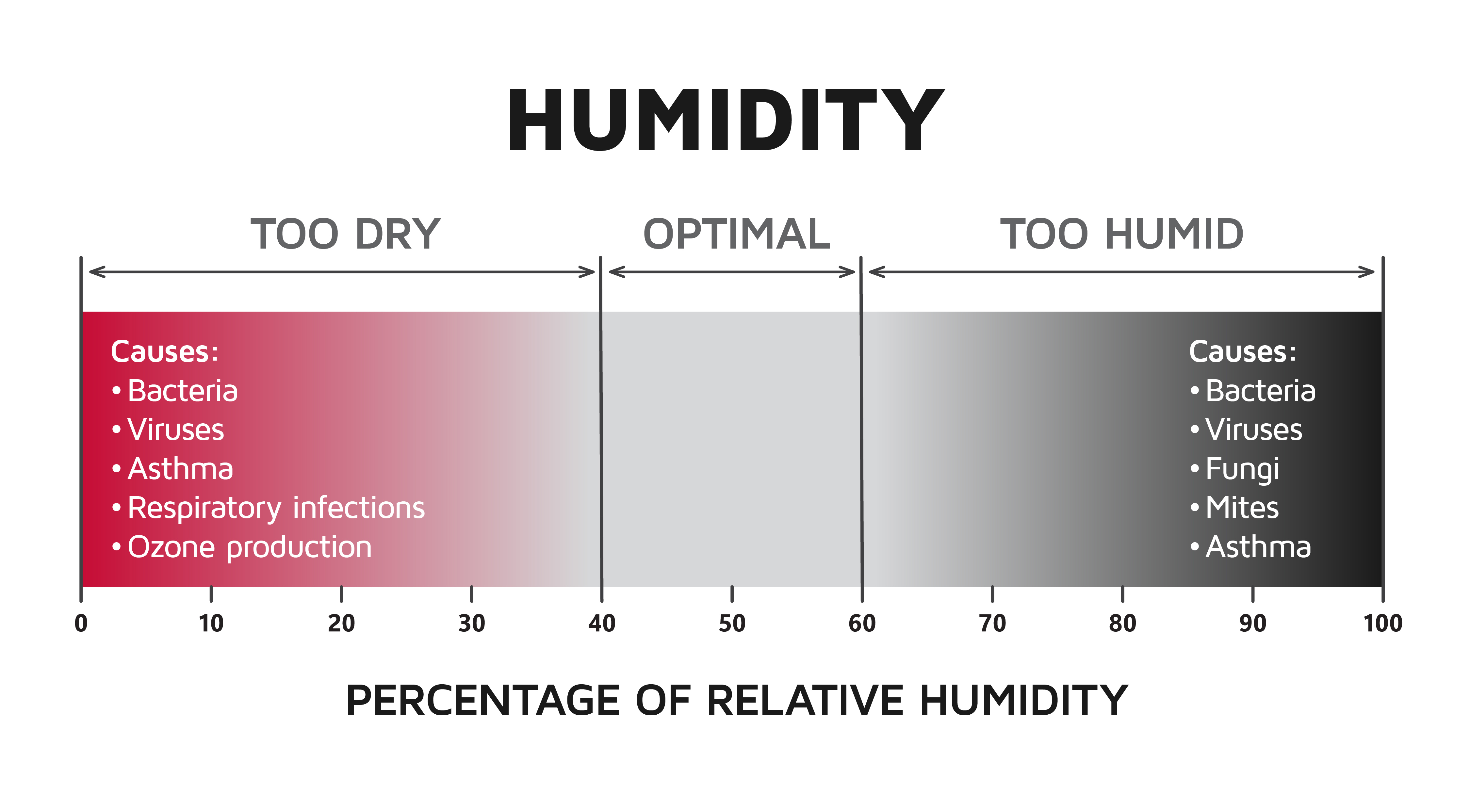
When the relative humidity drops below 30%, the air becomes an effective insulator rather than a conductor. While this might sound beneficial, it actually allows static electricity to build up on surfaces and human operators. In a low-humidity environment, a simple act like walking across a server room floor can generate thousands of volts of static electricity.
If this static discharge finds its way to a microprocessor or a memory module, it can cause “latent defects”—microscopic damage that doesn’t immediately kill the device but leads to intermittent crashes or premature failure months later. For tech professionals, an environment that is too dry is a breeding ground for invisible “lightning strikes” that can wipe out thousands of dollars in hardware in a microsecond.
Corrosion and Condensation: The Risks of High Humidity
Conversely, when humidity exceeds 60%, a different set of problems emerges. High humidity facilitates “hygroscopic dust” accumulation. Dust particles in the air absorb moisture and settle on circuit boards, becoming conductive. This creates “stray current paths” that can short-circuit delicate components.
The more severe threat is “chemical creep” or silver/copper corrosion. In high-humidity environments, moisture acts as a catalyst for oxidation. Over time, the copper traces on a motherboard or the silver pins on a CPU can develop a layer of non-conductive oxide or, worse, “whiskers”—microscopic metallic growths that bridge gaps between circuits and cause permanent shorts. Furthermore, if the temperature of the hardware drops below the “dew point” (the temperature at which air can no longer hold its water vapor), liquid water condenses directly onto the electronics, leading to immediate and total system failure.
Industry Standards: ASHRAE Guidelines for Data Centers and Server Rooms
For the tech sector, the gold standard for environmental control is defined by ASHRAE (the American Society of Heating, Refrigerating and Air-Conditioning Engineers). Their research into “Technical Committee 9.9” has shaped how every modern data center is built.
The Evolution of Thermal Guidelines
Historically, data centers were kept at a very narrow humidity range (around 45% to 50% RH). However, as server technology evolved and the industry moved toward “green” energy initiatives, these standards were broadened. The current ASHRAE guidelines differentiate between “Recommended” and “Allowable” ranges.
The Recommended range for mission-critical IT equipment is generally a dew point between 5.5°C (41.9°F) and 15°C (59°F), with a relative humidity of around 50%. This range is designed to maximize the reliability of the equipment while minimizing the energy required to humidify or dehumidify the space.
Finding the “Sweet Spot” for Uptime and Reliability
In professional server environments, the “ideal” is often considered 40% to 50% RH. This specific window provides enough moisture in the air to allow static charges to dissipate safely to the ground, yet stays far enough below the threshold of condensation and corrosion. By maintaining this “sweet spot,” enterprises can ensure five-nines (99.999%) uptime, as environmental stressors are effectively neutralized.
Modern “hyperscale” data centers operated by companies like Google or Amazon often push these boundaries to save on cooling costs, using advanced AI algorithms to monitor the relationship between external ambient humidity and internal server temperatures, adjusting the airflow in real-time to stay within the safe “envelope.”
Smart Home Integration: IoT Sensors and Automated Climate Control
While enterprise tech has long mastered humidity control, the rise of the “Smart Home” and the “Prosumer” office has brought this technical requirement into the domestic sphere. High-end workstations, home labs, and expensive home theater setups are equally susceptible to humidity-related degradation.
The Role of AI in Humidity Management
The modern tech ecosystem relies heavily on IoT (Internet of Things) integration. Smart thermostats, such as those from Nest or Ecobee, are no longer just about temperature. They serve as the central hub for atmospheric management. Through “IFTTT” (If This, Then That) protocols and AI-driven automation, a smart home can now detect a spike in humidity and automatically trigger a dehumidifier or adjust the HVAC system’s fan speed to pull moisture from the air.
This automation is vital for protecting home-based tech infrastructure. For instance, an AI-driven system can recognize that the outdoor humidity is rising due to rain and proactively adjust the indoor environment before the internal sensors even detect a change, creating a predictive rather than reactive climate control strategy.
Precision Monitoring: Evaluating the Top Smart Hygrometers
For tech enthusiasts, the “ideal humidity” is only achievable through precision measurement. Standard analog hygrometers are often inaccurate by as much as 10%. The tech-forward solution involves digital hygrometers equipped with Swiss-made Sensirion sensors, which provide accuracy within ±2% RH.
These devices connect via Bluetooth or Zigbee to a central dashboard, allowing users to monitor humidity trends over time. In a tech-centric environment, being able to analyze a “humidity map” of a room can reveal “dead zones” where air circulation is poor, potentially leading to localized moisture buildup behind server racks or inside enclosed cabinets.
Energy Efficiency and the Green Tech Revolution
One of the most significant challenges in maintaining ideal humidity is the energy cost. Dehumidification is an energy-intensive process, often requiring the air to be cooled below its dew point to wring out the water and then reheated to a comfortable temperature. In the era of “Green Tech,” this is a major hurdle for sustainability goals.
The Cost of Cooling vs. Dehumidification
In large-scale tech operations, energy efficiency is measured by Power Usage Effectiveness (PUE). A high PUE often indicates that a significant amount of electricity is being “wasted” on climate control rather than powering the actual servers. Engineers are now moving toward “evaporative cooling” and “adiabatic humidification” techniques. These technologies use the natural properties of water evaporation to regulate both temperature and humidity, significantly reducing the carbon footprint of the facility compared to traditional mechanical refrigeration.
Leveraging Advanced Economizers for Sustainable Tech Infrastructure
“Free cooling” or air-side economizers are a growing trend in tech infrastructure. These systems pull in filtered outside air when the external conditions are favorable. However, this requires incredibly sophisticated sensors. If the outside air is too humid (during a storm) or too dry (during a freeze), the system must instantly switch back to a closed-loop internal cycle. The “ideal humidity” in this context is managed by a software-defined layer that balances environmental safety with the economic imperative of energy conservation.
Future Trends: Quantum Computing and Specialized Environmental Requirements
As we look toward the future of technology, the definition of “ideal humidity” is becoming even more specialized. The next generation of hardware, including quantum computers and ultra-high-density storage arrays, operates under conditions that far exceed standard office environments.
Quantum processors, for example, often require cryogenic temperatures—near absolute zero. At these levels, “humidity” as we know it ceases to exist, as all moisture is frozen out of the environment. However, the peripheral hardware that supports these quantum systems—the control electronics and traditional servers—still requires a strictly regulated atmosphere.
Moreover, the move toward “Edge Computing,” where small data centers are placed in unconventional environments like 5G cell towers or industrial warehouses, necessitates a new breed of ruggedized tech. These devices are designed with conformal coatings—a thin polymeric film applied to circuit boards—that protects them from humidity, allowing them to operate in environments that would be “non-ideal” for standard hardware.
Conclusion: The Silicon Equilibrium
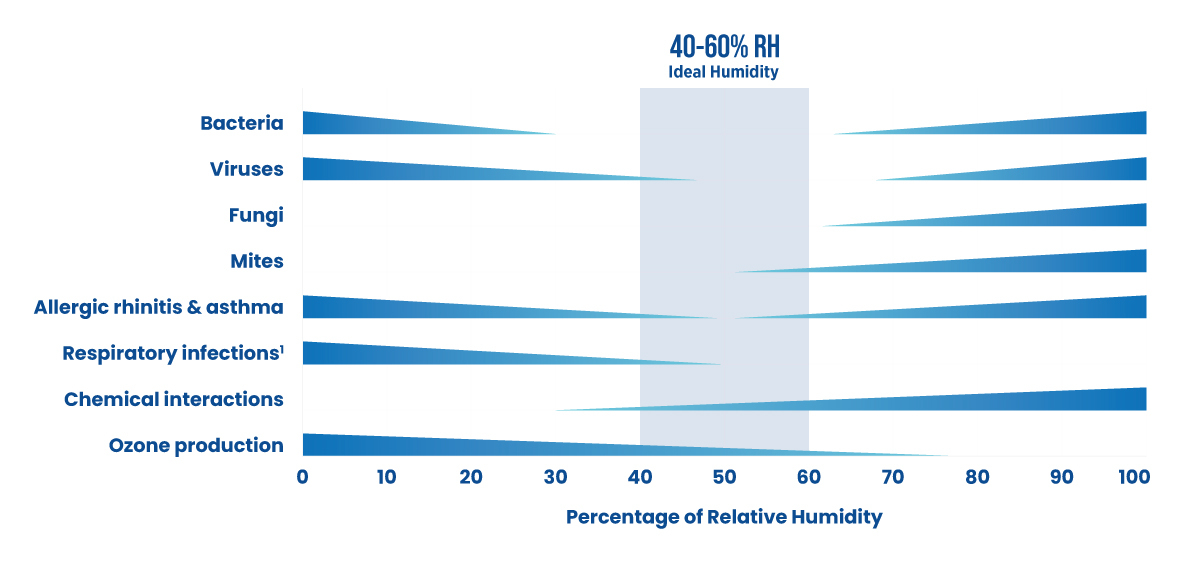
The question of “what is an ideal humidity” is central to the preservation of our digital world. For the technology niche, the answer is a calculated balance: 40% to 50% relative humidity. This range represents the perfect compromise between the mechanical threat of corrosion and the electrical threat of static discharge.
Whether you are managing a multi-million dollar data center or simply protecting a high-end home office, understanding the tech-centric physics of humidity is essential. By leveraging IoT sensors, adhering to ASHRAE standards, and embracing energy-efficient climate control, we can ensure that our hardware remains operational, our data stays safe, and our technological infrastructure stands the test of time. In the delicate dance of silicon and software, the air itself is a component we cannot afford to ignore.
aViewFromTheCave is a participant in the Amazon Services LLC Associates Program, an affiliate advertising program designed to provide a means for sites to earn advertising fees by advertising and linking to Amazon.com. Amazon, the Amazon logo, AmazonSupply, and the AmazonSupply logo are trademarks of Amazon.com, Inc. or its affiliates. As an Amazon Associate we earn affiliate commissions from qualifying purchases.