
The term “action” in the context of a guitar refers to a crucial, yet often overlooked, physical attribute: the height of the strings above the fretboard. It’s a fundamental aspect of a guitar’s playability and directly influences how comfortable and responsive the instrument feels under a player’s fingers. While seemingly a simple measurement, the action is a complex interplay of various guitar components and their precise adjustments, impacting everything from ease of fretting notes to the potential for buzzing and sustain. For guitarists, understanding action is not merely a technical detail; it’s a gateway to optimizing their instrument for their unique playing style, genre, and even physical limitations. This article delves into the technical intricacies of guitar action, exploring its measurement, its impact on playability, and the common adjustments guitarists and luthiers employ to achieve the ideal setup.
The Anatomy of Guitar Action: Components and Measurement
To truly grasp what guitar action is, we must first understand the components that contribute to its setting and how it’s objectively measured. The action is not a singular, isolated element but rather a product of the relationships between the strings, the frets, the nut, and the bridge. Each of these elements plays a vital role in dictating how high the strings sit above the playable surface of the fretboard.
The String-to-Fretboard Distance
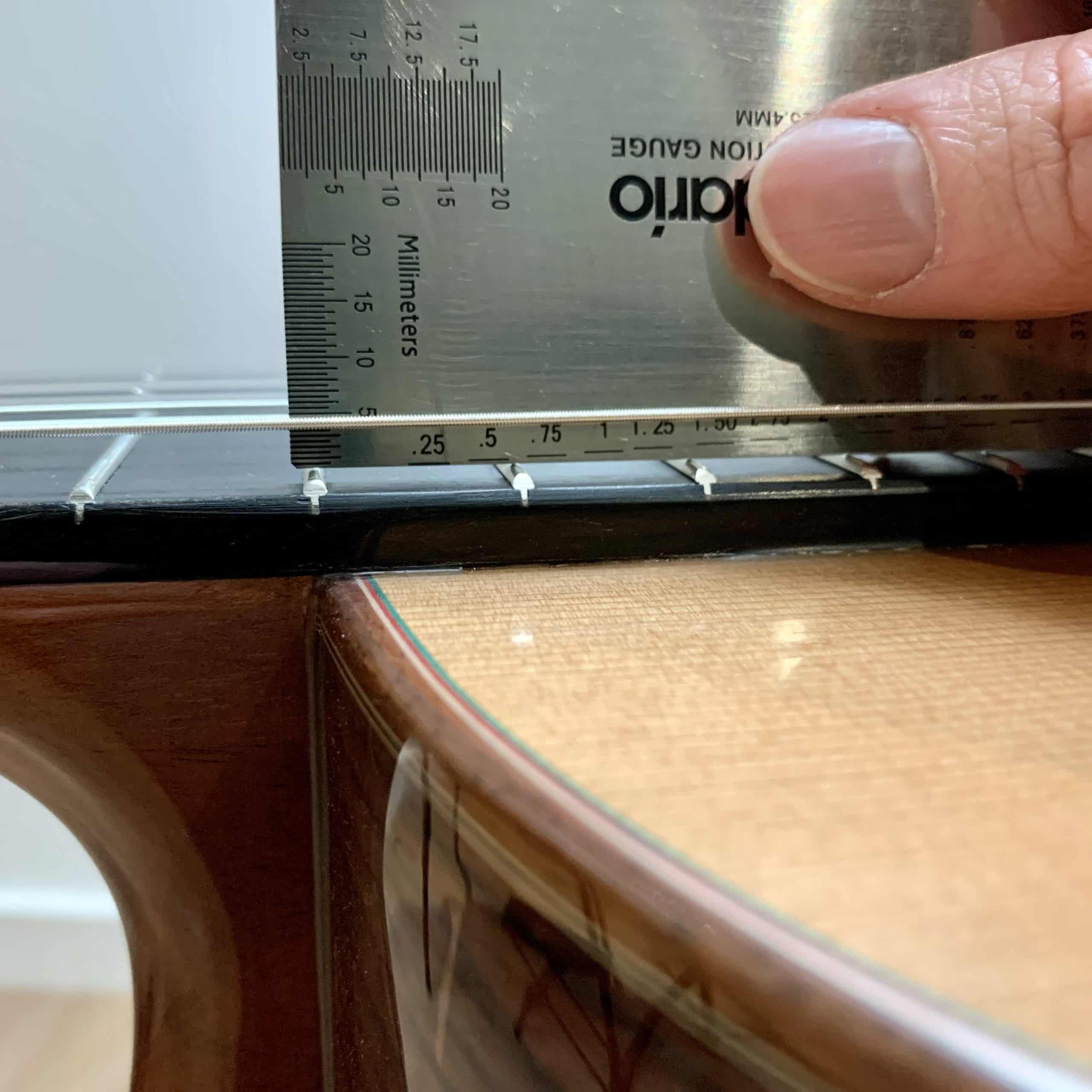
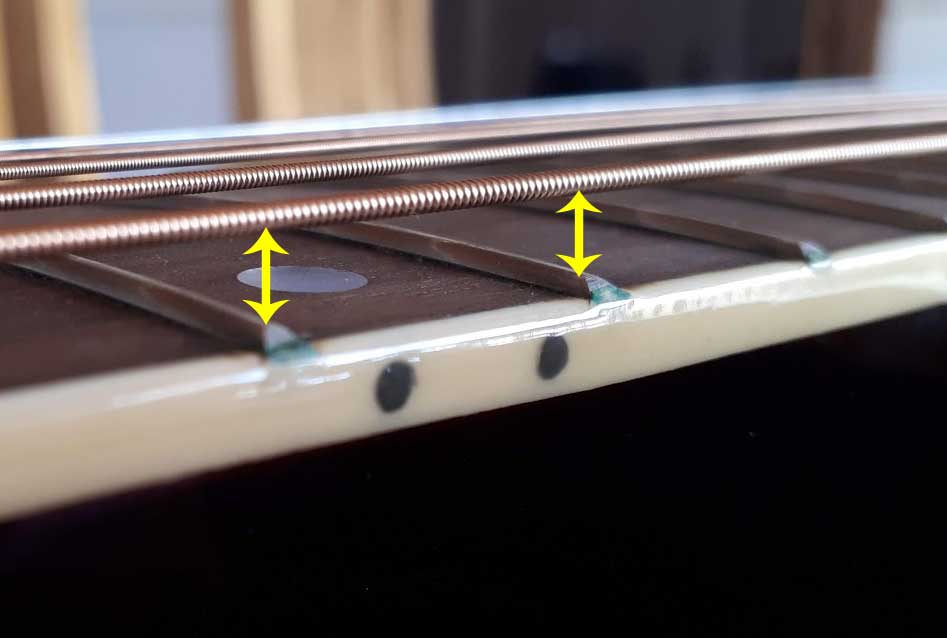
At its core, action is measured as the distance between the bottom of a vibrating string and the top of the fret wire. This measurement is typically taken at specific points along the fretboard, most commonly at the 12th fret. This particular fret is chosen because it represents a midpoint and a significant point of articulation for the string’s vibration.
- Nut Slots: The initial height of the strings is determined by the depth and spacing of the slots in the nut, located at the headstock end of the fretboard. If the nut slots are too shallow, the strings will sit too low near the headstock, potentially leading to buzzing or open strings sounding muted. Conversely, if they are too deep, the action will be higher at the first few frets.
- Fret Height and Levelness: The frets themselves are critical. Their height and how evenly they are seated within the fretboard directly influence the string’s trajectory. If frets are uneven (not properly “leveled”), one fret might be higher than another, causing buzzing even with otherwise acceptable action. Worn frets can also contribute to higher action as the string has to press down further to make contact with the fret.
- Neck Relief: The neck of a guitar, whether solid-body electric or acoustic, is not perfectly straight. It possesses a slight, intentional curvature known as “relief.” This relief is crucial to prevent the strings from hitting the frets in the middle of the neck. Too little relief (a “flat” neck) can cause buzzing, while too much relief (a “bowed” neck) will increase the action significantly in the middle register. The truss rod, located within the neck, is the primary mechanism for adjusting this relief.
- Bridge Height (Saddle Height): For electric guitars with adjustable bridges and acoustic guitars with adjustable saddles (or bone/tusq saddles that can be filed down), the bridge plays a significant role in setting the action, particularly in the upper register of the fretboard. The height of the saddles at the bridge dictates the string height as it leaves the fretboard, influencing the overall feel and playability of the instrument.
Standard Measurement Practices
While variations exist across different guitar types and player preferences, industry standards offer a baseline for understanding acceptable action.
- Electric Guitars: A common benchmark for electric guitar action at the 12th fret is around 1.5mm to 2.0mm for the low E string and 1.0mm to 1.5mm for the high E string. These are approximate figures, and individual preferences can lead to deviations.
- Acoustic Guitars: Acoustic guitars generally have slightly higher action than electrics to accommodate the increased string tension and the need for more forceful strumming and picking. A typical range at the 12th fret might be 2.0mm to 2.5mm for the low E string and 1.5mm to 2.0mm for the high E string.
- Bass Guitars: Bass guitars, with their thicker strings and higher tension, typically have even higher action, often in the range of 2.5mm to 3.5mm at the 12th fret for the lowest string.
The Impact of Action on Playability and Tone
The height of the strings above the fretboard is not merely an aesthetic consideration; it has profound and tangible effects on how a guitar plays and sounds. For players, understanding these impacts is key to diagnosing issues and making informed decisions about their instrument’s setup.
Ease of Fretting and String Bending
The most immediate impact of action is on the physical effort required to press a string down to the fretboard.
- Lower Action: When the action is low, the strings are closer to the frets. This means less pressure is needed to fret a note cleanly. For players with smaller hands, less finger strength, or those who play for extended periods, lower action can significantly reduce finger fatigue and make playing more comfortable. It allows for quicker note transitions and a generally more fluid playing experience. This is often a preference for lead guitarists who execute fast runs and intricate passages.
- Higher Action: Conversely, higher action requires more downward pressure from the fretting hand to make the string contact the fret. This can be physically demanding, especially for beginners or those accustomed to lower action. However, some players, particularly those with a heavier picking attack or who favor aggressive strumming, might find higher action more forgiving, as it provides a greater buffer against accidental string muting or buzzing from their picking hand.
Buzzing and Intonation
Action is intrinsically linked to the potential for fret buzz and the accuracy of a guitar’s intonation.
- Fret Buzz: Fret buzz occurs when the vibrating string lightly strikes a fret other than the one being fretted. Low action, especially if combined with insufficient neck relief or uneven frets, greatly increases the likelihood of buzzing. As the string vibrates, it has less distance to travel before it can make contact with an adjacent fret. While a slight, almost imperceptible buzz can sometimes be tolerated by some players, excessive buzzing can be distracting and negatively impact the clarity of the notes.
- Intonation: Intonation refers to the accuracy of the pitches produced by the guitar as you move up the fretboard. A guitar with poor intonation will sound sharp or flat when playing chords or melodies in different positions. While primarily adjusted at the bridge saddles, the overall action can indirectly affect perceived intonation. If the action is too high, players might unconsciously press down harder to fret notes, which can slightly sharpen the pitch of the note. Conversely, if the action is too low and leads to buzzing, the inconsistent sound can mask subtle intonation issues.
Tone and Sustain
The interaction between string height, vibration, and the guitar’s resonant properties also influences its tonal output and sustain.
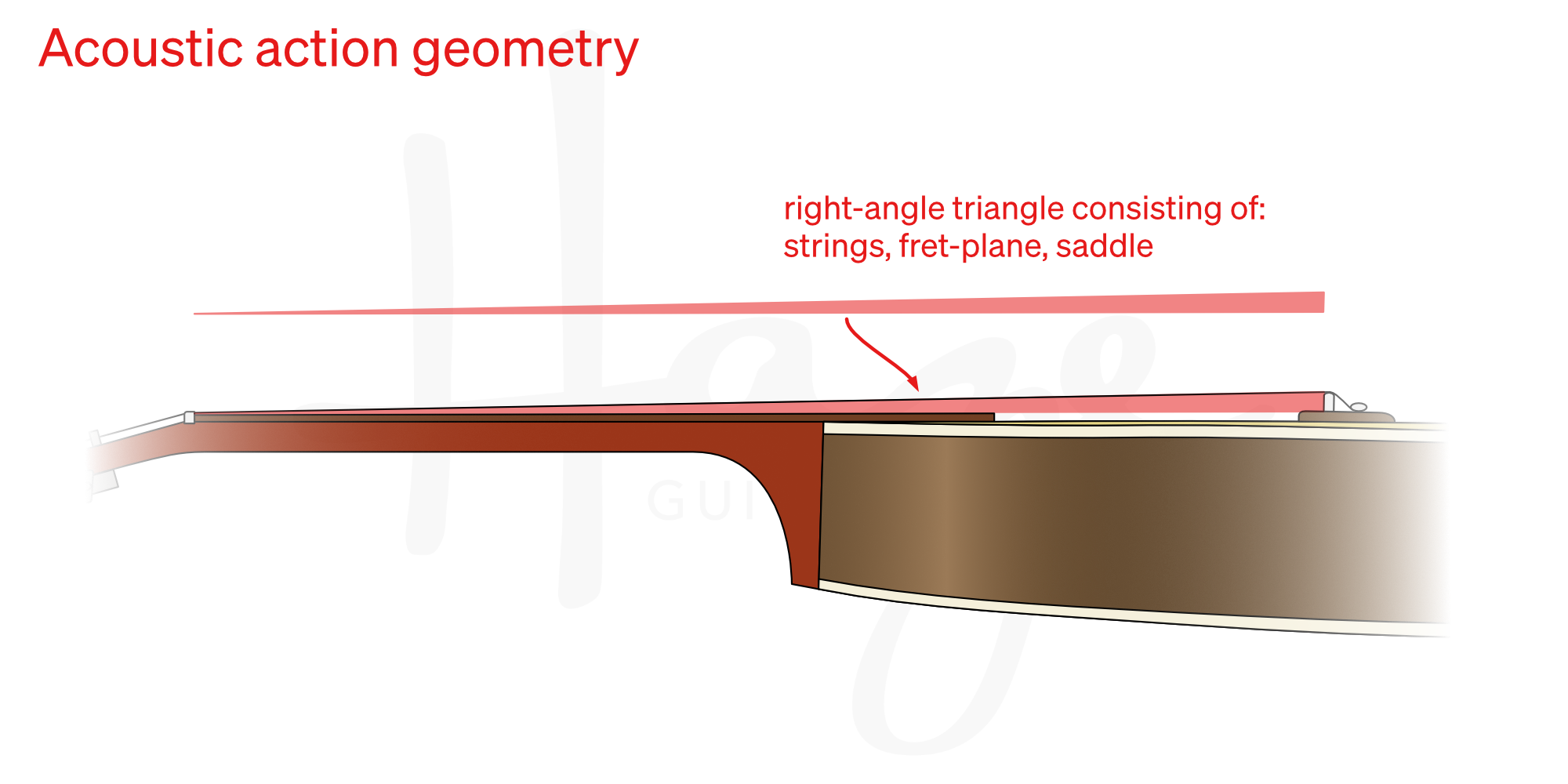
- Sustain: Sustain is the duration a note rings out after being played. Generally, lower action can contribute to better sustain. When strings are closer to the frets and bridge, more of their energy is efficiently transferred into the guitar’s body, allowing for a longer, clearer decay. With higher action, some of the string’s energy is dissipated in overcoming the increased distance and tension required for fretting.
- Tone: The character of a guitar’s tone can also be subtly affected by action. Lower action can sometimes result in a brighter, more articulate sound, as the strings are more responsive to the player’s touch and attack. Higher action, on the other hand, might produce a slightly warmer, fuller tone, with a more pronounced attack from the picking hand being less likely to cause unwanted string artifacts. However, these tonal differences are often less pronounced than the impact on playability and can be influenced by many other factors, including pickup selection, amplifier settings, and the guitar’s construction.
Adjusting Action: The Luthier’s Touch and DIY Solutions
The beauty of a guitar lies not only in its inherent design but also in its adjustability. The process of modifying a guitar’s action is a fundamental skill for guitar technicians and luthiers, and with some understanding and caution, can also be a rewarding DIY endeavor for guitarists.
Professional Setup by a Luthier
For most guitarists, especially those who are new to instrument maintenance or possess valuable instruments, a professional setup by a qualified luthier or guitar technician is the recommended course of action.
- Diagnosis and Expertise: A luthier possesses the knowledge and experience to accurately diagnose the root cause of action problems. They can assess fret wear, neck straightness, nut slot depth, and bridge geometry with a discerning eye.
- Precision Adjustments: They have specialized tools and a deep understanding of how each adjustment affects the overall playability. This allows for precise tuning of the truss rod, careful filing of nut slots, meticulous fret leveling and crowning, and accurate bridge saddle adjustments.
- Optimizing for Playing Style: A good luthier will not just set the action to a generic standard but will take into account the guitarist’s playing style, the type of music they play, and even their physical attributes to achieve a personalized and optimal setup. This might involve recommending specific string gauges that complement the chosen action.
Common DIY Adjustments and Considerations
While a full professional setup is often best, certain aspects of action adjustment can be tackled by the discerning DIY guitarist. However, it’s crucial to approach these with caution and a willingness to learn.
- Truss Rod Adjustment: This is arguably the most impactful DIY adjustment for action. The truss rod, usually accessed from the headstock or the heel of the neck, controls the neck relief. Tightening the truss rod (clockwise) flattens the neck, reducing relief and lowering the action in the middle of the fretboard. Loosening it (counter-clockwise) increases relief, raising the action. Crucially, truss rods should only be adjusted in small increments (typically a quarter to half turn at a time) and with the strings at tension. Over-tightening can cause severe damage to the neck. It’s highly recommended to watch instructional videos and understand the mechanics before attempting this.
- Bridge Saddle Height Adjustment: For guitars with adjustable bridge saddles (most electric guitars and some acoustic guitars), raising or lowering these directly affects string height at the bridge end. This is a relatively straightforward adjustment using small Allen wrenches or screwdrivers. By adjusting individual saddles, a guitarist can not only fine-tune the overall action but also compensate for any unevenness in fret height or neck relief, ensuring consistent action across all strings.
- Nut Slot Adjustment (Caution Advised): Adjusting nut slot depth is a more delicate procedure. If the slots are too shallow, they can be carefully filed deeper using specialized nut files. However, removing too much material is irreversible and can lead to unacceptably low action or buzzing at the first few frets. For this reason, nut slotting is often best left to experienced technicians.
Finding Your Perfect Action: A Personal Journey
The concept of “ideal” guitar action is subjective and deeply personal. What feels perfectly comfortable and conducive to great playing for one guitarist might be entirely unsuitable for another. This is why understanding action is not just about technical specifications but also about self-discovery and experimentation.
The Role of Playing Style and Genre
Different playing styles and musical genres necessitate different action preferences.
- Fingerstyle Players: Guitarists who primarily use their fingers to pluck strings, often employing complex chord voicings and melodic lines, might prefer a slightly lower action. This allows for precise finger placement and reduced effort when navigating intricate fretboard passages. The clarity and articulation afforded by lower action can enhance the nuances of fingerstyle playing.
- Rock and Blues Lead Guitarists: For those who rely heavily on string bending, vibrato, and fast soloing, a balanced action is key. Too low an action can lead to unwanted muting and buzzing during aggressive bending. Too high an action can make bending excessively difficult and tiring. A medium-low to medium action often strikes the right chord, offering a good balance of playability for expressive techniques.
- Heavy Strummers and Metal Players: Guitarists who employ a powerful strumming technique, especially those in genres like metal that often utilize down-tuned guitars and heavy picking, might find a slightly higher action beneficial. This provides a greater “breathing room” for the strings, preventing accidental muting from a heavy picking hand and offering a more robust attack.
- Acoustic Flatpickers: Acoustic guitarists who primarily use a flatpick for strumming and lead work often require a slightly higher action than electric players. This allows for the greater force of flatpicking without causing the strings to “choke” against the frets, contributing to a fuller, more resonant tone.
String Gauge and Its Influence
The gauge of the strings used on a guitar also plays a significant role in how the action feels and performs.
- Thicker Strings (Higher Gauge): Heavier gauge strings have more tension. When set to the same height as lighter strings, they will feel stiffer and require more effort to fret. However, they also vibrate with more mass and can produce a richer, fuller tone and potentially more sustain. Players who prefer thicker strings might find they can tolerate or even prefer a slightly lower action because the inherent tension of the strings provides a natural resistance.
- Lighter Strings (Lower Gauge): Lighter gauge strings have less tension and are easier to bend. They require less force to fret and can make playing feel “faster” and more effortless. However, they can also sound thinner and might be more prone to buzzing if the action is too low. Guitarists who opt for lighter strings might need to set their action slightly higher to compensate for the reduced tension and achieve a clean sound.
The Process of Finding Your Sweet Spot
Discovering your ideal action is often an iterative process of experimentation and listening to your instrument.
- Start with a Baseline: If you’re unsure, begin with the manufacturer’s recommended action or a commonly accepted standard for your guitar type.
- Play and Assess: Play your guitar extensively, focusing on how it feels under your fingers and how it sounds. Pay attention to any buzzing, discomfort, or difficulty in performing specific techniques.
- Make Gradual Adjustments: If you’re making DIY adjustments, make them in small increments. Play after each adjustment to evaluate the impact.
- Seek Professional Advice: Don’t hesitate to consult a luthier. They can provide expert guidance, perform precise adjustments, and offer recommendations based on their experience.
Ultimately, the “action” on a guitar is not a fixed specification but a dynamic characteristic that can be refined to enhance your playing experience, unlock new sonic possibilities, and make your instrument truly an extension of your musical voice. It’s a testament to the thoughtful engineering and craftsmanship that allows for such a high degree of personalization in the world of guitars.
aViewFromTheCave is a participant in the Amazon Services LLC Associates Program, an affiliate advertising program designed to provide a means for sites to earn advertising fees by advertising and linking to Amazon.com. Amazon, the Amazon logo, AmazonSupply, and the AmazonSupply logo are trademarks of Amazon.com, Inc. or its affiliates. As an Amazon Associate we earn affiliate commissions from qualifying purchases.