
Variegation, a captivating visual phenomenon in the plant kingdom, transforms ordinary foliage into extraordinary works of art. It’s the presence of differently colored zones in the leaves, stems, or flowers of a plant, creating patterns that range from subtle streaks to bold patches. While often perceived as a rare and exotic trait, variegation is a fascinating characteristic that arises from specific genetic or environmental factors. Understanding what causes variegation and how to care for these unique specimens is key to appreciating their beauty and ensuring their survival. This exploration delves into the science behind variegation, the different types and causes, and the considerations for cultivating these visually striking plants.

Understanding the Science of Variegation
At its core, variegation is about the absence or alteration of chlorophyll, the pigment responsible for the green color in plants and the fundamental driver of photosynthesis. This alteration leads to the appearance of other pigments, such as carotenoids (yellows and oranges) or anthocyanins (reds and purples), becoming visible, or to areas completely devoid of pigment, appearing white or cream. The genetic and cellular mechanisms behind this phenomenon are complex and varied, leading to distinct patterns and characteristics in different plants.
The Role of Chlorophyll and Pigmentation
Chlorophyll is crucial for a plant’s ability to convert light energy into chemical energy through photosynthesis. In variegated plants, certain cells or tissues within the leaf fail to produce chlorophyll, or produce it in reduced amounts. This lack of chlorophyll can occur in various patterns: along the veins, in patches, along the margins, or as sectorial patches of color. The exposed underlying pigments, or the absence of pigment altogether, create the striking visual appeal. For instance, the creamy white or yellow sections in a variegated leaf are often due to a lack of chlorophyll, allowing the yellow and orange carotenoids, which are always present but masked by the abundance of green chlorophyll, to become visible. In some cases, the white areas are entirely devoid of any pigment, consisting of air-filled cells.
Genetic Mutations as the Primary Driver
The most common cause of variegation is genetic mutation. These mutations can affect the development of chloroplasts, the organelles within plant cells that contain chlorophyll, or they can influence the distribution of chlorophyll within the leaf. These mutations can be spontaneous, appearing in a seed or seedling, or they can be induced.
- Chimeric Mutations: Many variegated plants are chimeras, meaning they are composed of genetically distinct tissues. This can occur when a mutation arises in the meristematic tissue (the actively dividing cells responsible for growth) of a plant. If the mutation occurs in the outermost layer of cells (L1) or in the layer just beneath it (L2), it can lead to variegation. For example, if the L1 layer is genetically normal and produces green pigment, but the L2 layer has a mutation causing it to lack chlorophyll, the resulting leaves will show patches of green and white or yellow. Conversely, if the L1 layer is mutated and the L2 is normal, the variegation pattern will be different.
- Albinism and Hypochromism: Some genetic mutations result in complete or partial loss of chlorophyll production. Albinism, the complete absence of pigment, leads to entirely white or pale yellow sections. Hypochromism refers to a reduced production of chlorophyll, resulting in lighter shades of green or patches of yellow and cream. These mutations are often recessive, meaning that for the variegation to be expressed, the plant needs to inherit the mutated gene from both parents, or the mutation must occur in a way that affects the expression of chlorophyll production.
- Inheritance of Variegation: Variegation caused by genetics can be stable or unstable. Stable variegation is consistently passed down through seeds, allowing for the propagation of variegated varieties. Unstable variegation, however, can revert to its non-variegated form, either in part or entirely, and may not be reliably passed on through seeds. This instability is often due to the chimeric nature of the plant, where the mutated tissue can outcompete the normal tissue, or vice versa, during growth.
Environmental Factors and Other Causes
While genetics plays the leading role, environmental factors can sometimes induce or enhance variegation, though these are typically temporary and less stable than genetic variegation.
- Nutrient Deficiencies: Certain nutrient deficiencies, particularly those involving magnesium or iron, can lead to chlorosis (yellowing of leaves) that can mimic variegation. Magnesium is a central component of chlorophyll, and its deficiency directly impacts chlorophyll production. Iron is essential for chlorophyll synthesis. However, these deficiencies usually affect the entire leaf or large areas uniformly, and the yellowing is often more diffuse than the distinct patterns seen in true variegation.
- Viral Infections: Some viral infections can cause mosaic patterns of yellow or light green on leaves, which can be mistaken for variegation. These viral-induced symptoms are often accompanied by other signs of distress in the plant and are not a stable characteristic.
- Light and Temperature Stress: Extreme light or temperature conditions can sometimes cause temporary changes in pigment production, leading to unusual coloration. However, these are usually transient and recover when the environmental stress is removed.
Types and Patterns of Variegation
The visual appeal of variegated plants lies in the diverse and often intricate patterns they exhibit. These patterns are not random but are a direct result of how the genetic mutations or environmental influences affect chlorophyll production and distribution across the leaf. Understanding these patterns helps in identifying and appreciating the unique characteristics of each variegated specimen.
Common Variegation Patterns
The way the colors are distributed across the leaf surface defines the type of variegation. These patterns can be broadly categorized, though many plants exhibit combinations or variations of these.
- Marginal Variegation: In this pattern, the edges of the leaves are a different color from the center. This can manifest as a thin strip of white, cream, or yellow along the leaf margin, creating a framed effect. Examples include many varieties of Hosta and some Pothos cultivars.
- Central Variegation (or Intramarginal Variegation): Here, the central part of the leaf, often near the midrib or veins, displays the variegation, while the margins remain green. This can result in striking designs, with the green edges providing a contrasting border.
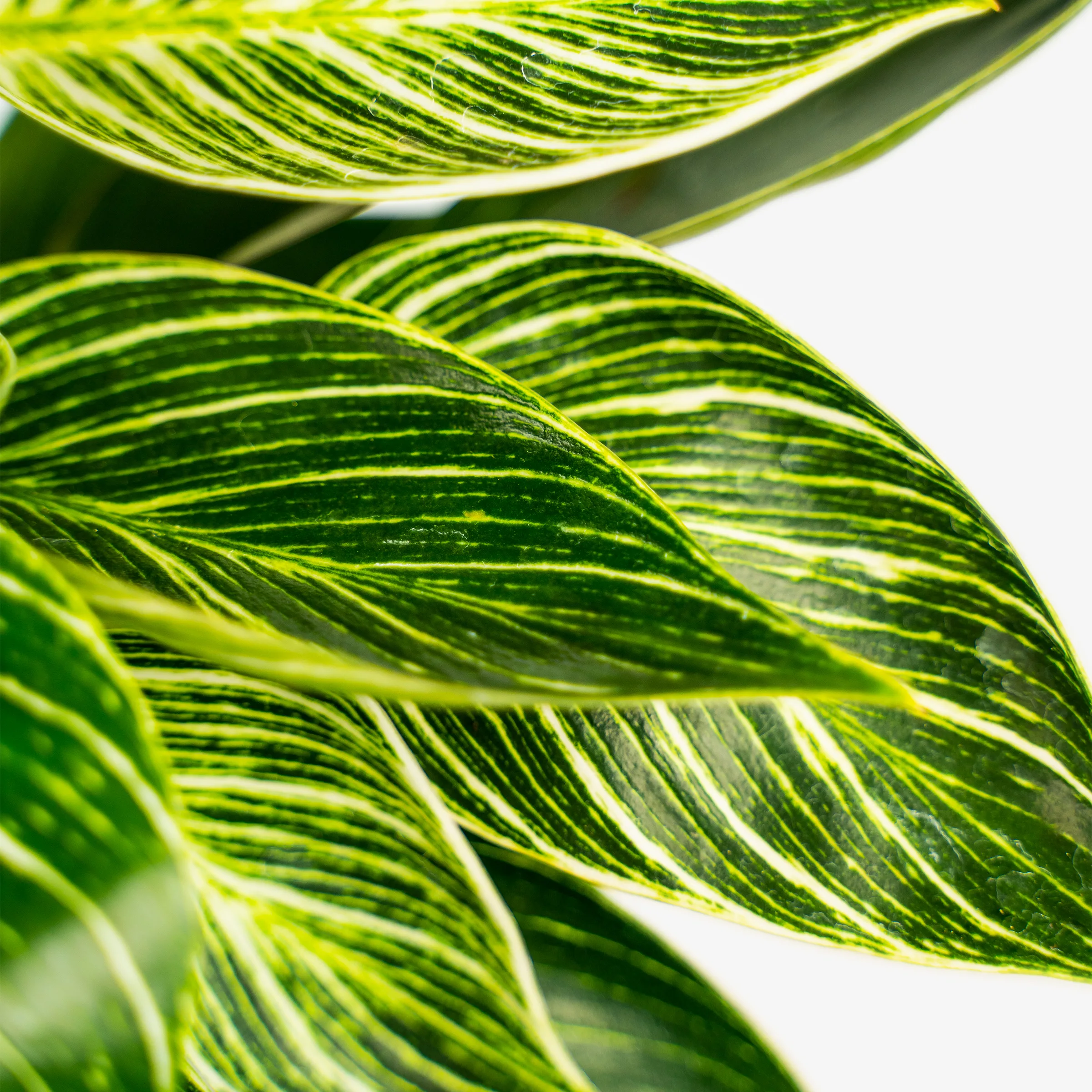
- Vein Variegation: This occurs when the veins of the leaf are a different color from the surrounding leaf tissue. The veins might appear white, cream, or even reddish, standing out against the green or other colored background. This pattern is common in plants like the Calathea.
- Splash Variegation: This type is characterized by irregular splotches or flecks of color scattered across the leaf surface. It creates a dynamic, almost painterly effect. Many Philodendron varieties and Monsteras exhibit beautiful splash variegation.
- Sectorial Variegation: In this pattern, a whole section or sector of a leaf displays a different color. This can be a large wedge or a more defined area, offering a bold and often asymmetrical design.
- All-Over or Random Variegation: This is less common and can be difficult to define precisely. It refers to a more generalized distribution of variegation that doesn’t strictly adhere to margins, veins, or specific sectors, creating a speckled or mottled appearance throughout the leaf.
Leaf Shape and Color Variations
Beyond the pattern of color distribution, variegation can also influence the overall appearance of the leaf in terms of its shape and the colors themselves.
- White, Cream, and Yellow Variegation: These are the most common forms of variegation, resulting from the absence or reduction of chlorophyll. The intensity can range from a pale cream to a bright, almost fluorescent yellow.
- Red, Pink, and Orange Variegation: In some plants, the presence of anthocyanins, which are red, purple, or orange pigments, contributes to variegation. These colors can appear alongside green or white, creating stunning color combinations. Many succulents and some tropical foliage plants display vibrant red or pink variegation.
- Dark Green and Black Variegation: While less common, some plants exhibit variegation where patches are a much darker shade of green, appearing almost black. This is due to a higher concentration of chlorophyll or other dark pigments in those areas.
- Shaped Leaves: Variegation can sometimes be more pronounced on specific leaf shapes or affect the leaf’s overall form. For instance, in plants with fenestrations (holes or splits), the variegation might follow the edges of these openings, enhancing the visual complexity.
Cultivating and Caring for Variegated Plants
The unique physiology of variegated plants, particularly their reduced chlorophyll content, necessitates specific care practices to ensure their health and vibrant coloration. While generally more sensitive than their all-green counterparts, with the right knowledge, anyone can successfully grow these stunning specimens.
Light Requirements: A Balancing Act
The reduced chlorophyll in variegated leaves means they have less capacity for photosynthesis. Therefore, their light requirements are a delicate balance: enough light to sustain growth and maintain coloration, but not so much that the sensitive, non-green parts of the leaves burn.
- Bright, Indirect Light: The ideal condition for most variegated plants is bright, indirect light. This mimics their natural habitat, where they might grow under the canopy of larger trees. Direct sunlight, especially harsh afternoon sun, can scorch the white or yellow parts of the leaves, leading to browning and tissue damage. Too little light, however, can cause the variegated areas to fade, leading to a loss of the distinctive patterns, or even a reversion to solid green as the plant tries to maximize its photosynthetic capacity.
- Monitoring and Adjustment: Observing your plant’s response is crucial. If the green parts of the leaves are darkening significantly, it might indicate too much light. If the variegated sections are becoming pale or turning predominantly green, it suggests insufficient light. Rotating the plant regularly can ensure even growth and coloration.
Watering and Humidity: Avoiding Extremes
Variegated plants often have slightly different needs when it comes to watering and humidity due to their varied cellular structure.
- Consistent Moisture, Not Saturation: Overwatering is a common killer of houseplants, and variegated varieties are no exception. Their ability to absorb water can be hampered by the lack of chlorophyll in some cells. It’s essential to allow the top inch or two of soil to dry out between waterings. Using well-draining potting mix is paramount to prevent waterlogged roots.
- Humidity Preferences: Many popular variegated plants originate from tropical regions, meaning they thrive in higher humidity environments. While they can adapt to average household humidity levels, periods of increased humidity can encourage healthier growth and prevent issues like crispy leaf edges. Using a humidifier, placing plants on pebble trays filled with water, or grouping plants together can help maintain adequate humidity. Misting can provide a temporary boost but should be done cautiously to avoid fungal issues.
Soil, Fertilization, and Propagation
The right growing medium, nutrients, and methods of propagation are vital for the continued health and expansion of your variegated plant collection.
- Well-Draining Potting Mix: A good quality potting mix that allows for ample aeration and drainage is essential. A blend of potting soil, perlite, and orchid bark is often suitable. This prevents the roots from sitting in water, which can lead to root rot.
- Fertilization: Less is More: Variegated plants typically require less fertilizer than their all-green counterparts. Over-fertilization can sometimes lead to increased green growth at the expense of variegation or can burn the sensitive leaf tissues. A balanced liquid fertilizer, diluted to half strength, should be applied sparingly during the growing season (spring and summer). It’s often advisable to fertilize less frequently than recommended for standard plants.
- Propagation Techniques: Propagating variegated plants can be a rewarding process. Stem cuttings are a common method, where a piece of stem with at least one node is cut and planted in soil or placed in water to root. For plants with a distinct chimera structure, it’s crucial that the cutting includes both green and variegated sections to ensure the variegation is maintained. Division of rhizomes or tubers is another method for certain types of variegated plants. Because variegation is often genetically controlled, some variegated plants are challenging to propagate true-to-type from seed, and cuttings are often the preferred method for maintaining specific patterns and colorations.
The Allure and Value of Variegated Plants
The fascination with variegated plants extends beyond their aesthetic appeal, influencing their desirability, market value, and even scientific interest. Their unique appearance and sometimes challenging cultivation contribute to their status as prized specimens among plant enthusiasts and collectors.
Aesthetic Appeal and Interior Design
The striking patterns and diverse color palettes of variegated plants make them highly sought after for interior design and horticultural displays. They add visual interest, texture, and a touch of exoticism to any space, transforming ordinary plant collections into curated botanical arrangements. From the dramatic fenestrations of a variegated Monstera to the subtle elegance of a variegated Fiddle Leaf Fig, these plants serve as living sculptures, drawing the eye and sparking conversation. Their ability to introduce vibrant colors without the need for flowers makes them a year-round source of beauty, especially in indoor environments where flowering might be inconsistent.
Rarity, Collectibility, and Market Value
The genetic mutations that cause variegation are not always common, making certain variegated varieties rarer than their all-green counterparts. This rarity, coupled with their inherent beauty, often translates into higher market values. Enthusiasts and collectors may pay significant sums for sought-after cultivars with unique patterns, high variegation coverage, and stable colorations. The online plant market has seen a surge in demand for rare variegated plants, with some specimens fetching prices that reflect their unique characteristics and limited availability. This has also led to an increase in speculative trading and a market for starter plants and cuttings, making some popular varieties accessible to a wider audience.

Scientific and Horticultural Interest
Variegation also holds significant interest for botanists and horticulturalists. Studying the genetic mechanisms behind variegation provides insights into plant genetics, cell development, and the complex interplay of pigments. Understanding how these mutations occur and are expressed allows for advancements in plant breeding and the development of new, aesthetically pleasing cultivars. Horticulturalists are continually working to identify and stabilize new forms of variegation, aiming to produce plants that are not only beautiful but also robust and easy to care for. The challenge of propagating and maintaining variegated plants also pushes the boundaries of horticultural techniques and knowledge.
In conclusion, variegated plants are more than just a botanical curiosity; they are a testament to the diversity and marvels of the natural world. From the intricate dance of pigments within their leaves to their captivating presence in our homes and gardens, they offer a unique blend of scientific intrigue and aesthetic delight. Understanding their origins, care requirements, and the science behind their beauty allows us to not only appreciate them more deeply but also to successfully cultivate these living works of art.
aViewFromTheCave is a participant in the Amazon Services LLC Associates Program, an affiliate advertising program designed to provide a means for sites to earn advertising fees by advertising and linking to Amazon.com. Amazon, the Amazon logo, AmazonSupply, and the AmazonSupply logo are trademarks of Amazon.com, Inc. or its affiliates. As an Amazon Associate we earn affiliate commissions from qualifying purchases.