
The term “beam” in the context of a ship refers to its width, specifically the widest point of the hull. It’s a fundamental dimension that significantly influences a vessel’s performance, stability, cargo capacity, and operational capabilities. While seemingly a simple measurement, understanding the beam and its implications is crucial for naval architects, shipbuilders, operators, and anyone seeking a deeper appreciation for maritime technology. This article will delve into the technical aspects of a ship’s beam, exploring its relationship with various design principles and its impact on a vessel’s function.
The Fundamental Role of Beam in Naval Architecture
The beam is not merely a static measurement; it is a dynamic design parameter that naval architects manipulate to achieve specific performance characteristics. It dictates how a ship interacts with the water, its ability to carry loads, and its overall seaworthiness.
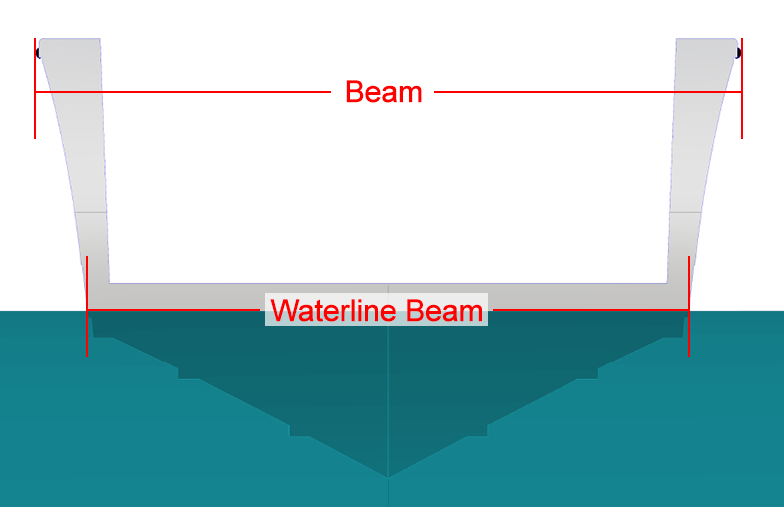
Defining the Beam: More Than Just Width
There are several ways to define and measure a ship’s beam, each with its specific application.
Maximum Beam
The most common understanding of beam is the maximum beam, which is the greatest horizontal distance across the hull at its widest point. This is typically measured at the waterline or slightly above. This measurement is critical for understanding the vessel’s overall size and its ability to fit within navigational channels, dry docks, and ports. For commercial vessels, the maximum beam is often a primary consideration for port access and cargo handling equipment compatibility.
Beam at Waterline
The beam at the waterline is another important measurement, as it directly influences the underwater volume and the stability of the ship. As a ship sinks deeper into the water, the submerged portion of its hull experiences greater buoyancy. The shape of the hull at the waterline, influenced by the beam, determines how this buoyancy is distributed. A wider beam at the waterline generally contributes to greater initial stability.
Molded Beam
In naval architecture, the molded beam is the measurement taken from the inside of the hull plating, excluding any sheathing or protective coatings. This measurement is used in design calculations to determine structural requirements and internal volume. It represents the pure geometric width of the hull structure.
Registered Beam
The registered beam is the official measurement recorded for regulatory and classification purposes. This can vary slightly from the maximum beam and is often used for calculating tonnage and fees. It’s the dimension that appears on official ship documentation.
Stability and Beam: A Crucial Relationship
The beam plays a pivotal role in a ship’s stability, its ability to resist capsizing and return to an upright position after being disturbed by waves, wind, or uneven loading.
Initial Stability and Metacentric Height (GM)
Initial stability is largely determined by the ship’s metacentric height (GM). This is the distance between the center of gravity (G) of the ship and the metacenter (M), which is a theoretical point representing the center of buoyancy as the ship heels. A larger GM indicates greater initial stability. The beam has a direct impact on the metacenter’s position. A wider hull, particularly at the waterline, increases the moment of inertia of the waterplane area, which in turn raises the metacenter. Therefore, a broader beam generally leads to a higher GM and better initial stability. This is why wide-bodied ships, like many large cargo carriers and cruise ships, are designed for stability.
Reserve Buoyancy and Deck Immersion
The beam also influences a ship’s reserve buoyancy. This is the volume of the hull that is above the waterline and provides an additional restoring force if the ship is heeled significantly. A wider hull can accommodate a larger deck area, which can help prevent water from coming aboard and overwhelming the vessel in rough seas. Conversely, a narrow beam might lead to the deck edge becoming submerged more easily during a significant heel, reducing reserve buoyancy and potentially leading to capsizing.
Hull Form and Beam
The relationship between beam and stability is further nuanced by the hull form. While a wider beam generally enhances stability, the specific shape of the hull matters. A U-shaped hull, common in barges and some cargo ships, offers good initial stability due to its wide flat bottom. In contrast, a V-shaped hull, often found in faster vessels, may have less initial stability but better seakeeping characteristics by cutting through waves. Naval architects carefully balance beam with hull form to achieve the desired stability and seakeeping for a particular vessel type.
Beam’s Impact on Performance and Capacity
Beyond stability, the beam is a key factor influencing a ship’s speed, maneuverability, and its ability to carry cargo or passengers.
Speed and Resistance
The beam, in conjunction with other hull dimensions, significantly affects a ship’s hydrodynamic resistance. A wider beam generally increases the wetted surface area of the hull, which in turn increases frictional resistance. Furthermore, a broader beam can contribute to higher wave-making resistance, especially at higher speeds. To achieve higher speeds, naval architects often opt for narrower, more streamlined hull forms. This is why racing yachts and high-speed ferries typically have a relatively low beam-to-length ratio compared to cargo vessels.
Maneuverability
A wider beam can impact a ship’s maneuverability, particularly its turning radius and responsiveness to rudder commands. A wider hull requires more force to initiate a turn and may have a larger turning circle. This is a critical consideration for vessels operating in confined waters, such as ports and narrow channels, where precise control is essential. Specialized hull designs, including bulbous bows and twin rudders, are often employed to mitigate the maneuverability challenges associated with wider beam vessels.
Cargo Capacity and Internal Volume
Perhaps the most direct impact of beam is on a ship’s cargo capacity and internal volume. A wider hull inherently provides more space for stowing cargo, whether it’s containers on a container ship, bulk commodities in a tanker, or passengers in a cruise liner. For commercial vessels, maximizing cargo capacity is often a primary design objective, and the beam is a key parameter in achieving this. The internal layout of a ship is also directly influenced by the beam, determining the size and arrangement of cargo holds, accommodation spaces, and machinery rooms.

Container Ships
Container ships are a prime example where beam is critical. Their wide decks are designed to accommodate multiple stacks of containers, and the beam directly dictates how many containers can be stowed abreast. Larger beams allow for more TEUs (Twenty-foot Equivalent Units) per ship, a key metric in the efficiency of global trade.
Tankers and Bulk Carriers
Similarly, tankers and bulk carriers rely on their broad beams to maximize the volume of liquid or dry cargo they can transport. The stability requirements for these vessels, often carrying volatile or dense cargoes, further necessitate a generous beam to ensure safe operation.
Passenger Ships
For passenger ships, a wider beam provides greater deck space for amenities, recreational areas, and cabins. It also contributes significantly to the overall stability, ensuring a comfortable experience for passengers even in moderate sea conditions.
Beam in Different Ship Types: Tailoring the Dimension
The optimal beam for a ship is highly dependent on its intended purpose and operational environment. Naval architects tailor the beam to meet the specific demands of each vessel type.
Displacement Hulls vs. Planing Hulls
The distinction between displacement hulls and planing hulls highlights the varying roles of beam.
Displacement Hulls
Displacement hulls, found on most large vessels like cargo ships, tankers, and cruise liners, operate by displacing water equal to their weight. These hulls are designed to move through the water at speeds generally below their hull speed. A wider beam in displacement hulls is often employed to enhance stability and cargo capacity. The beam-to-length ratio for displacement hulls can vary significantly, but generally, a larger beam relative to length contributes to a more stable and capacious vessel.
Planing Hulls
Planing hulls, common on high-speed boats, speedboats, and some naval vessels, are designed to lift out of the water and ride on top of the water’s surface at higher speeds. These hulls typically have a narrower beam relative to their length to reduce wetted surface area and minimize resistance as they plane. The V-shape of many planing hulls, with a relatively sharp entry and flatter aft sections, is optimized for this high-speed performance, and a wider beam would hinder their ability to lift and plane effectively.
Specialized Vessels and Beam Considerations
Beyond these broad categories, specialized vessels present unique beam requirements.
Naval Vessels
Naval vessels, such as warships and submarines, often have beam considerations dictated by factors like stability in rough seas, internal space for weapons systems and machinery, and draft limitations. Submarines, for instance, are designed with a specific beam that balances stability when submerged with hydrodynamic efficiency.
Icebreakers
Icebreakers require robust hull structures and often possess a beam that is wider than their length would suggest for their waterline. This broad beam, combined with a rounded hull shape, helps them to break ice by lifting and crushing it with the hull’s weight and buoyancy.
Catamarans and Multihulls
Catamarans and other multihull vessels utilize multiple hulls, and their overall “beam” is considered the distance between the outermost hulls. This configuration inherently provides a very wide platform, leading to exceptional stability and often a reduced draft compared to monohulls of equivalent carrying capacity. The large separation between hulls also reduces wave interference, contributing to speed and efficiency.
The Future of Beam in Ship Design
As maritime technology advances, the understanding and application of the ship’s beam continue to evolve. Innovations in materials, propulsion, and hull design are leading to new possibilities.
Advanced Hull Forms and Materials
The development of more sophisticated hull forms, employing computational fluid dynamics (CFD) for precise analysis, allows naval architects to optimize the beam in conjunction with other dimensions to achieve unparalleled performance. The use of advanced composite materials might also allow for the creation of lighter and stronger hulls, potentially influencing the optimal beam for certain applications.
Energy Efficiency and Beam Optimization
With a growing focus on energy efficiency and reducing environmental impact, the beam is increasingly being scrutinized for its role in resistance and fuel consumption. Future designs may prioritize beam dimensions that strike a better balance between stability, cargo capacity, and minimal hydrodynamic drag, potentially leading to more slender hull forms for certain vessel types or the application of active hull technologies.
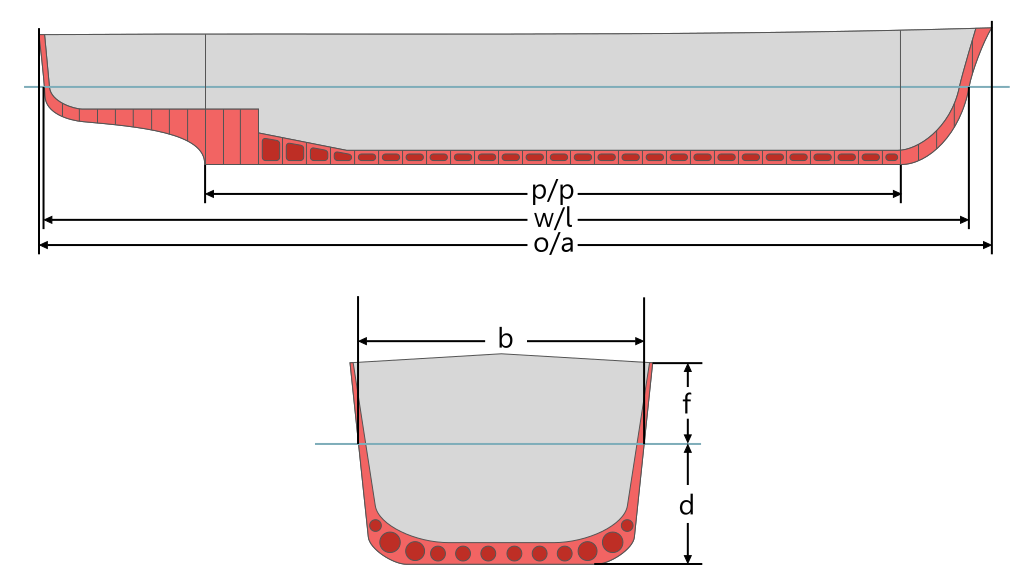
Autonomous Shipping and Beam
The rise of autonomous shipping may also influence beam considerations. While autonomous vessels aim for greater efficiency, their operational parameters, such as speed and maneuverability requirements in potentially more complex and dynamic environments, could lead to novel beam configurations optimized for automated navigation and control systems.
In conclusion, the beam of a ship is far more than just its width. It is a critical design parameter that underpins a vessel’s stability, performance, capacity, and operational effectiveness. From the broad beams of cargo behemoths to the slender lines of high-speed craft, the beam is a testament to the intricate science and art of naval architecture, constantly being refined to meet the ever-evolving demands of the maritime world.
aViewFromTheCave is a participant in the Amazon Services LLC Associates Program, an affiliate advertising program designed to provide a means for sites to earn advertising fees by advertising and linking to Amazon.com. Amazon, the Amazon logo, AmazonSupply, and the AmazonSupply logo are trademarks of Amazon.com, Inc. or its affiliates. As an Amazon Associate we earn affiliate commissions from qualifying purchases.