
A writ of restitution, while a legal term, has significant implications for financial matters, particularly in business and property law. It’s an order issued by a court that compels a party to restore something that was wrongfully taken or withheld. In essence, it’s a judicial tool designed to rectify a financial or possessory imbalance, often following a judgment in favor of one party. Understanding this writ is crucial for businesses and individuals involved in disputes concerning property, financial obligations, or the recovery of assets. This article will delve into the nature of a writ of restitution, its various applications, the process of obtaining and enforcing it, and its broader financial implications.

The Fundamental Nature and Purpose of a Writ of Restitution
At its core, a writ of restitution is a legal remedy designed to put a party back in the position they were in before a wrongful act or judgment. It’s not about punishing the losing party, but rather about restoring what was unjustly taken or is being wrongfully held. This restoration can take several forms, depending on the underlying legal dispute. The writ is issued by a judge and is directed at a specific party, commanding them to take a particular action.
Distinguishing from Other Legal Orders
It is important to distinguish a writ of restitution from other common legal orders. While some writs might command a party to pay a sum of money (like a writ of execution, which enforces a money judgment), a writ of restitution is broader. It can encompass the return of physical property, the reversal of a transaction, or the relinquishing of possession.
For instance, in a landlord-tenant dispute where a tenant has been wrongfully evicted, a writ of restitution would order the landlord to allow the tenant back into possession of the property. Conversely, if a buyer has paid for goods that were never delivered, a writ of restitution might order the seller to return the payment. The key differentiator is the focus on restoration of a specific item, right, or possession, rather than solely the recovery of a monetary debt.
The Financial Ramifications of Restitution
The financial implications of a writ of restitution can be substantial. For the party in whose favor the writ is issued, it represents the potential recovery of assets, income, or the right to use property, all of which have direct financial value. For the party against whom the writ is issued, it signifies an obligation that could involve significant financial cost, either through the return of money, the forfeiture of property, or the incurrence of further legal fees to comply.
Consider a business that has been unlawfully deprived of its intellectual property. A writ of restitution might order the infringing party to cease using the property and potentially return any profits derived from its unauthorized use. This directly impacts the financial health and competitive standing of both parties. Similarly, in a case of wrongful repossession of business assets, a writ of restitution would compel the return of those assets, allowing the business to resume operations and recoup potential financial losses.
Common Scenarios Where a Writ of Restitution is Applied
The application of a writ of restitution spans various legal contexts, each with distinct financial underpinnings. Its versatility makes it a vital tool in resolving disputes that involve the rightful possession or recovery of assets.
Landlord-Tenant Disputes and Evictions
One of the most common applications of a writ of restitution is in landlord-tenant law. When a tenant is lawfully evicted from a property due to non-payment of rent, lease violations, or other breaches of contract, a landlord may obtain a court order for possession. If the tenant refuses to vacate the premises voluntarily, the landlord can then petition the court for a writ of restitution. This writ directs law enforcement officials, such as a sheriff, to physically remove the tenant and their belongings from the property and restore possession to the landlord.
The financial impact here is direct. For the landlord, the writ ensures they can regain possession of their property, which is a revenue-generating asset. This allows them to re-rent the property and mitigate further financial losses. For the tenant, failing to comply with the writ can lead to additional costs, including fees associated with the eviction process and potential damages awarded to the landlord for continued unlawful possession.
Business Contract Disputes and Asset Recovery
In the business world, a writ of restitution plays a crucial role in resolving disputes arising from breaches of contract, particularly those involving the transfer or possession of assets. For example, if a company purchases equipment from a supplier, pays for it, but the supplier fails to deliver, a court might issue a writ of restitution ordering the supplier to return the payment. Alternatively, if a business enters into a lease agreement for vital machinery and defaults, a writ of restitution could be issued to reclaim the machinery for the lessor.
The financial implications in business contract disputes are often significant. The recovery of an asset through a writ of restitution can be essential for a business to continue its operations, prevent further losses, and maintain its competitive edge. The cost of not having a critical piece of equipment or inventory can be far more damaging than the price of the item itself. Conversely, the party against whom the writ is issued may face substantial financial penalties, including the value of the asset, lost profits, and legal costs.
Cases of Fraudulent Transactions and Property Recovery
Fraudulent activities often necessitate the use of a writ of restitution to undo the financial harm caused. If an individual or business is defrauded and their assets are wrongfully transferred, a court can issue a writ of restitution to recover those assets. This could involve the return of money obtained through deceptive practices, the reversal of a property sale that was based on misrepresentation, or the reclamation of stolen goods.
The financial stakes in cases of fraud are typically very high. A writ of restitution aims to restore the victim to their pre-fraud financial status as much as possible. This can involve recovering actual funds, preventing further dissipation of assets, and ensuring that the perpetrator does not profit from their illicit actions. The successful execution of such a writ is paramount for victims seeking to recover their financial standing.
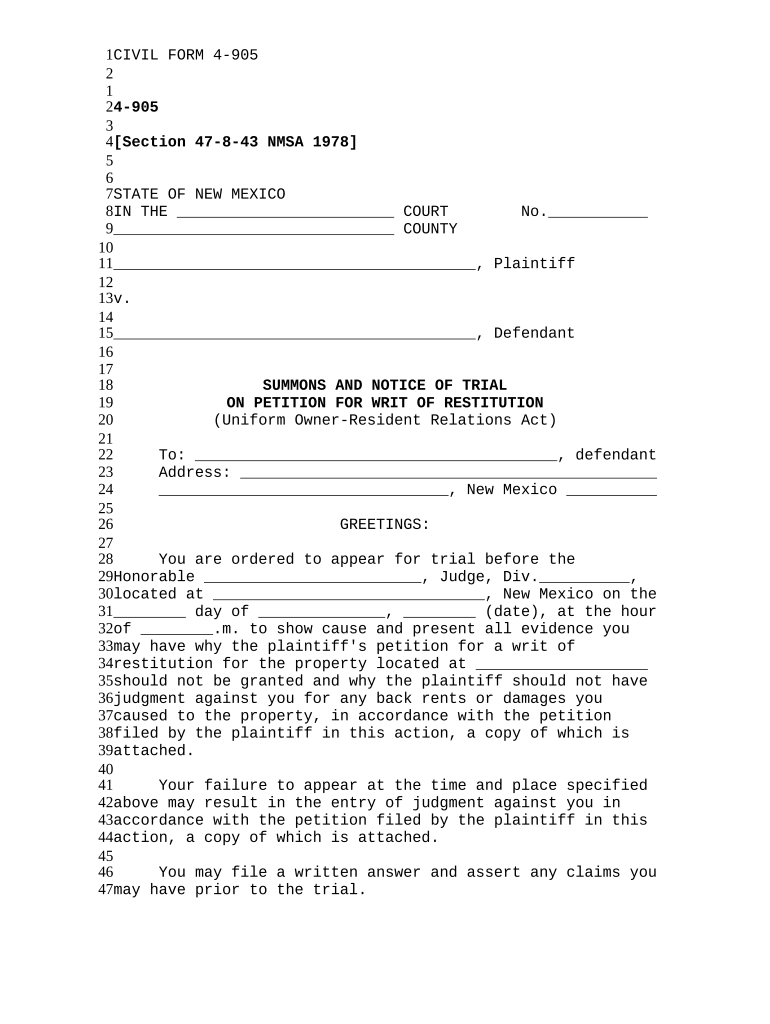
The Process of Obtaining and Enforcing a Writ of Restitution
Securing a writ of restitution is not an automatic process. It requires a formal legal procedure, and its enforcement relies on the authority of the court and often the cooperation of law enforcement.
Petitioning the Court and Legal Prerequisites
To obtain a writ of restitution, the party seeking it must first have a favorable court judgment or order that establishes their right to the property or restitution. This typically follows a lawsuit where the court has determined that the other party is wrongfully withholding possession or has unjustly benefited. For example, in an eviction case, the landlord must first obtain a judgment for possession.
Once the judgment is entered, the prevailing party can file a motion or petition with the court requesting the issuance of the writ of restitution. The court will review the request, ensuring that all legal prerequisites have been met and that the judgment clearly supports the issuance of such a writ. The specific forms and procedures can vary depending on the jurisdiction and the nature of the case.
The Role of Law Enforcement in Execution
The writ of restitution is not self-executing. It is directed at a specific individual or entity, and if they do not comply voluntarily, the court will order its enforcement. This is where law enforcement agencies, such as sheriffs or marshals, come into play. The writ is typically delivered to these officials, who are then empowered to take the necessary actions to carry out the court’s order.
In an eviction scenario, a sheriff would serve the tenant with a notice to vacate the premises, usually within a specified timeframe. If the tenant fails to leave by the deadline, the sheriff can then lawfully enter the property, remove the tenant and their belongings, and restore possession to the landlord. In cases involving the return of property, law enforcement might physically seize the item and deliver it to the rightful owner. The authority granted by the writ empowers these officials to act, ensuring the court’s decision is respected and upheld.
Potential Challenges and Legal Recourse
While the writ of restitution is a powerful tool, it is not without potential challenges. The party against whom the writ is issued may attempt to delay or obstruct its enforcement. This could involve filing appeals, seeking stays of execution, or arguing that the writ was improperly issued. These legal maneuvers can be costly and time-consuming, and they highlight the importance of having strong legal representation throughout the process.
Furthermore, there are instances where the physical recovery of an asset may be complicated, or where the monetary value of the restitution is difficult to ascertain or recover. The effectiveness of a writ of restitution ultimately depends on the court’s jurisdiction, the cooperation of the parties involved, and the diligent efforts of law enforcement.
Financial Strategies and Considerations Regarding Writs of Restitution
For businesses and individuals operating in financial spheres, understanding the implications of writs of restitution is not just about legal procedures; it’s about strategic financial management and risk mitigation.
Mitigating Financial Risks and Liabilities
Businesses that are at risk of facing a writ of restitution should proactively manage their financial obligations and contractual agreements. This includes maintaining accurate financial records, adhering strictly to lease agreements, ensuring timely payments, and conducting thorough due diligence when entering into transactions. Failing to do so can expose a business to significant financial liabilities, including the loss of assets, payment of damages, and substantial legal fees.
From a financial planning perspective, anticipating potential legal disputes and their financial consequences is crucial. This might involve setting aside contingency funds, securing appropriate insurance policies, and having clear internal protocols for managing contracts and property. The financial disruption caused by a writ of restitution can be severe, and proactive risk management is the most effective way to mitigate these potential harms.
The Impact on Business Valuation and Creditworthiness
The issuance or the potential for a writ of restitution can have a significant impact on a business’s financial standing. For instance, a business facing a writ to return valuable equipment might see its operational capacity diminished, directly affecting its revenue streams and profitability. This can lead to a decrease in its overall business valuation.
Moreover, the existence of outstanding legal judgments or writs of restitution can negatively affect a company’s creditworthiness. Lenders and investors often scrutinize a company’s legal history and outstanding obligations before extending credit or investing capital. A record of legal disputes, especially those resulting in a writ of restitution, can signal financial instability or poor risk management, making it more difficult and expensive to secure financing.

Utilizing Writs of Restitution as a Financial Recovery Tool
Conversely, for parties who are victims of wrongful acts, a writ of restitution can be an indispensable tool for financial recovery. It provides a legal mechanism to reclaim assets or funds that are rightfully theirs, thereby restoring their financial health. This can be particularly important for small businesses or individuals who may not have the resources to absorb significant financial losses due to the actions of others.
The successful execution of a writ of restitution can mean the difference between a business’s survival and its failure, or between an individual’s financial recovery and their continued hardship. It empowers the legal system to enforce financial fairness and to ensure that parties are held accountable for their actions, ultimately contributing to a more stable and predictable financial environment.
aViewFromTheCave is a participant in the Amazon Services LLC Associates Program, an affiliate advertising program designed to provide a means for sites to earn advertising fees by advertising and linking to Amazon.com. Amazon, the Amazon logo, AmazonSupply, and the AmazonSupply logo are trademarks of Amazon.com, Inc. or its affiliates. As an Amazon Associate we earn affiliate commissions from qualifying purchases.