
The term “decisional” in the context of technology isn’t a standalone product or a buzzword that has recently emerged from a Silicon Valley incubator. Instead, it represents a fundamental characteristic, a capability, and often, a critical differentiator in the evolution of software, artificial intelligence, and the digital tools we interact with daily. Understanding what “decisional” means in tech requires us to delve into how systems process information, make choices, and ultimately, automate complex tasks that were once solely within the human domain.
At its core, “decisional” refers to the capacity of a technological system to make a choice or arrive at a conclusion based on a set of inputs, rules, algorithms, or learned patterns. This is not merely about following a pre-programmed sequence of commands; it’s about exhibiting a degree of autonomy in selecting a course of action. In the digital age, where data is abundant and the need for efficient, intelligent operations is paramount, decisional capabilities are transforming industries and reshaping how we work, learn, and live.
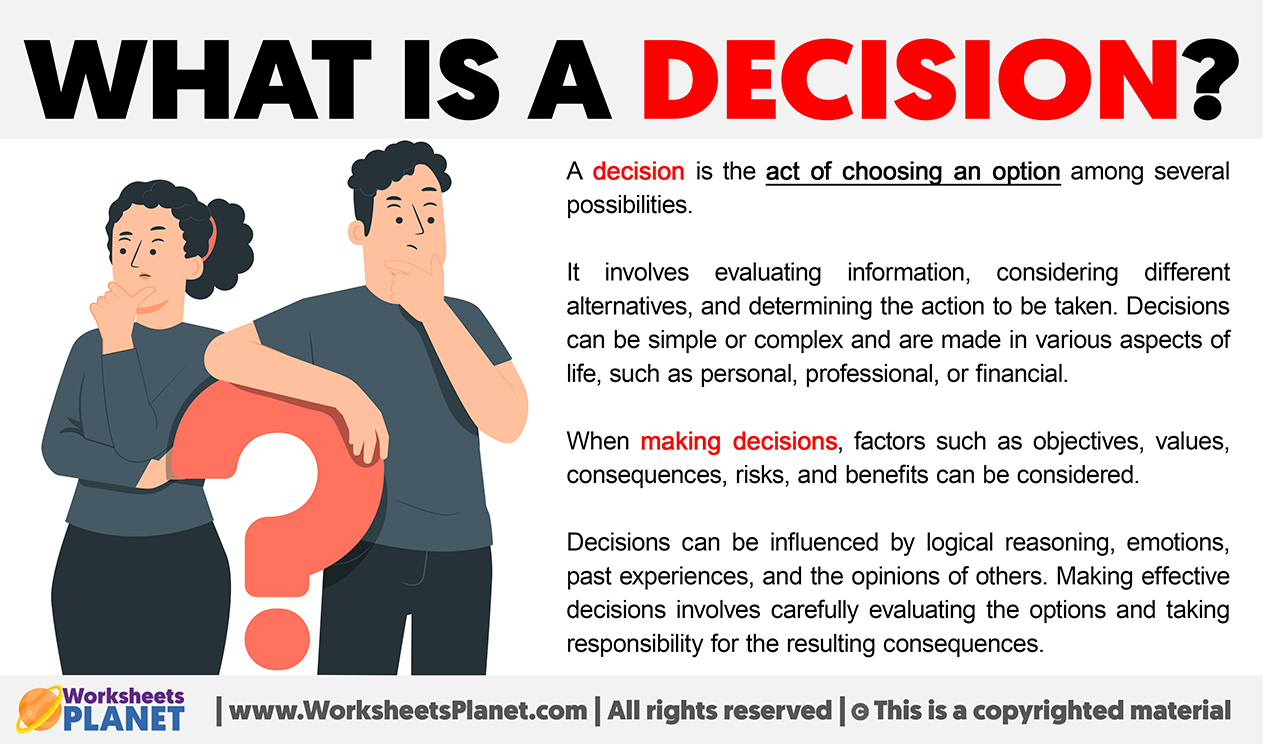
The implications of decisional tech are far-reaching. From personalized recommendations on streaming services to the sophisticated algorithms that drive autonomous vehicles, the ability of technology to make decisions is no longer a futuristic concept but a present-day reality. This article will explore the multifaceted meaning of “decisional” within the tech landscape, examining its underlying principles, its practical applications across various domains, and the future trajectory of systems that are increasingly empowered to decide.
The Algorithmic Engine of Decision-Making
The ability for technology to be “decisional” is fundamentally rooted in algorithms. These are precise, step-by-step instructions or sets of rules designed to solve a specific problem or perform a computation. In the context of decisional technology, algorithms are not just about performing calculations; they are about evaluating conditions, weighing options, and ultimately, selecting the most appropriate outcome.
Rule-Based Systems: The Foundation of Explicit Decisions
Early forms of decisional technology relied heavily on rule-based systems. These systems operate on a set of explicitly defined “if-then” statements. For example, a rule might state: “IF the user’s credit score is below 600 AND their debt-to-income ratio is above 40%, THEN deny the loan application.” The system processes incoming data, matches it against its predefined rules, and executes the corresponding action.
- Expert Systems: A prominent example of rule-based systems are expert systems, which were designed to mimic the decision-making ability of a human expert in a particular field. These systems encoded vast amounts of domain-specific knowledge and logical rules to provide diagnoses, recommendations, or solutions. While powerful, their limitation lies in their inability to adapt to situations not covered by their explicitly programmed rules.
- Business Process Automation (BPA): Many business processes that involve repetitive decision points are automated using rule-based systems. This could range from routing customer service requests to the appropriate department based on keywords in the query, to approving or rejecting simple expense claims based on predefined spending limits.
The strength of rule-based systems lies in their transparency and predictability. Because the rules are explicitly stated, it’s often easy to understand why a particular decision was made. However, their rigidity can be a significant drawback in dynamic environments where new scenarios and exceptions are common.
Machine Learning: Learning from Data to Make Inferred Decisions
The advent of machine learning (ML) has revolutionized decisional technology by enabling systems to learn from data without being explicitly programmed for every possible scenario. Instead of relying on predefined rules, ML algorithms identify patterns, correlations, and insights from large datasets to make informed predictions and decisions.
- Supervised Learning: In supervised learning, algorithms are trained on labeled datasets, meaning the input data is paired with the correct output. The algorithm learns to map inputs to outputs. For instance, an ML model trained on thousands of images of cats and dogs, along with their correct labels, can learn to classify new, unseen images as either a cat or a dog. This forms the basis for image recognition and many predictive analytics applications.
- Unsupervised Learning: Unsupervised learning algorithms work with unlabeled data, aiming to discover hidden patterns and structures. Clustering, a common unsupervised learning technique, groups similar data points together. This is used in market segmentation to identify distinct customer groups based on their purchasing behavior or in anomaly detection to flag unusual network traffic that might indicate a security threat.
- Reinforcement Learning: Reinforcement learning involves an agent learning to make decisions by performing actions in an environment and receiving rewards or penalties. The agent’s goal is to maximize its cumulative reward over time. This is particularly effective for complex tasks like game playing (e.g., AlphaGo) or robotics, where trial and error can lead to optimal strategies.
The “decisional” power of machine learning lies in its ability to generalize. Once trained, these models can apply their learned knowledge to new, unseen data, making predictions or decisions that were not hardcoded into their initial design. This adaptability is crucial for navigating the complexities and uncertainties of the real world.
Applications of Decisional Tech Across Industries
The capacity for technology to make decisions has permeated virtually every sector, driving innovation, efficiency, and new possibilities. The impact of decisional capabilities is not limited to theoretical advancements; it has tangible, real-world applications that are reshaping industries.
Enhancing User Experience with Personalized Decisions
One of the most pervasive applications of decisional technology is in personalizing user experiences. From e-commerce to content consumption, systems are designed to make decisions about what information to present and how to interact with individuals.

- Recommendation Engines: Streaming services like Netflix and Spotify, and online retailers like Amazon, employ sophisticated recommendation engines. These systems analyze a user’s past viewing or purchasing history, along with the behavior of similar users, to decide which movies, songs, or products to suggest. This significantly enhances engagement and discovery.
- Dynamic Content and Advertising: Websites and apps can dynamically adjust their content and advertisements based on user profiles, location, or real-time behavior. A travel website might decide to show deals for beach destinations to a user who has recently searched for vacation spots, or an e-commerce platform might present personalized discounts at opportune moments to encourage a purchase.
- Chatbots and Virtual Assistants: Conversational AI, powered by decisional algorithms, enables chatbots and virtual assistants to understand user queries, interpret intent, and provide relevant responses or take specific actions. These systems decide how to proceed based on the natural language input, making them powerful tools for customer support and information retrieval.
Optimizing Operations and Automating Complex Processes
Beyond user-facing applications, decisional technology is critical for optimizing internal operations and automating complex processes that require constant evaluation and adjustment.
- Supply Chain Management: In logistics and supply chain management, decisional systems are used to forecast demand, optimize inventory levels, plan delivery routes, and manage warehouse operations. These systems must make continuous decisions about resource allocation, routing, and stock management to minimize costs and ensure timely delivery.
- Financial Trading and Risk Management: The financial sector heavily relies on decisional algorithms for high-frequency trading, algorithmic trading strategies, and real-time risk assessment. These systems analyze market data, identify trading opportunities, and execute trades within milliseconds, while also making decisions about hedging and managing portfolio risk.
- Manufacturing and Industrial Automation: In factories, decisional systems are integral to robotics, quality control, and production scheduling. Robots can decide on the most efficient way to assemble components, machine vision systems can decide if a product meets quality standards, and scheduling software can decide the optimal sequence of tasks to maximize throughput.
Driving Innovation in Emerging Technologies
The concept of decisional technology is a cornerstone of many cutting-edge innovations, pushing the boundaries of what machines can achieve.
- Autonomous Vehicles: Self-driving cars are a prime example of complex decisional systems. They must constantly make decisions about steering, acceleration, braking, and navigation based on data from sensors (cameras, lidar, radar), real-time traffic information, and sophisticated AI models. These decisions are critical for safety and operational efficiency.
- Smart Grids and Energy Management: Decisional algorithms are used to manage the complex flow of electricity in smart grids. They can decide when to store energy, when to release it, and how to balance supply and demand from various sources, including renewables, in real-time to ensure grid stability and efficiency.
- Healthcare Diagnostics and Treatment: AI-powered decisional tools are beginning to assist healthcare professionals. These systems can analyze medical images to detect anomalies, predict patient risk for certain diseases, and even suggest personalized treatment plans based on a vast array of patient data and medical research.
The Future of Decisional Technology: Towards Greater Autonomy and Intelligence
As technology continues to advance, the “decisional” capabilities of systems will only become more sophisticated, more autonomous, and more deeply integrated into our lives. The trajectory points towards systems that not only make decisions but also learn to make better decisions over time, adapt to unforeseen circumstances, and collaborate with both humans and other intelligent systems.
Explainable AI (XAI): Building Trust in Automated Decisions
As decisional systems, particularly those powered by machine learning, become more complex, the need for transparency in their decision-making processes grows. Explainable AI (XAI) aims to develop methods and techniques that allow humans to understand the rationale behind an AI’s decision.
- Interpretability vs. Transparency: While interpretability refers to the degree to which a human can understand the cause of a decision, transparency concerns the visibility of the algorithm’s internal workings. XAI seeks to provide both, enabling users to trust and validate automated decisions, which is crucial in sensitive areas like healthcare, finance, and law.
- Debugging and Auditing: Understanding how a decisional system arrives at its conclusions is essential for debugging errors, identifying biases, and ensuring ethical compliance. XAI facilitates these processes, making automated decision-making more accountable.
Continual Learning and Adaptive Decision-Making
The next frontier for decisional technology lies in its ability to learn continuously and adapt its decision-making strategies in real-time. Traditional ML models are often trained on static datasets. Continual learning systems, however, can update their models as new data becomes available, allowing them to stay relevant and effective in dynamic environments.
- Dynamic Environments: Think of a self-driving car encountering a new traffic pattern or a trading algorithm facing an unprecedented market event. Continual learning allows these systems to adjust their decision-making strategies on the fly, rather than requiring a complete retraining process.
- Personalized Adaptation: This also extends to personalized experiences. A recommendation system that learns not just from aggregated user data but also from an individual’s evolving preferences and behaviors can provide increasingly tailored and relevant suggestions.

Human-AI Collaboration in Decision-Making
The future of decisional technology is not necessarily about replacing human decision-makers but about augmenting their capabilities. Human-AI collaboration offers a powerful synergy, combining the speed and analytical power of AI with human judgment, creativity, and ethical considerations.
- Augmented Intelligence: In this model, AI systems act as intelligent assistants, processing vast amounts of data, identifying patterns, and presenting insights or potential decisions to human operators. The human then makes the final call, leveraging the AI’s analysis to make a more informed and effective decision.
- Shared Responsibility: As systems become more capable, the lines of responsibility in decision-making will blur. Developing frameworks for shared responsibility between humans and AI will be crucial for ensuring accountability, safety, and ethical deployment.
In conclusion, “decisional” in the realm of technology signifies the inherent capability of systems to process information, evaluate options, and select a course of action. From the explicit logic of rule-based systems to the inferred intelligence of machine learning, this capacity is fundamental to modern technological advancement. As we move forward, the evolution of decisional technology promises greater autonomy, adaptability, and collaboration, fundamentally altering how we interact with and benefit from the digital world.
aViewFromTheCave is a participant in the Amazon Services LLC Associates Program, an affiliate advertising program designed to provide a means for sites to earn advertising fees by advertising and linking to Amazon.com. Amazon, the Amazon logo, AmazonSupply, and the AmazonSupply logo are trademarks of Amazon.com, Inc. or its affiliates. As an Amazon Associate we earn affiliate commissions from qualifying purchases.