
In the modern era of commercial aviation, the dimensions of a suitcase are no longer merely a matter of convenience; they are a critical variable in a traveler’s personal finance equation. As airlines increasingly unbundle their services to maximize ancillary revenue, the “carry-on bag” has transitioned from a standard travel right to a strategic financial asset. Understanding what size bag is allowed for carry-on is the first step in a broader strategy to optimize travel budgets, eliminate unnecessary expenditures, and protect one’s bottom line during both domestic and international transit.
For the savvy investor, business professional, or budget-conscious traveler, the carry-on bag represents a hedge against the rising costs of global mobility. By mastering the geometry of the overhead bin, travelers can avoid the “sunk costs” of checked baggage fees and the “opportunity costs” of lost time.
Decoding Airline Luggage Policies: A Financial Perspective
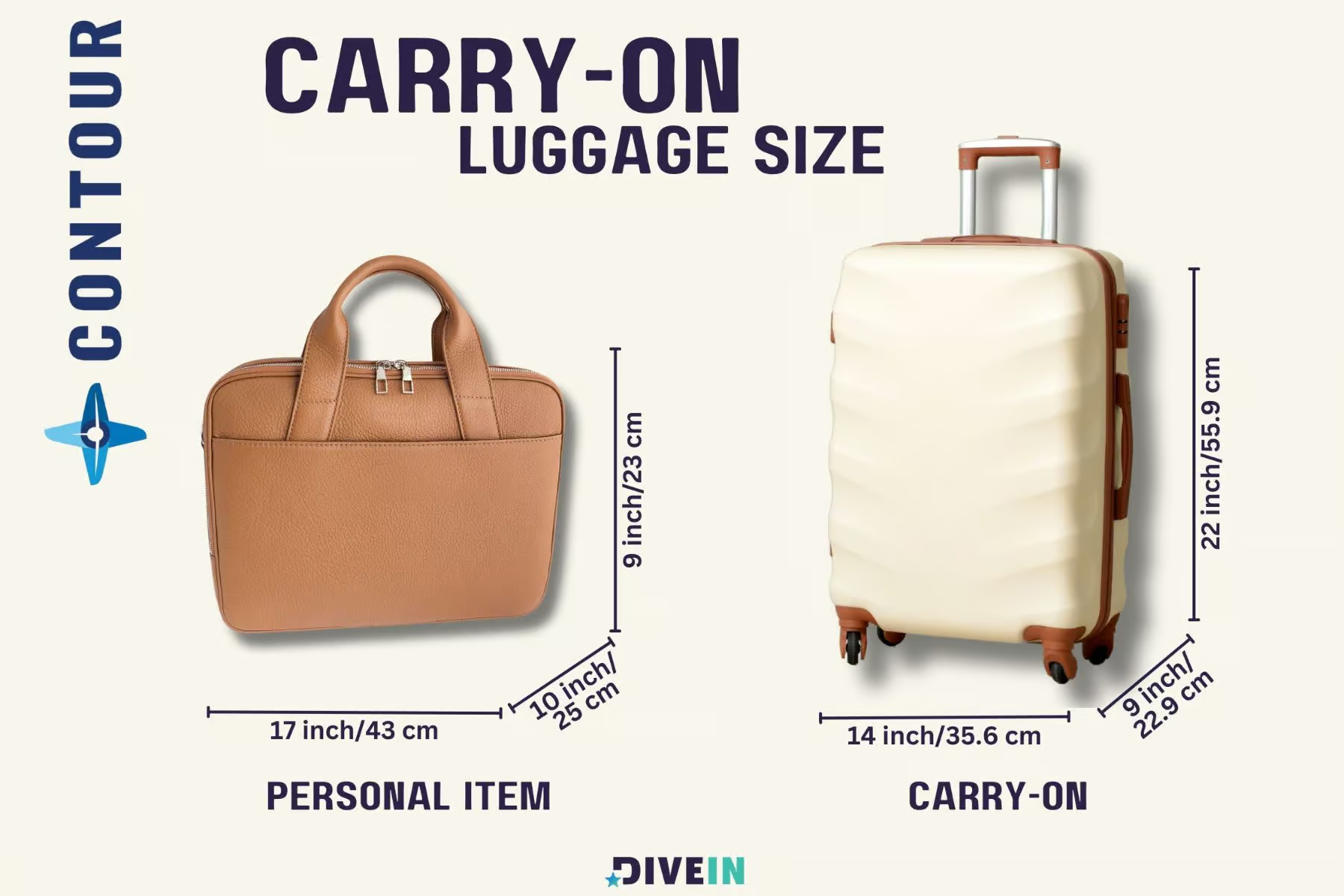
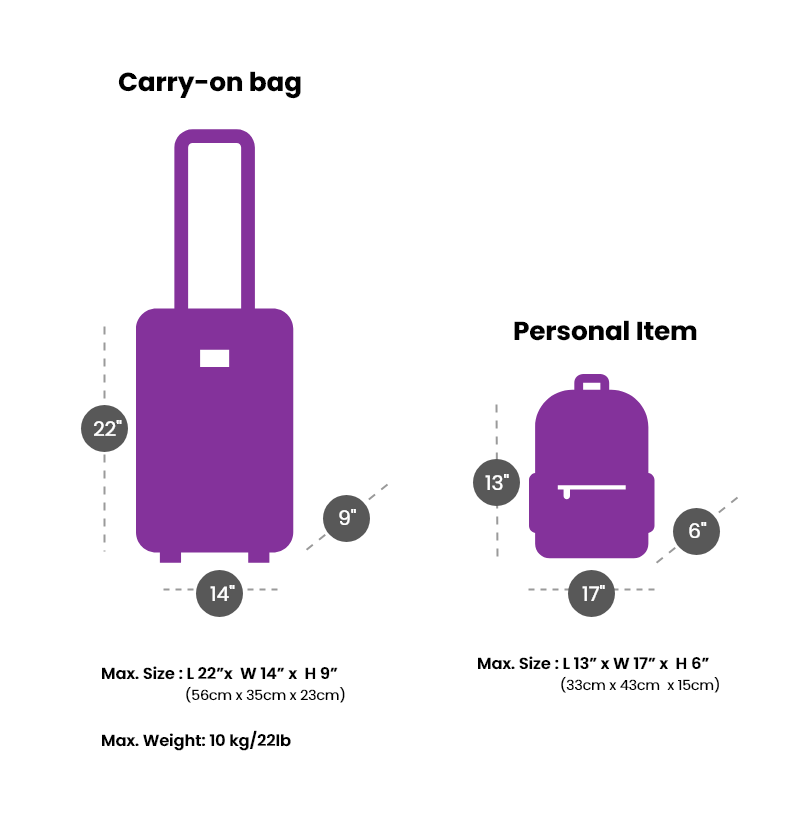
The standard dimensions for a carry-on bag on most major domestic U.S. carriers (such as Delta, United, and American Airlines) are approximately 22 x 14 x 9 inches (56 x 36 x 23 cm). However, these numbers are not universal, and the financial penalty for a mere half-inch of deviation can be substantial.
Standard vs. Budget Carriers: The Pricing Gap
Legacy carriers often include a full-sized carry-on in their base fare, but the rise of Low-Cost Carriers (LCCs) like Spirit, Frontier, and Ryanair has shifted the landscape. For these airlines, the “personal item” (usually 18 x 14 x 8 inches) is free, while a standard carry-on can cost anywhere from $30 to $90 if not booked in advance. From a personal finance standpoint, failing to verify the specific size allowed by an LCC can result in a gate-check fee that exceeds the original price of the flight ticket.
Ancillary Revenue and the “Gate Check” Penalty
Airlines have refined their business models to rely heavily on ancillary revenue—fees collected outside of the base ticket price. When a bag exceeds the allowed dimensions, the passenger is forced to “gate-check” the luggage. This is the most expensive way to handle baggage. By adhering strictly to the 22 x 14 x 9 rule, a frequent flyer can save upwards of $1,000 annually, which, if diverted into a high-yield savings account or an index fund, represents a significant gain in long-term wealth.
International Variance and Currency of Space
International travel introduces further complexity. Many European and Asian carriers have stricter weight limits—often 7kg to 10kg (15-22 lbs)—even if the bag meets size dimensions. In this context, the “weight” of the bag becomes a financial liability. Investing in ultra-lightweight carbon fiber or high-grade polycarbonate luggage is not just a style choice; it is a tactical move to maximize the “weight-to-value” ratio of the items you are carrying.
The Return on Investment (ROI) of Premium Carry-On Luggage
When viewing travel through a financial lens, a suitcase is a capital expense. While a $50 bag from a big-box retailer might seem like a bargain, its high “cost per use” due to frequent replacement makes it a poor investment compared to premium options.
Durability and the Amortization of Quality
A high-quality carry-on from brands like Briggs & Riley or Rimowa may cost $500 to $1,000, but these often come with lifetime warranties. If a traveler takes 20 flights a year over 10 years, a $600 bag costs $3.00 per trip. Conversely, a $100 bag that breaks every two years ends up costing $5.00 per trip, plus the stress and potential cost of emergency replacements mid-trip. Choosing a bag that strictly fits the 22 x 14 x 9 template ensures that this investment remains viable across almost all airline fleets.
Specialized Compartments for Business Productivity
For the business professional, a carry-on is a mobile office. Modern bags designed with dedicated, easy-access laptop sleeves and “power bank” integration allow for seamless transitions through security. The time saved by not fumbling with electronics or waiting at a baggage carousel is directly correlated to billable hours. If a consultant bills $200 per hour and saves 45 minutes by not checking a bag, the carry-on pays for itself in just four flights.
Resale Value and Asset Liquidity
Interestingly, certain premium luggage brands hold their value remarkably well. Much like luxury watches or high-end electronics, a well-maintained aluminum carry-on can be resold on secondary markets for 60-70% of its original value. This “liquidity” makes the initial high purchase price more of a temporary capital allocation than a permanent expense.

Maximizing the “Personal Item” for Ultimate Savings
If the carry-on bag is the primary tool for saving on baggage fees, the “personal item” is the secret weapon of the fiscally elite traveler. Most airlines allow one small bag that must fit under the seat in front of you, typically measuring around 18 x 14 x 8 inches.
The Under-the-Seat Strategy
For short business trips or weekend getaways, mastering the “personal item only” strategy can reduce travel costs to the absolute minimum. By utilizing vacuum-compression bags and selecting versatile, high-quality fabrics (like merino wool), a traveler can fit four days of clothing into a personal item. This bypasses all baggage fees entirely, allowing the traveler to capitalize on the lowest “Basic Economy” fares without compromise.
Avoiding Checked Bag Sunk Costs
Checked baggage is a “sunk cost”—money spent that provides no future value and carries significant risk (loss, theft, or damage). By keeping all assets in a carry-on and a personal item, the traveler retains 100% control over their property. This eliminates the need for supplemental baggage insurance and reduces the financial risk associated with airline logistics failures.
The Hidden Economy of Multi-Functional Gear
To fit within the strict carry-on size limits, one must adopt a minimalist financial mindset regarding “stuff.” This encourages the purchase of multi-functional gear—a laptop that serves as a tablet, a jacket that works for both business meetings and casual dinners. This “capsule” approach to packing reduces overall consumer spending and focuses capital on high-quality, long-lasting items.
Business Travel Optimization: Time is Money
In the world of corporate finance and entrepreneurship, time is the most scarce resource. The size of your bag is the primary factor determining how quickly you can exit an airport and enter a boardroom.
Expediting Airport Transit
A traveler with a compliant carry-on can utilize mobile boarding passes and bypass the check-in counter entirely. Upon landing, they are the first out of the airport, often beating the “rush hour” for rideshares like Uber or Lyft. During peak times, being 15 minutes ahead of the crowd can save $20-$40 in “surge pricing” for ground transportation.
Streamlining Business Expenses
From a corporate accounting perspective, checked bag fees are an administrative burden. They require separate line items in expense reports and can complicate travel audits. A policy of “carry-on only” simplifies expense management for companies and reduces the overhead costs of employee travel. For small business owners, these savings go directly into the company’s net profit.
The Opportunity Cost of Baggage Claim
The average wait time at a baggage claim is 20 to 45 minutes. For a frequent traveler, this accumulates into dozens of hours per year. If that time were spent on professional development, networking, or even rest (which prevents burnout and maintains high performance), the “value” of that time far exceeds the cost of a carry-on bag. In the economy of high performance, the carry-on bag is a tool for time-arbitrage.
Conclusion: The Geometry of Financial Freedom
Understanding “what size bag is allowed for carry-on” is far more than a logistical necessity; it is a fundamental component of modern financial literacy for the frequent traveler. By adhering to the 22 x 14 x 9-inch standard, investors and professionals can avoid the predatory fee structures of modern airlines, maximize their time, and ensure their travel gear acts as a durable asset rather than a disposable expense.
In a world where every inch of space is monetized, the ability to pack efficiently within the allowed dimensions is a skill that pays dividends. Whether it is avoiding the $60 gate-check fee, saving an hour at the baggage carousel, or investing in a piece of luggage that lasts a lifetime, the carry-on bag is a testament to the idea that small, disciplined choices lead to significant financial freedom. Travel light, travel smart, and let your luggage be a reflection of your commitment to financial efficiency.
aViewFromTheCave is a participant in the Amazon Services LLC Associates Program, an affiliate advertising program designed to provide a means for sites to earn advertising fees by advertising and linking to Amazon.com. Amazon, the Amazon logo, AmazonSupply, and the AmazonSupply logo are trademarks of Amazon.com, Inc. or its affiliates. As an Amazon Associate we earn affiliate commissions from qualifying purchases.