
In the rapidly evolving landscape of data analytics and engineering, the ability to transform, test, and deploy data models efficiently is paramount. Companies are increasingly reliant on accurate, reliable, and up-to-date data to drive critical business decisions. This is where dbt Cloud emerges as a significant player, offering a comprehensive, cloud-native platform designed to streamline and enhance the entire data transformation workflow. More than just a tool, dbt Cloud represents a paradigm shift in how data teams approach their work, fostering collaboration, promoting best practices, and ultimately accelerating the delivery of high-quality data insights.
Understanding dbt Cloud requires delving into its core functionalities, its position within the modern data stack, and the tangible benefits it brings to organizations. It’s a platform built for data professionals, empowering them to move beyond the limitations of manual scripting and ad-hoc analyses towards a more robust, version-controlled, and automated approach to data modeling. This article will explore the multifaceted nature of dbt Cloud, demystifying its purpose, its architecture, and its impact on the technological operations of businesses.
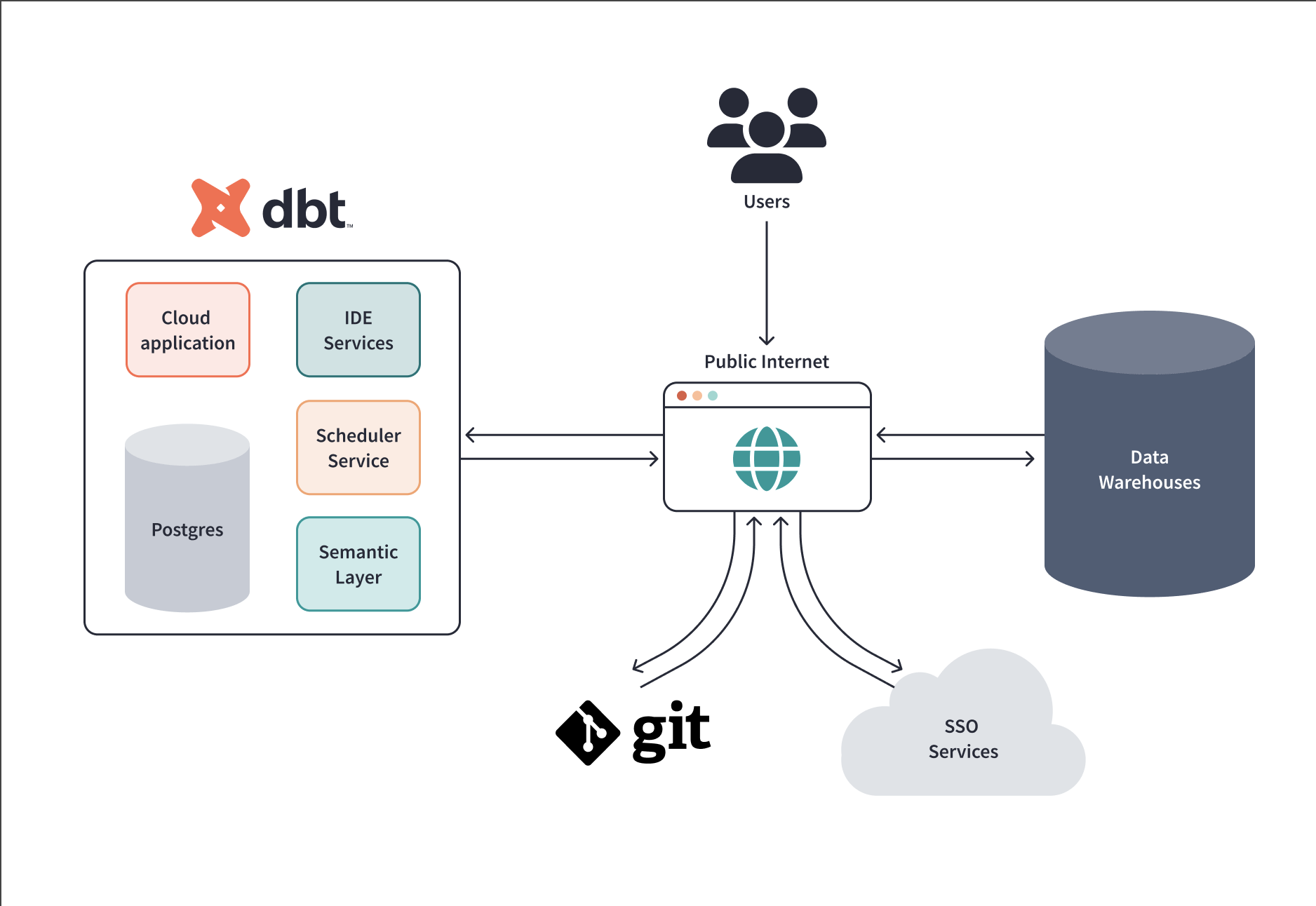
The Core of dbt Cloud: Transforming Data with Confidence
At its heart, dbt Cloud is a transformation tool. It allows data analysts and engineers to transform data already loaded into their cloud data warehouses using SQL. However, its power lies not just in its ability to execute SQL, but in the framework and ecosystem it provides for doing so in a reproducible, testable, and documented manner. This transformation process is crucial because raw data, as it exists in source systems, is rarely in a format that’s directly usable for reporting, analytics, or machine learning. Data needs to be cleaned, aggregated, joined, and enriched – tasks that dbt Cloud simplifies and standardizes.
SQL-Based Transformation and the dbt Core Engine
The foundation of dbt’s transformation capabilities is built upon SQL. Users write their transformations as SQL SELECT statements, which dbt then orchestrates and runs within the connected data warehouse. This familiar language makes dbt accessible to a vast number of data professionals. However, dbt elevates SQL by introducing concepts like modularity, reusability, and dependency management. Instead of writing monolithic SQL scripts, users can break down complex transformations into smaller, manageable models. These models can then be linked together, forming directed acyclic graphs (DAGs) that represent the flow of data from raw sources to final analytical tables.
dbt Core, the open-source engine that powers dbt Cloud, provides the command-line interface (CLI) and the logic for executing these transformations. It handles materialization (how the transformed data is stored, e.g., as tables or views), dependency resolution, and execution scheduling. dbt Cloud builds upon this robust engine by providing a collaborative, web-based interface, advanced scheduling, and integrations that significantly enhance the developer experience and operational efficiency.
Version Control and Collaboration: Building Trust in Data
A critical aspect of modern software development, version control is also a cornerstone of dbt Cloud. By integrating seamlessly with Git, dbt Cloud enables teams to track changes to their dbt projects, revert to previous versions, and collaborate effectively. This means that every transformation, every model, and every test is auditable and reproducible. When an issue arises, teams can pinpoint the exact change that caused it, understand its impact, and resolve it quickly.
This commitment to version control fosters a culture of trust in data. Data models are no longer black boxes; they are transparent, well-understood, and managed with the same rigor as production code. Collaboration is enhanced through features like pull requests within the dbt Cloud IDE, allowing for code reviews and peer validation before changes are deployed. This collaborative environment ensures that multiple team members can contribute to the data transformation process without stepping on each other’s toes or introducing errors.
Testing and Data Quality: Ensuring Reliability
Data quality is not an afterthought with dbt Cloud; it’s an integrated part of the development process. dbt provides a powerful testing framework that allows users to define and run various types of tests on their data models. These tests can range from simple uniqueness and not-null checks to more complex custom SQL assertions that validate business logic.
- Schema Tests: These are built-in tests that verify the basic structure of your data, such as ensuring that columns have the expected data types or that primary keys are unique.
- Data Tests (Custom SQL Tests): Beyond schema validation, dbt allows you to write custom SQL queries that assert specific conditions about your data. For example, you could test that the total revenue for a given month matches a known benchmark or that the count of active users never drops below a certain threshold.
- Generic Tests: dbt supports generic tests that can be applied across multiple models, reducing the need to write repetitive test code.
By running these tests as part of the dbt deployment pipeline, teams can catch data quality issues early, before they propagate to downstream reports and dashboards, preventing costly errors and maintaining stakeholder confidence. dbt Cloud’s dashboard provides a clear overview of test results, highlighting any failures and enabling quick remediation.
dbt Cloud in the Modern Data Stack: Integration and Orchestration
dbt Cloud doesn’t operate in a vacuum. It’s designed to be a central piece of the modern data stack, integrating seamlessly with a variety of other tools that data teams rely on. Its ability to connect with cloud data warehouses, data lakes, and other platforms makes it a versatile component that can augment existing infrastructure.
Connecting to Your Data Warehouse: The Foundation
The first and most crucial integration for dbt Cloud is its connection to your cloud data warehouse. dbt Cloud supports major platforms such as Snowflake, BigQuery, Redshift, Azure Synapse Analytics, and Databricks. This connectivity allows dbt Cloud to read data from your warehouse, execute transformation logic within it, and write the transformed results back, leveraging the computational power of the warehouse itself. This approach avoids the need to move large volumes of data, which is both inefficient and costly.
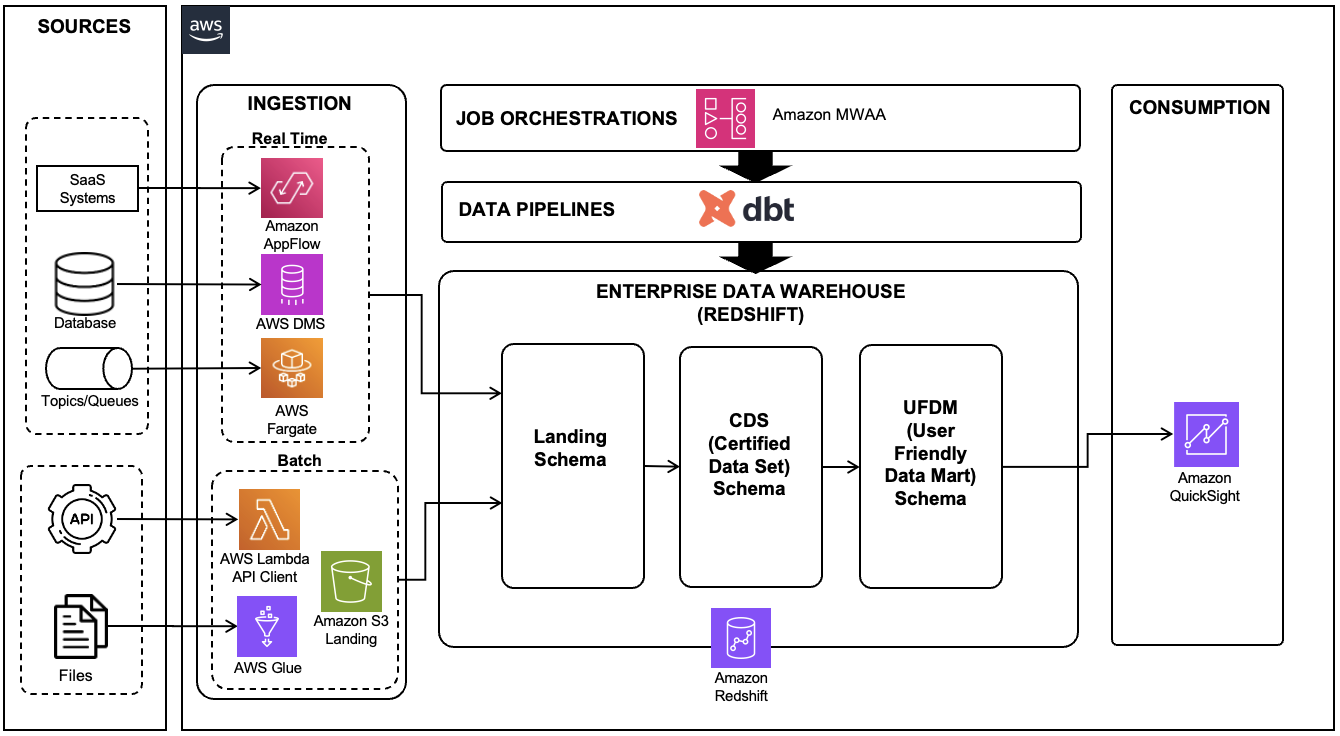
dbt Cloud manages these connections securely, ensuring that your data warehouse credentials are protected. Once connected, users can begin defining their data models and transformations, with dbt Cloud handling the orchestration of jobs that run these transformations on a schedule or on demand.
Orchestration and Scheduling: Automating Your Data Pipelines
While dbt Core can be scheduled using external tools like cron or Airflow, dbt Cloud brings robust, built-in orchestration and scheduling capabilities. This eliminates the need for complex external setups for many common use cases. Teams can define sophisticated job schedules, including recurring jobs, chained jobs (where one job runs only after another completes successfully), and even conditional logic for job execution.
This integrated scheduling allows data teams to automate their entire data transformation pipeline. Raw data is ingested, transformed by dbt Cloud, and then made available for reporting and analysis on a predictable schedule. This automation reduces manual effort, minimizes the risk of human error, and ensures that business stakeholders always have access to the most up-to-date data. dbt Cloud also provides detailed job history and logs, making it easy to monitor the status of your pipelines and troubleshoot any failures.
Integrations with BI Tools and Data Observability Platforms
The output of dbt Cloud’s transformations is typically consumed by Business Intelligence (BI) tools and other analytical applications. dbt Cloud’s well-modeled and tested data makes it an ideal source for tools like Tableau, Looker, Power BI, and others. By providing clean, reliable datasets, dbt Cloud empowers BI analysts to build accurate and insightful dashboards and reports with greater confidence.
Furthermore, dbt Cloud complements data observability platforms. While dbt Cloud focuses on the quality of transformations and data modeling, observability tools monitor the health and performance of the entire data pipeline, including data freshness, lineage, and anomaly detection. The insights from dbt tests can feed into these observability platforms, creating a comprehensive view of data health across the organization.
The Value Proposition: Why Choose dbt Cloud?
The adoption of dbt Cloud by data teams across industries is driven by a clear set of benefits that address common pain points in data analytics and engineering. It’s not just about a new tool; it’s about adopting a more mature and efficient way of working with data.
Accelerating Time to Insight
One of the most significant advantages of dbt Cloud is its ability to significantly reduce the time it takes to transform raw data into actionable insights. The combination of a familiar SQL interface, modular development, automated testing, and integrated scheduling means that data teams can build, deploy, and iterate on their data models much faster. This speed allows businesses to react more quickly to market changes, identify new opportunities, and address challenges with data-driven decisions.
Fostering Collaboration and Best Practices
dbt Cloud promotes a collaborative and disciplined approach to data transformation. Its Git integration, IDE features, and emphasis on documentation and testing encourage data professionals to work together effectively and adopt software engineering best practices. This leads to more maintainable, understandable, and reliable data models, reducing technical debt and improving the overall quality of the data infrastructure. It democratizes data modeling to some extent, allowing a broader range of data professionals to contribute while maintaining high standards.
Enhancing Data Reliability and Trust
By embedding testing and version control into the core workflow, dbt Cloud fundamentally enhances data reliability. Teams can be confident that the data they are using for decision-making is accurate, consistent, and well-understood. This increased trust in data is crucial for any organization that relies on analytics to guide its operations. When data sources or transformations change, tests will fail, providing an early warning system and preventing the propagation of bad data.
Scalability and Efficiency
dbt Cloud is built for the cloud, leveraging the scalability of modern data warehouses. It enables teams to manage complex data transformation pipelines efficiently, regardless of data volume. The platform’s ability to automate tasks, manage dependencies, and provide clear visibility into job execution contributes to operational efficiency, freeing up data professionals to focus on more strategic analytical work rather than manual maintenance.

Conclusion: A Cornerstone of Modern Data Operations
In conclusion, dbt Cloud is more than just a data transformation tool; it’s a comprehensive platform that empowers data teams to build, test, and deploy data models with unprecedented efficiency and confidence. By leveraging the power of SQL within a framework of software engineering best practices, dbt Cloud addresses critical challenges in data analytics, including speed, collaboration, and reliability.
Its seamless integration into the modern data stack, coupled with its robust features for version control, testing, and orchestration, makes it an indispensable component for any organization seeking to maximize the value of its data. As businesses continue to rely on data for their strategic decisions, dbt Cloud provides the technological backbone necessary to ensure that this data is not only accessible but also accurate, trustworthy, and readily available for analysis. It represents a significant leap forward in how data is managed and transformed, ultimately driving better business outcomes.
aViewFromTheCave is a participant in the Amazon Services LLC Associates Program, an affiliate advertising program designed to provide a means for sites to earn advertising fees by advertising and linking to Amazon.com. Amazon, the Amazon logo, AmazonSupply, and the AmazonSupply logo are trademarks of Amazon.com, Inc. or its affiliates. As an Amazon Associate we earn affiliate commissions from qualifying purchases.