
Navigating the complexities of the Family and Medical Leave Act (FMLA) can be a significant undertaking for both employers and employees. While the law grants eligible employees job-protected, unpaid leave for specific family and medical reasons, there are certain exceptions and definitions within the act that require careful consideration. One such critical definition is that of a “key employee.” Understanding who qualifies as a key employee under FMLA is crucial for businesses to manage their workforce effectively and ensure compliance with federal regulations. This article delves into the definition of a key employee, the criteria used to identify them, the implications for businesses, and the process involved when an employer chooses to deny leave to such an individual.

Understanding the FMLA and its Purpose
The Family and Medical Leave Act, enacted in 1993, is a landmark piece of legislation designed to provide a safety net for employees facing significant life events. Its primary purpose is to allow employees to take unpaid, job-protected leave for a maximum of 12 workweeks in a 12-month period for specific reasons. These reasons include the birth or adoption of a child, the placement of a child for foster care, caring for a spouse, child, or parent with a serious health condition, or the employee’s own serious health condition that prevents them from performing their job functions.
Core Principles of FMLA
At its heart, FMLA is about balancing the needs of employees with the operational requirements of businesses. It acknowledges that employees will, at times, need to step away from their duties to attend to critical personal and family health matters. In return for this job protection, FMLA places certain responsibilities on employers. These include maintaining group health insurance coverage during the leave and ensuring that the employee can return to their same or an equivalent position upon their return.
Eligibility Criteria for FMLA Leave
It’s important to note that not all employees are automatically eligible for FMLA leave. To qualify, an employee must meet several criteria. Firstly, they must have worked for a covered employer for at least 12 months (not necessarily consecutive). Secondly, they must have worked at least 1,250 hours of service during the 12 months immediately preceding the commencement of the leave. Finally, the employer must have a physical office or facility at the worksite where at least 50 employees are employed within a 75-mile radius. Employers who do not meet these criteria are generally not covered by FMLA.
Defining a “Key Employee” Under FMLA
The concept of a “key employee” arises from a specific provision within FMLA designed to address situations where the absence of certain highly compensated or critical employees could cause substantial economic hardship to the employer. This designation is not arbitrary; it is rooted in a defined set of criteria outlined by the Department of Labor.
The Threshold for Key Employee Status
A key employee is generally defined as a salaried employee who is among the highest-paid 10% of all employees (including the employer’s foreign operations) when measured by compensation paid during the year. This calculation includes bonuses and the value of any other permanent compensation paid to the employee. The purpose of this threshold is to identify individuals whose absence would have a significant impact on the employer’s ability to conduct business.
Salaried vs. Hourly Workers
It is crucial to distinguish between salaried and hourly employees when considering the key employee definition. FMLA’s key employee provision specifically applies to salaried employees. Hourly workers, regardless of their compensation level, generally do not fall under this specific classification for the purpose of FMLA’s key employee exception. This distinction ensures that the focus remains on individuals whose managerial or technical contributions are critical to the employer’s operations.
Compensation as the Primary Factor
Compensation serves as the primary determinant for identifying key employees. This means employers must regularly review and track employee salaries to determine who falls within the top 10%. This includes not only base salary but also any variable compensation like bonuses, commissions, and other monetary benefits. The value of non-monetary benefits, such as stock options or retirement contributions, is generally not included in this calculation, though it’s always advisable for employers to consult with legal counsel for definitive guidance.
The Impact of Key Employee Status on Leave Entitlement
The designation of an employee as a “key employee” does not automatically disqualify them from taking FMLA leave. Instead, it provides the employer with a potential basis for denying reinstatement to their position if such denial is necessary to prevent substantial economic injury to the employer’s operations. This is a critical distinction and a nuanced aspect of FMLA.
Substantial Economic Injury: The Employer’s Burden of Proof
For an employer to successfully deny reinstatement to a key employee, they must demonstrate that serious economic harm would result from the employee’s absence. This is not a minor inconvenience; it must be a substantial injury to the business’s operations. Factors that might be considered include the difficulty of finding a replacement, the impact on production or service delivery, and the financial consequences of the employee’s absence. The burden of proof lies squarely with the employer.
Reinstatement Rights and Exceptions
Even if an employee is deemed a key employee, they are still entitled to FMLA leave. The employer’s right is to deny reinstatement to their specific job, not to deny the leave itself. If the employer chooses to deny reinstatement, they must notify the employee of this fact, in writing, at the time FMLA leave is requested or commences. The notice must explain the consequences of the designation and the potential consequences of the employee’s failure to return to work. The employee still has the right to take the leave, but their employer may not be obligated to hold their exact position open.
The Process for Identifying and Notifying Key Employees
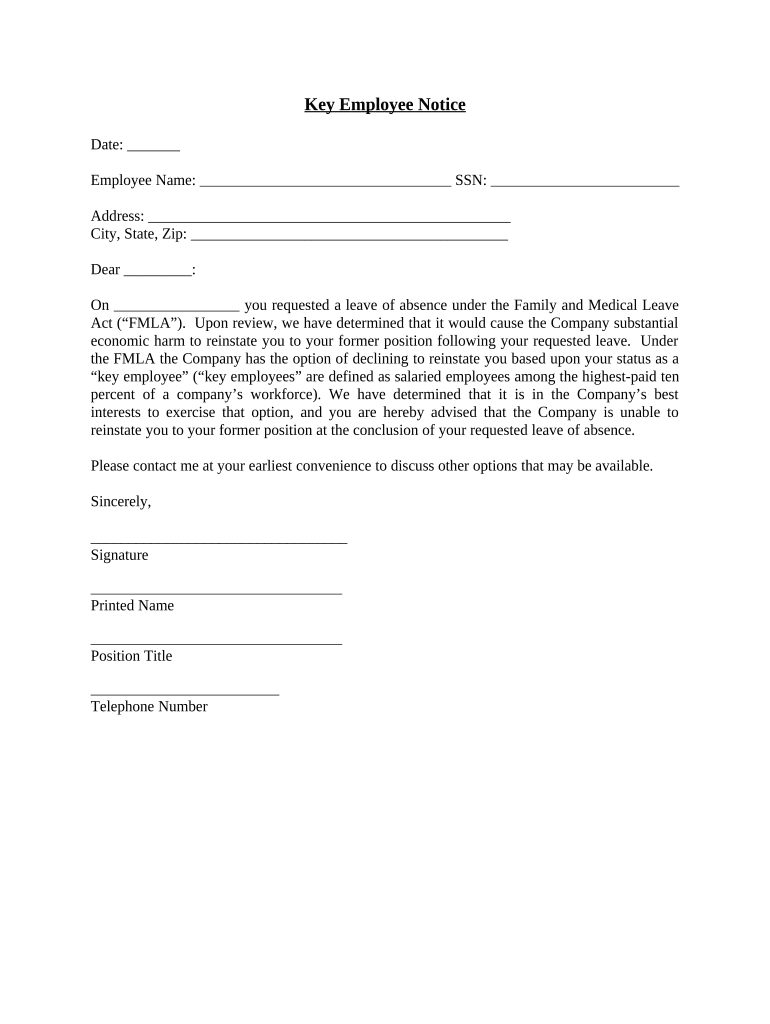
Accurately identifying key employees and properly notifying them of their status is paramount for employers to maintain FMLA compliance. A misstep in this process can lead to legal challenges and penalties. Employers need a structured approach to this crucial aspect of HR management.
Steps for Employer Compliance
Employers should establish a clear policy and procedure for identifying potential key employees. This typically involves an annual review of compensation data. Once potential key employees are identified, the employer must then assess whether their absence would cause substantial economic injury. This assessment should be documented.
Documentation and Record-Keeping
Thorough documentation is essential throughout the FMLA process. This includes records of employee eligibility, the reasons for leave requests, the duration of leave, and any decisions made regarding reinstatement. For key employees, this documentation should include the basis for their classification, the assessment of potential economic hardship, and copies of all notices provided to the employee.
The Notification Requirement
The FMLA regulations are very specific about how and when employers must notify employees who are identified as key employees. This notification is a critical step that must be taken before or at the time FMLA leave is approved or commences.
Content of the Key Employee Notice
The written notice to a key employee must clearly state that they are designated as a key employee, explain the potential consequences of their designation with respect to their job restoration, and outline the conditions under which substantial economic injury might be avoided. It should also inform the employee of their right to request reinstatement and that the employer will make a determination based on business necessity. The notice should also provide the employee with a reasonable period to return to work to avoid losing their right to reinstatement.
Timing of the Notification
The notification must be provided in writing and, ideally, at the time FMLA leave is requested or commenced. This gives the employee the opportunity to understand their rights and potential limitations before they embark on their leave. Delaying this notification can weaken the employer’s position should a dispute arise.
Alternatives and Best Practices for Employers
While the key employee provision exists within FMLA, many employers opt for strategies that minimize the need to invoke this exception. Prioritizing employee well-being and maintaining a flexible approach can often lead to more positive outcomes and stronger employee relations.
Fostering a Supportive Work Environment
Creating a culture of support and understanding can significantly reduce the likelihood of situations where an employer feels compelled to deny reinstatement to a key employee. This involves robust communication, clear expectations, and proactive workforce planning.
Proactive Workforce Planning and Cross-Training
Investing in cross-training employees and developing a strong succession plan can mitigate the impact of any employee’s absence, including that of a key employee. When multiple individuals possess the necessary skills and knowledge, the departure or extended leave of one person becomes less disruptive.
Open Communication and Flexible Arrangements
Maintaining open lines of communication with all employees about their work-life balance needs and being open to discussing flexible work arrangements when possible can foster loyalty and reduce the necessity of strict FMLA interpretations. For instance, exploring remote work options or adjusted schedules, where feasible, can sometimes accommodate critical employee needs without triggering complex FMLA exceptions.
The Importance of Legal Counsel
Given the intricate nature of FMLA and the potential legal ramifications of misinterpreting or misapplying its provisions, employers are strongly advised to consult with experienced legal counsel. An attorney specializing in employment law can provide tailored advice, assist in developing compliant policies, and ensure that all actions taken regarding key employees are legally sound.

Staying Updated on FMLA Regulations
Employment law is dynamic, and FMLA regulations can be subject to updates and changes. Employers must commit to staying informed about any revisions to the law or its interpretations. This commitment to continuous learning is crucial for maintaining compliance and protecting the business from potential liabilities.
In conclusion, understanding the definition and implications of a “key employee” under FMLA is a critical aspect of responsible HR management. While the provision allows employers a pathway to deny reinstatement in specific, narrowly defined circumstances to prevent substantial economic harm, it is a path that requires meticulous adherence to notification requirements and a clear demonstration of business necessity. For most organizations, focusing on proactive workforce planning, fostering a supportive culture, and seeking expert legal guidance will prove to be the most effective strategies for navigating FMLA compliance and supporting their valuable employees.
aViewFromTheCave is a participant in the Amazon Services LLC Associates Program, an affiliate advertising program designed to provide a means for sites to earn advertising fees by advertising and linking to Amazon.com. Amazon, the Amazon logo, AmazonSupply, and the AmazonSupply logo are trademarks of Amazon.com, Inc. or its affiliates. As an Amazon Associate we earn affiliate commissions from qualifying purchases.