
The allure of the dark, mysterious, and deeply saturated has captivated humanity for millennia. From the depths of the earth to the sleekest of digital interfaces, black has always held a special significance. When we talk about gemstones, the concept of “black” immediately conjures images of elegance, power, and understated luxury. But what exactly are these enigmatic stones, and how do we categorize them within the vast spectrum of precious and semi-precious materials? This exploration delves into the world of black gemstones, not just through the traditional lens of gemology, but through the critical and analytical perspective of technology. We’ll examine how technological advancements in analysis, grading, and even artificial creation are shaping our understanding and appreciation of these dark jewels.

The Foundation: Understanding Black Gemstones Through Technological Classification
The very notion of classifying gemstones, regardless of their color, has been revolutionized by technology. What was once a practice reliant on human perception and rudimentary tools is now an intricate science aided by sophisticated equipment. When it comes to black gemstones, this technological approach becomes even more vital. The subtle differences in their composition, crystalline structure, and optical properties, which dictate their value and identity, are often invisible to the naked eye. Technology allows us to move beyond mere appearance and delve into the fundamental characteristics that define these stones.
Spectroscopic Analysis: Unmasking the True Identity
One of the most powerful technological tools in gemology is spectroscopy. Different elements and compounds absorb and emit light at specific wavelengths, creating unique spectral “fingerprints.” For black gemstones, spectroscopic analysis is crucial for differentiation. For instance, a black diamond might exhibit a different spectral response compared to a black spinel or a black sapphire, even if they appear superficially similar.
Infrared Spectroscopy (IR) and Raman Spectroscopy: Delving into Molecular Structure
Infrared and Raman spectroscopy provide detailed insights into the molecular vibrations within a gemstone. These techniques can identify the presence of specific chemical impurities that impart the black color or reveal the crystalline lattice structure. For example, in black diamonds, the color is often due to an abundance of tiny, dark-colored inclusions, such as graphite or sulfides. Spectroscopic methods can pinpoint the type and distribution of these inclusions, helping to distinguish natural black diamonds from treated ones or other black simulants. Similarly, for black spinels, which were historically mistaken for black diamonds, spectroscopy can clearly differentiate their distinct chemical compositions and crystal structures.
X-ray Diffraction (XRD): Understanding Crystallinity
X-ray diffraction is another fundamental technology that helps in identifying gemstones by analyzing their crystalline structure. Each mineral has a unique arrangement of atoms, and XRD patterns are like a fingerprint for these arrangements. For black gemstones, XRD can confirm whether a stone is a diamond (cubic structure), spinel (cubic), sapphire (trigonal), or another mineral. This is particularly important because several black gemstones share a similar visual appearance, and their value can differ significantly based on their true mineral identity.
Advanced Imaging Techniques: Visualizing the Imperfectly Perfect
While spectroscopy analyzes the chemical and structural makeup, advanced imaging technologies allow us to visually examine the internal characteristics of black gemstones with unprecedented detail. These techniques go beyond the capabilities of a standard jeweler’s loupe and can reveal inclusions, fractures, and other internal features that are critical for grading and identification.
Photomicrography and Digital Microscopy: A High-Resolution Look
High-resolution digital microscopes and photomicrography allow gemologists to capture and analyze detailed images of a gemstone’s interior. For black gemstones, these images can reveal the nature of the dark inclusions, their size, shape, and distribution. This information is vital for determining clarity grades and can also provide clues about the gemstone’s origin and formation process. For example, the pattern of inclusions in a natural black diamond might be distinctly different from those in a synthetically created black diamond.
Electron Microscopy (SEM/TEM): Unveiling Nanoscale Details
For even finer details, scanning Electron Microscopy (SEM) and Transmission Electron Microscopy (TEM) can be employed. These powerful tools offer magnifications far beyond optical microscopes, allowing for the examination of nanoscale features. This can be crucial in identifying the precise composition of microscopic inclusions or understanding the surface characteristics of a gemstone, which can sometimes offer clues to its authenticity or treatment history.
Technological Innovations in Black Gemstone Treatment and Synthesis
The world of gemstones is not solely about natural discoveries. Technology has also played a significant role in both treating existing black gemstones to enhance their appearance and, more recently, in synthesizing them. Understanding these technological interventions is crucial for both consumers and professionals in the jewelry industry.
Enhancing the Darkness: Treatments for Black Gemstones
Many black gemstones, particularly diamonds and some colored stones like sapphires and garnets, can undergo treatments to deepen their color or improve their clarity. These treatments are a testament to technological ingenuity in altering mineral properties.
Diffusion Treatment: Altering Surface Color
Diffusion is a heat treatment process where specific elements are introduced into the surface layer of a gemstone to impart color. For some black gemstones, this can involve introducing metallic ions to create a more intense black hue. This is a sophisticated process that requires precise control of temperature and atmosphere to ensure even penetration and a desirable outcome. Understanding the metallurgy and high-temperature chemistry involved highlights the technological underpinnings of these treatments.
Irradiation and Annealing: Transforming Inclusions

Irradiation, often followed by annealing (heating), is another common treatment for gemstones. While more commonly associated with other colors, certain black gemstones might also undergo variations of this process. For instance, it can sometimes be used to alter the optical properties of inclusions, potentially making them darker or more uniform. The controlled application of radiation and heat relies on advanced scientific understanding and precise engineering.
The Rise of Lab-Grown Black Gemstones: A Technological Frontier
Perhaps the most significant technological advancement in the realm of black gemstones is the ability to synthesize them in a laboratory. These lab-grown counterparts are chemically and physically identical to their natural counterparts, offering an ethical and often more affordable alternative.
High-Pressure, High-Temperature (HPHT) Synthesis: Mimicking Nature’s Pressure Cooker
The HPHT method is one of the primary techniques used to synthesize diamonds, including black diamonds. This process involves subjecting carbon to extremely high pressures and temperatures, mimicking the conditions under which natural diamonds form deep within the Earth’s mantle. Sophisticated machinery and precise process control are essential for success. The technology behind these massive presses and the understanding of the thermodynamic principles involved are remarkable achievements.
Chemical Vapor Deposition (CVD): Building Layer by Layer
CVD is another advanced technology used for synthesizing diamonds. In this process, a carbon-rich gas mixture is introduced into a vacuum chamber and heated. The carbon atoms then deposit onto a seed crystal, gradually building up the diamond layer by layer. CVD allows for precise control over the growth process and can be used to create black diamonds by introducing specific impurities during growth. The intricate plasma chemistry and vacuum engineering involved showcase a different facet of technological innovation.
Identifying and Valuing Black Gemstones: The Role of Digital Databases and AI
Beyond the physical analysis, technology is transforming how we access information, identify, and even value black gemstones. Digital databases and emerging AI tools are democratizing access to gemological knowledge and streamlining the appraisal process.
Digital Gemological Databases: A World of Information at Our Fingertips
The traditional reliance on thick, printed gemological encyclopedias is rapidly being replaced by comprehensive digital databases. These platforms, often accessible online, store vast amounts of information on gemstones, including their geological origins, chemical compositions, physical properties, historical significance, and market values.
Virtual Gemological Libraries: Accessing Expert Knowledge
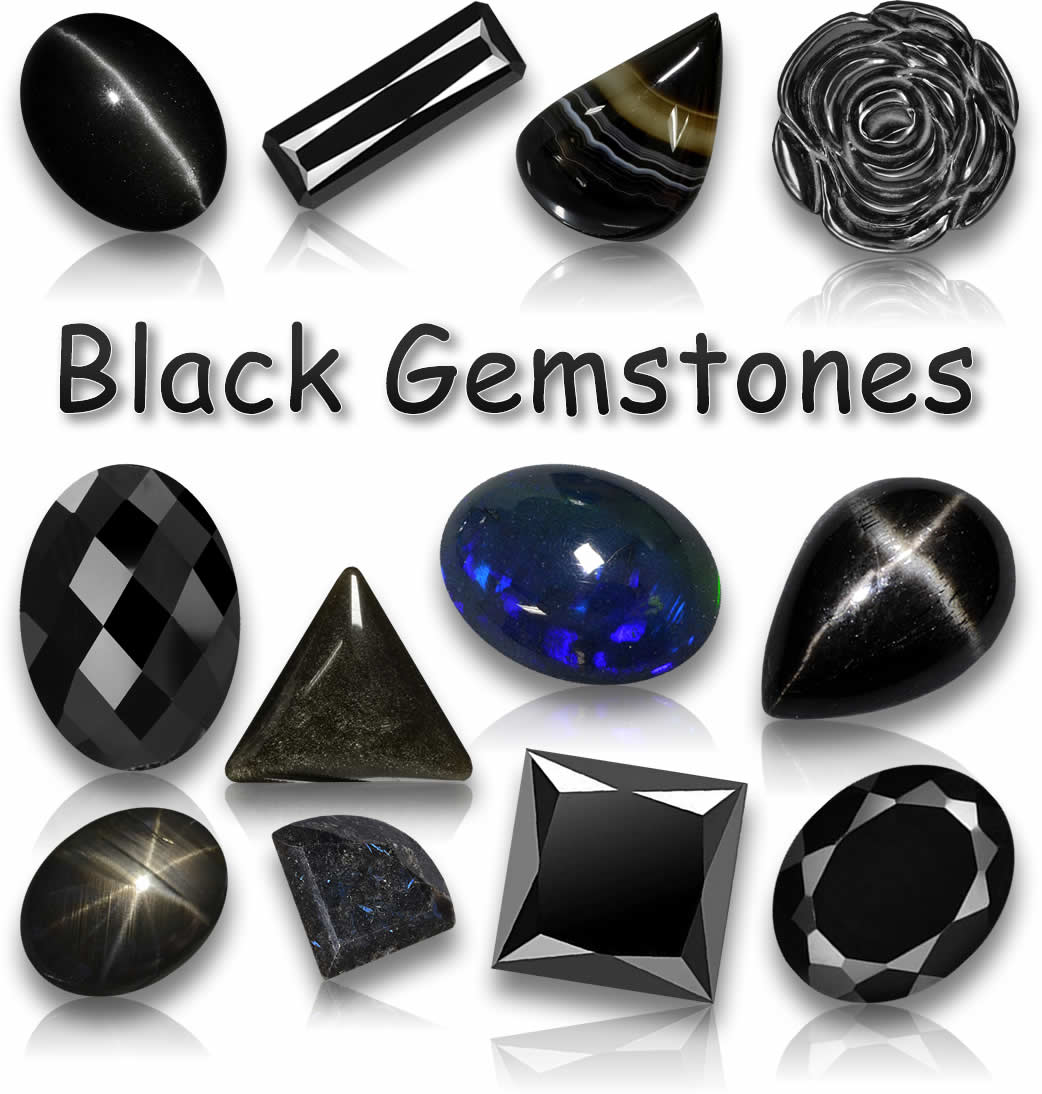
These digital libraries allow gemologists, jewelers, and even curious consumers to research specific black gemstones. A quick search can reveal common names for black gemstones like Onyx, Black Spinel, Black Sapphire, Black Diamond, Black Tourmaline, Hematite, and Obsidian, along with their defining characteristics. This immediate access to curated information reduces the time and effort required for identification and comparison.
Visual Identification Tools: Matching Stone to Data
Many of these databases incorporate advanced image recognition capabilities. Users can upload images of gemstones, and the system, powered by AI algorithms, can help identify the stone by comparing its visual characteristics to a vast library of reference images. While not a replacement for professional grading, these tools provide a valuable first step in the identification process, especially for commonly encountered black gemstones.
Artificial Intelligence in Gemstone Analysis and Valuation
Artificial intelligence is rapidly making inroads into the gemological field, promising to enhance accuracy, efficiency, and even predictability in the identification and valuation of black gemstones.
AI-Powered Grading Systems: Standardizing Quality Assessment
AI algorithms are being trained on massive datasets of graded gemstones to learn the intricate criteria used in assessing quality. For black gemstones, this could mean AI systems that can analyze images and spectral data to more consistently and objectively determine factors like color saturation, clarity, and cut quality. This has the potential to reduce human subjectivity and improve standardization across the industry.
Predictive Analytics for Market Trends: Understanding Value
AI can also be used to analyze market data, historical sales trends, and gemological reports to predict the future value of black gemstones. By identifying patterns and correlations that might be missed by human analysts, AI can provide insights into investment potential, helping buyers and sellers make more informed decisions. This is particularly relevant for rare or exceptionally well-formed black gemstones where valuation can be complex.
Conclusion: The Future of Black Gemstones is Technologically Illuminated
The question “what is a black gemstone called” is no longer a simple query answered by a singular name. It’s a gateway to understanding a complex interplay of mineralogy, chemistry, physics, and increasingly, sophisticated technology. From the fundamental spectroscopic analysis that confirms a stone’s identity to the cutting-edge synthesis methods that create lab-grown alternatives, technology is at the heart of our modern appreciation and engagement with black gemstones.
The evolution from reliance on intuition and simple tools to advanced analytical instruments and artificial intelligence signifies a profound shift in gemology. These technological advancements not only help us accurately identify and classify black gemstones but also allow for their enhancement and creation, offering more choices and a deeper understanding of these captivating dark jewels. As technology continues to evolve, so too will our ability to explore, appreciate, and interact with the dark, enigmatic beauty of black gemstones. The future of these stones is not just about their natural origins but is inextricably linked to the technological innovations that illuminate their very essence.
aViewFromTheCave is a participant in the Amazon Services LLC Associates Program, an affiliate advertising program designed to provide a means for sites to earn advertising fees by advertising and linking to Amazon.com. Amazon, the Amazon logo, AmazonSupply, and the AmazonSupply logo are trademarks of Amazon.com, Inc. or its affiliates. As an Amazon Associate we earn affiliate commissions from qualifying purchases.