
The crankshaft position sensor (CKP) is a critical component within your vehicle’s engine management system. Often overlooked until it malfunctions, this unassuming sensor plays a vital role in ensuring your engine runs smoothly and efficiently. Its primary function is to inform the engine control module (ECM) about the precise rotational position and speed of the crankshaft. This information is fundamental for the ECM to accurately time critical engine events, such as fuel injection and ignition spark. When a crankshaft sensor goes bad, a cascade of issues can arise, impacting everything from your car’s drivability to its ability to start at all. Understanding the symptoms and consequences of a faulty CKP sensor is crucial for any vehicle owner aiming to maintain their car’s optimal performance and avoid costly repairs.

The Crucial Role of the Crankshaft Position Sensor in Engine Operation
The crankshaft sensor’s importance cannot be overstated. It’s the central nervous system’s sensory organ for the engine’s rotational data. Without accurate readings from the CKP sensor, the engine control module operates in a vacuum, unable to make informed decisions about engine management.
Understanding Crankshaft Sensor Functionality
At its core, the crankshaft position sensor is a magnetic transducer. It works in conjunction with a toothed wheel, often called a reluctor wheel, attached to the crankshaft. As the crankshaft rotates, the teeth of the reluctor wheel pass by the CKP sensor. This passage creates a change in the magnetic field surrounding the sensor, which in turn generates an electrical signal. This signal, typically a series of pulses, is then transmitted to the ECM. The frequency and pattern of these pulses provide the ECM with two key pieces of information: the engine’s rotational speed (RPM) and the exact position of the crankshaft.
The Engine Control Module’s Reliance on CKP Data
The ECM, the vehicle’s onboard computer, is the brain of the engine. It receives input from a multitude of sensors, including the CKP sensor, to orchestrate the complex ballet of combustion. The data from the CKP sensor is arguably the most fundamental, as it dictates the timing of virtually all other engine operations.
- Ignition Timing: The CKP sensor tells the ECM when to fire the spark plugs. Precise ignition timing is essential for maximizing power, fuel efficiency, and minimizing emissions. If the ECM receives incorrect or no information about the crankshaft’s position, it cannot accurately determine when to send the spark to the correct cylinder at the right moment.
- Fuel Injection Timing: Similarly, the CKP sensor’s input is vital for determining when to inject fuel into each cylinder. The ECM uses this data to ensure fuel is delivered at the optimal time in the combustion cycle, contributing to efficient burning and power generation.
- Engine Speed (RPM) Calculation: The CKP sensor’s pulse rate directly correlates to the engine’s speed. The ECM uses this RPM data for various functions, including idle control, transmission shifting (in automatic transmissions), and diagnostic monitoring.
Without this critical data, the ECM is essentially blind, leading to a range of malfunctions.
Common Symptoms of a Failing Crankshaft Sensor
A failing crankshaft sensor rarely fails all at once. It typically exhibits symptoms that gradually worsen, providing early warning signs that astute drivers can heed. Recognizing these symptoms can save you from a complete breakdown.
Starting and Stalling Issues
One of the most common and frustrating symptoms of a bad crankshaft sensor is difficulty starting the engine or the engine stalling unexpectedly.
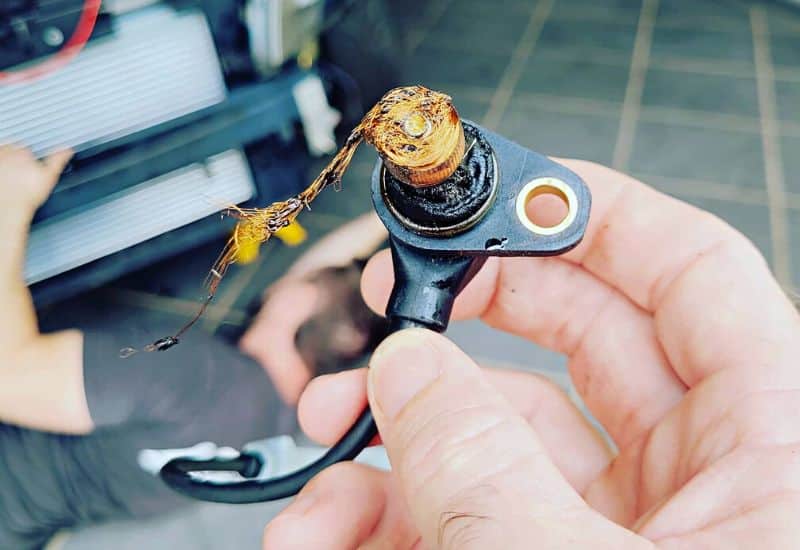
- Engine Cranks But Won’t Start: This is a hallmark of a completely failed CKP sensor or one that is intermittently failing. If the ECM receives no signal, or a corrupted signal, it cannot determine the engine’s position, rendering it impossible to initiate the combustion process. The starter motor will engage and turn the engine over, but the fuel injectors and ignition system won’t activate correctly.
- Intermittent Stalling: If the CKP sensor is failing intermittently, the engine might start and run for a period before suddenly shutting off. This is because the ECM momentarily loses contact with the crankshaft’s position. The vehicle might restart after a short cooldown period, or it might require several attempts. This unpredictable stalling can be particularly dangerous if it occurs while driving.
- Rough Idling: Even before complete failure, a struggling CKP sensor can cause the engine to idle poorly. The ECM, receiving inaccurate RPM data, may struggle to maintain a stable idle speed, leading to a rough or erratic idle.
Performance Degradation and Warning Lights
Beyond starting and stalling, a faulty CKP sensor can manifest in noticeable performance issues and illuminate your dashboard.
- Check Engine Light Illumination: The ECM is designed to detect anomalies in sensor readings. When it receives erratic or implausible data from the crankshaft sensor, it will typically trigger the “Check Engine” or “Malfunction Indicator Lamp” (MIL) on your dashboard. The stored diagnostic trouble code (DTC) related to the CKP sensor will provide a clear indication of the problem.
- Misfires and Hesitation: Inaccurate timing of spark or fuel can lead to engine misfires, where one or more cylinders fail to combust properly. This can manifest as a noticeable sputtering or “hiccup” during acceleration or even at steady speeds. The vehicle might feel sluggish and hesitant.
- Reduced Fuel Efficiency: When the engine’s timing is off due to faulty CKP sensor data, the combustion process becomes less efficient. This can result in a noticeable drop in your vehicle’s miles per gallon (MPG), as the engine struggles to extract the maximum energy from the fuel.
- Catalytic Converter Damage: Persistent misfires, caused by a faulty CKP sensor, can lead to unburned fuel entering the exhaust system. This unburned fuel can overheat and damage the catalytic converter, a costly component to replace.
Diagnosing and Replacing a Faulty Crankshaft Sensor
Identifying and rectifying a bad crankshaft sensor involves a systematic approach, usually requiring specialized tools and knowledge.
Diagnostic Procedures for Crankshaft Sensor Issues
Automotive technicians employ a series of diagnostic steps to confirm a faulty CKP sensor.
- OBD-II Scan: The first step is typically to connect an On-Board Diagnostics (OBD-II) scanner to the vehicle’s diagnostic port. This scanner retrieves any stored DTCs. Codes related to the crankshaft position sensor often include P0335, P0336, P0337, P0338, P0339, or similar, indicating an issue with the sensor or its circuit.
- Visual Inspection: A visual inspection of the CKP sensor and its wiring harness is essential. Technicians will look for any signs of physical damage, such as frayed wires, corroded connectors, or a sensor that appears loose or damaged. They will also inspect the reluctor wheel for any damage or debris that might be interfering with the sensor’s reading.
- Multimeter Testing: If the DTC points to the CKP sensor, a technician will use a multimeter to test the sensor’s electrical resistance and voltage output. This involves measuring the signal generated by the sensor as the crankshaft is rotated (often manually or by a helper cranking the engine). Comparing the readings to the manufacturer’s specifications can help determine if the sensor is functioning correctly.
- Oscilloscope Analysis: For more advanced diagnostics, an oscilloscope can be used. This instrument displays the electrical signal generated by the CKP sensor in a waveform pattern. Analyzing this waveform can reveal subtle issues, such as inconsistent pulses or signal dropouts, that might not be apparent with a multimeter alone.

The Replacement Process and Considerations
Replacing a crankshaft sensor is a task that can range in difficulty depending on the vehicle’s make and model.
- Locating the Sensor: The CKP sensor is usually mounted on the engine block or transmission bell housing, positioned to read the reluctor wheel on the crankshaft. Its exact location varies significantly between vehicle manufacturers and engine types.
- Access and Removal: In some vehicles, the sensor is easily accessible. In others, it may be hidden behind other engine components, requiring the removal of other parts to gain access. The sensor is typically held in place by a single bolt.
- Installation of the New Sensor: Once the old sensor is removed, the new sensor is installed and secured with the retaining bolt. It’s crucial to ensure the new sensor is seated correctly and the electrical connector is firmly attached.
- Clearing DTCs and Testing: After the new sensor is installed, the stored DTCs must be cleared from the ECM using the OBD-II scanner. The engine is then started, and the technician will monitor its operation to ensure the problem has been resolved. A test drive is usually performed to confirm normal drivability and the absence of any warning lights.
Important Note on Sensor Types: There are different types of crankshaft position sensors, including Hall-effect sensors and variable reluctance (VR) sensors. The diagnostic and replacement procedures are generally similar, but understanding the specific type used in your vehicle can be helpful.
When a crankshaft sensor goes bad, it’s not just an inconvenience; it’s a critical failure that can leave you stranded. Recognizing the symptoms, understanding the sensor’s vital role, and knowing the diagnostic and replacement process empowers vehicle owners to address the issue promptly and effectively, ensuring their vehicle’s continued reliability and performance.
aViewFromTheCave is a participant in the Amazon Services LLC Associates Program, an affiliate advertising program designed to provide a means for sites to earn advertising fees by advertising and linking to Amazon.com. Amazon, the Amazon logo, AmazonSupply, and the AmazonSupply logo are trademarks of Amazon.com, Inc. or its affiliates. As an Amazon Associate we earn affiliate commissions from qualifying purchases.