
Dexter, Showtime’s critically acclaimed crime drama, captivated audiences for eight seasons with its dark and complex portrayal of a forensic blood spatter analyst who moonlights as a vigilante serial killer. While the series was renowned for its intricate plotlines, compelling characters, and often shocking twists, not every character’s arc was as central or as thoroughly explored as others. One such character, whose fate left some viewers curious and others indifferent, is Anton.
Anton was a recurring character who, for a time, played a significant role in Dexter Morgan’s life and his pursuit of justice – or rather, his particular brand of it. He wasn’t a primary antagonist or a close confidant, but a pawn, a tool, and a fleeting acquaintance whose presence raised questions about Dexter’s methods and the ethical ambiguities of his crusade. To understand what happened to Anton, we must delve into his origins within the narrative, his interactions with Dexter, and the ultimate purpose he served, or failed to serve, in the grander scheme of the show. This exploration will illuminate how Dexter’s world, a landscape of shadows and moral compromise, often dictated the fates of those who crossed its path, including the seemingly minor figure of Anton.
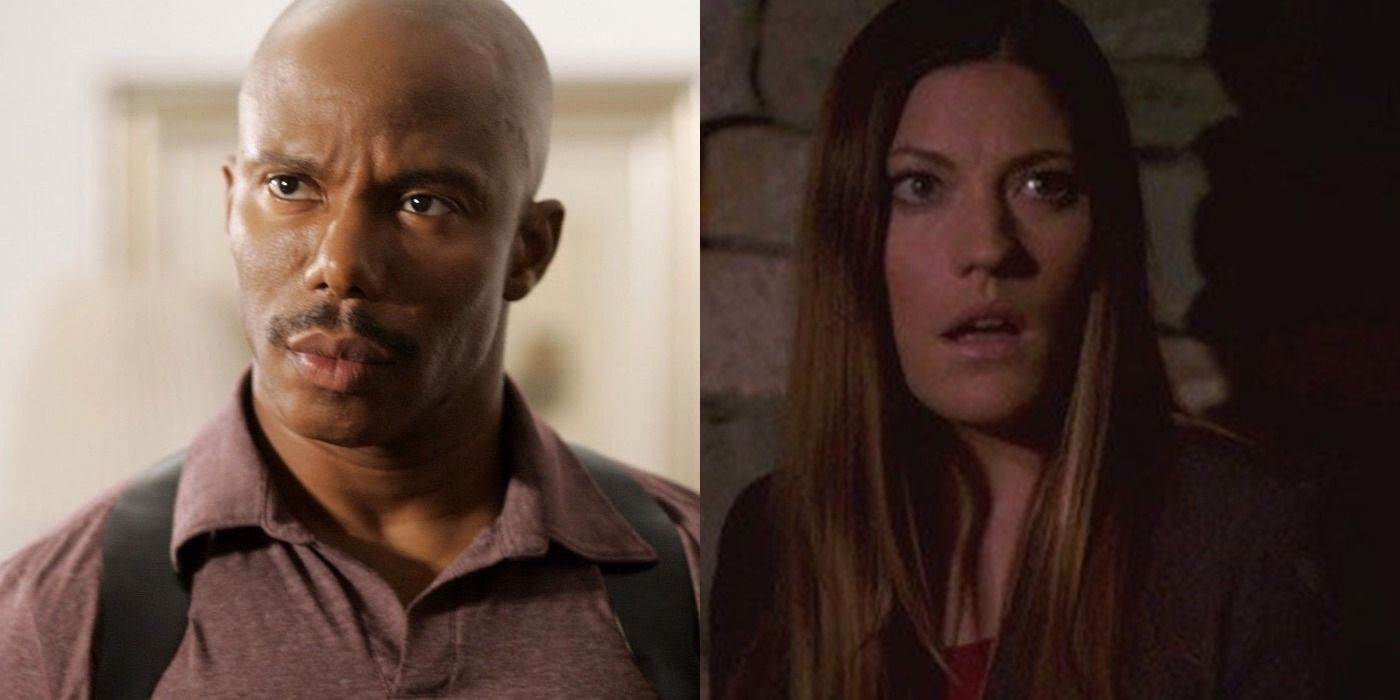
Anton’s Tangled Web: An Introduction to a Dexter Associate
Anton’s narrative within Dexter is not one of grand ambition or personal struggle for survival in the traditional sense. Instead, his story is intrinsically linked to Dexter’s operational needs and the various “opportunities” that presented themselves to the Bay Harbor Butcher. He emerged not as a force of nature or a psychological foil, but as a consequence of Dexter’s intricate dance with the darkness, a useful, albeit disposable, element in the pursuit of other, more significant targets.
The Genesis of Anton’s Role
Anton’s introduction into the Dexter universe was not marked by a dramatic entrance or a deeply fleshed-out backstory. He was, in essence, a product of circumstance, a useful asset that Dexter could leverage. His initial appearances were often in the periphery, a background player whose actions, while not always heroic, served to advance Dexter’s clandestine activities. This deliberate lack of extensive personal history for Anton is crucial to understanding his function within the narrative. He was designed to be a tool, a stepping stone, and his limited personal narrative underscored the transactional nature of many of Dexter’s relationships.
The Shadow of Dexter’s Code
At the heart of Anton’s story lies his unwitting entanglement with Dexter’s “Code of Harry.” This unwritten set of rules, designed to guide Dexter’s killings towards those who preyed on innocents, often dictated who Dexter deemed worthy of his attention and, by extension, who he felt deserved to be dealt with. Anton, in his own way, became a demonstration of the code’s flexibility and Dexter’s willingness to bend its principles when it suited his immediate objectives. While Anton himself wasn’t a killer in the same vein as the targets Dexter pursued, his past actions or associations might have brought him into a morally grey area, making him a candidate for Dexter’s manipulative influence. This is where the narrative begins to weave a more complex tapestry around Anton, suggesting that his existence was not entirely benign, even if his eventual fate was dictated by external forces.
Anton’s Utility and Dexter’s Calculated Moves

Anton’s presence in the series was primarily defined by his utility to Dexter. He was not a character developed for his own intrinsic worth or for the audience to empathize with his personal journey, but rather for the plot functions he could serve. Dexter, ever the strategist, identified Anton as a means to an end, a piece on his personal chessboard that could be moved to achieve specific objectives, often involving information gathering or the incapacitation of potential threats to Dexter’s operations.
Information Broker and Enforcer
One of the key ways Anton served Dexter was as an informal information broker and, at times, an enforcer. Dexter, with his meticulous planning, required reliable sources and individuals who could operate outside the direct gaze of law enforcement, yet still be effective. Anton, with his own criminal connections or a willingness to engage in less-than-savory activities, fit this niche. His ability to access information that Dexter couldn’t, or to perform tasks that required a certain kind of brute force or intimidation, made him a valuable asset. This wasn’t about friendship; it was about leveraging Anton’s skillset to further Dexter’s agenda, whether it was to gather intel on a target or to create a diversion. The inherent danger of this association, however, was that Anton was constantly operating in Dexter’s orbit of violence and deception, a dangerous place to be.
The Disposable Asset
The tragic reality of Anton’s role, and indeed, the role of many characters who found themselves too close to Dexter’s dark side, was their disposability. Dexter was a master manipulator, adept at using people for his own ends and then discarding them once they had outlived their usefulness or posed a potential risk. Anton, despite his contributions, was never a core member of Dexter’s inner circle. He was a tool, and like any tool, he could be set aside or, if necessary, eliminated to protect the primary user. This calculated approach to human interaction is a hallmark of Dexter’s character and serves to highlight the moral bankruptcy that underpins his seemingly righteous crusade. The question of “what happened” to Anton, therefore, is less about a dramatic personal arc and more about the practicalities of Dexter’s operational security.
The Inevitable Conclusion: Anton’s Fate and Dexter’s Legacy
The ultimate fate of Anton in Dexter is a reflection of the show’s grim realism and its unflinching examination of the consequences of living a double life. While the specifics of his departure from the narrative might not have been as explosive as some of the show’s major plot points, they served a crucial purpose in illustrating the precariousness of life within Dexter’s sphere of influence. His story, in its understated conclusion, reinforces the central themes of the series: the corrupting nature of violence, the blurred lines between good and evil, and the often-tragic fates of those caught in the crossfire.
The Vanishing Act
Anton’s story concludes not with a bang, but with a fade. He essentially disappears from the narrative, a common fate for supporting characters in Dexter who were not integral to the overarching season arcs. This vanishing act is not necessarily a sign of him being “killed off” in a spectacular fashion, though the possibility cannot be entirely discounted within the Dexter universe. More likely, his role was fulfilled, and Dexter, ever pragmatic, moved on to other assets or dealt with any lingering loose ends discreetly. The lack of a definitive, on-screen demise allows for ambiguity, mirroring the ambiguous nature of morality within the show. His absence simply signifies that his utility had run its course, and Dexter had no further need for him, whether that need ended due to completion of a task, a potential threat to Dexter’s secret, or simply the natural ebb and flow of his meticulously managed underworld operations.

The Unspoken Cost of Dexter’s Code
Anton’s story, or rather his lack of a prolonged one, serves as a potent reminder of the unspoken cost of Dexter’s vigilante lifestyle. While Dexter justified his actions by adhering to Harry’s Code, the application of that code often extended beyond the direct act of killing. It involved manipulation, coercion, and the collateral damage inflicted upon those who became entangled in his web. Anton, a man who likely had his own set of flaws, was ultimately consumed by Dexter’s “greater good.” His story is a microcosm of the broader impact of Dexter’s actions: a trail of lives irrevocably altered, even if not all of them ended in a pool of blood. The show never shied away from portraying the dark underbelly of justice, and Anton’s quiet exit is a subtle yet powerful testament to the sacrifices, intended or otherwise, that paved Dexter’s bloody path. His fate underscores the idea that in Dexter’s world, even those who aren’t the primary target can become casualties of his chosen profession.
aViewFromTheCave is a participant in the Amazon Services LLC Associates Program, an affiliate advertising program designed to provide a means for sites to earn advertising fees by advertising and linking to Amazon.com. Amazon, the Amazon logo, AmazonSupply, and the AmazonSupply logo are trademarks of Amazon.com, Inc. or its affiliates. As an Amazon Associate we earn affiliate commissions from qualifying purchases.