
In the vast and intricate ecosystem of the internet, countless unseen mechanisms work tirelessly to connect users with the information, services, and brands they seek. Among these unsung heroes is the “A record” – a seemingly simple piece of data that serves as the bedrock of nearly every online interaction. Far more than just a technical detail, understanding A records is crucial for anyone navigating the digital landscape, impacting everything from cutting-edge technology and robust brand identity to the fundamental financial operations of businesses worldwide.
For those immersed in the world of Tech, an A record represents a critical component of the Domain Name System (DNS), the internet’s phonebook. For Brand strategists, its proper functioning ensures a brand’s online visibility and reliability, directly influencing user trust and reputation. And for anyone concerned with Money, the stability and security afforded by well-managed A records can mean the difference between seamless commerce and costly downtime. This article will demystify A records, exploring their technical underpinnings, their profound implications for branding, and their undeniable financial impact, offering insights relevant to every facet of our digitally driven lives.
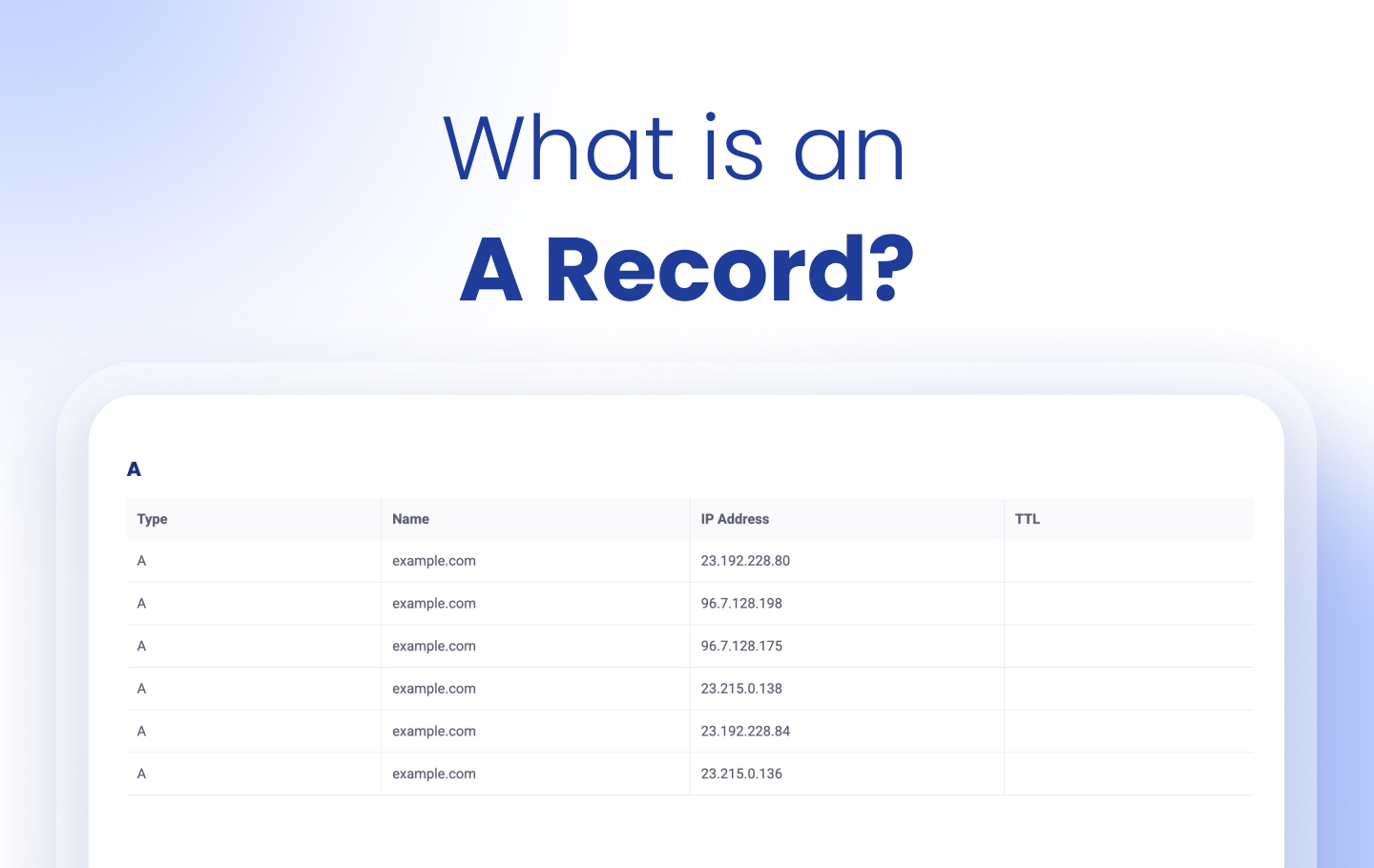
Unpacking the “A” in A Records: The Core Technology
At its heart, an A record, short for “Address record,” is a type of DNS record that maps a domain name to an IPv4 address. Without these records, the human-readable domain names we type into our browsers, like “google.com” or “yourbrand.com,” would be meaningless to computers, which communicate using numerical IP addresses.
The DNS System: Your Internet’s Phonebook
To fully grasp the significance of A records, we first need to understand the Domain Name System (DNS). Imagine the internet as a massive city with countless buildings, each with a unique numerical street address (an IP address, e.g., 192.0.2.1). However, people remember names better than numbers. The DNS acts as the city’s comprehensive phonebook, allowing you to find a building by its familiar name (e.g., “Empire State Building”) rather than needing to memorize its exact street address.
When you type a domain name into your web browser, your computer doesn’t instantly know where to find the corresponding website. Instead, it queries the DNS system, which translates that domain name into the correct IP address. This translation process, known as DNS resolution, is incredibly fast and occurs almost imperceptibly every time you access a website or send an email.
What an A Record Does: Mapping Names to Numbers
Within this DNS “phonebook,” an A record is specifically responsible for connecting a domain or subdomain (like www.example.com or blog.example.com) to the numerical IP address of the server where its content resides. For instance, an A record might tell the internet that yourcompany.com is located at 203.0.113.45. When you type yourcompany.com into your browser, the DNS system looks up the A record, finds 203.0.113.45, and directs your browser to that specific server.
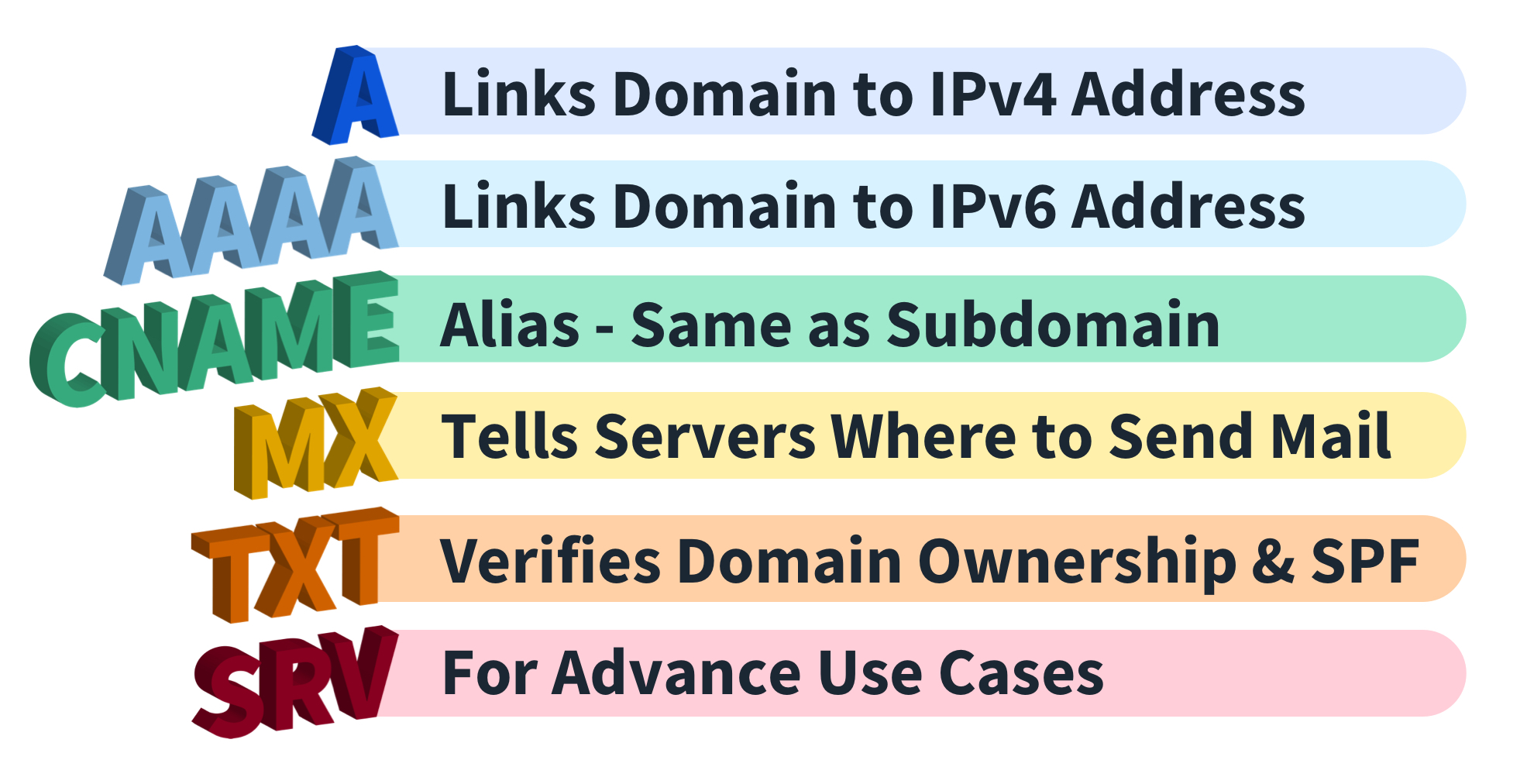
It’s important to distinguish A records from other types of DNS records. For example, a CNAME (Canonical Name) record points a domain or subdomain to another domain name, rather than directly to an IP address. While A records handle the direct name-to-IPv4 mapping, AAAA records perform the same function for IPv6 addresses, the newer standard for IP addresses. Both A and AAAA records are fundamental for ensuring modern websites are reachable.
How A Records Work in Practice: A Step-by-Step Overview
Let’s trace the journey of a request that relies on an A record:
- User Enters URL: You type
example.cominto your browser. - DNS Query: Your browser asks your operating system (OS) to find
example.com. Your OS checks its local cache and then typically forwards the request to your configured DNS resolver (often provided by your ISP). - Recursive Search: The DNS resolver doesn’t know the answer immediately. It starts by asking a root nameserver, which directs it to the Top-Level Domain (TLD) nameserver (e.g., for
.com). - Authoritative Nameserver: The TLD nameserver then directs the resolver to the authoritative nameserver for
example.com. This is the server that holds the definitive DNS records for that specific domain. - A Record Lookup: The authoritative nameserver provides the A record for
example.com, which contains the IP address (e.g.,93.184.216.34). - Connection Established: The DNS resolver sends this IP address back to your browser, which then uses the IP address to connect directly to the web server hosting
example.comand load the website.
This entire process usually happens within milliseconds, showcasing the efficiency and critical role of A records in delivering web content to users seamlessly.
Key Components of an A Record
Every A record typically consists of a few essential pieces of information:
- Host/Name: This specifies the domain or subdomain to which the IP address is mapped. It can be
@(representing the root domain, e.g.,yourcompany.com) or a specific subdomain (e.g.,www,blog,shop). - Value/Target: This is the actual IPv4 address (e.g.,
192.0.2.1) of the server. - TTL (Time-To-Live): This numerical value (in seconds) tells DNS resolvers how long they should cache the A record before requesting a fresh copy from the authoritative nameserver. A shorter TTL means changes propagate faster but can increase the load on DNS servers, while a longer TTL reduces DNS traffic but delays updates.
A Records and Your Brand: Building a Reliable Online Identity
In today’s digital age, a brand’s online presence is paramount. Websites, online stores, and digital communication channels are often the first, and sometimes only, touchpoints customers have with a brand. A records, while technical, play an incredibly significant role in shaping this digital identity and influencing brand perception.
Ensuring Website Accessibility and User Experience
The most direct impact of A records on your brand is fundamental accessibility. If your website’s A record is incorrectly configured, missing, or pointing to the wrong IP address, your website becomes unreachable. For users, this results in error messages like “site can’t be reached” or “server not found.” This immediate breakdown in accessibility directly translates to a negative user experience.
A brand that is consistently unavailable, slow to load due to DNS resolution issues, or prone to errors, rapidly erodes trust and frustrates potential customers. In an era where user patience is thin, a flawless and immediate connection to your brand’s digital storefront or information hub is non-negotiable. A robust A record setup ensures that when a user types your domain name, they seamlessly land on your intended destination, reinforcing reliability and professionalism.
The Role of A Records in Branding Consistency
Your domain name is a core component of your brand’s online identity. It’s how customers remember you, how they find you, and how they perceive your professionalism. A records ensure that this branded domain name consistently resolves to the correct online assets. Whether it’s yourbrand.com, shop.yourbrand.com, or blog.yourbrand.com, each needs its own precise A record (or other DNS record like CNAME) to direct traffic appropriately.
This consistency extends beyond just the main website. Email services, for example, rely on DNS records (specifically MX records, which in turn might point to servers defined by A records) to function correctly, ensuring brand-aligned email addresses (info@yourbrand.com) work without a hitch. By meticulously managing these records, brands can maintain a unified and professional online presence across all their digital touchpoints.
Protecting Your Brand: Security and Redundancy
A records are also critical in the realm of digital security and brand protection. Incorrectly configured or compromised A records can lead to serious vulnerabilities. For example, if a malicious actor gains control of your DNS records, they could alter your A record to point your domain name to a fraudulent website (a practice known as “pharming”). Users trying to reach your legitimate brand site would then be redirected to a phishing site, potentially exposing sensitive data and severely damaging your brand’s reputation and customer trust.
Implementing DNS security measures like DNSSEC (DNS Security Extensions) can help prevent such attacks by adding cryptographic authentication to DNS data. Furthermore, strategic A record deployment can contribute to redundancy and failover planning. By using multiple A records for the same domain (known as round-robin DNS) or leveraging content delivery networks (CDNs) that distribute traffic across many IP addresses, brands can ensure their website remains available even if one server goes offline, protecting their reputation for reliability.
SEO Implications of Robust A Record Management
Search Engine Optimization (SEO) is intrinsically linked to a website’s technical foundation, and A records play a subtle yet significant role. Search engines prioritize websites that are consistently available, fast, and secure.
- Uptime: If your A record is misconfigured and causes downtime, search engine crawlers will repeatedly encounter errors. Persistent downtime can lead to lower search rankings or even temporary de-indexing, severely impacting your brand’s visibility.
- Speed: While DNS lookup is usually fast, an inefficient DNS infrastructure (e.g., slow DNS providers or high TTLs during updates) can add milliseconds to page load times. Even small delays can negatively impact user experience and, consequently, SEO rankings, especially on mobile.
- Authoritativeness: Correct A records ensure search engines consistently find your main domain and all its subdomains, contributing to the perceived authority and coherence of your brand’s digital footprint.
The Monetary Impact: How A Records Influence Your Bottom Line
Beyond their technical necessity and branding implications, A records hold significant financial weight for businesses of all sizes. From safeguarding revenue streams to ensuring business continuity, their proper management directly correlates with a company’s financial health.

Preventing Downtime: The Cost of Disconnection
Perhaps the most direct financial impact of A records stems from their role in preventing website downtime. If an A record fails or points to an incorrect server, your website is effectively offline. For an e-commerce business, this means immediate and quantifiable lost sales. For a service-based business, it could mean missed leads, inability to deliver services, or a breakdown in critical communication channels.
Consider the ripple effect:
- Lost Revenue: Every minute of downtime during peak hours can translate into thousands or even millions of dollars in lost sales, depending on the scale of the business.
- Reduced Productivity: Employees reliant on internal web applications or external tools accessible via domain names are rendered unproductive if DNS resolution fails.
- Reputation Damage: Repeated outages or slow access can drive customers to competitors, eroding brand loyalty and future revenue potential. Repairing a damaged reputation often requires significant marketing spend.
- SLA Penalties: Businesses hosting applications or providing services to other companies might face penalties for not meeting Service Level Agreements (SLAs) due to DNS-related downtime.
The cost of downtime is not just hypothetical; major outages (often involving DNS issues) have cost large corporations millions in a matter of hours. Investing in robust DNS management and understanding A records is a direct investment in business continuity and revenue protection.
Enabling E-commerce and Online Business Operations
For businesses that derive revenue directly from online transactions, A records are the silent enablers of their entire financial operation. An online store, a SaaS platform, a digital subscription service – all rely on A records to direct customers to the correct servers to process payments, deliver content, and manage user accounts.
Without a functioning A record, the path from customer interest to completed purchase is broken. Payment gateways cannot be reached, product databases become inaccessible, and order confirmations cannot be processed. In essence, the entire infrastructure supporting online income streams collapses. For companies relying on online advertising revenue, correct A record mapping ensures that ads are served on legitimate pages, validating impressions and clicks that translate into income. Financial tools and platforms, too, depend on accurate DNS for their operations, ensuring secure and reliable access to sensitive financial data.
Cost-Effective Management of Your Digital Assets
While A records themselves don’t typically incur direct costs beyond the general expenses of domain registration and DNS hosting, their efficient management can lead to significant cost savings. Choosing a reliable, high-performance DNS provider, for example, can be a cost-effective alternative to suffering expensive downtime.
Furthermore, a clear understanding of A records and other DNS configurations can help businesses avoid costly errors. Misconfigurations can lead to unnecessary troubleshooting expenses, wasted engineering hours, or even the need for emergency, high-cost solutions to restore service. Investing in training for IT staff on DNS best practices can be a prudent financial decision, preventing future liabilities. On the flip side, efficient management can also mean optimizing server resources by directing traffic effectively, leading to lower hosting costs.
The Investment in a Resilient Digital Infrastructure
Viewing robust A record management as an investment rather than an expense is crucial for financial planning. Just as a physical business invests in its premises, security systems, and infrastructure, a digital business must invest in its online infrastructure. A resilient DNS setup, powered by well-managed A records, contributes to:
- Scalability: Easily add new subdomains for new products or services by creating new A records.
- Reliability: Ensure consistent access, even during traffic spikes or localized outages, by leveraging advanced DNS features like load balancing or geo-DNS.
- Security: Protect against financial fraud and data breaches by implementing secure DNS practices.
These factors directly influence a company’s long-term financial stability, growth potential, and ability to attract and retain customers in a competitive digital marketplace.
Advanced Considerations and Best Practices for A Record Management
For those looking to optimize their digital presence beyond the basics, a deeper dive into A record management reveals several advanced considerations and best practices that can significantly enhance performance, security, and reliability.
Understanding TTL (Time-To-Live) for Optimal Performance
The Time-To-Live (TTL) value of an A record is a critical setting that dictates how long DNS resolvers (like your ISP’s server or your computer’s cache) should store the record before requesting an updated version from the authoritative nameserver.
- Short TTL (e.g., 300 seconds or 5 minutes): Ideal when you anticipate making frequent changes to your IP address (e.g., migrating servers). Changes propagate faster across the internet, minimizing downtime during transitions. However, a very short TTL can increase the load on your authoritative nameservers, as resolvers will query them more frequently.
- Long TTL (e.g., 3600 seconds or 1 hour, or even 24 hours): Suitable for stable IP addresses that rarely change. It reduces the number of DNS queries to your authoritative nameservers, potentially improving overall DNS performance and reducing overhead. The trade-off is that if you need to change your IP address, it will take longer for the updates to propagate globally, leading to a longer period of potential inconsistency.
Choosing the right TTL is a strategic decision that balances the need for rapid updates with the desire for reduced DNS traffic and faster resolution from cached entries.
DNS Security: Protecting Against Attacks
Given the foundational role of A records, they are unfortunately a target for various cyberattacks. Securing your DNS infrastructure is paramount to protecting your brand and financial assets.
- DNSSEC (DNS Security Extensions): This suite of extensions adds cryptographic signatures to DNS records, allowing resolvers to verify the authenticity of the data they receive. DNSSEC helps prevent DNS spoofing and cache poisoning, where attackers try to redirect traffic to malicious sites by providing forged DNS responses. Implementing DNSSEC is a vital step for any serious digital operation.
- DDoS Protection for DNS Servers: Distributed Denial of Service (DDoS) attacks can target DNS servers, overwhelming them with traffic and preventing legitimate queries from being resolved. Using a DNS provider with robust DDoS protection is essential.
- Access Control: Ensure strict access controls are in place for managing your DNS records. Only authorized personnel should have the ability to modify A records, and strong authentication (like two-factor authentication) should be enforced.
- Regular Audits: Periodically review your A records and other DNS settings for any unauthorized changes or misconfigurations.
Redundancy and Failover Strategies
A single point of failure in your A record configuration can lead to complete website outages. Implementing redundancy and failover strategies can significantly enhance resilience.
- Multiple A Records (Round Robin DNS): You can configure multiple A records for the same domain, each pointing to a different IP address. DNS resolvers will then cycle through these IP addresses, distributing traffic across multiple servers. If one server goes down, traffic can still be directed to the others. While simple, this method lacks intelligence; it won’t automatically detect a downed server and stop sending traffic to it unless combined with other solutions.
- Anycast DNS: Many premium DNS providers use Anycast networking, which routes user queries to the closest available DNS server among a global network. This improves resolution speed and provides inherent redundancy, as requests are automatically rerouted if a local server fails.
- Content Delivery Networks (CDNs): CDNs place copies of your website’s static content on servers distributed globally. When a user requests your content, they are served by the nearest CDN server. CDNs often integrate with DNS, and while they use A records themselves, they abstract much of the complexity, providing significant performance and redundancy benefits.
- Managed DNS Services with Health Checks: Advanced DNS services can include health checks that continuously monitor the availability of your web servers. If a server becomes unreachable, the DNS service can automatically update your A records (or switch to a backup IP) to direct traffic away from the faulty server, enabling seamless failover.
Monitoring Your A Records: Staying Proactive
The adage “what gets measured gets managed” certainly applies to A records. Proactive monitoring is crucial to detect issues before they impact users and revenue.
- Uptime Monitoring Services: Utilize third-party services that monitor your website’s availability from various global locations. Many of these services can also monitor DNS resolution times.
- DNS Propagation Tools: When you make changes to your A records, use online tools to check DNS propagation across different DNS servers globally, ensuring your updates are taking effect as expected.
- Logging and Alerting: Ensure your DNS provider offers logging of queries and changes, and set up alerts for any unusual activity or failures in DNS resolution.
- Regular Review: Periodically review your DNS zone files to ensure all records are current, accurate, and optimized for your current infrastructure.
By embracing these advanced considerations and best practices, businesses can move beyond merely having functional A records to having a truly resilient, high-performing, and secure DNS infrastructure that actively supports their tech, brand, and financial objectives.
Conclusion: The Unsung Hero of the Internet
From the fundamental process of navigating to a website to the intricate dance of global e-commerce, A records are the unsung heroes facilitating nearly every digital interaction. While often hidden behind the scenes, their correct configuration and robust management are absolutely critical for individuals and businesses alike.
For the tech-savvy, A records represent a core building block of network infrastructure, a testament to the elegant simplicity of the internet’s design. For brand builders, they are the silent guardians of online presence, ensuring accessibility, trust, and consistency in a competitive digital world. And for those focused on money and finance, A records are a direct determinant of business continuity, revenue generation, and financial security.
Ignoring the importance of A records is akin to building a skyscraper without a solid foundation – it might stand for a while, but it’s inherently vulnerable. As our reliance on the digital realm continues to grow, so too does the imperative to understand and meticulously manage these foundational elements. Investing in robust DNS strategies, securing your A records, and embracing best practices is not just a technical chore; it’s a strategic imperative for safeguarding your digital future, protecting your brand, and ensuring your financial success in the interconnected world.
aViewFromTheCave is a participant in the Amazon Services LLC Associates Program, an affiliate advertising program designed to provide a means for sites to earn advertising fees by advertising and linking to Amazon.com. Amazon, the Amazon logo, AmazonSupply, and the AmazonSupply logo are trademarks of Amazon.com, Inc. or its affiliates. As an Amazon Associate we earn affiliate commissions from qualifying purchases.