
The Toyota Yaris, particularly in its 1.5-liter guise, has long been a celebrated subcompact car, lauded for its efficiency, reliability, and practicality. While its exterior styling and interior comfort often take center stage in consumer discussions, the true heart of this vehicle lies within its engine. Understanding the intricacies of the 1.5L engine isn’t just for the mechanically inclined; for those interested in technology, performance, and the evolution of automotive engineering, it offers a fascinating glimpse into how modern vehicles are designed to balance power, economy, and environmental responsibility. This exploration will delve into the technological underpinnings of the Toyota Yaris 1.5L engine, examining its core components, operational principles, and the innovations that make it a standout in its segment.
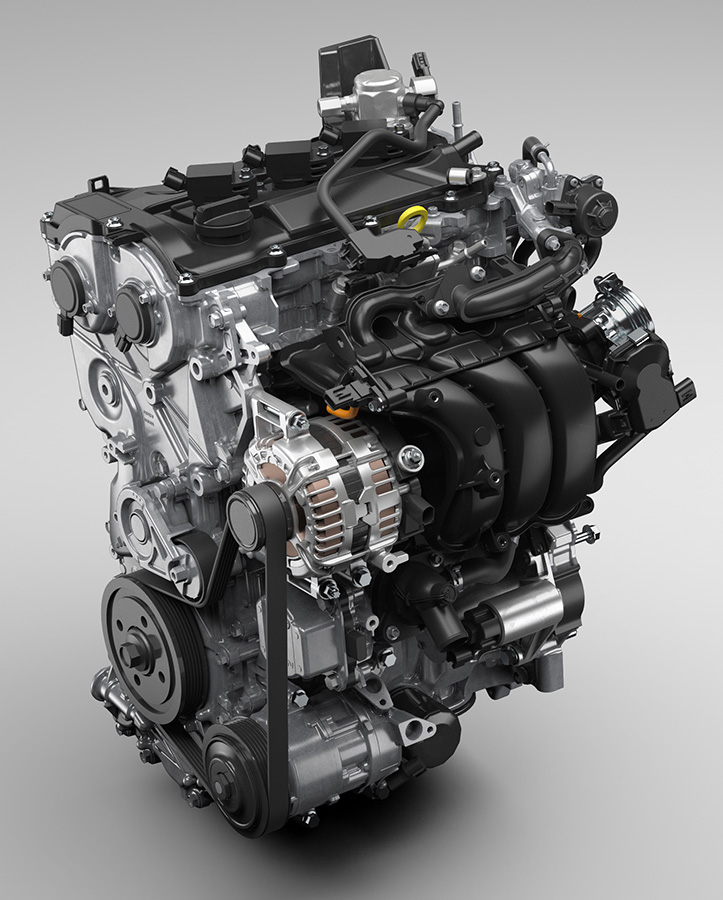
The Foundation: Understanding the Toyota Yaris 1.5L Engine Architecture
At its core, the Toyota Yaris 1.5L engine is a testament to decades of refinement in internal combustion engine technology. Toyota’s philosophy of continuous improvement, often referred to as “Kaizen,” is evident in the meticulous design and engineering of this powerplant. The 1.5-liter displacement signifies the total volume swept by the pistons within the cylinders during one complete engine cycle. This size is a carefully chosen balance point, offering sufficient power for everyday driving while remaining highly fuel-efficient.
Displacement and Cylinder Configuration: The Building Blocks of Power
The 1.5-liter designation points to a specific displacement, which directly influences an engine’s power output and fuel consumption. Larger displacements generally produce more power but consume more fuel. Toyota has opted for a 1.5L configuration in the Yaris to strike an optimal equilibrium. This displacement is typically achieved through a specific bore (diameter of the cylinder) and stroke (distance the piston travels within the cylinder).
For the Yaris 1.5L, the most common configuration utilizes an inline-four cylinder layout. This means four cylinders are arranged in a straight line. This configuration is favored for its balance, relatively compact size, and smooth operation compared to other cylinder arrangements like V-engines or boxer engines. The inline-four is a workhorse of the automotive industry, and Toyota has perfected its design over many generations. Each cylinder houses a piston that moves up and down, driven by the controlled combustion of fuel and air. The collective movement of these pistons translates into rotational force at the crankshaft, which ultimately powers the vehicle’s wheels.
Valvetrain Technology: Dictating Airflow and Combustion Efficiency
The valvetrain is a critical system responsible for controlling the intake of the air-fuel mixture and the expulsion of exhaust gases from the engine’s cylinders. In modern Yaris 1.5L engines, this system typically employs Double Overhead Camshafts (DOHC). This means there are two camshafts located in the cylinder head, one operating the intake valves and the other operating the exhaust valves.
DOHC vs. SOHC: The Advantages of Dual Camshafts
DOHC configurations offer several advantages over Single Overhead Camshaft (SOHC) systems. With two camshafts, Toyota can independently control the timing and lift of both intake and exhaust valves. This precise control allows for optimized airflow into the cylinder during the intake stroke and efficient expulsion of exhaust gases during the exhaust stroke. This, in turn, leads to improved combustion efficiency, better power delivery across the rev range, and enhanced fuel economy. The DOHC setup also allows for more valves per cylinder (typically two intake and two exhaust valves), further improving breathing and performance.
Fuel Delivery System: Precision and Efficiency
The method by which fuel is delivered to the engine’s cylinders is a crucial determinant of performance, efficiency, and emissions. Modern Yaris 1.5L engines predominantly feature a sophisticated Electronic Fuel Injection (EFI) system. This technology has largely replaced older carburetor systems due to its superior precision and adaptability.
Direct Injection vs. Port Injection: The Evolution of Fuel Delivery
Within EFI, a key distinction lies between Port Injection and Direct Injection. In Port Injection, fuel is injected into the intake manifold, just before the intake valve. The air and fuel mix in the port before entering the combustion chamber. In Direct Injection (often abbreviated as GDI for Gasoline Direct Injection), fuel is injected directly into the combustion chamber itself.
Toyota has utilized both port injection and, in more recent iterations, direct injection for its 1.5L engines depending on the specific model year and market. Direct injection offers several technological advantages:
- Improved Fuel Atomization: Injecting fuel directly into the hot combustion chamber allows for finer atomization, leading to more complete combustion.
- Precise Fuel Control: The engine control unit (ECU) can meter fuel with extremely high accuracy, optimizing the air-fuel ratio for various operating conditions.
- Cooling Effect: The evaporation of injected fuel within the cylinder has a cooling effect, which can increase the engine’s compression ratio without causing knock (pre-ignition), thereby enhancing efficiency and power.
- Reduced Emissions: Precise fuel control and efficient combustion contribute to lower harmful emissions.
The specific implementation of fuel injection in a Yaris 1.5L will depend on the generation of the vehicle, but the trend has been towards increasingly sophisticated systems that prioritize both performance and environmental consciousness.
Key Technologies Enhancing Performance and Efficiency
Beyond the fundamental architectural elements, Toyota integrates several advanced technologies into its 1.5L Yaris engines to maximize their potential. These innovations are not mere add-ons but integral components of the engine’s design, reflecting a commitment to cutting-edge automotive engineering.
Variable Valve Timing (VVT): Adapting to Every Demand
One of the most significant technological advancements in modern internal combustion engines is Variable Valve Timing (VVT). Toyota’s implementation, often branded as VVT-i (Variable Valve Timing with intelligence), is a cornerstone of the Yaris 1.5L’s performance and efficiency.
How VVT-i Optimizes Engine Operation

VVT-i technology allows the engine’s control unit to adjust the timing of the intake and/or exhaust valves relative to the crankshaft’s rotation. This adjustment is made dynamically based on engine speed, load, and temperature.
- At Low Engine Speeds: Valve timing is optimized for smoother idle operation and better low-end torque.
- At Mid-Range Speeds: Timing is adjusted for a balance of power and fuel efficiency.
- At High Engine Speeds: Valve timing is advanced to allow for maximum airflow, boosting top-end power.
By continuously optimizing valve timing, VVT-i ensures the engine breathes optimally under all driving conditions, leading to improved throttle response, increased power output, and significantly better fuel economy, while also helping to reduce emissions. Some VVT-i systems can also adjust valve lift, further enhancing breathing capabilities.
Atkinson Cycle vs. Miller Cycle: Fuel-Saving Strategies
While many gasoline engines operate on the traditional Otto cycle, some implementations of Toyota’s smaller displacement engines, including certain versions of the 1.5L found in hybrids and sometimes even standard models, might employ variations of the Atkinson Cycle or Miller Cycle. These cycles are designed to prioritize fuel efficiency, often at the expense of peak power, making them ideal for hybrid powertrains where electric motors can compensate for lower combustion engine torque.
Understanding the Efficiency Gains
The Atkinson cycle is characterized by a longer expansion stroke than compression stroke for the same cylinder volume. This means that after combustion, the gases expand more, extracting more energy from the fuel. While this reduces the engine’s pumping losses and improves thermal efficiency, it can also lead to lower torque. The Miller cycle is similar but uses an oversized or undersized supercharger or turbocharger to control the amount of air entering the cylinder, effectively mimicking the Atkinson cycle’s efficiency benefits while mitigating some of its power limitations.
When a 1.5L Yaris engine utilizes an Atkinson or Miller cycle, it’s a strategic technological choice aimed at maximizing miles per gallon and minimizing environmental impact, particularly in hybrid variants where it works in tandem with electric motors.
Engine Management System (EMS) and Sensors: The Brains of the Operation
The Engine Management System (EMS), often referred to as the Engine Control Unit (ECU) or Powertrain Control Module (PCM), acts as the central computer governing the engine’s operation. This sophisticated electronic system relies on a network of sensors to gather real-time data about the engine’s environment and performance.
The Role of Sensors in Optimizing Performance
These sensors provide critical input to the ECU, enabling it to make instantaneous adjustments to fuel injection, ignition timing, valve timing, and other parameters. Key sensors include:
- Oxygen Sensors (O2 Sensors): Measure the amount of oxygen in the exhaust gases, allowing the ECU to fine-tune the air-fuel mixture for optimal combustion and emissions control.
- Mass Airflow (MAF) Sensor: Measures the amount of air entering the engine, crucial for calculating the correct amount of fuel to inject.
- Crankshaft Position Sensor: Determines the engine’s rotational speed and piston position, essential for precise ignition timing.
- Camshaft Position Sensor: Identifies the position of the camshafts, used in conjunction with the crankshaft position sensor for sequential fuel injection and valve timing control.
- Throttle Position Sensor (TPS): Informs the ECU about how far the throttle pedal is pressed, indicating driver demand.
- Knock Sensor: Detects engine knocking or pinging, allowing the ECU to retard ignition timing to prevent engine damage.
The intricate interplay between the EMS and these sensors allows the Yaris 1.5L engine to operate with exceptional efficiency, responsiveness, and compliance with stringent emissions regulations.
The Yaris 1.5L in Context: Evolution and Future Trends
The 1.5L engine in the Toyota Yaris is not a static entity; it’s a product of continuous evolution, reflecting advancements in automotive technology. Each generation of the Yaris, and indeed each model update, typically brings subtle or significant improvements to its powertrain.
Generations of the Yaris 1.5L: A Historical Perspective
Tracing the lineage of the Yaris 1.5L reveals a consistent focus on efficiency and reliability, with progressive integration of new technologies. Early models might have utilized simpler fuel injection systems and less sophisticated valve timing. As the Yaris evolved, so did its engine, incorporating DOHC, VVT-i, and eventually, in some markets and hybrid variants, more advanced combustion cycles and direct injection. This progression highlights Toyota’s commitment to staying at the forefront of engine technology.
Hybrid Synergy Drive: A Glimpse into the Future
While the primary focus here is on the standard 1.5L gasoline engine, it’s impossible to discuss the Yaris’s powertrain without acknowledging its significant role in Toyota’s Hybrid Synergy Drive system. In hybrid Yaris models, the 1.5L engine is often paired with electric motors, sophisticated power split devices, and a battery pack. This integration allows the engine to operate in its most efficient range, or to be shut off entirely when electric power is sufficient. The use of the Atkinson cycle is particularly prevalent in these hybrid applications, maximizing the synergy between the gasoline engine and electric propulsion. This hybrid technology represents a crucial stepping stone towards more electrified and sustainable automotive futures.

Future Outlook: Efficiency and Electrification
Looking ahead, the trend in automotive powertrains, including for subcompacts like the Yaris, is a continued push towards greater efficiency and electrification. While the internal combustion engine will likely remain relevant for some time, its role is evolving. We can expect further refinements in combustion efficiency, friction reduction, and potentially, a more widespread adoption of hybrid and plug-in hybrid technologies for the Yaris. The 1.5L engine, given its already optimized design for efficiency, is well-positioned to continue serving as a capable and adaptable powerplant in an increasingly electrified automotive landscape.
In conclusion, the engine that powers the Toyota Yaris 1.5L is a sophisticated piece of engineering, embodying Toyota’s dedication to technological advancement. From its fundamental architecture to its integrated VVT-i system and precise fuel management, it represents a harmonious blend of performance, efficiency, and environmental consciousness, making it a compelling choice for discerning drivers and a testament to the ongoing innovation in automotive technology.
aViewFromTheCave is a participant in the Amazon Services LLC Associates Program, an affiliate advertising program designed to provide a means for sites to earn advertising fees by advertising and linking to Amazon.com. Amazon, the Amazon logo, AmazonSupply, and the AmazonSupply logo are trademarks of Amazon.com, Inc. or its affiliates. As an Amazon Associate we earn affiliate commissions from qualifying purchases.