
The enduring image of the green light at the end of Daisy Buchanan’s dock, pulsing across the water in F. Scott Fitzgerald’s The Great Gatsby, has transcended its literary origins to become a potent symbol. While often discussed in terms of love, hope, and the elusive American Dream, its meaning can also be powerfully understood through the lens of brand symbolism. In the world of branding, symbols are not mere decorations; they are carefully crafted anchors that communicate values, aspirations, and identity. The green light, in its narrative context, functions remarkably like a powerful brand emblem, embodying a complex set of desirable attributes that resonate deeply with its target audience – in this case, Jay Gatsby and, by extension, the readers who engage with his story.
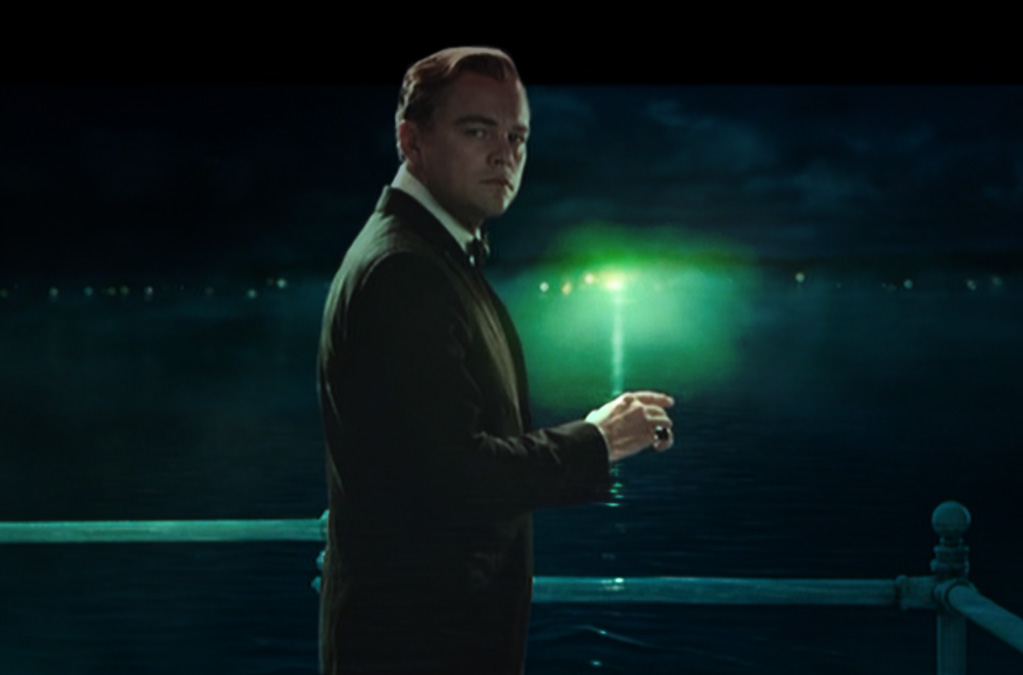
Understanding the green light’s significance as a brand symbol requires us to unpack its core components: its visual nature, its aspirational projection, and its ultimate unattainability. These elements, when considered within a branding framework, reveal how Fitzgerald masterfully constructed an emblem that evokes a powerful emotional response and serves as a focal point for Gatsby’s entire persona and life’s pursuit.
The Emerald Emblem: Visual Cues and Initial Brand Association
The initial impact of the green light is undeniably visual. It is a singular point of luminescence against the vast darkness of the night and the expanse of water separating Gatsby from Daisy. In branding, the visual element is paramount. A logo, a color palette, a specific typeface – these are the initial touchpoints that an audience has with a brand. The green light, as an object, is simple yet striking.
The Power of Color Psychology: Green and Its Connotations
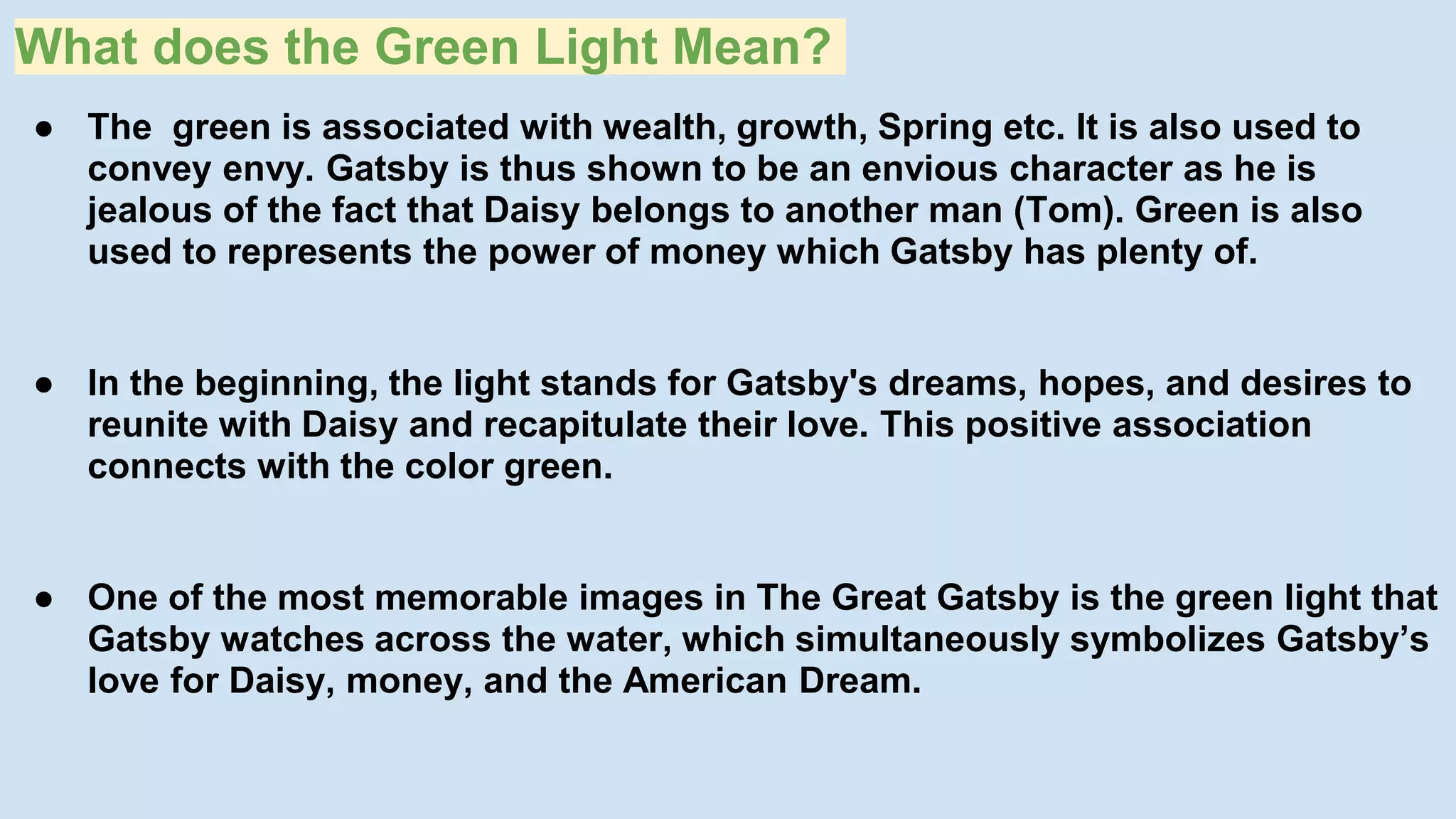
Green, as a color, carries a rich tapestry of pre-existing connotations that Fitzgerald expertly taps into. In Western culture, green is overwhelmingly associated with nature, growth, fertility, and life. However, it also possesses a powerful connection to wealth and prosperity. This is not just an abstract association; green is the color of currency in many parts of the world, most notably American dollars. This immediate link to financial success is crucial for understanding Gatsby’s motivations and how he positions himself.
For Gatsby, the green light is not just about Daisy’s presence; it is about the lifestyle and the status that Daisy represents. Daisy, born into old money, embodies a level of privilege and social standing that Gatsby, the self-made man, desperately craves and believes he can achieve through sheer wealth. The green light, therefore, becomes a beacon not only of love but also of the material success he has amassed in his pursuit of her. It is the outward manifestation of his achievement, the tangible proof that he has “made it.”
In branding terms, the color green in this context would be a deliberate choice to associate Gatsby’s aspirations with financial success, vitality, and perhaps even a sense of natural entitlement to the life he desires. It’s a color that speaks of potential and the realization of dreams, particularly those tied to tangible wealth.
Distance and Desire: The Role of Physical Separation
The physical distance between Gatsby and the green light is also a critical element of its symbolic power, akin to how brands often position themselves as aspirational goals for consumers. The light is across the bay, an impassable expanse for much of the novel. This distance cultivates a sense of longing and elevates the object of desire.
In branding, a product or service can become aspirational when it is perceived as being just beyond reach, or when it represents a future state of being that the consumer wishes to attain. This could be a luxury car that symbolizes status, a cutting-edge gadget that signifies technological advancement, or a financial service that promises future security. The very act of reaching for something distant fuels desire and strengthens the perceived value of the target.
Gatsby’s gaze is perpetually fixed across the bay. This unwavering focus, directed at a distant, glowing beacon, perfectly encapsulates the psychological mechanism of desire fueled by separation. The green light is more potent because it is not immediately available. Its unattainability intensifies Gatsby’s longing and, by extension, elevates its symbolic importance within his personal narrative. It’s the ultimate “goal” that shapes his entire existence.
The American Dream Manifested: Aspiration and the Illusion of Attainment
The green light is inextricably linked to the broader concept of the American Dream, a national narrative that promises opportunity and upward mobility through hard work and determination. For Gatsby, the green light becomes the ultimate symbol of this dream, a personalized manifestation of his belief that he can achieve anything he sets his mind to, including reclaiming the past and winning back the love of Daisy.
Old Money vs. New Money: A Brand Identity Crisis
The novel starkly contrasts “old money” (represented by Tom and Daisy Buchanan) with “new money” (embodied by Gatsby). This distinction is critical to understanding the brand identity Gatsby is trying to construct. Old money represents an established, inherited status, a sense of inherent belonging. New money, while possessing immense wealth, often lacks the social polish and the deep-rooted acceptance that comes with lineage.
Gatsby’s brand is one of immense wealth, flamboyant displays, and a carefully curated persona. He has built his fortune through questionable means, but he presents it as a testament to his ambition and capability. The green light, therefore, is his attempt to bridge the gap between his newfound wealth and the inherited social standing that Daisy represents. It’s his brand promise: “I have achieved the pinnacle of financial success, and therefore, I am worthy of your love and your world.”
In branding terms, Gatsby is trying to convince his audience (primarily Daisy, but also society at large) that his manufactured brand is equivalent to, or even superior to, the established brands of the elite. The green light is his primary visual cue, his rallying symbol that suggests he has arrived, that his wealth has earned him a place at the table.
The Elusive Future: A Brand Promise That Fades
The tragic arc of The Great Gatsby lies in the fact that the green light, and what it represents, remains perpetually out of reach for Gatsby in its true, idealized form. While he achieves immense wealth and creates a lavish lifestyle, he cannot truly recapture the past or erase the social barriers that separate him from Daisy. The green light, in the end, becomes a symbol not just of aspiration but also of the illusion of attainment.
This is a powerful lesson in branding. A brand’s promise must be grounded in reality, or at least in a believable and achievable future state. When a brand over-promises or relies on an illusion that ultimately crumbles, the audience’s trust is eroded, and the brand’s credibility is shattered. Gatsby’s brand, built on the singular pursuit of an idealized Daisy and a past that cannot be rewritten, is ultimately unsustainable.
The green light, initially a beacon of hope and a symbol of achieved success, transforms into a haunting reminder of what Gatsby thought he could buy and attain. His relentless pursuit of this distant light leads him to a tragic end, highlighting the dangers of basing a brand identity and personal life on an unattainable ideal.
The Green Light as a Marketing Metaphor: Crafting Desire and Perpetuating Myth
Considering the green light as a branding element allows us to analyze Fitzgerald’s narrative through a marketing lens. Gatsby, in essence, is engaged in a sophisticated, albeit tragic, marketing campaign to win back Daisy. The green light is his most powerful marketing tool.
Target Audience and Positioning: Focusing on the Ideal Customer
Gatsby’s primary target audience is Daisy. His entire existence is dedicated to appealing to her desires and her world. He meticulously crafts his persona, his parties, and his wealth to position himself as the ultimate catch – a man who can provide the security, luxury, and perhaps even the romantic ideal she once knew. The green light is the ultimate symbol of this positioning, signifying his success and his enduring devotion.
In marketing, understanding the target audience is crucial. Brands invest heavily in market research to understand consumer needs, desires, and pain points. Gatsby, through his actions and his obsession with the green light, demonstrates an intuitive, though ultimately flawed, understanding of what Daisy values and what she represents to him.

The Myth-Making Power of Symbols: Creating a Narrative of Success
Brands thrive on narrative. They create stories that connect with consumers on an emotional level, imbuing their products or services with meaning beyond their functional purpose. The green light functions as a powerful myth-making tool for Gatsby. It transforms his immense wealth, acquired through shadowy means, into a romantic symbol of love and ambition.
The myth surrounding Gatsby is one of reinvention and extraordinary success. The green light is the shining emblem of this myth, a tangible representation of his extraordinary journey. It allows him to project an image of self-made destiny, a narrative that resonates deeply with the aspirational ideals of the American Dream. This is a classic branding strategy: create a compelling narrative, a myth that captures the imagination, and imbue it with a potent symbol that reinforces the message.
The tragedy of The Great Gatsby and the enduring power of the green light lie in the cautionary tale it offers about the pursuit of unattainable ideals and the superficiality that can underpin even the most glittering of brands. The green light, as a brand symbol, ultimately reveals the hollowness of a dream pursued without a true understanding of its essence, leaving behind a lingering question about the true cost of aspiration and the seductive, yet often deceptive, power of a well-placed beacon.
aViewFromTheCave is a participant in the Amazon Services LLC Associates Program, an affiliate advertising program designed to provide a means for sites to earn advertising fees by advertising and linking to Amazon.com. Amazon, the Amazon logo, AmazonSupply, and the AmazonSupply logo are trademarks of Amazon.com, Inc. or its affiliates. As an Amazon Associate we earn affiliate commissions from qualifying purchases.