
The term “polarised” in the context of eyewear might sound technical, but its meaning translates to a significant enhancement in visual comfort and clarity, particularly in environments with bright, reflective light. Polarised lenses are not just another sunglass tint; they represent a sophisticated optical technology designed to combat glare, a pervasive and often disruptive visual phenomenon. Understanding what polarised glasses mean delves into the physics of light and how this technology leverages it to offer a superior viewing experience.
This article will explore the technological underpinnings of polarised lenses, the tangible benefits they offer to users across various activities, and how to identify and appreciate this advanced eyewear feature.

The Science Behind Glare Reduction: How Polarisation Works
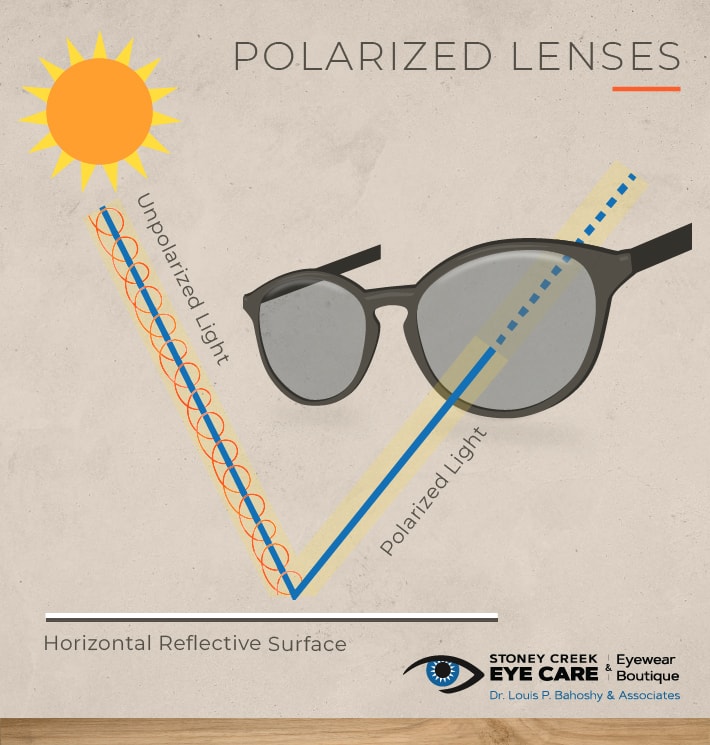
At its core, the meaning of polarised glasses is rooted in the way light behaves. Light waves travel in all directions, but when light reflects off smooth, horizontal surfaces like water, snow, roads, or even car bonnets, it becomes predominantly oriented horizontally. This horizontally polarised light is what we perceive as glare. It’s the blinding sheen that makes it difficult to see clearly, causes eye strain, and can be downright dangerous in situations like driving or water sports.
Light and its Properties
Light is an electromagnetic wave that oscillates in multiple directions. When light strikes a surface and bounces off, especially a non-metallic, smooth surface, the reflected light waves tend to align themselves in a particular direction. For horizontal surfaces, this alignment is predominantly horizontal. This phenomenon is known as polarisation. Think of it like a picket fence; if you try to push a rope through the gaps horizontally, it passes easily. If you try to push it vertically, it gets blocked. Polarised lenses act as this vertical barrier for light.
The Polarising Filter: A Selective Barrier
Polarised lenses contain a special chemical film that acts as a polarising filter. This filter is engineered to block horizontally polarised light while allowing vertically polarised light to pass through. The filter is oriented in such a way that it effectively cancels out the distracting horizontal glare. Imagine looking through a slot in a fence; you can only see what aligns with the slot. The polarising filter in sunglasses works similarly, blocking the horizontally oriented light waves that cause glare. This selective blocking is what gives polarised glasses their unique and beneficial properties.
The Contrast and Clarity Enhancement
Beyond simply reducing glare, polarisation also enhances visual contrast and colour perception. By removing the scattered, unoriented light that contributes to haze, polarised lenses allow for a clearer view of the actual colours and details of the scene. This is because the glare often washes out colours and obscures fine details. With the glare eliminated, colours appear more vibrant, and objects stand out with greater definition. This is particularly noticeable on overcast days or in environments with mixed lighting conditions.
The Practical Advantages of Polarised Eyewear
The technological principles behind polarised lenses translate into a host of practical benefits for anyone who spends time outdoors or in environments with significant light reflection. Understanding what polarised glasses mean in a real-world context highlights their value beyond mere fashion.
Enhanced Vision for Outdoor Activities
For athletes and outdoor enthusiasts, polarised glasses are an indispensable tool. When driving, glare from the road surface can be incredibly dangerous, impairing a driver’s ability to see hazards, traffic lights, or other vehicles. Polarised lenses significantly reduce this road glare, offering a safer and more comfortable driving experience.
On the water, whether it’s fishing, boating, or kayaking, glare from the water’s surface can make it impossible to see what’s beneath. Polarised sunglasses allow anglers to see fish and the seabed, and boaters to spot submerged obstacles or changes in water depth. Similarly, for skiers and snowboarders, glare reflecting off snow can cause disorientation and even temporary blindness. Polarised lenses cut through this glare, improving visibility on the slopes and reducing the risk of accidents.
Reduced Eye Strain and Fatigue

Constant exposure to glare, even at lower intensities, can lead to significant eye strain and fatigue. The eyes constantly try to adjust and compensate for the blinding reflections, leading to discomfort, headaches, and a general feeling of tiredness. By filtering out this harsh glare, polarised lenses allow the eyes to relax, reducing strain and improving overall visual comfort, especially during prolonged outdoor exposure. This makes them ideal for everyday wear, not just for specific activities.
Improved Depth Perception and Colour Vibrancy
The ability of polarised lenses to filter out scattered light also leads to an improved sense of depth perception. When glare is present, it can flatten the visual field, making it harder to judge distances accurately. By restoring a clearer view, polarised lenses help to make landscapes appear more three-dimensional. Furthermore, as mentioned earlier, the removal of glare allows colours to appear richer and more true to life. This enhancement is subtle but noticeable, contributing to a more pleasing and engaging visual experience.
Identifying and Appreciating Polarised Technology
Distinguishing between standard tinted sunglasses and true polarised eyewear involves understanding what polarised glasses mean in terms of their construction and performance. While the visual benefits are the most apparent indicator, there are also practical tests one can perform to confirm the presence of polarisation.
Visual Cues and Performance Indicators
The most obvious sign that you are wearing polarised glasses is the dramatic reduction or complete elimination of glare. When you look at a reflective surface like water or a wet road with polarised sunglasses on, the blinding sheen will either disappear or become significantly muted. You will be able to see through the surface more clearly. Another common observation is that LCD screens, such as those on car dashboards or smartphones, can appear to dim or even turn black when viewed through polarised lenses at certain angles. This is because the light emitted by these screens is also polarised, and the orientation of the polarising filter in the glasses clashes with the screen’s polarisation.
Testing for Polarisation
There are a few simple tests you can perform to determine if a pair of sunglasses is indeed polarised.
The LCD Screen Test
This is perhaps the most common and easiest test. Take the sunglasses and look at an LCD screen (like a phone or computer monitor) through them. Rotate your head or the sunglasses. If the screen’s brightness changes significantly, or if it appears to go dark or even black at a certain angle, then the sunglasses are polarised. Standard tinted sunglasses will simply dim the screen uniformly without the dramatic angle-dependent changes.
The Two-Pair Test
If you have a pair of sunglasses you know are polarised and a pair you suspect might be, you can test them against each other. Hold both pairs of sunglasses in front of your eyes, one directly on top of the other. Then, rotate the top pair by 90 degrees. If both pairs are polarised and oriented correctly, the view will become very dark or completely black. If one pair is not polarised, or if they are polarised but oriented in the same direction, this effect will not occur. This test works because when two polarising filters are crossed at 90 degrees, they block all light.
The Reflection Test
This test involves looking at a bright, reflective surface like a window or a body of water. Without the sunglasses, the glare will be noticeable. Put on the sunglasses. If the glare is significantly reduced and you can see more clearly into or through the surface, then the sunglasses are polarised. This is the direct benefit you are seeking when choosing polarised eyewear.
Beyond the Tint: Understanding Lens Technology
It’s crucial to understand that polarisation is a function of the lens filter itself, not the colour of the tint. Polarised lenses come in various tints, including grey, brown, and green, each offering slightly different visual effects. Grey lenses reduce brightness without altering colours. Brown and amber lenses enhance contrast and are excellent for driving and everyday wear, making colours appear warmer. Green lenses offer a good balance of contrast enhancement and colour fidelity. Therefore, the effectiveness of polarisation is independent of the cosmetic tint. When considering polarised glasses, it’s about the technology embedded within the lens that actively combats glare, leading to a clearer, more comfortable, and safer visual experience.
aViewFromTheCave is a participant in the Amazon Services LLC Associates Program, an affiliate advertising program designed to provide a means for sites to earn advertising fees by advertising and linking to Amazon.com. Amazon, the Amazon logo, AmazonSupply, and the AmazonSupply logo are trademarks of Amazon.com, Inc. or its affiliates. As an Amazon Associate we earn affiliate commissions from qualifying purchases.