
The phrase “dump the clutch” is more than just a colloquialism in the automotive world; it represents a specific, albeit often aggressive, technique for engaging the clutch in a manual transmission vehicle. While seemingly straightforward, understanding what it means and the implications of its execution can illuminate fundamental principles of vehicle operation, mechanical interaction, and even broader concepts of control and efficiency within the realm of technology. In this exploration, we will delve into the technical intricacies of “dumping the clutch,” examining its mechanics, the scenarios where it’s employed, and the technological underpinnings that govern its behavior. This dive into a seemingly simple automotive action will reveal connections to broader technological principles of rapid engagement, power transfer, and performance optimization, firmly placing its discussion within the Tech niche.
The Mechanical Ballet: Understanding Clutch Engagement
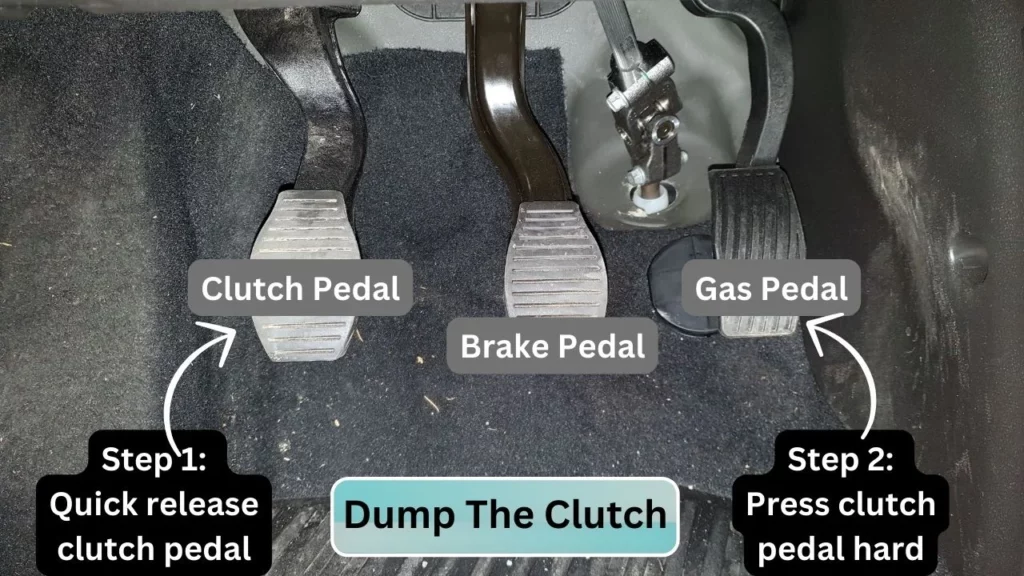
At its core, “dumping the clutch” refers to the rapid release of the clutch pedal in a manual transmission vehicle, typically when engaging a gear. To truly grasp this, we must first understand the function of a clutch itself. The clutch is a mechanical device that allows for the engagement and disengagement of the engine from the transmission. It’s a crucial intermediary, enabling the driver to change gears smoothly or to stop the vehicle without stalling the engine.
The Role of the Clutch System
The clutch system in a manual transmission automobile consists of several key components: the clutch pedal, the clutch master cylinder and slave cylinder (in hydraulic systems), the clutch disc, the pressure plate, and the flywheel. When the clutch pedal is depressed, it disengages the clutch, effectively separating the engine’s spinning crankshaft from the transmission’s input shaft. This allows the gears within the transmission to be shifted without resistance. When the pedal is released, the clutch engages, creating a friction interface between the spinning flywheel (attached to the engine) and the pressure plate (which in turn clamps the clutch disc against the flywheel). This friction then transmits the engine’s power to the transmission and ultimately to the wheels.
The Spectrum of Clutch Engagement
The process of engaging the clutch, or “letting the clutch out,” exists on a spectrum. At one end is a slow, deliberate release, known as feathering the clutch. This technique involves gradually increasing the friction between the clutch disc and the flywheel, allowing for a smooth transfer of power. It’s often used for starting from a standstill on an incline or for precise low-speed maneuvering.
At the other end of this spectrum is “dumping the clutch.” This involves releasing the clutch pedal very quickly, often almost instantaneously. The intention here is to establish a direct and immediate connection between the engine and the drivetrain. This rapid engagement can result in a jolt or lurch as the engine’s rotational speed is abruptly matched to the transmission’s input shaft, which is already connected to the driven wheels.
The “Dump” in Context: Scenarios and Motivations
The decision to “dump the clutch” is not arbitrary; it’s a technique employed in specific situations, driven by a need for immediate acceleration or a particular type of performance. While often associated with aggressive driving or racing, it has practical applications and a clear technological rationale behind its use.
Performance Driving and Launch Control
In performance driving, especially in motorsports or for enthusiastic street driving, “dumping the clutch” is a technique used to achieve the quickest possible start from a standstill. This is often referred to as a “clutch dump launch.” The goal is to minimize the time it takes to transfer maximum engine power to the wheels from a dead stop. By rapidly engaging the clutch, the driver aims to overcome the inertia of the vehicle and its components as quickly as possible, leading to rapid acceleration.
This technique is closely related to the concept of “launch control” in modern performance vehicles. Launch control systems are sophisticated electronic aids designed to optimize acceleration from a standstill. While the driver might still engage the clutch, the car’s computer manages throttle input and clutch engagement to prevent wheelspin and achieve the most efficient launch. In essence, launch control automates and refines the principles behind a clutch dump, ensuring optimal power delivery without excessive loss.
Off-Roading and Traction Challenges
Beyond the race track, “dumping the clutch” can also be a useful, albeit potentially damaging, technique in certain off-road scenarios. When a vehicle is stuck in mud, sand, or deep snow, a rapid burst of power can sometimes be enough to break free. By quickly engaging the clutch, the driver attempts to shock the wheels with a sudden surge of torque, hoping to gain enough traction to move the vehicle. This is a risky maneuver, as it can easily lead to excessive wheelspin, digging the vehicle deeper, or, more critically, damaging the clutch and drivetrain components due to the immense stress placed upon them.
The Trade-offs: Wear and Tear
It’s crucial to understand that “dumping the clutch” is inherently hard on the vehicle’s drivetrain, particularly the clutch itself. The rapid engagement creates significant friction and heat. The clutch disc, designed to absorb and transmit torque through friction, is subjected to extreme stress during a clutch dump. This can lead to accelerated wear of the clutch disc, pressure plate, and flywheel. In severe or repeated instances, it can cause the clutch to overheat, slip, or even fail prematurely. This highlights a fundamental trade-off in many technological applications: maximizing immediate performance often comes at the cost of long-term durability and efficiency.
The Technology Behind the “Dump”: Engineering for Rapid Engagement
The concept of “dumping the clutch” is not merely about the driver’s action; it’s also about the underlying engineering that allows for and responds to such an engagement. Modern automotive technology, while increasingly automated, still relies on the fundamental principles of mechanical power transfer, and understanding how these systems handle rapid engagement is key.
Clutch Design and Material Science
The design of the clutch system itself is a testament to material science and engineering. The clutch disc is typically made of a high-friction material, often a composite of organic compounds, kevlar, or ceramic. These materials are chosen for their ability to withstand high temperatures and provide consistent friction under demanding conditions. The pressure plate, a spring-loaded mechanism, exerts the force needed to clamp the clutch disc against the flywheel. The strength and engagement speed of these springs are critical factors in how the clutch behaves during a rapid release.
For performance applications, manufacturers may offer upgraded clutch kits designed for higher torque capacities and more aggressive engagement. These kits often feature stiffer pressure plates and more durable clutch discs, better suited to withstand the abuse of frequent clutch dumps and high-performance driving. This represents a technological evolution driven by the demands of performance enthusiasts.
The Role of Transmission and Drivetrain Components
While the clutch is the focal point of the “dump,” the transmission and other drivetrain components must also be capable of handling the sudden surge of power. The gears within the transmission are designed to withstand specific torque loads. Rapid engagement can place immense stress on these gears, especially during a hard launch. Similarly, the differential and axles must be robust enough to transmit this power without failing.
In many modern performance vehicles, integrated electronic systems play a significant role. While a driver might manually dump the clutch, the engine’s computer (ECU) can be programmed to manage engine speed and torque output during this critical moment. This can involve techniques like “anti-lag” systems in turbocharged engines, which maintain boost pressure even when the throttle is lifted or during clutch engagement, ensuring immediate power delivery upon clutch release.
Evolution Towards Automation: The Digital Clutch
The evolution of automotive technology has seen a significant shift towards automation, particularly in how power is managed. While manual transmissions are still prevalent, the rise of dual-clutch transmissions (DCTs) and automated manual transmissions (AMTs) represents a significant technological leap. These systems, in essence, automate the process of clutch engagement and disengagement, often with incredible speed and precision.
A DCT, for instance, uses two separate clutches, one for odd-numbered gears and one for even-numbered gears. While one gear is engaged, the next gear is pre-selected. This allows for near-instantaneous gear changes with minimal interruption of power flow. While a human driver doesn’t “dump the clutch” in a DCT, the underlying principle of rapid power transfer is achieved through sophisticated electro-hydraulic actuators and intelligent control software. This automation, while sacrificing the tactile engagement of a manual clutch, prioritizes speed, efficiency, and consistency – key performance metrics in modern vehicle technology.
Beyond the Automobile: Analogies in Technological Systems
The concept of “dumping the clutch” – a rapid, forceful engagement to achieve immediate operational status – can be observed as an underlying principle in various technological systems. While not a direct application of automotive mechanics, these analogies highlight the universality of certain engineering challenges and solutions related to power transfer, system activation, and performance optimization.
Rapid Power Transfer in Robotics and Industrial Automation
In fields like robotics and industrial automation, there are often scenarios that require rapid and precise power transfer to actuators or machinery. Consider an industrial robot arm that needs to quickly pick up and place a heavy object. While advanced servo motors and control systems are employed, there are moments where a rapid, decisive engagement of a pneumatic cylinder or an electric actuator might be analogous to a clutch dump. The goal is to overcome inertia and initiate movement with utmost speed to maintain production cycles or complete tasks efficiently.
The engineering challenge in these contexts is similar to that of a clutch dump: how to transfer a significant amount of energy to initiate motion without causing damage or instability. This often involves sophisticated control algorithms that manage the rate of engagement, monitor for slippage or overloads, and adjust parameters in real-time. The materials used for actuators and their drive mechanisms must also be robust enough to handle these rapid, high-force engagements.
Initiating Complex Digital Processes
In the digital realm, while the physical manifestation of a clutch is absent, the concept of a rapid, decisive initiation of a complex process can be found. Think of the “boot-up” sequence of a powerful server or a high-performance computing cluster. While these processes are highly orchestrated by software, there are critical junctures where multiple components must be brought online and synchronized almost simultaneously to achieve operational readiness.
The term “system initialization” or “boot sequence” might not sound as dramatic as “dump the clutch,” but the underlying objective is similar: to bring a complex system to a fully functional state as quickly and efficiently as possible. This involves intricate software protocols, hardware handshake signals, and rapid data synchronization. A failure to initiate any one of these critical steps promptly can cascade and delay the entire process, akin to a stalled engine or a missed gear in a manual transmission. The underlying technological challenge is to manage the initiation and coordination of numerous interconnected elements to achieve a desired outcome with speed and reliability.
The trade-off Between Speed and Finesse in Technology
Across all these examples, from automotive clutches to industrial robotics and digital systems, a common theme emerges: the trade-off between speed and finesse. “Dumping the clutch” prioritizes raw speed and immediate power transfer, often at the expense of smoothness and component longevity. Similarly, rapid digital process initiation might sacrifice some level of granular control or diagnostic capability in favor of faster startup times.
The ongoing evolution of technology is often about finding a better balance in these trade-offs. In automobiles, this has led to sophisticated electronic aids that refine clutch engagement, manage torque distribution, and optimize acceleration. In industrial automation, it means developing more intelligent control systems that can predict and adapt to changing conditions, allowing for faster yet safer operations. In computing, it involves optimizing algorithms and hardware architectures for faster boot times and quicker execution of complex tasks. The understanding of what it means to “dump the clutch” in its most literal sense, therefore, offers a valuable lens through which to appreciate the continuous innovation and engineering ingenuity that drive technological progress.
aViewFromTheCave is a participant in the Amazon Services LLC Associates Program, an affiliate advertising program designed to provide a means for sites to earn advertising fees by advertising and linking to Amazon.com. Amazon, the Amazon logo, AmazonSupply, and the AmazonSupply logo are trademarks of Amazon.com, Inc. or its affiliates. As an Amazon Associate we earn affiliate commissions from qualifying purchases.